
REVIEW · AKAROA TOURS
Akaroa: Astronomy Bites Tour with 3 telescopes and platter
Look up before dinner. Akaroa Stargazing packs sunspots, sunset food, and deep-space views into one thoughtful three-hour outing. I especially like the small group of six and the rare chance to see both the Sun and night sky through specialist equipment. The main catch is the 90-minute scenic drive from Christchurch, plus the need for warm clothing after dark.
I also like that the experience does more than point a telescope at the sky. Luca, the guide, explains what you are seeing in a clear, personal way, then sends you home with solar and nebula images plus a personalized night-sky portrait. At $226 per person, it is not a cheap evening, but the three telescopes, food, guidance, and photographs make it a serious outing rather than a quick look through an eyepiece.
In This Review
- Key points at a glance
- Why this Akaroa astronomy tour feels different
- Starting with sunspots at 280 Long Bay Road
- Sunset, hot drinks, and a local grazing platter
- Three telescopes, three ways to see the sky
- The night session and live astrophotography
- Your personalized photo beneath Akaroa’s stars
- Warmth, darkness, and practical comfort
- Is $226 per person good value?
- Who should book this three-hour outing?
- How to decide before booking
- Should you book Akaroa Stargazing?
- FAQ
- How long does the Akaroa Astronomy Bites Tour last?
- Where does the tour start?
- Is the tour suitable for someone staying in Christchurch?
- What telescopes are included?
- Can I safely look at the Sun during the tour?
- What food and drinks are included?
- What photos do I receive?
- Is the tour wheelchair accessible?
- What should I bring or avoid bringing?
Key points at a glance
- Daylight solar viewing: Use a dedicated solar scope to see sunspots and other activity safely.
- Three different telescopes: Move from solar observation to a 10-inch Dobsonian and then live astrophotography with the ZWO Seestar S50.
- Akaroa Harbour at sunset: Enjoy a local grazing platter and hot drinks while daylight fades.
- Personalized night portrait: Receive a high-resolution photo of yourself beneath the stars.
- Small-group format: With no more than six participants, you get room to ask questions and time at the equipment.
- Plan for the cold: Warm clothes and cozy blankets matter once the Sun is gone.
Why this Akaroa astronomy tour feels different
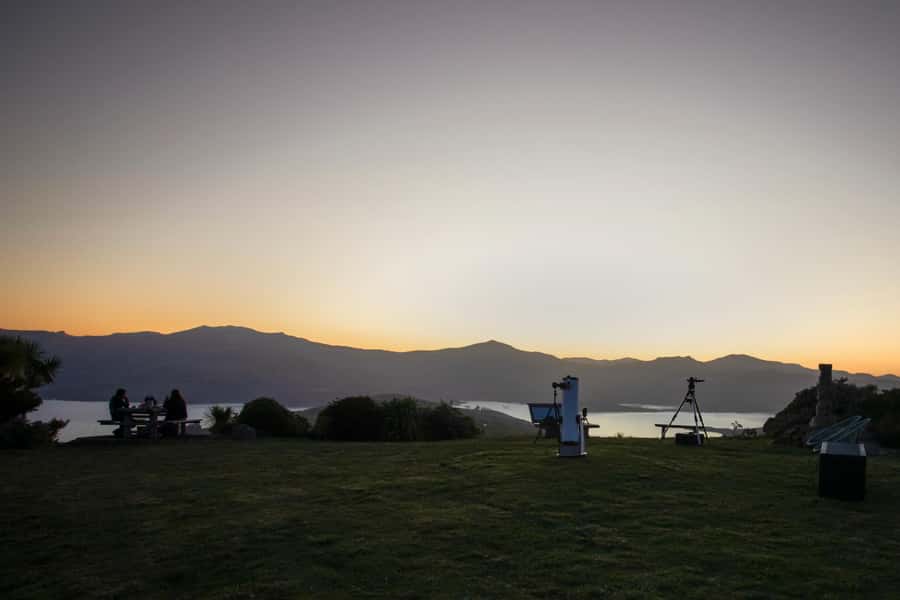
Many stargazing outings begin after dark and ask you to wait for the sky to reveal itself. This one gives the evening a useful rhythm. You start with the Sun, watch the light change over Akaroa Harbour, then move into night viewing as the first stars appear.
That progression makes the science easier to follow. You can compare the bright, active Sun with faint objects far beyond our solar system. The experience also works well for people who enjoy photography, since you do not simply look through a telescope and walk away. You receive digital images captured during the session.
The small-group limit is important. Six people is still enough for a social outing, but it should feel more personal than a large coach-based activity. You can ask Luca to explain an object again, take your time at the eyepiece, and get help understanding the images on the smart telescope.
The strongest praise goes to Luca’s enthusiasm and explanations. That matters here. Astronomy can become a list of names and distances very quickly, but a guide who can connect the view to a simple story helps the sky feel less remote. One confirmed rating gave the experience five out of five, with particular praise for Luca’s passion and the way the time passed quickly during his explanations.
A few more to weigh up in Akaroa
- Akaroa Dolphins ~ Harbour Nature Cruise
★ 5.0 · 2,143 reviews - Akaroa: Dolphin Nature Cruise
★ 4.9 · 440 reviews - Akaroa Harbour Nature Cruise
★ 5.0 · 332 reviews
Starting with sunspots at 280 Long Bay Road
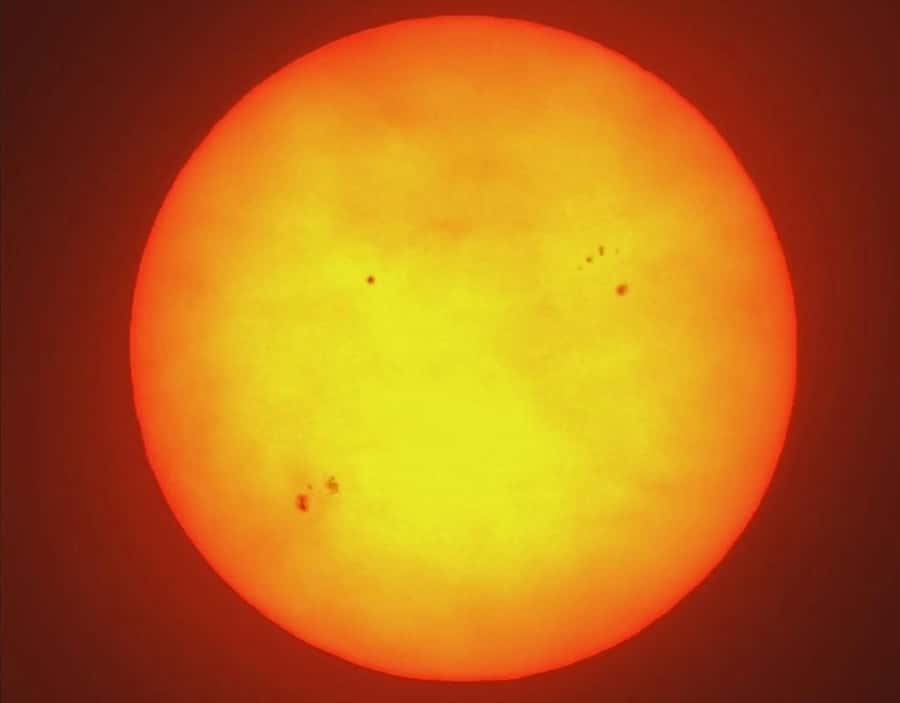
The tour begins at 280 Long Bay Road with a daytime session focused on the Sun. This is not ordinary sightseeing. You use a dedicated solar scope designed for safe solar observation, allowing you to see major sunspots and patterns of solar activity without looking directly at the Sun.
That first session gives the tour a useful scientific anchor. Sunspots are easier to understand when you can see them rather than hear a general explanation about them. Your guide can place the activity in context and help you notice details that might otherwise look like a bright, featureless disk.
The solar viewing also avoids one common problem with night tours: cloudy or faint conditions can make the main event feel uncertain. Here, the daytime portion has its own clear purpose. The night sky still depends on conditions, but you have already had a complete astronomy experience before sunset.
You should still think about timing. The tour lasts three hours and includes both daylight and nighttime activities, so it is not a quick evening stop. If you are visiting Akaroa on a packed schedule, set aside the full block rather than trying to squeeze this between other plans.
Sunset, hot drinks, and a local grazing platter
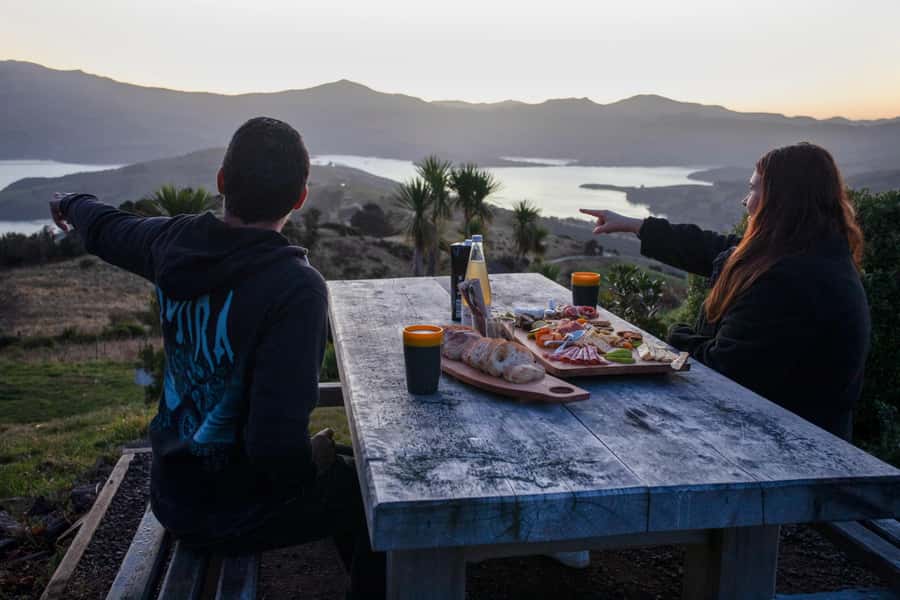
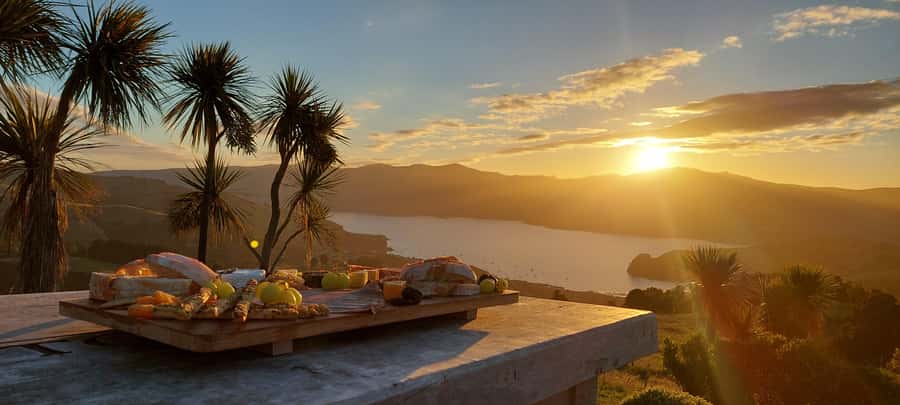
After the solar session, the focus shifts from the Sun as an object to the Sun as part of the view. You have about an hour for the grazing platter and sunset as the light drops over Akaroa Harbour.
The food is a practical touch, not just decoration. You can pause, talk with the guide, and watch the sky change without standing around waiting for darkness. Hot drinks help, too, since temperatures can fall quickly once daylight fades.
The platter is described as local, but the available information does not specify the exact items. If you have allergies or strict dietary needs, check before booking rather than assuming the food will suit you.
This section also gives the tour a welcome break. Looking through telescopes requires patience, and a short meal period keeps the experience from feeling like three straight hours of technical instruction. You get time to enjoy Akaroa Harbour before attention turns fully upward.
The setting is part of the value. You are not only buying access to equipment. You are spending the transition from day to night in Akaroa, with food and a hot drink in hand. That makes the activity work for couples, families, and anyone who likes astronomy but does not want a bare-bones science lesson.
Three telescopes, three ways to see the sky
The tour uses three specialized telescopes, each with a different job. That variety is one of the clearest reasons the $226 price can make sense.
The first is the dedicated solar scope used during the day. It is built for the Sun, so it is not simply a standard telescope pointed at a bright target. You get a safe way to view sunspots and solar activity with guidance from the astronomer.
The second is a powerful 10-inch Dobsonian telescope. This is the traditional visual part of the night session. You look through the eyepiece and see deep-space objects directly, with the guide helping you identify and understand them.
The third is the ZWO Seestar S50 smart telescope. It brings live astrophotography into the experience. Instead of only seeing a faint object through an eyepiece, you can watch the telescope build an image of nebulae and other targets on screen.
These two night telescopes complement each other. The Dobsonian offers the direct, old-fashioned pleasure of looking into space yourself. The Seestar S50 shows how modern equipment can collect and process light to reveal detail that is harder to see with the naked eye.
I like this combination because it serves different interests. If you enjoy the physical act of using a telescope, the Dobsonian is the main attraction. If you want a clearer image or enjoy seeing photography happen in real time, the Seestar adds something distinct rather than repeating the same view.
A completely different sort of day out:
- Akaroa Harbour 2-Hour Dolphin Nature Cruise
★ 4.7 · 235 reviews - Akaroa Shore Excursion: Banks Peninsula and Christchurch City Sights Tour
★ 4.0 · 228 reviews - Shore Excursion Guided Sea Kayaking through Akaroa Marine Reserve
★ 5.0 · 160 reviews - Akaroa Shore Excursion: Banks Peninsula, Christchurch City Tour and the International Antarctic Centre
★ 4.0 · 135 reviews
The night session and live astrophotography
Once twilight fades, the most technical portion begins. Your guide points the 10-inch Dobsonian toward deep-space objects, then demonstrates live astrophotography with the ZWO Seestar S50.
The phrase live astrophotography is important. You are not simply shown a finished picture with no connection to the session. You can watch an image of a nebula develop as the smart telescope captures it. That gives you a sense of how cameras reveal faint light over time.
You also receive digital images of the Sun and nebulae captured during the tour. These are useful souvenirs because they preserve what you actually viewed, rather than offering a generic astronomy picture from a website.
The visual experience can differ from what you expect from photographs. A high-resolution image on a screen will show more color and detail than your eye may see through an eyepiece. That is not a flaw. It is the point of using both methods. The Dobsonian gives you the direct view, while the Seestar shows what electronic imaging can bring out.
The guide’s role becomes especially valuable here. Astronomy equipment can feel intimidating if you do not know where to look or what the controls do. Luca’s explanations help you follow the process without needing a technical background. You do not need to arrive knowing the names of stars or nebulae.
Your personalized photo beneath Akaroa’s stars
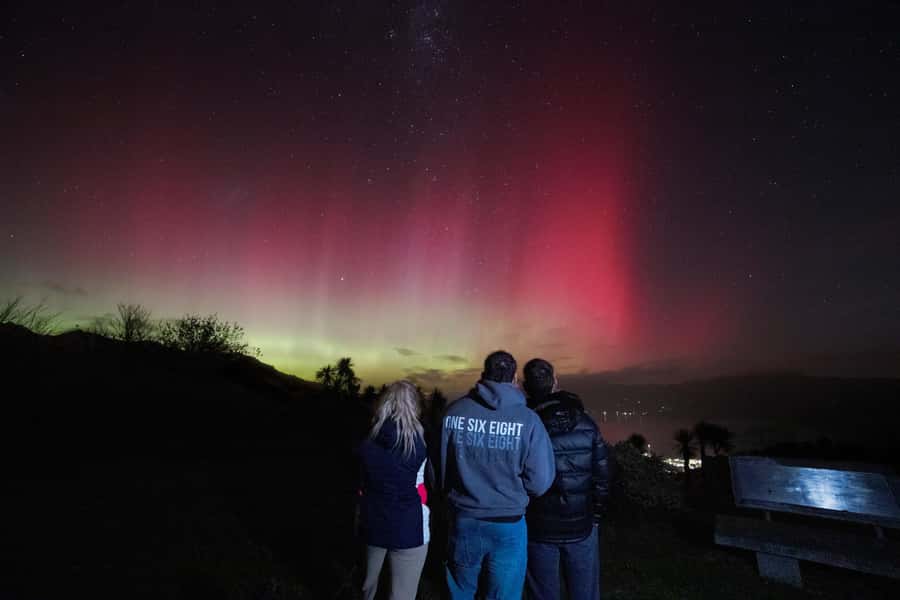
The tour includes a personalized high-resolution photo of you under the night sky. This is separate from the live images of the Sun and nebulae, and it gives the experience a more personal record.
That photo may be the best practical extra for anyone who wants to share the activity afterward. A telescope view is hard to photograph with a phone, and ordinary night portraits often lose either the person or the stars. A prepared image gives you something that documents your visit in a more polished way.
You also receive instant, shareable digital images from the solar and night sessions. Together, the two types of photos cover the experience well: one set records the astronomical subjects, and the other places you in the setting.
Flash photography is not allowed. That rule protects night vision and avoids spoiling the viewing for other people. You should also leave the flashlight at home or keep it switched off, since bright lights make it harder for everyone’s eyes to adjust.
Warmth, darkness, and practical comfort
Akaroa can feel chilly during nighttime observation, even if the afternoon seemed mild. Warm clothing is essential, and cozy blankets are included. The most useful approach is to dress for standing or sitting outside after sunset, not for the warmer part of the day.
A confirmed booking review specifically stressed that warm clothing is a must. Take that advice seriously. Hot drinks and blankets help, but they do not replace a warm jacket and suitable layers.
The tour does not allow alcohol or drugs. That is sensible for a dark outdoor activity involving delicate equipment and careful movement. Flash photography and flashlights are also prohibited.
The experience is wheelchair accessible. That is useful information for planning, although the supplied details do not describe the exact surfaces, telescope positions, or restroom arrangements. If you need specific access features, contact Akaroa Stargazing before reserving.
English is the tour language, and a live guide leads the session. Since much of the value comes from explanation, you should be comfortable following astronomy guidance in English.
Is $226 per person good value?
At $226 per person, this sits in the premium activity category. You are paying more than you would for a basic evening look at the stars, so the value depends on how much of the full program you will use.
The package includes solar observation, a guided sunset session, a local grazing platter, hot drinks, access to three telescopes, live astrophotography, digital astronomy images, and a personalized high-resolution portrait. Those inclusions make the price easier to justify than a simple telescope viewing with no food or photos.
The six-person maximum also matters. A small group can mean more time with the guide and less waiting for your turn. For someone who has always wanted to ask astronomy questions, that personal access may be worth more than a lower-priced large-group outing.
Still, I would not book it solely for the meal or the photo. The main value is the complete day-to-night format and the quality of the telescope experience. If the sky is your priority, you are likely to appreciate the cost. If you only want a scenic sunset and a casual look at a few stars, a less expensive activity may fit better.
The 90-minute scenic drive from Christchurch adds another cost in time and transport. From Akaroa, the location is more convenient. From Christchurch, you should treat this as a substantial half-day plan, not a quick add-on.
Who should book this three-hour outing?
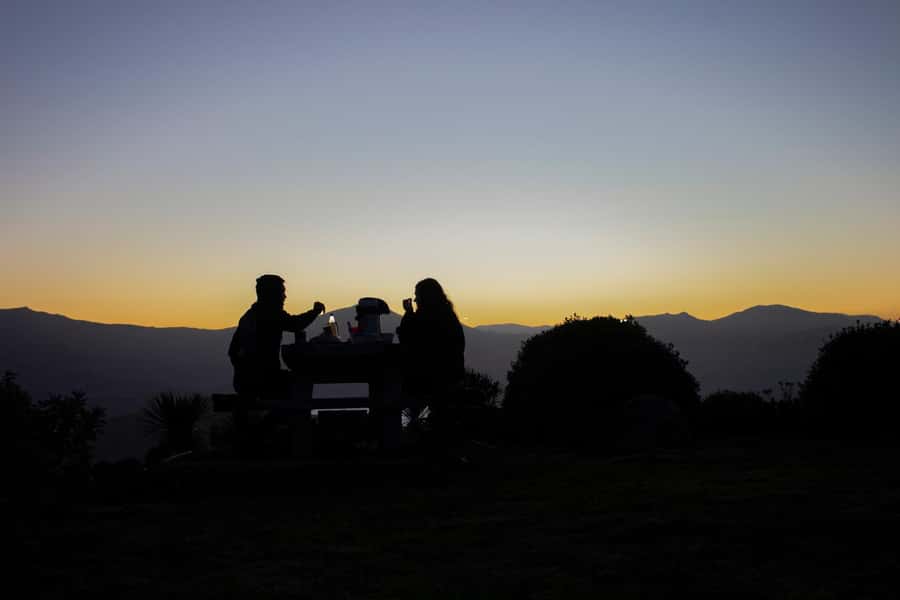
I would recommend it to first-time stargazers who want a guide to make the sky understandable. It also suits couples and small groups looking for a calm evening with food, views, and a clear focus.
Families may enjoy the change from Sun to stars, especially if children are curious about space. The three-hour length is worth considering for younger children, since the final portion takes place after dark and may feel cold or slow if they are not interested in astronomy.
Photography fans have a good reason to choose this tour. The Seestar S50, solar and nebula images, and personalized portrait give you more than a memory made only through your eyes.
I would be more cautious if you dislike cold outdoor activities, have very limited time in the Akaroa area, or want a highly flexible schedule. The tour has a fixed three-hour structure, and the drive from Christchurch makes the total commitment much longer.
How to decide before booking
Check the available starting time carefully, since the activity includes daylight viewing and sunset. You need to arrive prepared for the whole sequence, rather than assuming this is a night-only appointment.
Wear warm clothing, accept that flash photography and flashlights are not allowed, and expect the tour to be conducted in English. If you are traveling from Christchurch, allow for the 90-minute scenic drive each way.
The booking terms are friendly for uncertain plans. You can cancel up to 24 hours ahead for a full refund, and you can reserve now and pay later. That gives you some protection while you watch the forecast and organize your Akaroa visit.
Should you book Akaroa Stargazing?
Book this tour if you want astronomy explained by an enthusiastic guide, not just a telescope pointed at the sky. The mix of solar viewing, sunset food, a 10-inch Dobsonian, live images from the ZWO Seestar S50, and a personal night portrait gives the evening real variety.
I would skip it if you want a cheap, short activity or if you are unwilling to dress warmly after sunset. For everyone else, especially visitors already spending time in Akaroa, the small group and three-part format make $226 a reasonable price for a specialized experience. The best tip is simple: bring warm layers, arrive ready to ask questions, and let the sky take its time.
FAQ
How long does the Akaroa Astronomy Bites Tour last?
The experience lasts three hours and includes daytime solar observation, sunset and food, and nighttime stargazing.
Where does the tour start?
The starting location is 280 Long Bay Road.
Is the tour suitable for someone staying in Christchurch?
Yes, but the location is a 90-minute scenic drive from Christchurch, so you should plan extra time for transportation.
What telescopes are included?
The tour uses a dedicated solar scope, a 10-inch Dobsonian telescope, and a ZWO Seestar S50 smart telescope.
Can I safely look at the Sun during the tour?
Yes. The daytime session uses a dedicated solar scope for safe solar observation.
What food and drinks are included?
The tour includes a local grazing platter and hot drinks. The specific platter items are not provided.
What photos do I receive?
You receive digital images of the Sun and nebulae, along with a personalized high-resolution photo of you under the stars.
Is the tour wheelchair accessible?
Yes, the activity is listed as wheelchair accessible.
What should I bring or avoid bringing?
Warm clothing is strongly advised. Flash photography, flashlights, alcohol, and drugs are not allowed.
Just added in Akaroa
- Akaroa Wildlife Cruise★ 5.0 · 101 reviews
- Shore Excursion Guided Sea Kayaking through Akaroa Marine Reserve★ 5.0 · 160 reviews
- Night Awe – Stargazing tour in Akaroa★ 5.0 · 61 reviews
- Solar Explorer in Akaroa – Sun-Viewing Tour with Telescopes★ 5.0 · 5 reviews
- Sailing and Wildlife Tour Akaroa Fox II Sailing★ 5.0 · 76 reviews
- Small group guided sea kayaking in Akaroa marine reserve★ 5.0 · 116 reviews
- Electric Mountain Bike & Sea Kayak Tour in Akaroa★ 4.5 · 3 reviews
- Lava Loop- Guided electric mountain bike tour in Akaroa★ 5.0 · 34 reviews
Akaroa Tours, compared.
Akaroa Shore Excursion: Banks Peninsula and Christchurch City Sights Tour
Read our review →
Shore Excursion Guided Sea Kayaking through Akaroa Marine Reserve
Read our review →
Akaroa Shore Excursion: Banks Peninsula, Christchurch City Tour and the International Antarctic Centre
Read our review →
Pohatu Penguins Scenic Nature 2-Hour or 4-Hour Tour
Read our review →Browse the lists this tour appears in