
REVIEW · AKAROA TOURS
From Akaroa Lighthouse: Sungazing Tour with Two Telescopes
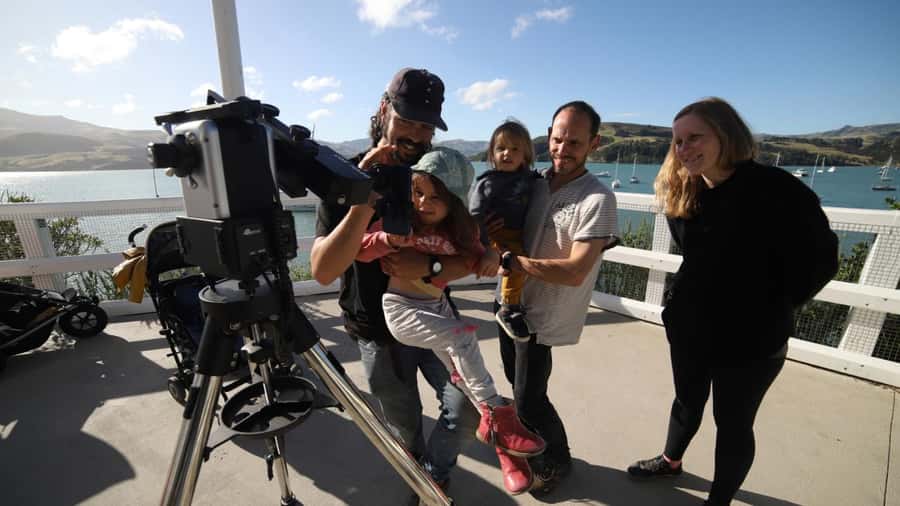
See the Sun in a whole new way. Akaroa Stargazing’s 30-minute Solar Explorer tour gives you a safe, close look at our nearest star from the historic Akaroa Lighthouse. I like the small maximum group of eight, which gives the astronomy guide room to explain what you are seeing. I also like the smartphone adapter, since you can take home a picture instead of relying on memory alone.
The main thing to consider is that this is a short, fully outdoor experience, and the quality of the view depends on solar conditions at the time. Still, for $23 per person, it is a modest-cost addition to a day in Akaroa, especially if you want something educational that works for both adults and children.
In This Review
- Key things to know before you book
- A daytime astronomy stop at Akaroa Lighthouse
- What you see through the Coronado PST solarscope
- Why Luca’s guidance matters
- Taking a solar photo with your smartphone
- How the 30-minute schedule works
- What the $23 price gets you
- Who will enjoy the Solar Explorer most
- Practical tips for a better visit
- Should you book this Akaroa solar tour?
- FAQ
- Where does the solar tour meet?
- How early should I arrive?
- How long does the tour last?
- What telescope is used?
- Is it safe to look at the Sun during the activity?
- Can I take photos of the Sun?
- Will I see sunspots?
- How many people can join the group?
- Is the tour conducted in English?
- Is the activity wheelchair accessible?
- What happens if I need to cancel?
Key things to know before you book
- You look directly at the Sun through a Coronado PST solarscope, designed for safe solar viewing.
- The tour takes place at Akaroa Lighthouse, at 145 Beach Road, giving the experience a memorable setting.
- The group is limited to eight people, so the guide can give proper attention to each participant.
- You may see sunspots and other solar details, depending on what the Sun is doing that day.
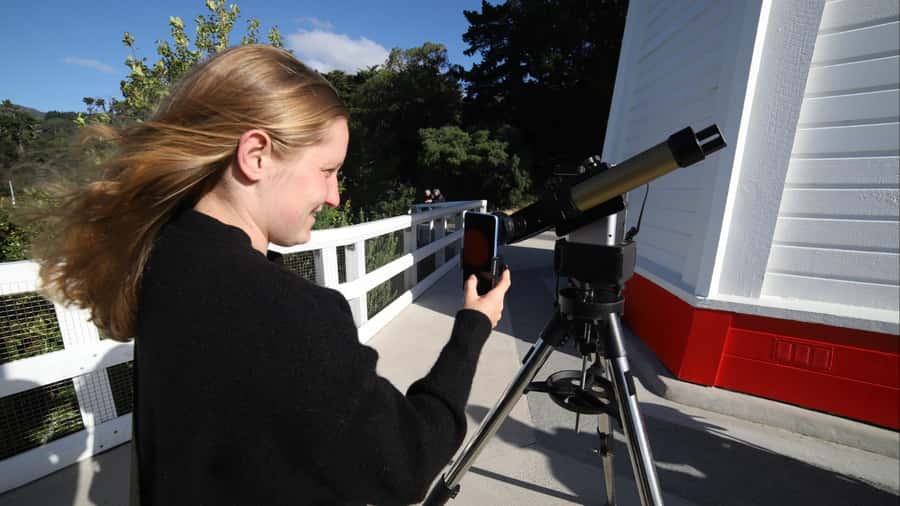
- A smartphone adapter is included, allowing you to capture images through the telescope.
- The whole experience lasts 30 minutes, making it easy to fit around other Akaroa plans.
A daytime astronomy stop at Akaroa Lighthouse
Most stargazing tours wait for darkness. This one turns your attention upward during the day, when the Sun is the main event. That simple change makes the experience especially useful for families, cruise passengers, and anyone who wants a short activity without giving up an entire afternoon or evening.
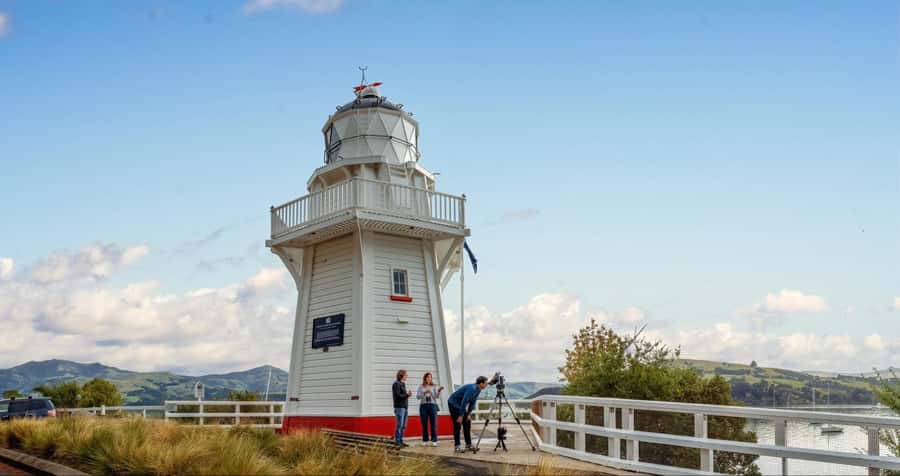
You meet your astronomy guide five minutes before the scheduled start at Akaroa Lighthouse, located at 145 Beach Road in Akaroa. The meeting point is clear and central to the experience: you are not being taken to a distant field or asked to find an unmarked trail. You arrive at the lighthouse and prepare for a guided look at the Sun.
The setting adds character. The lighthouse is an iconic historic part of Akaroa, and the telescope work takes place outdoors beside it. You get a local landmark and a science lesson in the same half-hour, which is a good use of time if you are already exploring the waterfront area.
This is a guided group tour in English. The maximum of eight participants matters more than it might sound. With a large crowd, solar viewing can become a queue with a few rushed seconds at the eyepiece. A small group gives the guide more time to point out details, answer questions, and help you use the phone adapter.
A few more to weigh up in Akaroa
- Akaroa Dolphins ~ Harbour Nature Cruise
★ 5.0 · 2,143 reviews - Akaroa: Dolphin Nature Cruise
★ 4.9 · 440 reviews - Akaroa Harbour Nature Cruise
★ 5.0 · 332 reviews
What you see through the Coronado PST solarscope
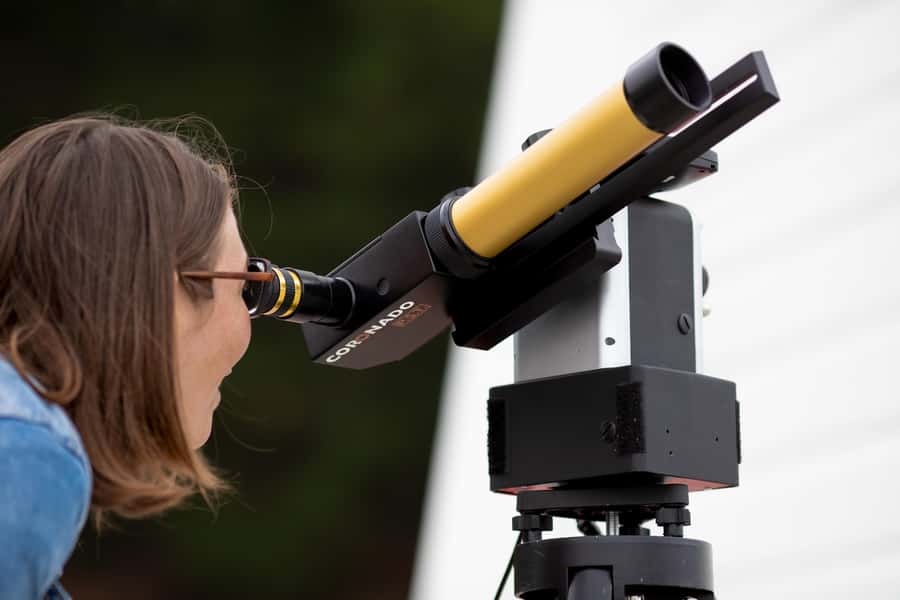
The central equipment is a Coronado PST solarscope. Its purpose is safe observation of the Sun, so you are not simply looking through an ordinary telescope with improvised filters. The guide controls the viewing process and explains what you are seeing.
That safety point is important. You should never look directly at the Sun with your bare eyes or with ordinary binoculars or a standard telescope. This tour is built around a dedicated solar instrument, allowing you to observe the Sun in the proper way under guidance.
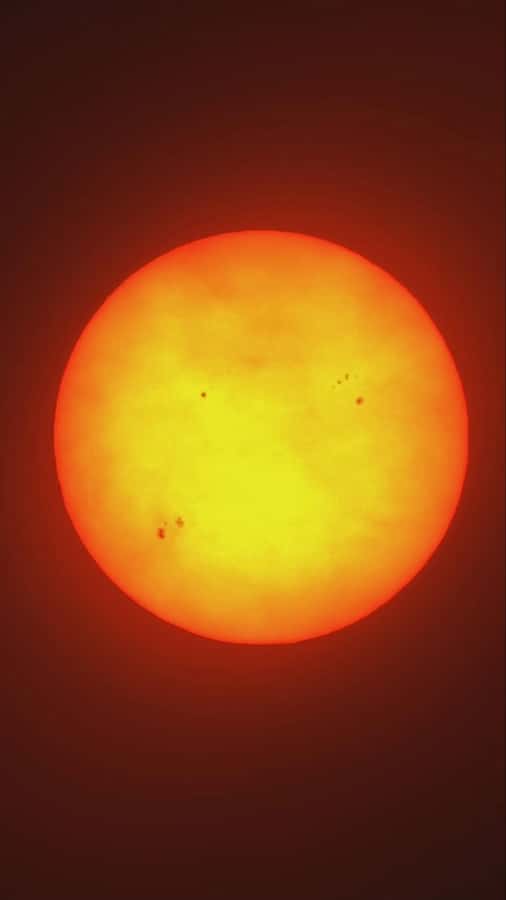
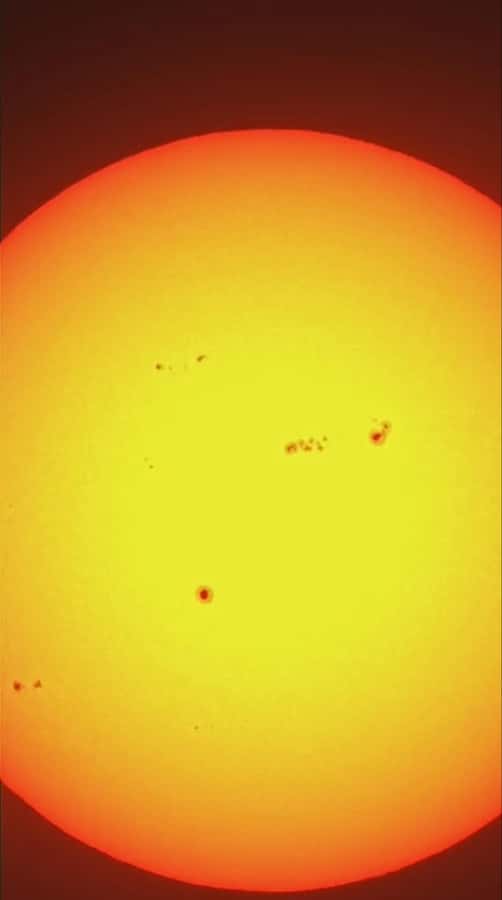
Your view can include sunspots, which are darker regions on the Sun’s visible surface. One participant specifically described seeing sunspots through the solarscope, while another praised the amount of information provided about the Sun. The exact view can change from day to day. Solar activity is not fixed, so the appearance of the Sun will depend on current conditions.
That uncertainty is part of the honest picture. You should not book expecting one guaranteed feature every time. You are paying for a safe, guided chance to see the Sun in detail and understand what appears in the scope that day.
The telescope changes your sense of scale. The Sun can look like a simple bright disk in the sky, but through the solarscope it becomes an object with visible structure. A good guide helps turn those marks into something meaningful rather than leaving you to peer at a red circle and guess what you are seeing.
Why Luca’s guidance matters
The astronomy guide named in the feedback is Luca, and he received particularly warm praise for his explanations and patient approach. That is useful information because this experience depends as much on the guide as on the telescope.
The equipment gives you the image, but the guide gives it context. Luca was described as an expert who explained things patiently, and another participant highlighted how informative and helpful the session was. You can expect the tour to focus on understanding the Sun, not just taking a quick look and moving on.
A strong guide also helps with the practical side. Solar viewing can take a little adjustment, and the image may not be immediately obvious to every person in the group. The guide can direct your attention, explain what you are looking at, and help you make sense of sunspots or other visible details.
This is particularly useful for children. A child may be fascinated by the idea of looking at the Sun but may need a simple explanation to connect the telescope image with the bright disk overhead. The format is family-friendly without reducing the subject to a quick novelty.
The four available ratings are all five out of five, with praise focused on the guide’s expertise, clear explanations, and helpful attitude. That is a small sample, so I would not treat it as a guarantee of every future session. It does point to the most important strength of the experience: the human guidance appears to make the telescope view much more rewarding.
Taking a solar photo with your smartphone
The included smartphone adapter is one of the most practical touches. After seeing the Sun through the telescope, you can use your phone to capture an image through the eyepiece. This gives you a personal record of the session and may help you show family and friends what the experience looked like.
The adapter is not a promise of a perfect professional image. Phone models differ, and getting the lens lined up can take a little care. The small group should help here, since the guide can assist with the setup instead of rushing everyone through it.
I would treat the photo as a useful extra, not the sole reason to book. The live view is the main event. The image on your phone is a souvenir of that moment, and it can be more satisfying because you know you saw the detail with your own eyes first.
Keep your expectations sensible. You might capture a clear image of the solar disk or visible sunspots, but the result will depend on the phone, the alignment, and what is visible that day. The adapter still adds real value because it turns a brief observation into something you can keep.
A completely different sort of day out:
- Akaroa Harbour 2-Hour Dolphin Nature Cruise
★ 4.7 · 235 reviews - Akaroa Shore Excursion: Banks Peninsula and Christchurch City Sights Tour
★ 4.0 · 228 reviews - Shore Excursion Guided Sea Kayaking through Akaroa Marine Reserve
★ 5.0 · 160 reviews - Akaroa Shore Excursion: Banks Peninsula, Christchurch City Tour and the International Antarctic Centre
★ 4.0 · 135 reviews
How the 30-minute schedule works
The tour starts at 145 Beach Road, where your guide greets you five minutes before departure. Arriving early is sensible, since the activity is short and the meeting point is part of a working sightseeing area. If you arrive at the scheduled start time, you may lose a meaningful part of a half-hour session.
The guided experience itself takes 30 minutes at Akaroa Lighthouse. You should expect the time to be divided between an introduction, safe telescope observations, explanations from the astronomy guide, and the chance to use the smartphone adapter.
The short duration is both a strength and a limitation. It is long enough to learn the basic story of the Sun and look through the solarscope, but it is not a full astronomy class. If you want a long scientific presentation or a detailed study of solar physics, this will feel brief.
For most day plans, the length works well. You can place it between other activities in Akaroa without surrendering a large block of time. Families may appreciate the compact format, especially if younger children lose focus during longer tours.
The activity is fully outdoors. That means you should be prepared to spend the entire session outside at the lighthouse. The provided information does not specify weather arrangements or indoor alternatives, so you should keep that in mind when planning your day.
What the $23 price gets you
At $23 per person, the tour is priced as a small add-on rather than a major excursion. You receive a guided experience, access to the Coronado PST solarscope, a small group capped at eight, and use of the smartphone adapter.
The value comes from the combination. You are not paying simply for access to a viewpoint at the lighthouse. You are paying for specialist equipment and a guide who can explain the view and help you use it safely. That makes the price easier to justify than a basic sightseeing stop, especially if you have never used a solar telescope before.
I think the tour offers the best value for people already spending time in Akaroa. The lighthouse setting gives you a specific destination, and the 30-minute schedule leaves room for other plans. If you are on a tight budget, it is short enough that you can decide whether a focused educational stop fits your priorities.
The value is less obvious if you want a long activity. There is no indication of a wider lighthouse admission package, an extended astronomy presentation, or additional transport. You should book it for the telescope observation and expert commentary, not for a full-day attraction.
Flexible booking improves the practical value. You can reserve now and pay later, and cancellation is allowed up to 24 hours before the activity for a full refund. Those terms are useful if your South Island schedule is still changing.
Who will enjoy the Solar Explorer most
This tour suits families particularly well. It gives children a safe way to look at the Sun, while adults can appreciate the science and the unusual setting. The short length also helps if your group has mixed attention spans.
It works for first-time astronomy visitors. You do not need to arrive with technical knowledge or experience using a telescope. The guide leads the session, explains the details, and helps you understand what appears in the view.
It also suits anyone looking for something different from the usual Akaroa sightseeing pattern. A daytime solar observation is not a standard waterfront walk or scenic lookout. It gives you a focused reason to visit the lighthouse and adds a little science to your day.
You may want to skip it if you dislike outdoor activities or prefer attractions with guaranteed visual results. Solar features vary, and the session is brief. You should also be comfortable taking part in a small group where the telescope is shared rather than used privately.
The tour is wheelchair accessible, which makes it a practical option for people who need an accessible activity. The provided details do not explain the exact surface or access route at the lighthouse, so you may want to confirm any specific mobility needs before booking.
Practical tips for a better visit
Arrive five minutes early, as requested. The guide meets you at Akaroa Lighthouse, and a short activity leaves little room for late arrivals.
Keep your phone ready if you want to use the smartphone adapter. You do not need to treat photography as the main goal, but having your camera available means you will not miss the chance to record the view.
Pay close attention to the safety instructions. The dedicated solarscope makes observation safe when used correctly, but you should follow the guide’s directions and never attempt to view the Sun through personal equipment unless it is designed and approved for solar observation.
Plan for an outdoor session at the lighthouse. The supplied information does not list clothing advice or weather policies, so check the conditions for your visit and dress for the time of day.
Finally, ask questions. The strongest part of the experience appears to be the guide’s explanations. A quick glance through the telescope is interesting, but asking what you are seeing turns it into a lesson you are more likely to remember.
Should you book this Akaroa solar tour?
I would book it if you want a short, affordable activity with a clear focus. The Coronado solar telescope, small group, smartphone adapter, and praise for Luca’s teaching give the tour more substance than a simple photo stop.
You should book with realistic expectations. This is 30 minutes outdoors, not a long astronomy course, and the Sun may show different features from one session to the next. For $23, though, it offers a rare chance to see our nearest star safely from a well-known Akaroa landmark.
If you are curious, traveling with children, or already planning to visit the lighthouse, this is an easy activity to add. If you need a weather-proof attraction or a guaranteed display of dramatic solar activity, choose something else. For most visitors with a free half-hour in Akaroa, the price and unusual subject make it a worthwhile stop.
FAQ
Where does the solar tour meet?
Your guide meets you at Akaroa Lighthouse, 145 Beach Road, Akaroa 7520.
How early should I arrive?
You should meet your astronomy guide five minutes before the scheduled departure time.
How long does the tour last?
The guided solar observation at Akaroa Lighthouse lasts 30 minutes.
What telescope is used?
The tour uses a Coronado PST solarscope for safe solar observations.
Is it safe to look at the Sun during the activity?
Yes. The tour provides solar observations through a Coronado solarscope under the guidance of an astronomy guide.
Can I take photos of the Sun?
Yes. A smartphone adapter is included so you can capture images through the solarscope.
Will I see sunspots?
You might see sunspots or other solar details, depending on the Sun’s activity at the time of your visit.
How many people can join the group?
The group is limited to a maximum of eight participants.
Is the tour conducted in English?
Yes. The live guide and tour language are English.
Is the activity wheelchair accessible?
Yes. The activity is listed as wheelchair accessible.
What happens if I need to cancel?
You can cancel up to 24 hours in advance for a full refund. You can also reserve now and pay later.
Just added in Akaroa
- Akaroa Wildlife Cruise★ 5.0 · 101 reviews
- Night Awe – Stargazing tour in Akaroa★ 5.0 · 61 reviews
- Solar Explorer in Akaroa – Sun-Viewing Tour with Telescopes★ 5.0 · 5 reviews
- Shore Excursion Guided Sea Kayaking through Akaroa Marine Reserve★ 5.0 · 160 reviews
- Sailing and Wildlife Tour Akaroa Fox II Sailing★ 5.0 · 76 reviews
- Small group guided sea kayaking in Akaroa marine reserve★ 5.0 · 116 reviews
- Electric Mountain Bike & Sea Kayak Tour in Akaroa★ 4.5 · 3 reviews
- Lava Loop- Guided electric mountain bike tour in Akaroa★ 5.0 · 34 reviews
Akaroa Tours, compared.
Akaroa Shore Excursion: Banks Peninsula and Christchurch City Sights Tour
Read our review →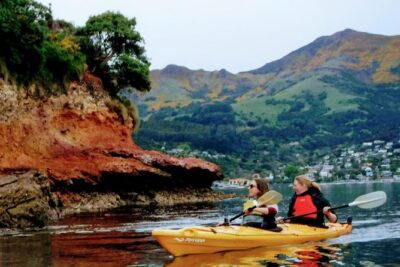
Shore Excursion Guided Sea Kayaking through Akaroa Marine Reserve
Read our review →
Akaroa Shore Excursion: Banks Peninsula, Christchurch City Tour and the International Antarctic Centre
Read our review →
Pohatu Penguins Scenic Nature 2-Hour or 4-Hour Tour
Read our review →Browse the lists this tour appears in