
REVIEW · CANTERBURY TOURS
Hanmer Springs Star Tours at Manuka Skies
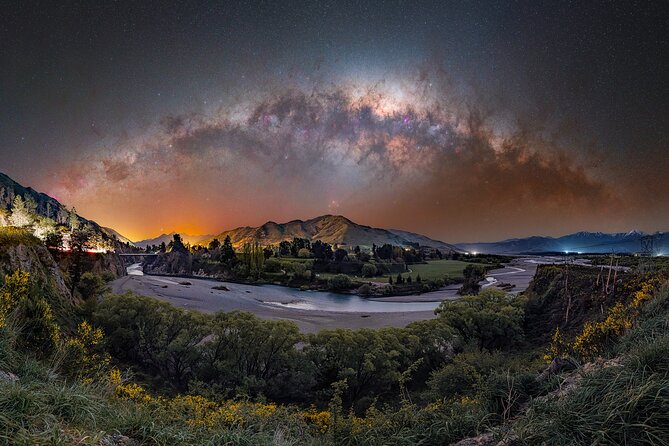
Look up, and Hanmer Springs changes character. At Manuka Skies, you leave the town lights behind for a small sanctuary of native forest, a spring-fed stream, and a remarkably dark sky. I like the small maximum of 10 people, which gives the astronomy time to feel personal, and I like the mix of guided constellation spotting with free-roaming telescopes. The main catch is simple: clear weather is essential, so your evening may be canceled or moved.
A pickup option makes the trip easy if you are staying in Hanmer Springs. Guide Brent brings real enthusiasm and a strong grasp of the night sky, while the setting adds more than a standard telescope session. You may hear morepork owls in the trees, but the roughly two-hour experience depends on darkness, patience, and suitable conditions.
In This Review
- Key points to know before booking
- Leaving Hanmer Springs for a darker sky
- The first lesson is written across the whole sky
- Seeing distant objects through the Celestron telescope
- Manual telescopes let you roam
- Reclining lounges and astro binoculars
- Listen for morepork owls beside the stream
- What the two-hour format feels like
- Is the $80.05 price fair?
- Weather is the one serious variable
- Who will enjoy Manuka Skies most?
- Should you book Hanmer Springs Star Tours?
- FAQ
- Where does Hanmer Springs Star Tours take place?
- How long does the tour last?
- How much does the tour cost?
- Is pickup available?
- How many people can join the tour?
- What equipment is used?
- What can you learn during the tour?
- What happens if the weather is poor?
Key points to know before booking
- Manuka Skies sits away from Hanmer Springs lights: The darker setting improves your chance of seeing faint stars and deep-sky objects.
- The tour begins with the naked eye: You learn the Southern Cross and other constellations before using optical equipment.
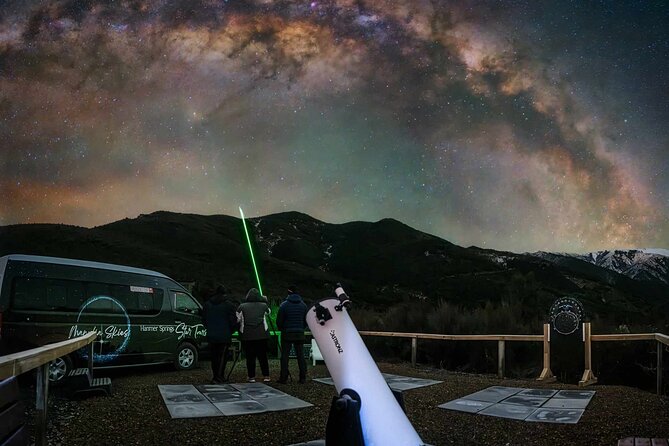
- Several types of equipment are available: A guided Celestron telescope, manual telescopes, astro binoculars, and an interactive star finder each offer a different way to explore.
- The setting is part of the experience: A spring-fed stream, native forest, and possible morepork owl calls connect the astronomy to the surrounding sanctuary.
- Groups stay small: With no more than 10 people, you should get a closer look and more room for questions.
- Weather controls the schedule: You can cancel for a full refund up to 24 hours ahead, and poor weather may lead to a new date or full refund.
Leaving Hanmer Springs for a darker sky
Hanmer Springs is easy to enjoy in daylight, with its thermal pools and mountain setting. At night, though, the town’s lights can wash out the faintest stars. Manuka Skies solves that problem by taking you into the surrounding hills and forest, where the sky has less artificial light competing with it.
That change matters. You do not need an expensive telescope to enjoy a clear night, but a darker site helps you see more stars with your own eyes. It also gives the guide a better chance to point out objects that disappear in a bright town center.
Pickup is offered from Hanmer Springs, and the experience begins in Hanmer Springs before heading out to the site. That is useful if you do not want to drive on unfamiliar roads after dark. It also lets you enjoy the evening without worrying about finding your way back from a rural location.
The setting is not a polished observatory with a busy visitor center. Manuka Skies is presented as a sanctuary for astronomy and wildlife, with the operators acting as kaitiaki, or guardians, of the area. That approach gives the tour a gentle environmental focus. The goal is not only to point a telescope upward, but also to reconnect the sky with the forest below it.
A few more to weigh up in Canterbury
- Hanmer Springs Thermal Pools & Spa
★ 4.5 · 218 reviews - Amuri Adventure Jet Boating in Hanmer Springs
★ 5.0 · 191 reviews - Hanmer Springs: Thermal Pools Single or Return Entry Ticket
★ 4.7 · 107 reviews
The first lesson is written across the whole sky
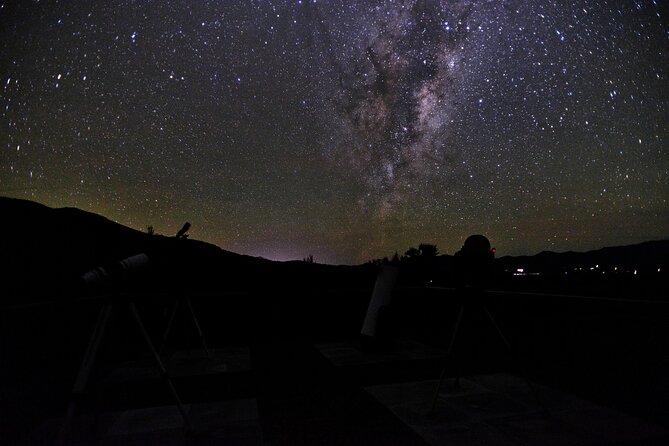
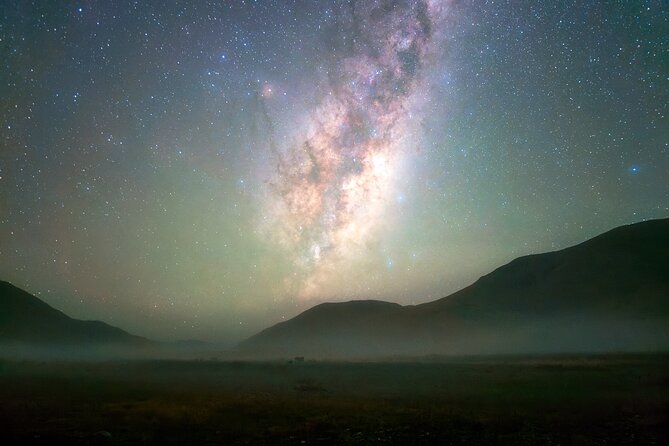
The tour starts without complicated equipment. Your guide uses the naked eye to introduce stars and constellations, including the Southern Cross, one of the best-known markers in the southern sky.
This is the right order for a beginner. If you start by looking through a telescope, you may see an impressive object but have little sense of where it sits overhead. Learning a few patterns first helps you get your bearings and understand the sky as a map rather than a collection of isolated points.
The Southern Cross is especially useful because it has long helped people navigate in the Southern Hemisphere. You are not simply memorizing a shape for a quiz. You are learning how a constellation can help you orient yourself at night.
The guide also discusses different stars and constellations during this opening section. The exact objects visible will depend on the season, the time of night, and the weather, so you should expect a live lesson shaped by the conditions rather than a fixed script.
I like this part because it keeps the experience accessible. You do not need any prior astronomy knowledge. If you already know the major constellations, it still gives you a useful framework before the equipment comes out.
Seeing distant objects through the Celestron telescope
The main telescope is a quality Celestron model with electronic guidance. This is the tool for viewing objects that are too faint or too distant to make out clearly with your eyes alone.
The tour highlights the Omega Cluster and the Sombrero Galaxy. They offer two different kinds of appeal. A star cluster can show you a dense gathering of stars, while a galaxy gives you a sense of scale far beyond our own Milky Way. You might not see these objects in the same way you would see a bright planet or the Moon. Their appearance can be subtle, and the final view will depend heavily on the night.
That is worth knowing before you book. A telescope does not turn every deep-sky object into a sharp, colorful photograph. In many cases, the pleasure comes from recognizing a faint form and understanding just how far away it is. A good guide helps you make that mental connection.
Electronic guidance also matters in a small group. The scope can locate selected objects without spending the whole evening manually searching for them. That leaves more time for looking, asking questions, and moving on to another part of the sky.
At a group limit of 10, you should have a better chance of getting a turn without feeling rushed. The tour is still shared, so you will not control the telescope for the entire evening. Even so, the small size should make it easier to hear Brent’s explanations and ask for another look if you need one.
Manual telescopes let you roam

Manuka Skies also has manual telescopes. These offer a different experience from the electronically guided Celestron.
A manual telescope is less about following a prepared sequence and more about exploring. You may be able to move from one part of the sky to another, guided by your own curiosity and by instructions from the tour team. This can be especially rewarding after the main constellation lesson because you have a better idea of what you are looking at.
The tradeoff is that manual equipment may require more patience. You may spend time learning how to aim or adjust the view. That is not a flaw, but it does mean the evening is not designed as a quick series of spectacular images.
I would see the manual telescopes as a good feature for families, curious beginners, and anyone who enjoys learning by trying things. If you want a fast, polished presentation with no pauses, this part may feel slower. If you like the idea of finding your own target, it adds a welcome sense of participation.
A completely different sort of day out:
- Methven-Mt Hutt Scenic Hot Air Balloon Flight
★ 5.0 · 74 reviews - Akaroa: Guided Sunrise Sea Kayaking Tour
★ 4.8 · 59 reviews - Lyttelton Shore Excursion – Guided Walking Tour and Picnic
★ 5.0 · 57 reviews - Amuri Jet Adventures – Hanmer Springs Quad Biking tour
★ 5.0 · 49 reviews
Reclining lounges and astro binoculars
One of the more unusual features is the use of astro binoculars on lounges. You can lie back and gaze upward instead of standing at a telescope for the entire session.
This changes the pace. Telescope viewing usually means waiting your turn, leaning toward an eyepiece, and concentrating on one small field. Binocular viewing gives you a broader connection with the sky and lets you stay comfortable while scanning above you.
The lounges also make sense for a long night outdoors. Even a two-hour tour can feel tiring if you spend all of it standing or bending toward equipment. Being able to recline encourages you to slow down and simply watch the sky.
The astro binoculars work with an interactive star finder, giving you a practical way to test your navigation skills. This is a nice bridge between instruction and play. You can use the star finder to work out where objects should be, then check your aim through the binoculars.
Again, the exact experience depends on the conditions. Cloud, rain, or poor visibility can limit what you see. But on a clear evening, this combination should help the tour feel less like a lecture and more like hands-on exploration.
Listen for morepork owls beside the stream
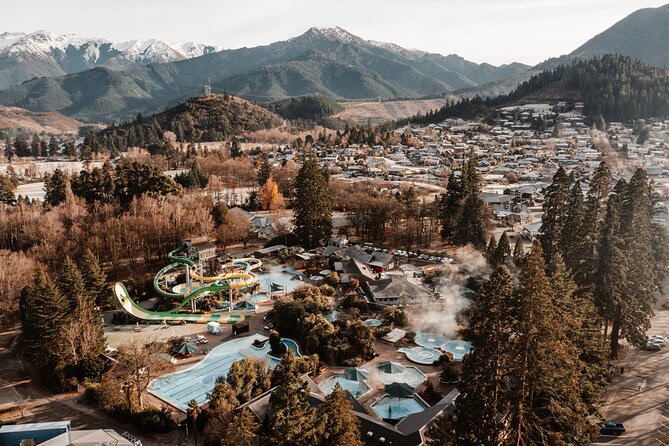
The astronomy is only half of the appeal. Manuka Skies sits in a native forest sanctuary, and a spring-fed stream flows down the mountain nearby. The sound of running water gives the evening a natural background instead of the hum of traffic or a busy town.
You may also hear morepork owls nesting in the area. These native owls are nocturnal, so their calls fit the setting perfectly. There is no guarantee that you will hear one during your two hours, but listening for wildlife adds an extra layer to the visit.
This is where the kaitiaki idea becomes meaningful. The operators describe themselves as guardians of the sanctuary, and the tour connects astronomy with care for the forest. You are not simply visiting a dark patch of ground to use a telescope. You are spending time in a place where the night sky, water, trees, and wildlife are treated as parts of one environment.
The setting can also make the tour feel calmer than a standard astronomy presentation. The stream and forest give you something to notice between telescope views. If the sky is temporarily clouded, the surroundings still have value, though poor weather can cancel the tour altogether.
What the two-hour format feels like
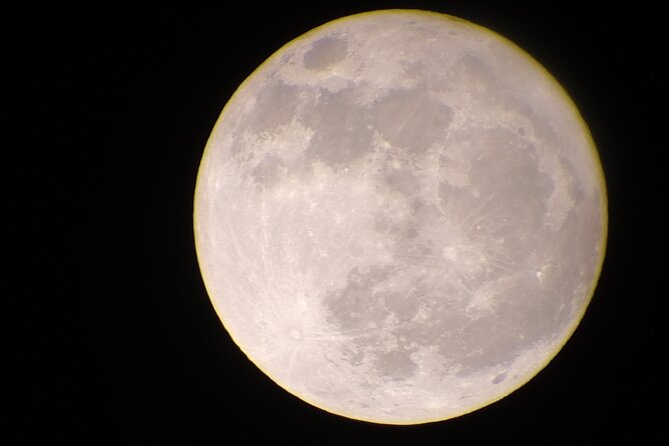
The experience lasts about two hours. That is enough time for a proper introduction, several telescope stops, and relaxed use of the binoculars and star finder without turning the evening into an all-night commitment.
The likely rhythm is straightforward:
- You meet in Hanmer Springs, with pickup available.
- You travel to the Manuka Skies site outside the brighter town center.
- The guide introduces the visible stars and constellations with the naked eye.
- You use the electronically guided Celestron telescope for deep-sky targets.
- You explore with manual telescopes and astro binoculars.
- You finish with time to look upward, listen to the forest, and take in the setting.
The order of individual objects may change. Astronomy tours must respond to what is visible, and the guide may spend more time on a particularly good target or adjust the plan as the night develops.
I appreciate that the experience does not rely on equipment alone. You get a lesson in the sky, direct views through several types of optics, and time to enjoy the site itself. That gives the tour more staying power than a simple stop at a telescope.
Is the $80.05 price fair?
The listed price is $80.05 per person. For a roughly two-hour activity, that is not a throwaway evening attraction, so value depends on what you want from it.
If you only want to glance through a telescope once, the price may feel high. The cost makes more sense if you value the small group, transport option, guide-led instruction, several kinds of equipment, and access to a darker setting outside Hanmer Springs.
The group limit of 10 is important here. A larger astronomy outing might offer similar equipment but less time at the eyepiece and fewer chances to ask questions. With a smaller group, your money is paying for a more personal session rather than just admission to a viewing area.
The wildlife setting also adds value, though it is not something you can measure or guarantee. The stream, forest, and possibility of hearing morepork owls help make the evening feel tied to Hanmer Springs rather than interchangeable with a city observatory.
The tour is booked, on average, 44 days ahead. That suggests you should think about reserving before your visit, especially if your stay is short. At the same time, build some flexibility into your plans because cloud and poor weather can interfere.
Weather is the one serious variable
Good weather is required. If poor conditions cancel the experience, you are offered another date or a full refund.
That policy is reassuring, but weather still affects your planning. If you are in Hanmer Springs for several nights, you have a better chance of moving the tour to a clearer evening. If you are there for only one night, you may need to accept that the sky will not cooperate.
You can cancel for a full refund if you do so at least 24 hours before the start time. Cancellations made less than 24 hours ahead are not refunded, and late changes are not accepted. The cut-off follows local time.
One particularly positive detail is the handling of a bad-weather cancellation. A canceled evening does not simply become a lost payment. You are offered a new date or a full refund, which is exactly the fair approach for an outdoor activity controlled by cloud cover.
Who will enjoy Manuka Skies most?
I would recommend this tour to first-time stargazers who want guidance without a large crowd. The naked-eye introduction gives you a clear starting point, while the telescopes and binoculars add enough variety to keep the evening interesting.
It also suits families and mixed groups. Someone who loves astronomy can spend time with the manual telescopes, while a beginner can relax on the lounges and learn the Southern Cross. The small group should help keep the experience manageable.
Couples and quiet-night seekers may appreciate the stream, forest, and owl calls as much as the equipment. This is not a loud activity or a rapid sightseeing circuit. It asks you to slow down and pay attention.
I would be more cautious if your schedule is rigid, your interest in astronomy is low, or you strongly dislike outdoor activities at night. The experience depends on clear conditions, and some deep-sky objects may appear faint rather than dramatic.
Should you book Hanmer Springs Star Tours?
Yes, if you want more than a quick look through a telescope. Manuka Skies combines a dark location, a small group, a helpful guide, several viewing tools, and a forest setting that gives the evening a real sense of place.
Book it when you can leave room for a weather change, and try to reserve ahead of time because the tour is often booked well before the visit date. If your schedule allows only one evening, understand that the sky makes the final decision.
The strongest reason to choose it is the complete experience: learn the southern sky with your own eyes, search for distant objects through the Celestron, test manual equipment, recline with astro binoculars, and listen for morepork owls beside the stream. At $80.05, that is a fair price for a personal, two-hour introduction to Hanmer Springs after dark.
FAQ
Where does Hanmer Springs Star Tours take place?
The experience starts in Hanmer Springs, New Zealand, and visits Manuka Skies, a dark stargazing location surrounded by native forest and wildlife.
How long does the tour last?
The tour lasts approximately two hours.
How much does the tour cost?
The listed price is $80.05 per person.
Is pickup available?
Yes. Pickup is offered for the experience.
How many people can join the tour?
The maximum group size is 10 people.
What equipment is used?
The tour uses a Celestron electronically guided telescope, manual telescopes, astro binoculars, lounges, and an interactive star finder.
What can you learn during the tour?
The guide begins with naked-eye astronomy, including stars and constellations such as the Southern Cross. The telescopes can also be used to view deep-sky objects such as the Omega Cluster and Sombrero Galaxy.
What happens if the weather is poor?
The experience requires good weather. If it is canceled because of poor conditions, you are offered a different date or a full refund. You can also cancel at least 24 hours before the start time for a full refund.
Just added in Canterbury
- Twizel Stargazing Experience with a Guide (Carbon Positive)★ 4.7 · 26 reviews
- Amuri Jet Adventures – Hanmer Springs Quad Biking tour★ 5.0 · 49 reviews
- Helicopter trial Flight. Have a go at being the pilot★ 5.0 · 1 review
- Merino Farm Experience★ 5.0 · 3 reviews
- Christchurch Alpaca Farm Tour From Kaiapoi★ 5.0 · 2 reviews
- Oasis Cottage Gardens and Floristry Studio in Oxford, NZ★ 5.0 · 1 review
- Canterbury Helicopter Scenic Flight with Hilltop Landing★ 5.0 · 1 review
- Lyttelton Shore Excursion – Guided Walking Tour and Picnic★ 5.0 · 57 reviews
Canterbury Tours, compared.


Hanmer Springs: Thermal Pools Single or Return Entry Ticket
Read our review →

Lyttelton Shore Excursion – Guided Walking Tour and Picnic
Read our review →
Amuri Jet Adventures – Hanmer Springs Quad Biking tour
Read our review →
Browse the lists this tour appears in