
REVIEW · MOUNT COOK TOURS
Mount Cook Alpine Explorer Helicopter Flight with Alpine Landing
Snow under your boots, mountains all around. This 35-minute helicopter flight gives you a rare view of Aoraki Mount Cook, the Ben Ohau Range, the Southern Alps, and the Tasman Valley, with a short alpine landing when conditions allow. I especially like the small maximum group of six and the pilot’s live commentary, which helps turn a quick flight into a proper introduction to the region.
The snow landing is the real prize, and stepping out above the valleys feels far more memorable than simply circling the peaks. I also like that the flight reaches places you cannot get to by road or ordinary walking track. The main caution is simple: snow is seasonal and weather can cancel or change the experience, so do not book this expecting a guaranteed white mountaintop.
In This Review
- Quick points before you book
- Taking off from Glentanner Park
- The Ben Ohau Range from above
- Stepping onto an alpine snowfield
- Aoraki Mount Cook from a rare viewpoint
- Looking down the Tasman Valley
- What the $359.62 price really buys
- Weather, cancellations, and minimum numbers
- Who will enjoy this flight most
- Practical advice for a better outing
- Should you book the Mount Cook Alpine Explorer?
- FAQ
- Where does the helicopter flight start?
- Where does the activity end?
- How long does the experience last?
- How much time is spent flying?
- How long is the alpine landing?
- Is the snow landing guaranteed?
- How many people can ride in the helicopter?
- Is pilot commentary included?
- Can children join the tour?
- What happens if bad weather cancels the flight?
Quick points before you book
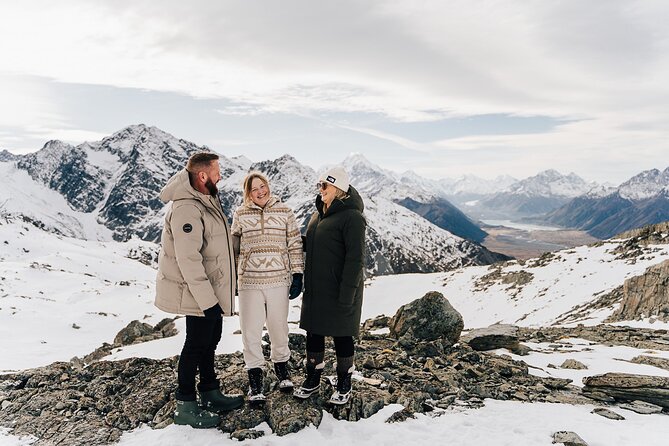
- A 10-minute alpine landing lets you leave the helicopter and stand on snow when conditions are suitable.
- Aoraki Mount Cook reaches 12,217 feet, giving you a remarkable high viewpoint over the Southern Alps.
- The helicopter carries up to six passengers, creating a small-group setting rather than a crowded sightseeing ride.
- The flight lasts about 35 minutes, with roughly 20 to 25 minutes in the air and the rest used for landing and time outside.
- Pilot commentary is included, with guides such as Greg and Dan praised for pointing out peaks, valleys, glaciers, and local history.
- The route may change with conditions, and a different departure point or flight path can sometimes provide a better chance of flying.
Taking off from Glentanner Park
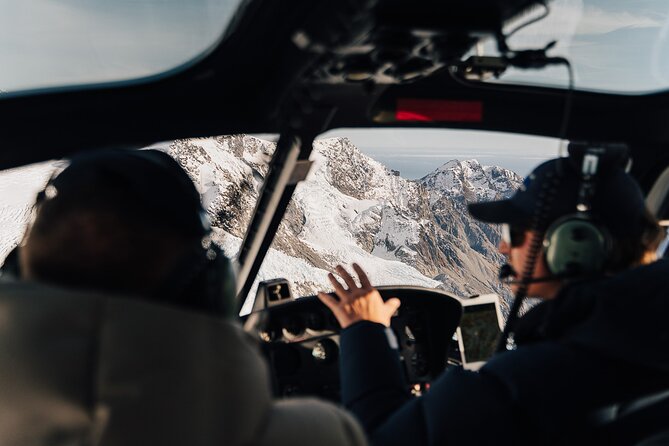
Your meeting point is The Helicopter Line base at Glentanner Park on State Highway 80, close to Mount Cook Village. You check in, receive a safety briefing, and board a twin-engine helicopter with room for as many as six passengers.
That small capacity matters. You are not packed into a large aircraft with rows of heads blocking the view. Each passenger gets a more personal experience, and the pilot can speak directly to the group while pointing out features below.
The total trip takes about 35 minutes. Around 20 to 25 minutes are spent flying, with approximately 10 minutes set aside for the alpine landing. It is a short outing, but the scenery begins almost at once, so you are not spending much of the paid time on transfers or waiting between attractions.
Wear warm clothing and sturdy footwear. The cabin may feel comfortable, but the landing site can be cold, and snow conditions are not the place for thin shoes. Sunglasses are also a smart choice, particularly when sunlight reflects off snow. One summer report found the landing surprisingly mild, but mountain weather can shift quickly.
More Helicopter Flights in Mount Cook:
- Mount Cook: Scenic Helicopter Flight with Alpine Landing
★ 4.8 · 442 reviews - Mount Cook: Ski Plane and Helicopter Glacier Combo Flight
★ 4.6 · 271 reviews - Mount Cook: 3-Hour Tasman Glacier Helicopter Ride and Hike
★ 4.9 · 235 reviews
The Ben Ohau Range from above
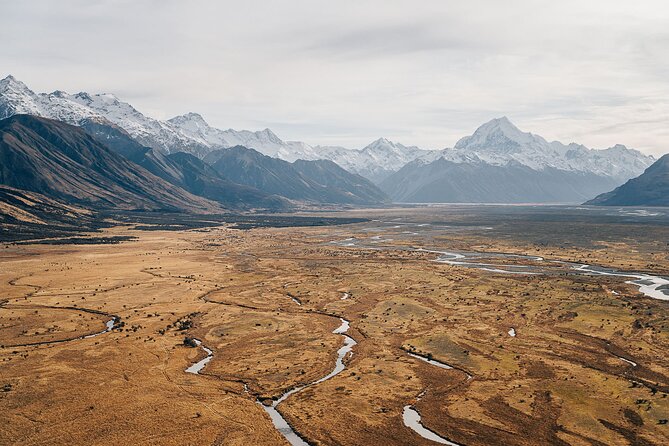
The first major part of the flight takes you over the Ben Ohau Mountain Range and toward a pass through the Southern Alps. From the helicopter, the ridges show scars left by ancient glaciers, with steep slopes and sharp folds that are difficult to understand from the valley floor.
I like this section because it gives you a sense of scale before the helicopter reaches the highest peaks. Roads and walking tracks show you one valley at a time. From the air, you can see how the ridges connect, where rivers run, and how the mountains close around the valleys.
The pilot provides commentary during the flight. That is useful here, because the view can become a jumble of snowfields, rock faces, ridges, and distant peaks without some explanation. Pilots have pointed out areas of interest, described the region, and helped passengers understand what they were seeing.
The route is not fixed in the way a bus tour route is fixed. Weather, cloud, wind, and safe landing conditions guide the flight plan. One successful flight took an alternative route that brought the helicopter closer to Mount Cook, which made the change worthwhile. You should treat route adjustments as part of mountain flying, not as a failure to follow a promised script.
Stepping onto an alpine snowfield
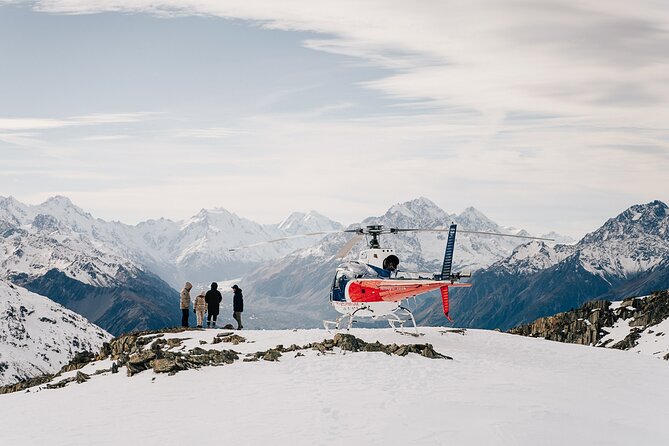
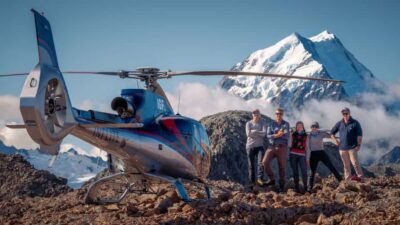
The landing in Aoraki Mount Cook National Park is the heart of the experience. The helicopter settles onto an alpine snowfield, and you have about 10 minutes to step outside, take photographs, and take in the surrounding peaks, broad valleys, and winding rivers.
This is not a long glacier walk. You are outside briefly, and the exact surface depends on the season and current conditions. In some periods, you may stand on snow rather than a blue glacier or heavily crevassed ice. That distinction matters if your main goal is to walk on a glacier.
Still, even a short stop on snow offers something a normal Mount Cook sightseeing day cannot. You are standing high above the valley with no road, building, or marked trail nearby. The helicopter itself becomes part of the scene, and the pilot may help with photographs. Greg was specifically praised for taking pictures and offering useful commentary, while another pilot, Dan, was noted for careful landings and takeoffs.
The landing is weather dependent. In warmer periods, the snow may be limited or absent, and the operator may provide a scenic flight without the white footing you imagined. If snow is essential to your plans, ask about current conditions before paying for the more expensive landing option.
Aoraki Mount Cook from a rare viewpoint
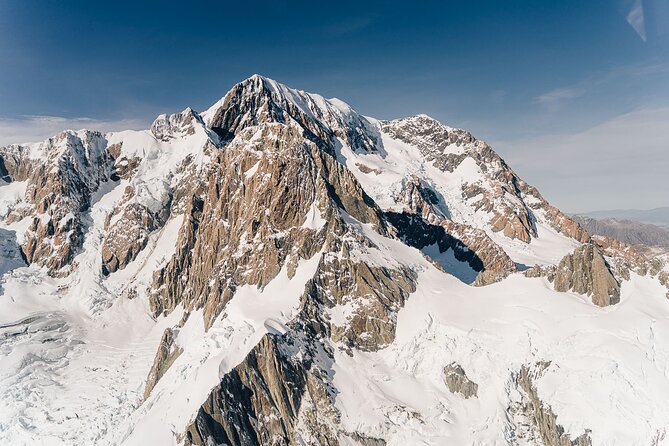
Aoraki Mount Cook, known in Māori as the cloud piercer, rises to 12,217 feet, or 3,724 meters. Seeing it from the air changes your sense of the mountain. From below, you look up at one face or ridge. From the helicopter, you can see how it fits among the surrounding peaks and valleys.
The flight offers a viewpoint that ordinary hiking cannot match within such a short time. You are not being asked to climb, trek for hours, or carry technical equipment. You simply step from the helicopter and look across a high alpine setting.
That convenience is also the limitation. The experience is a quick taste of a vast area, not a substitute for a full-day walk or a mountaineering trip. You get a powerful overview, but only a few minutes on the ground.
For many people, that is exactly the appeal. If you have limited time in the Mount Cook region, the flight covers Ben Ohau, the Southern Alps, Aoraki Mount Cook National Park, and the Tasman Valley in one compact outing.
More Mount Cook trips:
- Mt Cook Small Group Scenic Day Tour from Queenstown
★ 5.0 · 407 reviews - From Christchurch: Mount Cook & Lake Tekapo Day Tour & Lunch
★ 4.6 · 405 reviews - Mount Cook, Lake Tekapo and Tasman Glacier Tour from Christchurch
★ 5.0 · 353 reviews - Tekapo Shuttle: Mt Cook Day Tour via Pukaki & Tasman Lake
★ 4.8 · 307 reviews
Looking down the Tasman Valley
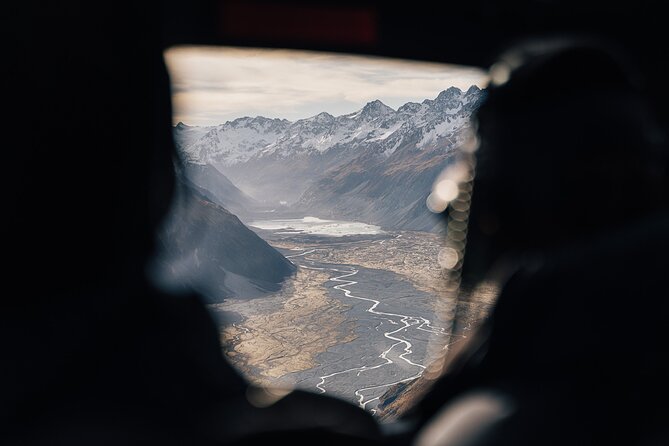
After the alpine stop, the helicopter returns toward Glentanner Park, looking down the Tasman Valley in the direction of Lake Pukaki. This return section helps complete the picture of the region.
The Tasman Valley is marked by broad open spaces, glacial features, and rivers threading through the valley floor. The aerial view lets you follow the shape of the valley rather than seeing only the section beside a road or walking route.
Several people rated the combination of flight, commentary, and landing as the reason the experience felt worthwhile. The scenery is the main attraction, but the pilot’s narration gives the ride structure. Without it, you might spend the whole flight trying to work out which peak is which.
The return to Glentanner also makes this easy to fit into a wider South Island itinerary. You do not need a full day, and the activity ends back at the meeting point.
What the $359.62 price really buys
At $359.62 per person, this is not a casual add-on. You are paying for aircraft operation, a trained pilot, a small group, the scenic flight, the alpine landing, and access to terrain that cannot be reached by car.
The value depends on what you want from Mount Cook. If you mainly want a view of the mountain and already have time for walks in the national park, the cost may feel high. If you want a brief flight over the Southern Alps and the chance to stand on a snowfield, the price is easier to justify.
I would compare it with the cost of a longer flight if your budget allows. One passenger who enjoyed this 35-minute trip said a 40-minute flight, or a departure from the Mount Cook aerodrome, might be worth considering next time. A longer option may give you more time near the main peaks, but the supplied details do not guarantee a particular route or landing.
The most important value warning is the snow. The advertised alpine landing may not mean fresh snow all year. One passenger booked specifically to show a friend snow, only to find that the season did not provide it. If the landing is the reason you are paying, confirm the seasonal conditions first.
Weather, cancellations, and minimum numbers
Mount Cook weather can stop the flight. Strong wind, cloud, or poor visibility may ground the helicopters, and the operator requires suitable conditions for a safe trip. If weather cancels the flight, you can be offered another date or a full refund.
There is also a minimum number of passengers required to operate the flight. A single booking may not be enough, and one passenger arrived for a morning departure only to learn that the flight would not operate because she was the only person booked. This is worth knowing if your schedule is tight.
Communication can also be an issue when conditions change. A cancelled birthday outing involved a long, unnecessary drive after the passenger felt the cancellation had not been communicated early enough. I would keep your phone available on the day, check messages before leaving, and avoid planning a costly same-day connection immediately after the flight.
At the same time, flexible staff have sometimes redirected passengers from Glentanner to the Mount Cook aerodrome when fog affected one location but not the other. That sort of change can save the outing, though you should follow the operator’s instructions rather than arriving at an alternate base without confirmation.
Who will enjoy this flight most
This tour suits you if you want a dramatic view with little physical effort. It works well for families, couples, photographers, and anyone with only part of a day in the Mount Cook area. Most people can participate, and children must be accompanied by an adult.
Children under 15 kilograms must sit on a parent’s lap. The total passenger weight limit is 276 pounds per person. If weight is close to that limit, check the operator’s requirements before booking.
You should choose this experience if the air itself is part of the attraction. The helicopter flight gives you views that are impossible from the valley, and the brief snow stop adds a physical moment to what could otherwise be a purely visual tour.
You may want a different activity if you need guaranteed snow, a long glacier walk, or a full day among the peaks. This is a scenic flight with a short landing, not an extended alpine expedition.
Practical advice for a better outing
Book with some flexibility if you can. The flight is often reserved about 17 days ahead, which suggests that advance planning is sensible, especially during busy periods. But leave room in your itinerary in case weather or minimum numbers cause a change.
Plan to arrive at Glentanner Park in good time for the briefing. Bring warm layers and suitable footwear, even if the valley feels mild. Snow glare can be strong, so sunglasses are useful.
Keep your camera ready, but do not spend the whole landing looking at a screen. Ten minutes passes quickly. Take a few photographs, listen to the pilot, and give yourself time to look across the peaks without a lens in front of your face.
Free cancellation is available if you cancel at least 24 hours before the start time. Changes or cancellations inside that window are not accepted for a refund, except when the operator cancels because of weather or minimum numbers.
Should you book the Mount Cook Alpine Explorer?
I would book this flight if you want a short, high-impact introduction to Aoraki Mount Cook and understand that the snow landing depends on the season and the weather. The strongest reasons are the small group, the pilot commentary, the view over the Ben Ohau Range and Tasman Valley, and the chance to step onto an alpine snowfield.
I would hesitate if your budget is tight or if the snow landing is non-negotiable. Confirm current conditions first, and keep your schedule flexible. For a first aerial look at the Southern Alps, this is a memorable choice. Just buy it for the flight and the mountain views, with the snow landing treated as a welcome bonus.
FAQ
Where does the helicopter flight start?
The experience starts at The Helicopter Line at Glentanner Park, State Highway 80, Glentanner 7999, New Zealand.
Where does the activity end?
The flight ends back at the meeting point at Glentanner Park.
How long does the experience last?
The total trip lasts about 35 minutes, including the alpine landing.
How much time is spent flying?
The flight time is approximately 20 to 25 minutes.
How long is the alpine landing?
The alpine landing lasts approximately 10 minutes.
Is the snow landing guaranteed?
No. The snow landing depends on the season and the conditions on the day.
How many people can ride in the helicopter?
The helicopter seats up to six passengers, and the activity has a maximum group size of six.
Is pilot commentary included?
Yes. The pilot provides narration about the peaks, valleys, and other sights during the flight.
Can children join the tour?
Most children can participate when accompanied by an adult. Children under 15 kilograms must sit on a parent’s lap.
What happens if bad weather cancels the flight?
You will be offered a different date or a full refund if poor weather causes the cancellation.
Just added in Mount Cook
- Queenstown to Mt Cook Small Group Tour (One-Way)★ 5.0 · 25 reviews
- Queenstown to Christchurch via Mt Cook (1 way) (Small Group)★ 5.0 · 6 reviews
- Queenstown to Lake Tekapo via Mt Cook One-Way Small Group Tour★ 4.5 · 13 reviews
- Queenstown to Christchurch One-Way Tour via Mt Cook & Lake Tekapo★ 4.5 · 134 reviews
- Mount Cook Day Tour from Queenstown★ 4.0 · 63 reviews
- Queenstown to Christchurch One Way Tour Via Lake Tekapo & Mt Cook★ 5.0 · 10 reviews
- Mount Cook Tour: Finish at Queenstown, Christchurch or Dunedin★ 5.0 · 3 reviews
- Mount Cook & Lake Tekapo the Ultimate combo from Queenstown★ 5.0 · 3 reviews
Mount Cook Tours, compared.
Mount Cook: Scenic Helicopter Flight with Alpine Landing
Read our review →
Mt Cook Small Group Scenic Day Tour from Queenstown
Read our review →
Mount Cook, Lake Tekapo and Tasman Glacier Tour from Christchurch
Read our review →
Tekapo Shuttle: Mt Cook Day Tour via Pukaki & Tasman Lake
Read our review →
Mt Cook & Tasman Glacier lookout Small Group Tour from Queenstown
Read our review →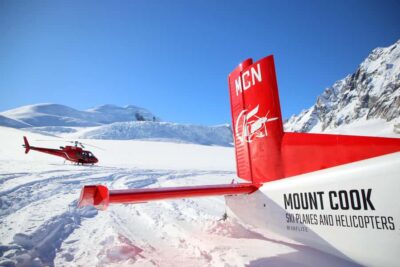
Mount Cook: Ski Plane and Helicopter Glacier Combo Flight
Read our review →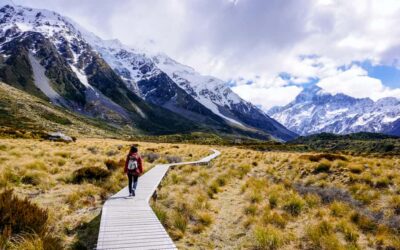
Browse the lists this tour appears in