
REVIEW · MOUNT COOK TOURS
Mount Cook: Mountains High 40 minute Flight
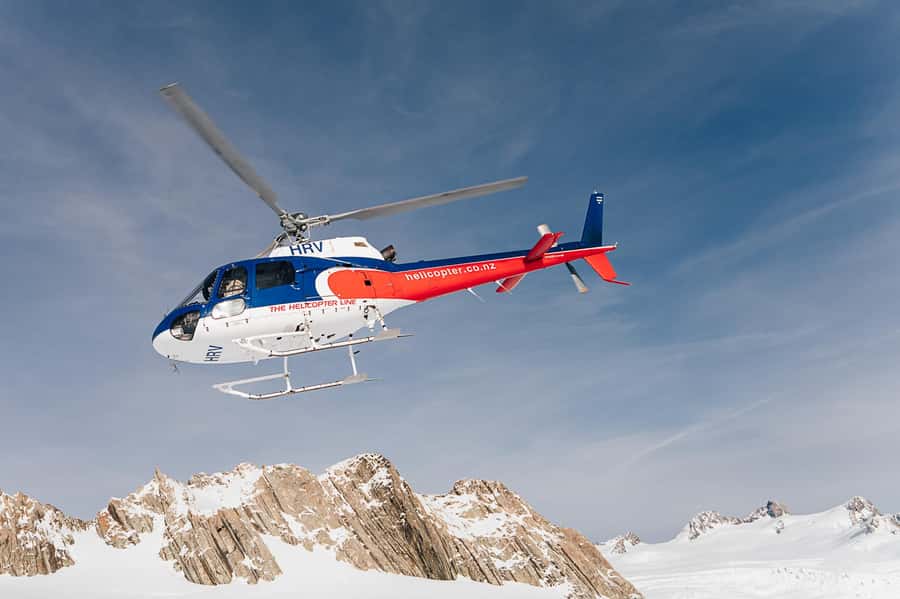
The mountains come right up to you. From Glentanner Park, this 40-minute helicopter flight sweeps past the Hochstetter Icefall and upper Tasman Glacier before setting down in a remote alpine spot, when snow levels allow it. I like the small group of up to six and the chance to stand in the snow rather than only see the peaks through a window. I also like the route back through the Burnett Mountains, with the dry Mackenzie Basin spread below.
The main catch is the weather. Routes, flight times, and landings can change at the pilot’s discretion, and a snow landing is never guaranteed. At $391 per person, this is a major splurge for a 40-minute activity, but it offers access to high mountain country that is difficult to reach any other way.
In This Review
- Key points to know before you fly
- A short flight with a serious mountain setting
- Starting at Glentanner Park near Aoraki/Mount Cook
- Flying toward the Hochstetter Icefall
- Seeing the upper Tasman Glacier from above
- Touching down in a remote alpine place
- Returning over the Burnett Mountains and Mackenzie Basin
- Is $391 a fair price for 40 minutes?
- Who will get the most from this flight?
- Weather, clothing, and practical planning
- Should you book the Mountains High flight?
- FAQ
- How long is the Mount Cook Mountains High flight?
- Where does the flight depart?
- Is an alpine snow landing guaranteed?
- What sights are included on the route?
- How many people can join the flight?
- Is transportation from Aoraki/Mount Cook Village available?
- What should I bring?
- What items are not allowed on board?
Key points to know before you fly
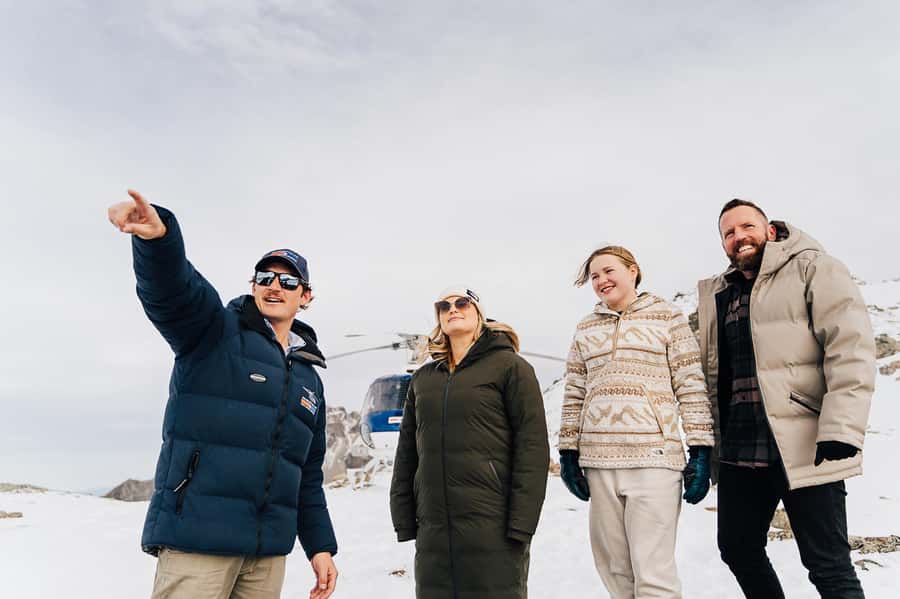
- The alpine landing depends on snow levels: You may step out into a remote snowy setting, but the landing site can change or be unavailable.
- The flight starts at Glentanner Park: Complimentary transport may be available to and from Aoraki/Mount Cook Village.
- The route includes major ice features: Look for the Hochstetter Icefall on Aoraki/Mount Cook and the upper Tasman Glacier.
- The return route adds variety: The Burnett Mountains and broad Mackenzie Basin give you a different view from the flight out.
- The group is limited to six people: That keeps the helicopter experience relatively small and gives each passenger a better chance at the window.
- Bring practical mountain gear: Wear warm clothing and closed-toe shoes, and take a camera instead of a drone, selfie stick, tablet, or iPad.
A short flight with a serious mountain setting
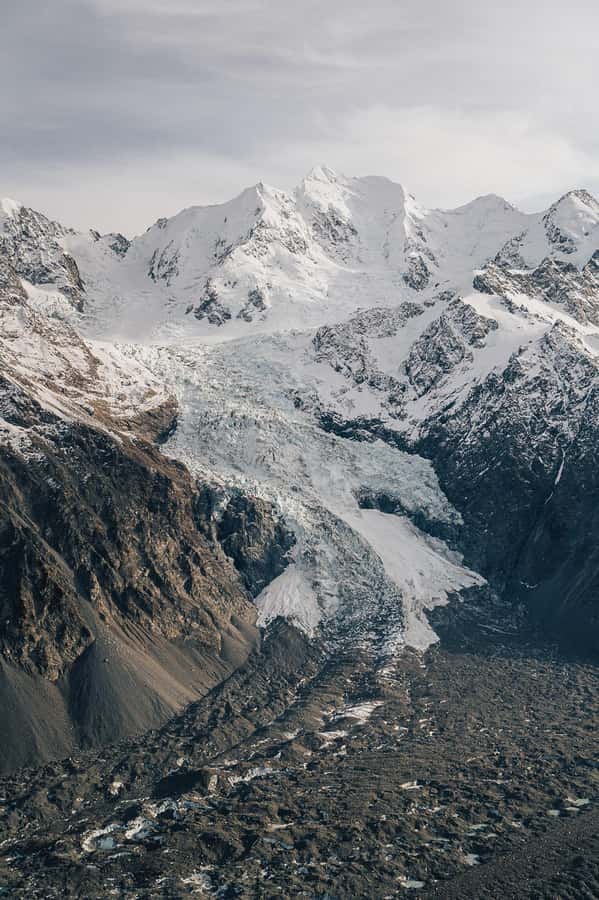
Aoraki/Mount Cook National Park is not a place you understand fully from a roadside lookout. The peaks, icefalls, and glaciers are enormous, and their scale can be hard to read from the valley floor. A helicopter changes that quickly. You rise above the approach roads and see how the ice and rock fit together.
This flight lasts 40 minutes, including the alpine landing. That is long enough for a proper scenic route, but short enough to fit into a busy South Island schedule. I would treat it as a focused mountain flight rather than a full-day outing. You will not spend hours walking on a glacier or hiking to a summit. You will get a high, wide view, a close look at major ice features, and a brief chance to stand in a remote alpine place.
The small group size matters. With a maximum of six participants, the experience should feel less crowded than a large sightseeing departure. It also makes the experience easier to manage when everyone is boarding, listening to the pilot, and getting settled after the landing.
The Helicopter Line Mount Cook operates the flight, with an English-speaking pilot providing commentary. The pilot’s perspective is useful here because the route changes with weather, visibility, and safety conditions. You should think of the advertised path as a strong guide, not a fixed promise.
More Mount Cook trips:
- Mount Cook: Scenic Helicopter Flight with Alpine Landing
★ 4.8 · 442 reviews - Mt Cook Small Group Scenic Day Tour from Queenstown
★ 5.0 · 407 reviews - From Christchurch: Mount Cook & Lake Tekapo Day Tour & Lunch
★ 4.6 · 405 reviews
Starting at Glentanner Park near Aoraki/Mount Cook
The flight begins at The Helicopter Line’s Mount Cook base at Glentanner Park. Complimentary transportation may be provided to and from Aoraki/Mount Cook Village, which is helpful if you are staying in the village and do not have a convenient way to reach the departure point.
Give yourself enough time to arrive ready for a mountain flight. Wear warm clothing even if the weather feels mild in the valley. The temperature can feel very different once you are in the air or standing at an alpine landing site. Closed-toe shoes are required, and practical footwear is a better choice than anything delicate or open.
The base is also where the final decisions are made. Flights, routes, and landing sites depend on conditions. That flexibility is not a flaw. In high mountain country, it is the sensible way to operate. Still, you should keep some room in your day if possible. The stated flight duration is approximate and includes the landing, so the actual route may not match the exact timing you imagined.
Minimum passenger numbers apply. Bookings are coordinated where possible to meet those requirements, so your departure may depend on the operator filling the flight. Confirmation is sent within 48 hours of booking, subject to availability.
Flying toward the Hochstetter Icefall
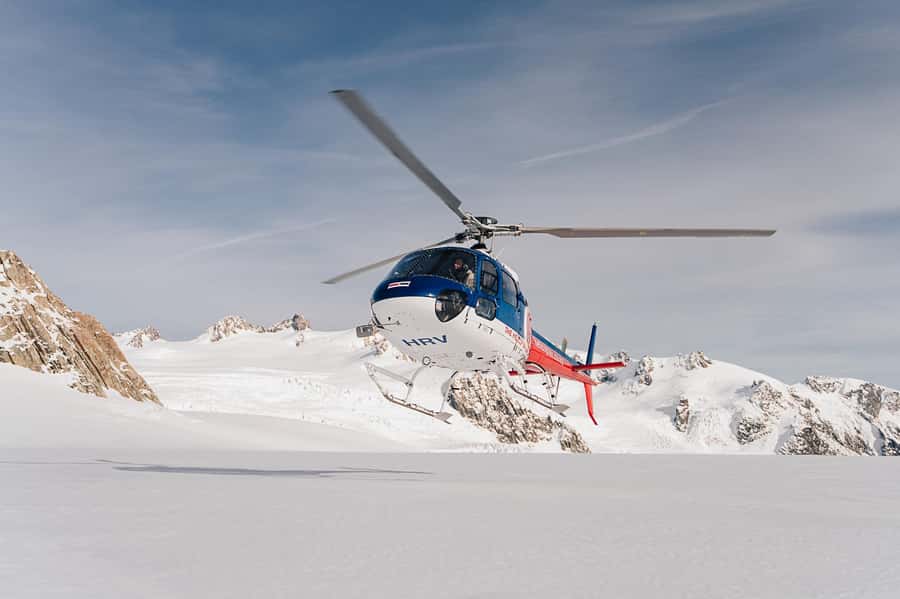
Once airborne, the flight heads toward Aoraki/Mount Cook and the Hochstetter Icefall. This is one of the most powerful parts of the route because it shows the mountain as an active world of ice, not simply a pointed summit in the distance.
An icefall is a steep, broken section of glacier where the ice moves over uneven ground. From the air, you can make out the cracks, folds, and sharp changes in the frozen surface. The Hochstetter Icefall sits on the eastern side of Aoraki/Mount Cook and forms part of the mountain’s dramatic upper setting.
I like this part of the flight because it gives you a sense of scale. A glacier viewed from far away can look like a white ribbon. From a helicopter, the icefall becomes more complex and more imposing. The pilot commentary should help you understand what you are seeing, although the exact viewing angle depends on the route and conditions.
The flight offers one of the better chances to see Aoraki/Mount Cook and the surrounding glacial range from several angles. That does not mean clear views are guaranteed. Cloud, wind, and changing visibility can affect what you see. The pilot may alter the route to find safer or better conditions.
Seeing the upper Tasman Glacier from above
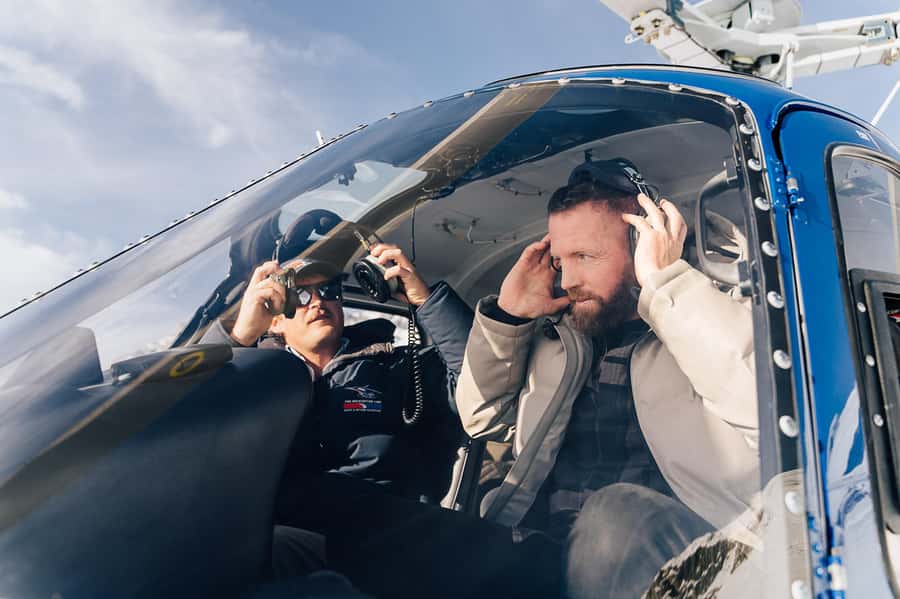
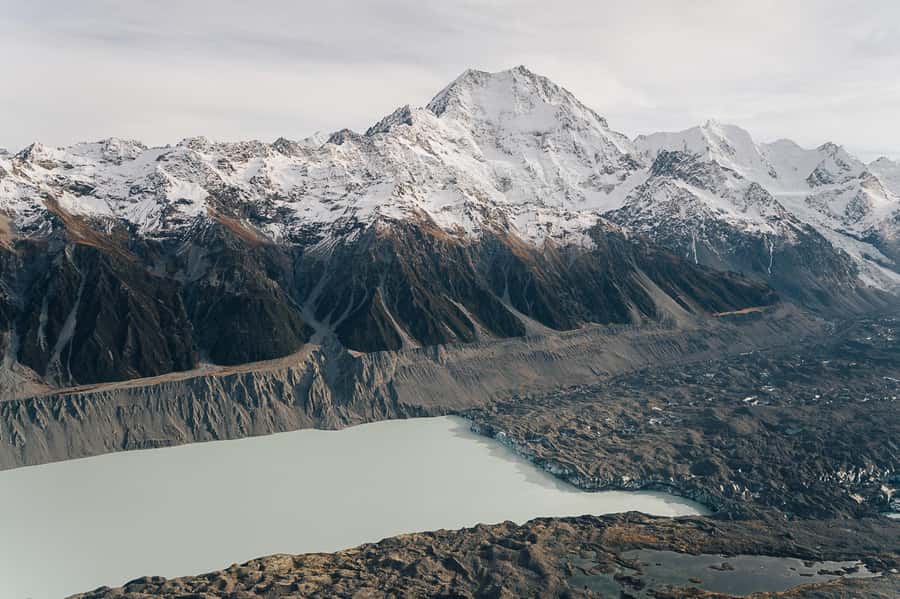
The upper Tasman Glacier adds a second major feature to the flight. It is one of the defining ice formations of Aoraki/Mount Cook National Park, and viewing it from the air helps you grasp its long, broad form.
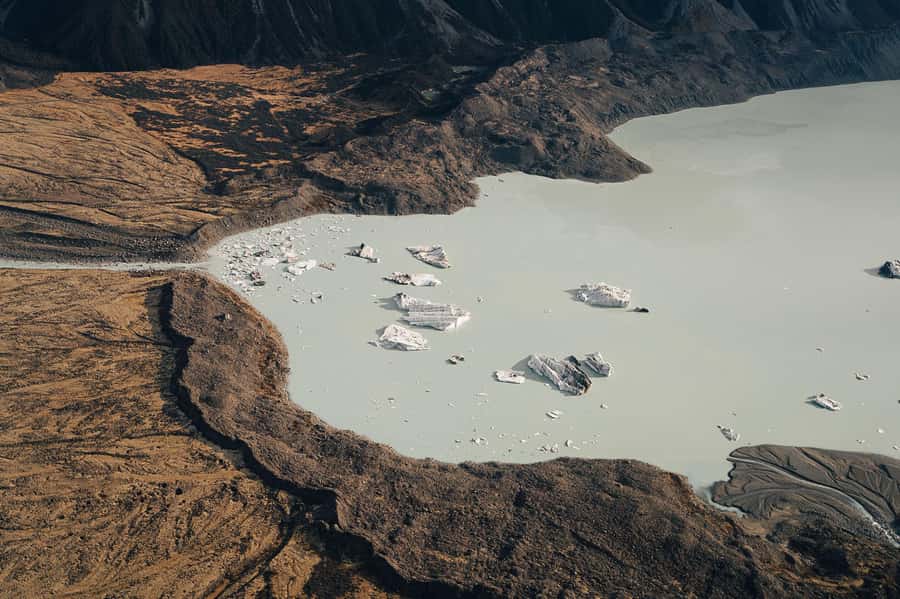
From above, the glacier is part of a much larger system of snowfields, ridges, and mountain valleys. You may notice how the white upper ice gives way to darker, more broken sections lower down. The aerial angle also shows why a glacier is not just a frozen river, but a moving body shaped by steep slopes and changing elevation.
This is where the flight earns part of its price. A road trip can take you near the park’s major viewpoints, but it cannot put you over the upper Tasman Glacier. A hike may bring you to excellent viewpoints, yet it takes far longer and still cannot provide the same high view. You are paying for access, speed, and perspective.
The drawback is that the flight can feel brief if you want extended time at each sight. Forty minutes passes quickly, especially when the route includes travel to the landing site and the return over the Burnett Mountains. If your main goal is to study the glacier in detail, a longer flight may suit you better. If your goal is to see the major features in one compact outing, this length is more practical.
A completely different sort of day out:
- Mount Cook, Lake Tekapo and Tasman Glacier Tour from Christchurch
★ 5.0 · 353 reviews - Tekapo Shuttle: Mt Cook Day Tour via Pukaki & Tasman Lake
★ 4.8 · 307 reviews - Mt Cook & Tasman Glacier lookout Small Group Tour from Queenstown
★ 5.0 · 296 reviews - Mount Cook: Ski Plane and Helicopter Glacier Combo Flight
★ 4.6 · 271 reviews
Touching down in a remote alpine place
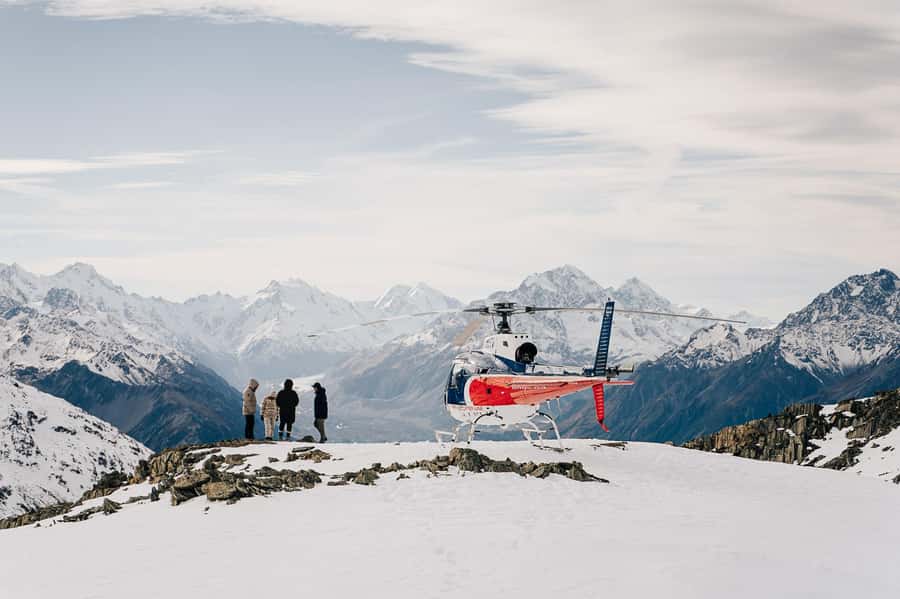
The alpine landing is the emotional center of the experience. Instead of viewing the snow only from the helicopter, you may step onto it, take photographs, and breathe cold alpine air in a place reached by aircraft rather than road or ordinary walking track.
The setting is remote by design. You get a short pause to take in the silence, the snow, and the mountain surroundings. This is also the best moment for photos and videos because you are no longer shooting through a helicopter window.
Snow levels decide if this part happens. That condition deserves serious attention. The tour includes an alpine landing, but it does not promise a snowy landing on every departure. If the snow is too low or conditions do not allow the planned site, the pilot may choose another landing location or adjust the route.
Do not build your entire decision around one perfect photograph. The flight itself remains the main experience. The landing is a valuable bonus when conditions allow it, and the route can still provide strong views if the landing changes.
Bring a camera, but keep your equipment simple. Drones, selfie sticks, tablets, and iPads are not allowed on board for safety. A phone or compact camera is easier to handle, especially when you are dealing with cold air, gloves, and a short time outside.
Returning over the Burnett Mountains and Mackenzie Basin
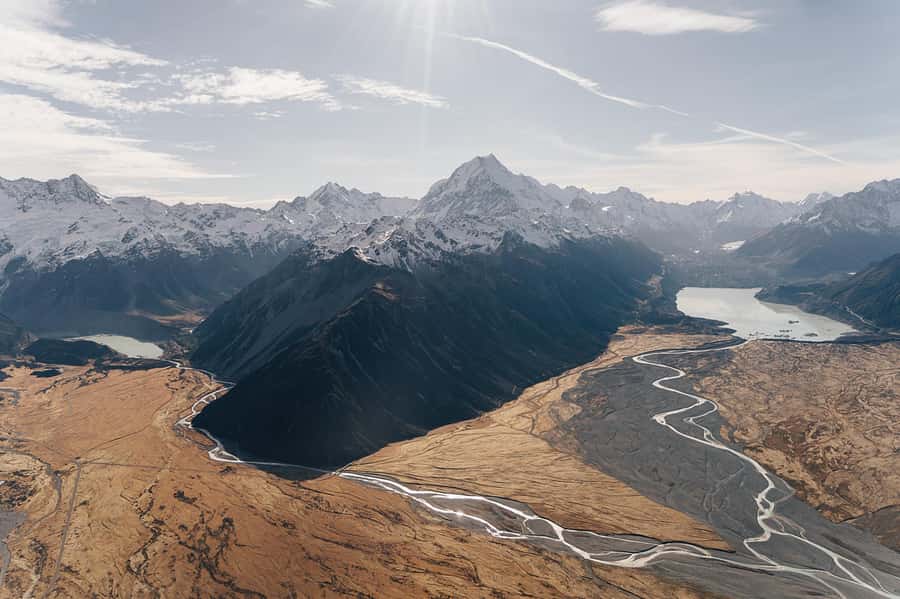
The return route brings a different kind of scenery. The Burnett Mountains face toward Aoraki/Mount Cook, while the expansive Mackenzie Basin opens below. This contrast is one of the clever features of the flight.
Near the national park, the view is all ice, steep slopes, and high peaks. Toward the basin, the scene becomes broad and dry, with much more open country. From the helicopter, you can see the relationship between the mountain range and the basin in a way that is difficult to understand from ground level.
The Mackenzie Basin is especially useful for putting the alpine world into context. It is not just a backdrop beneath the helicopter. It shows how sharply the region changes from high glacial country to open, arid terrain. The Burnett Mountains then guide your view back toward Aoraki/Mount Cook.
I appreciate that the return is not simply the same route in reverse. You get a second set of views, and the pilot commentary can help explain the features below. As always, the precise route depends on weather and the pilot’s judgment.
The helicopter returns to The Helicopter Line’s Mount Cook base at Glentanner Park. From there, transport back to Aoraki/Mount Cook Village may be available if arranged through the operator.
Is $391 a fair price for 40 minutes?
At $391 per person, this is expensive in ordinary sightseeing terms. You are not buying a long tour, a meal, or a full-day excursion. You are paying for a small-group helicopter flight into high mountain country, with an alpine landing when snow conditions allow.
I think the value depends on what you want from your time around Aoraki/Mount Cook. If you have dreamed of seeing the glaciers from above, the cost can make sense. The flight reaches the Hochstetter Icefall, upper Tasman Glacier, Burnett Mountains, and Mackenzie Basin in one compact outing. That combination would require much more time and effort on foot, and some viewpoints cannot be matched from the ground.
If your budget is tight, this should be one of your main splurges rather than an automatic add-on. You might prefer to spend your money on a longer walking route or another park activity. The flight is also less appealing if you are uncomfortable with changing routes or if a snow landing is the only part that interests you.
The price includes concession fees that support conservation and sustainability management. That does not make the cost small, but it gives the fee a practical connection to the protected area you are visiting.
A useful way to judge the price is to ask how much you value access to remote terrain. If the answer is high, the flight offers a strong, concentrated experience. If you mainly want a quick scenic look at the mountain, the cost may feel harder to justify.
Who will get the most from this flight?
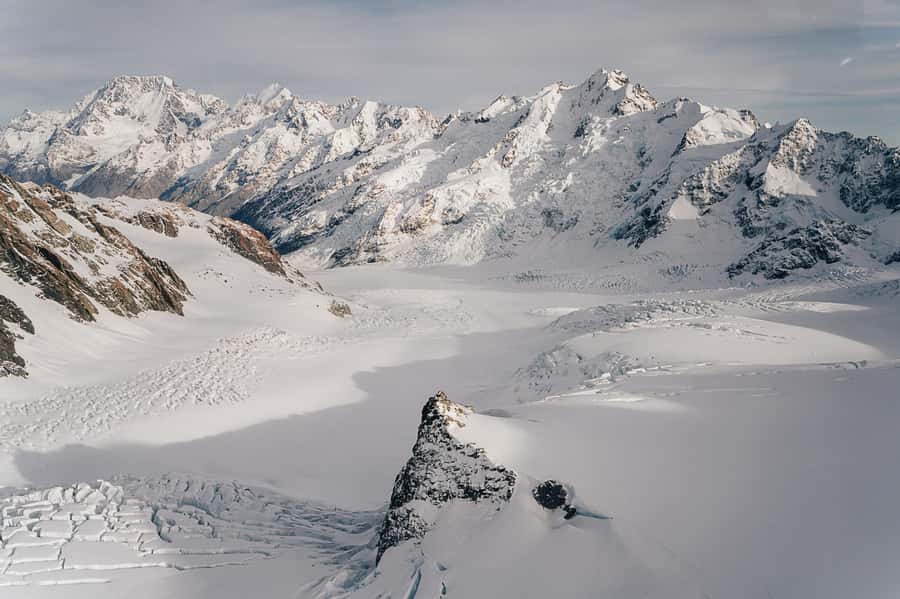
I would recommend this experience to anyone who wants a clear aerial view of Aoraki/Mount Cook National Park without committing to a long excursion. It is also a good fit for photographers, provided you accept that weather and flight routes control your best angles.
The flight suits people who enjoy seeing several types of scenery in one trip: high ice, broken glacier surfaces, mountain ridges, a snowy landing site, and a broad dry basin. The small group size is another plus for couples, families, and anyone who prefers a quieter departure.
Families should pay attention to the infant rule. Children under four years old and under 15 kilograms must sit on an adult’s lap. The activity is wheelchair accessible, though you should discuss your needs with the operator when arranging the booking.
You should reconsider if you need a guaranteed landing, a fixed route, or a long amount of time outside. Mountain flights are controlled by safety and conditions. That is part of the reality, not fine print to ignore.
The English-language commentary also means you can follow the pilot’s information directly if English works for you. If you need another language, the supplied details do not list other guide languages.
Weather, clothing, and practical planning
Warm clothes are essential. Even if you are visiting during a warm month, the alpine air can be cold, and you may land in snow. Closed-toe shoes are required, so choose footwear that feels secure and practical.
Take a camera, but keep your setup manageable. You will have limited time at the landing site, and there is no reason to burden yourself with equipment that cannot be used on board. Drones, selfie sticks, tablets, and iPads are prohibited.
Keep your schedule flexible. Flights can vary because of weather, and routes or landing sites may change at the pilot’s discretion. If you are connecting to another activity immediately afterward, allow extra time rather than planning the day down to the minute.
Cancellation is flexible up to 24 hours before departure for a full refund. You can also reserve now and pay later, which helps if you are arranging a South Island trip before every detail is fixed. Confirmation remains subject to availability, and minimum passenger numbers apply.
Should you book the Mountains High flight?
Book it if you want a short but substantial aerial view of Aoraki/Mount Cook National Park, especially if the upper Tasman Glacier and a possible snow landing appeal to you. The route packs several major sights into 40 minutes, and the small group limit keeps the outing personal.
Skip it if $391 would strain your trip budget, or if you need certainty about the landing and route. The strongest reason to book is not simply the helicopter ride. It is the chance to see the Hochstetter Icefall and upper Tasman Glacier from above, then return over the Burnett Mountains and Mackenzie Basin. If that perspective is worth the splurge, this is a well-focused way to get it.
FAQ
How long is the Mount Cook Mountains High flight?
The flight lasts 40 minutes, and the approximate flight time includes the alpine landing.
Where does the flight depart?
The flight departs from The Helicopter Line at Glentanner Park near Aoraki/Mount Cook.
Is an alpine snow landing guaranteed?
No. The snow landing is subject to snow levels, and flights, landing sites, and routes can change because of weather and the pilot’s discretion.
What sights are included on the route?
The flight passes the Hochstetter Icefall on Aoraki/Mount Cook and the upper Tasman Glacier. The return route goes through the Burnett Mountains, with views toward the Mackenzie Basin.
How many people can join the flight?
The activity is a small-group experience limited to six participants.
Is transportation from Aoraki/Mount Cook Village available?
Complimentary transportation may be provided to and from Aoraki/Mount Cook Village.
What should I bring?
Bring warm clothing, a camera, and closed-toe shoes.
What items are not allowed on board?
Drones, selfie sticks, tablets, and iPads are not allowed for safety reasons.
Just added in Mount Cook
- Christchurch to Queenstown via Lake Tekapo and Mt Cook (1 way)★ 4.5 · 60 reviews
- Private Mt Cook Day Tour From Christchurch via Lake Tekapo★ 4.5 · 5 reviews
- Mt Cook & Tekapo Day Tour from Christchurch (lunch included)★ 5.0 · 145 reviews
- Christchurch to Mt Cook via Tekapo (1 way) (Small Group)★ 4.5 · 8 reviews
- Explore Mount Cook from Christchurch★ 4.5 · 34 reviews
- Lake Tekapo Stargazing & Mount Cook 2-Day Tour from Christchurch★ 5.0 · 4 reviews
- Christchurch to Queenstown One Way Tour Via Lake Tekapo & Mt Cook★ 5.0 · 10 reviews
- Christchurch to Queenstown One-Way Tour via Mt Cook & Lake Tekapo★ 4.5 · 76 reviews
Mount Cook Tours, compared.
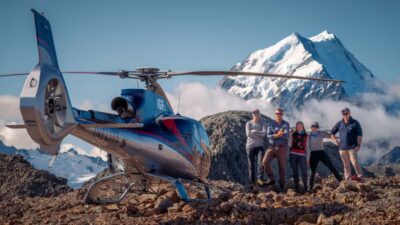
Mount Cook: Scenic Helicopter Flight with Alpine Landing
Read our review →
Mt Cook Small Group Scenic Day Tour from Queenstown
Read our review →
Mount Cook, Lake Tekapo and Tasman Glacier Tour from Christchurch
Read our review →
Tekapo Shuttle: Mt Cook Day Tour via Pukaki & Tasman Lake
Read our review →
Mt Cook & Tasman Glacier lookout Small Group Tour from Queenstown
Read our review →
Mount Cook: Ski Plane and Helicopter Glacier Combo Flight
Read our review →
Browse the lists this tour appears in