
REVIEW · MOUNT COOK TOURS
Mt Cook: 55-Minute Scenic Flight in Helicopter or Ski Plane
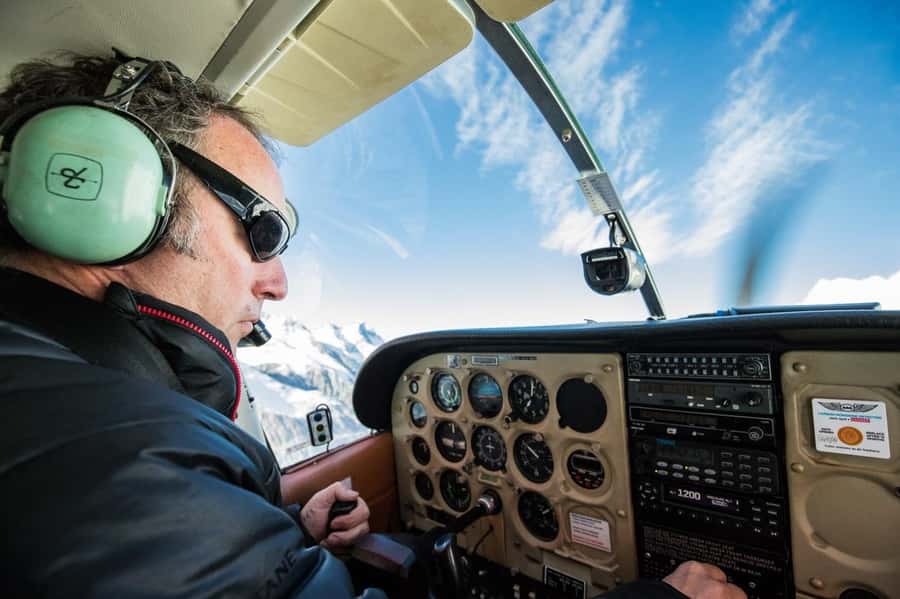
See Aoraki from the sky. This 55-minute flight gives you a fast, thrilling view of the Southern Alps, with routes around Mount Cook, Mount Tasman, and Mount Sefton. I like the choice between a helicopter and ski plane, and I like that a small group of up to six keeps the flight personal. The flight also reaches Fox and Franz Josef Glaciers, giving you a much broader view than a short lookout visit.
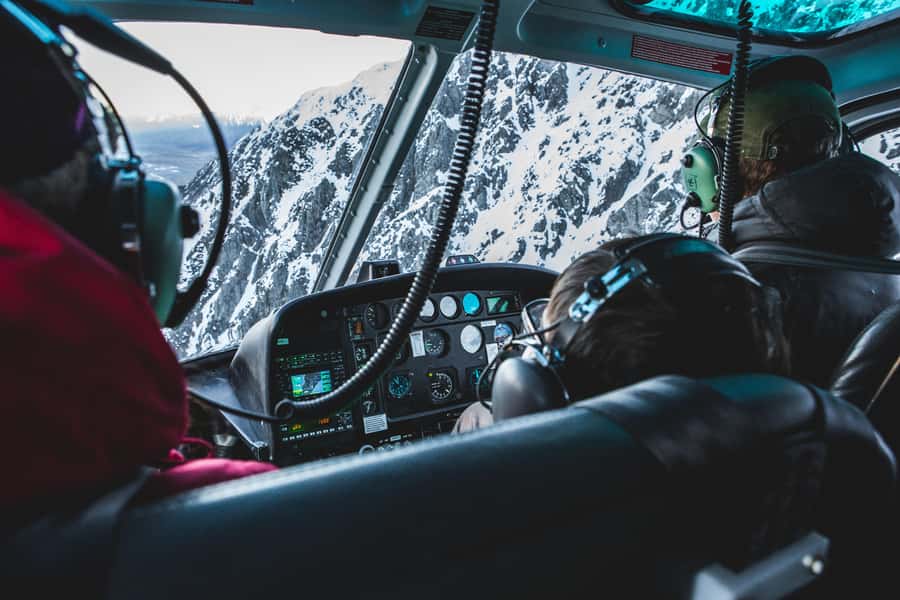
The main caution is seating. One passenger reported poor visibility from the middle seat behind the rotor blade, pilot, and front passenger. Weather can also cancel or shorten the flight, so you should keep your schedule flexible and ask about seating before takeoff.
In This Review
- Key points to know before booking
- Why this flight is worth considering
- Takeoff and the first views over Mount Cook
- Crossing the Main Divide to Fox and Franz Josef Glaciers
- Along the Tasman Sea, then back toward Tasman Glacier
- The Tasman route, Grand Plateau, and Hochsteter Icefall
- Descending over Tasman Terminal Lake
- Helicopter or ski plane: which should you choose?
- Small group service and the human side of the flight
- Weather, visibility, and the real risk of cancellation
- Is the NZ$447 price good value?
- Who will enjoy this most?
- What I would do before booking
- Should you book the Mt Cook scenic flight?
- FAQ
- How long is the scenic flight?
- Is the flight by helicopter or ski plane?
- What mountains can I see?
- Which glaciers are included in the route?
- Does the flight include a glacier landing?
- Can I use my phone or camera?
- Can I bring a bag or selfie stick?
- What happens if bad weather cancels the flight?
- Is there a weight limit?
Key points to know before booking
- Two aircraft choices: Fly by helicopter or ski plane, depending on availability and conditions.
- A full Southern Alps route: Cross the Main Divide, reach the West Coast, then return over the Tasman Glacier.
- Glacier flying is the star: Look for Fox, Franz Josef, and Tasman Glaciers from above.
- Aoraki Mount Cook comes late: The route passes beneath the mountain’s east face before descending toward Tasman Terminal Lake.
- Small group size: The aircraft carries no more than six participants, though your exact seat can affect your view.
- Weather matters: You receive a full refund or a rescheduled flight if the operator cancels for safety reasons.
Why this flight is worth considering
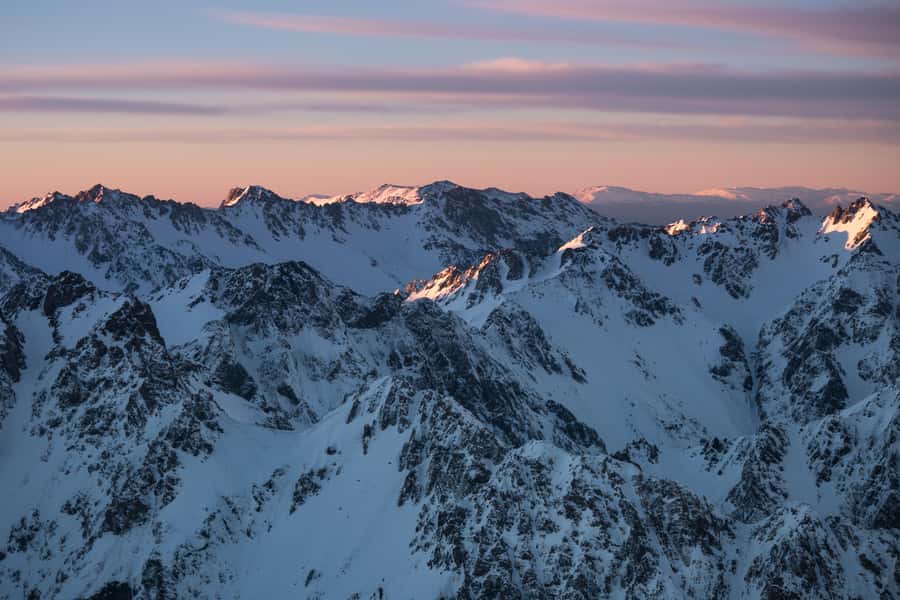
Aoraki Mount Cook National Park is hard to grasp from the ground. Roads and walking tracks show you one valley at a time. From the air, the Southern Alps unfold as one connected system of snow, ice, ridges, and river valleys.
That change in scale is the strongest reason to book. In 55 minutes, you can see the eastern side of the Alps, cross toward the West Coast, follow the Tasman Sea, and return across the high peaks. It is a lot of scenery in less than an hour, but the route has enough variety to keep the flight from feeling repetitive.
I also like the choice of aircraft. A helicopter may suit you if you want the compact, direct feel of rotor flight. A ski plane offers the unusual possibility of landing and taking off on a glacier, as one passenger experienced. The aircraft used for your departure can depend on weather, weight limits, and operational decisions, so treat the choice as a preference rather than a guarantee.
The flight includes live English commentary from the guide. That matters here because the views come quickly. You may not know which glacier or icefall you are looking at without help, especially when several snow-covered ridges appear together.
More Helicopter Flights in Mount Cook:
- Mount Cook: Scenic Helicopter Flight with Alpine Landing
★ 4.8 · 442 reviews - Mount Cook: Ski Plane and Helicopter Glacier Combo Flight
★ 4.6 · 271 reviews - Mount Cook: 3-Hour Tasman Glacier Helicopter Ride and Hike
★ 4.9 · 235 reviews
Takeoff and the first views over Mount Cook
The flight begins with views almost immediately. That is useful if you are nervous about spending time waiting for the main sight. The Southern Alps are not a slow build. Snow-covered peaks, steep valleys, and ice fields surround the aircraft from the start.
The first stage also gives you a feel for the aircraft. A helicopter can feel close to the peaks, with the terrain appearing just outside the windows. A ski plane offers a different character, with its wide flight path and glacier landing capability when conditions allow.
You should keep your camera or phone ready, but do not let it occupy the whole flight. The operator allows both during the trip, and the views change quickly. Bags and selfie sticks are not allowed, so bring only what you can use comfortably without blocking another passenger.
A practical point is seating. A small aircraft does not mean every seat has the same sightline. One passenger found the center seat behind the rotor blade and the front pair especially limiting. If you care about photography, ask the staff how seating is arranged and which aircraft is operating that day.
Crossing the Main Divide to Fox and Franz Josef Glaciers
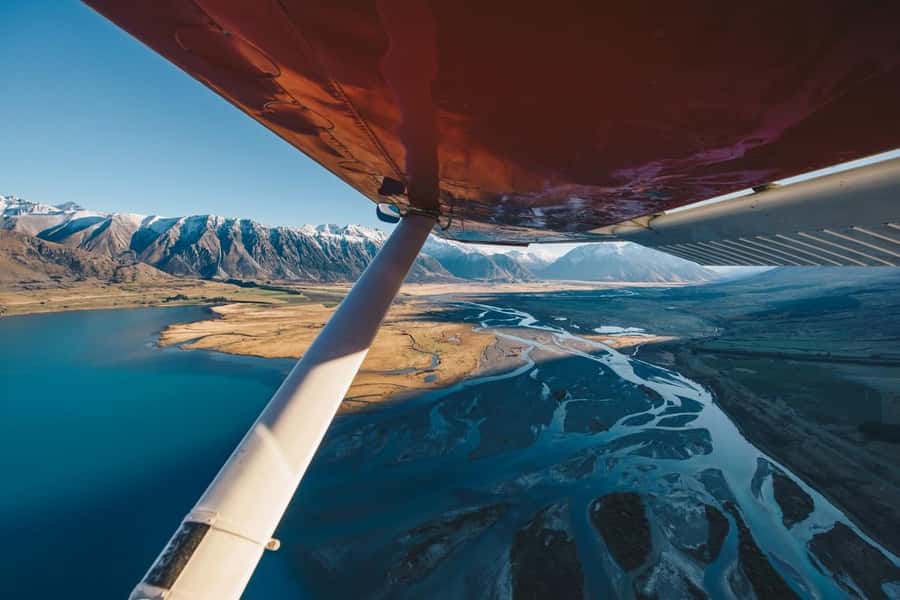
The route then heads across the Main Divide toward the West Coast. This crossing is one of the most valuable parts of the trip because it shows how quickly the Southern Alps change from one side to the other.
You will see the Fox and Franz Josef Glaciers from above. From ground level, each glacier is usually experienced through a single valley or viewing area. From the aircraft, you can follow the ice through the larger mountain system and understand its scale more clearly.
The glaciers are not just isolated white features. They cut through dark rock and snow-covered peaks, creating long lines that guide your eye through the scene. Your guide’s commentary helps identify what you are seeing, which is particularly helpful when cloud or snow makes the boundaries less obvious.
This section also shows why weather is a serious factor. Low cloud can hide the peaks, while poor visibility may leave you with only partial views. The operator may shorten, reschedule, or cancel the flight when conditions are unsafe. That is frustrating if you have planned tightly, but it is the right tradeoff for an aircraft operating near mountains and ice.
Along the Tasman Sea, then back toward Tasman Glacier
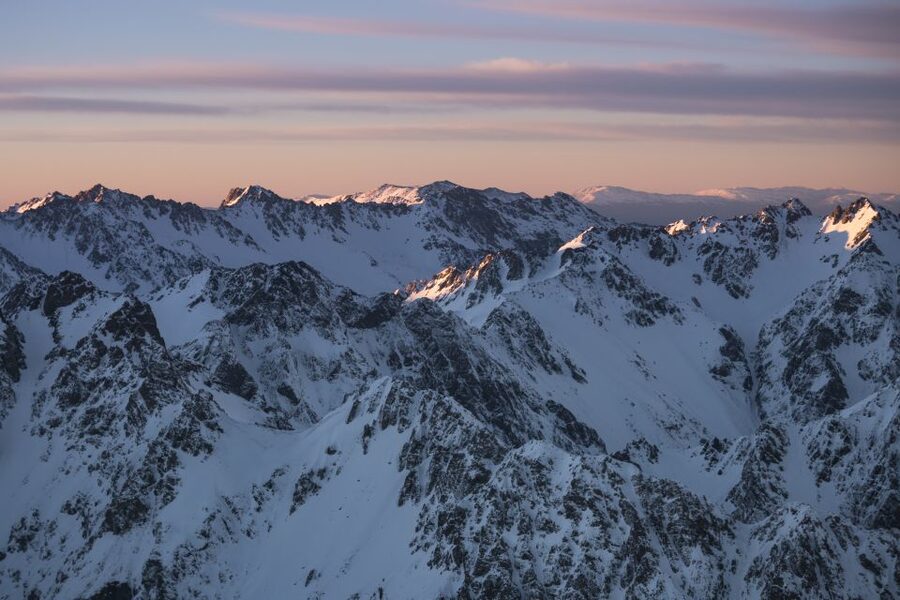
After reaching the West Coast, the aircraft tracks north along the Tasman Sea before crossing the Southern Alps again. The change from glacier valleys to the coast gives the flight a strong sense of movement.
The return crossing brings you toward the Tasman Glacier, the major focus of the second half. Seeing the glacier from above helps you understand its position among the surrounding peaks and ice fields. The route is not simply a loop around one mountain. It links the West Coast glaciers with the eastern side of the park.
If your aircraft lands on a glacier, the moment can be especially memorable. One passenger described a ski plane landing and taking off from a glacier, which is a rare feature for a scenic flight. Do not assume every departure includes a glacier landing, though. The supplied details present it as something that can happen on the ski-plane experience, not a fixed part of every flight.
The aircraft may also be changed if the combined passenger weights reach the safety limit. Passengers over 254 pounds, or 115 kilograms, cannot take part, and the operator may reschedule a flight if the group’s total weight reaches the maximum. This is routine aviation safety, but it is worth understanding before you pay for a fixed time slot.
More Mount Cook trips:
- Mt Cook Small Group Scenic Day Tour from Queenstown
★ 5.0 · 407 reviews - From Christchurch: Mount Cook & Lake Tekapo Day Tour & Lunch
★ 4.6 · 405 reviews - Mount Cook, Lake Tekapo and Tasman Glacier Tour from Christchurch
★ 5.0 · 353 reviews - Tekapo Shuttle: Mt Cook Day Tour via Pukaki & Tasman Lake
★ 4.8 · 307 reviews
The Tasman route, Grand Plateau, and Hochsteter Icefall
The flight continues south down the Tasman Glacier, bringing you into the central mountain section of the route. Here the named features become important: the Grand Plateau and Hochsteter Icefall are not just points on a map. They show different forms of high-altitude ice.
The Grand Plateau is a broad snow and ice area, while the Hochsteter Icefall is more broken and dramatic. From above, you can compare the smooth open surface with the fractured ice below. This contrast gives the commentary a useful job. Without explanation, you might see only white snow and shadows. With place names and context, the scenery becomes easier to read.
The route passes under the east face of Aoraki Mount Cook. This is the moment many people are waiting for. Aoraki is New Zealand’s highest mountain, and seeing its east face from an aircraft gives you a perspective that a road or ordinary walking track cannot provide.
The flight does not linger at a single viewpoint for a long time. You are moving throughout the 55 minutes, and the pilot must keep to a safe route. If you want a slow, quiet look at one peak, a longer glacier flight may suit you better. If you want a broad survey with many named features, this itinerary makes better use of your time.
Descending over Tasman Terminal Lake
The final section descends over Tasman Terminal Lake. It is a fitting end because the lake shows where the glacier’s journey meets the lower valley.
The descent also gives you a last chance to connect the high ice with the terrain below. You have seen the upper glacier, the plateau, the icefall, and the mountain face. Now the route drops toward the terminal area, bringing the flight back to a more familiar scale.
A 55-minute trip sounds short, but the planned route is quite full. You will not spend the entire time circling Mount Cook. You will cross to the West Coast, travel along the Tasman Sea, cross the Alps again, and then return down the Tasman route. That variety is one reason I consider the duration sensible for the price.
Helicopter or ski plane: which should you choose?
The helicopter and ski plane provide different kinds of excitement, but the supplied details do not guarantee a particular aircraft for every booking. Availability, safety, weather, and group weight all matter.
Choose the helicopter if you prefer a compact aircraft and the feeling of flying close to the mountain walls. It may also appeal if your main goal is a direct aerial tour without hoping for a glacier landing.
Choose the ski plane if the idea of landing on snow or ice is a major part of the appeal. A previous flight included a glacier landing and takeoff, making the aircraft itself part of the adventure. Still, you should confirm the day’s aircraft and route rather than assuming a landing is included.
Whichever aircraft you take, ask about the seating arrangement. The small group limit is helpful, but limited seats can make the exact position more important. A clear view is not guaranteed from every place inside the aircraft.
Small group service and the human side of the flight
With a maximum of six participants, this is a more personal experience than a large sightseeing flight. You have a better chance of hearing the English commentary clearly and asking a quick question before or after the flight.
The staff also appear willing to handle changes with care. One passenger’s partner had to cancel because of fear, and the team responded with understanding. When the weather first shortened the flight and later caused a cancellation, the staff arranged a helicopter flight instead. That kind of flexibility is valuable in the mountains, where plans can change through no fault of your own.
Pilot Angus received specific praise for making the trip enjoyable. You should not book based on one pilot being guaranteed, but it is reassuring to know the operating team has made a good impression on past departures.
There is no food or drink included. That is not a major problem for a 55-minute flight, but you should eat and drink before or after the experience if it fits your schedule. Comfortable clothes are recommended, and simple clothing is the sensible choice for a small aircraft.
Weather, visibility, and the real risk of cancellation
Mountain flying depends heavily on visibility. Even if the sky looks reasonable at the airfield, cloud can obscure the high peaks or make a planned route unsafe.
The operator will offer a full refund or rescheduled flight if weather causes a cancellation. That protection makes booking less risky, but a rescheduled flight is only useful if you have spare time. I would avoid placing this activity on the final morning of a South Island itinerary.
One booking was canceled for safety reasons, and another flight was first shortened because of changing weather before a later flight was canceled. These changes are inconvenient, but they show why the operator may adjust the plan rather than force a full route in poor conditions.
If the flight matters greatly to you, leave a buffer in your schedule. The best plan is to book early enough in your stay that you still have another day available. Keep your phone accessible for updates, and do not arrange a tight connection immediately afterward.
Is the NZ$447 price good value?
At $447 per person, this is a major travel expense. I would not call it a casual add-on, especially for a family or group. The value depends on how important the Southern Alps are to your New Zealand trip.
The price covers 55 minutes in the air, a safety briefing, live English commentary, and a route that reaches both the West Coast glaciers and the Aoraki Mount Cook area. You are not paying for a quick circle over one valley. You are paying for access to a large area that would take much longer to understand from the ground.
I think the price makes sense for a once-in-a-lifetime New Zealand trip, particularly if you want to see glaciers without committing to a longer flight or strenuous walk. It is less attractive if you are mainly looking for a close view of Mount Cook, since shorter ground-based viewpoints may cost far less.
The possibility of a ski-plane glacier landing adds value if it happens, but do not count on that feature unless the operator confirms it. The core value is the aerial route and the chance to see several major ice features in one flight.
Who will enjoy this most?
This flight suits you if you want maximum scenery in a limited amount of time. It is also a strong choice if you have limited mobility but can safely board the aircraft, since the route gives you access to remote mountain areas without a long walk.
The activity is not suitable for people with mobility impairments, and it has a maximum passenger weight of 115 kilograms. You should check your personal situation with the operator if boarding or seating could be difficult.
Photographers may love the access but should manage expectations. You can use a camera and phone, yet glare, reflections, aircraft parts, and seat position may affect your photographs. A phone is easier to handle than a large camera in a small cabin, and selfie sticks are prohibited.
This is also a good option for people who want a grand overview rather than a slow ground visit. If your priority is walking on a glacier, the aircraft type and conditions become especially important. If your priority is seeing Mount Cook, Tasman Glacier, Fox Glacier, and Franz Josef Glacier in one trip, the route is more convincing.
What I would do before booking
I would first check the forecast and make sure I had flexibility on another day. Weather is the biggest threat to the experience, not the price or the 55-minute duration.
I would also ask three simple questions:
- Which aircraft is likely to operate?
- How is seating assigned?
- Is a glacier landing planned, or is this an aerial-only flight?
The answers can change how you judge the price. I would wear comfortable clothes, leave bags and selfie sticks behind, and keep my phone ready but secure. If you are sensitive to flight anxiety, tell the staff before departure. Their response to a passenger who canceled because of fear suggests that a calm, practical conversation is worthwhile.
Should you book the Mt Cook scenic flight?
I would book it if Aoraki Mount Cook and the Southern Alps are central to your New Zealand plans, and if $447 fits your budget. The route covers a remarkable amount of ground, from Fox and Franz Josef Glaciers to the Tasman Glacier, Grand Plateau, Hochsteter Icefall, and the east face of Aoraki.
I would hesitate only if your schedule is rigid, your budget is tight, or you need a guaranteed clear view from a particular seat. The flight can be shortened, rescheduled, canceled, or changed between helicopter and ski plane because of weather and safety limits.
For the best chance of a strong experience, book early in your stay, keep a backup day, and ask about seating. If conditions cooperate, this is one of the most efficient ways to understand the scale of New Zealand’s highest mountain country.
FAQ
How long is the scenic flight?
The flight lasts 55 minutes.
Is the flight by helicopter or ski plane?
You can take the scenic flight by helicopter or ski plane. The operating aircraft can depend on conditions, availability, and safety requirements.
What mountains can I see?
The route includes views of Mount Cook, also called Aoraki, Mount Tasman, and Mount Sefton.
Which glaciers are included in the route?
You can see Fox Glacier, Franz Josef Glacier, and Tasman Glacier from the air.
Does the flight include a glacier landing?
A ski-plane flight may land and take off from a glacier, but a glacier landing is not stated as guaranteed for every departure.
Can I use my phone or camera?
Yes. You can use a camera and phone during the flight.
Can I bring a bag or selfie stick?
No. Bags and selfie sticks are not allowed.
What happens if bad weather cancels the flight?
You will be offered a full refund or a rescheduled tour if the operator cancels because of weather.
Is there a weight limit?
Yes. The activity is not suitable for people over 254 pounds, or 115 kilograms. The flight may also be rescheduled if the combined passenger weights reach the aircraft’s maximum safety limit.
Just added in Mount Cook
- Christchurch to Queenstown via Lake Tekapo and Mt Cook (1 way)★ 4.5 · 60 reviews
- Private Mt Cook Day Tour From Christchurch via Lake Tekapo★ 4.5 · 5 reviews
- Mt Cook & Tekapo Day Tour from Christchurch (lunch included)★ 5.0 · 145 reviews
- Christchurch to Mt Cook via Tekapo (1 way) (Small Group)★ 4.5 · 8 reviews
- Explore Mount Cook from Christchurch★ 4.5 · 34 reviews
- Lake Tekapo Stargazing & Mount Cook 2-Day Tour from Christchurch★ 5.0 · 4 reviews
- Christchurch to Queenstown One Way Tour Via Lake Tekapo & Mt Cook★ 5.0 · 10 reviews
- Christchurch to Queenstown One-Way Tour via Mt Cook & Lake Tekapo★ 4.5 · 76 reviews
Mount Cook Tours, compared.
Mount Cook: Scenic Helicopter Flight with Alpine Landing
Read our review →
Mt Cook Small Group Scenic Day Tour from Queenstown
Read our review →
Mount Cook, Lake Tekapo and Tasman Glacier Tour from Christchurch
Read our review →
Tekapo Shuttle: Mt Cook Day Tour via Pukaki & Tasman Lake
Read our review →
Mt Cook & Tasman Glacier lookout Small Group Tour from Queenstown
Read our review →
Mount Cook: Ski Plane and Helicopter Glacier Combo Flight
Read our review →
Browse the lists this tour appears in