

REVIEW · NAPIER TOURS
Napier: Cape Kidnappers Gannet, Nature & Sightseeing Tour
Birds, cliffs, and a very bumpy road make a memorable morning. This three-hour outing takes you across the Cape Kidnappers area to one of New Zealand’s most remarkable wildlife sights, a mainland gannet colony where you can watch thousands of birds from only a few feet away. I especially like the close viewing and the local commentary, which adds Maori stories, farm history, and conservation details to the drive. The main consideration is transport: the route can be rough, the rear seats may feel cramped, and the bus has received mixed comments about warmth and sound.
At $59 per person, this is good value if you want to see Cape Kidnappers without a long walk or a costly private outing. Guides such as Marcus, Jan, Trevor, Marty, and Garth have been praised for making the ride as interesting as the colony itself. Bring a warm jacket, even in summer. The cape is exposed, windy, and the gannets themselves are not shy about announcing their presence.
In This Review
- Key points to know before you go
- Reaching Cape Kidnappers from Te Awanga
- Forest, reserves, and local stories along the route
- Arriving at the gannet colony
- Choosing the right month for chicks and courtship
- Why the no-walking format matters
- Photography and the rhythm of the visit
- Is $59 good value for three hours?
- Who will enjoy this Cape Kidnappers tour most?
- Practical tips for a better morning
- Should you book it?
- FAQ
- Where does the Cape Kidnappers gannet tour meet?
- How long does the tour last?
- Is walking required?
- When can I see the gannets?
- What should I bring?
- Are hotel transfers or food included?
Key points to know before you go
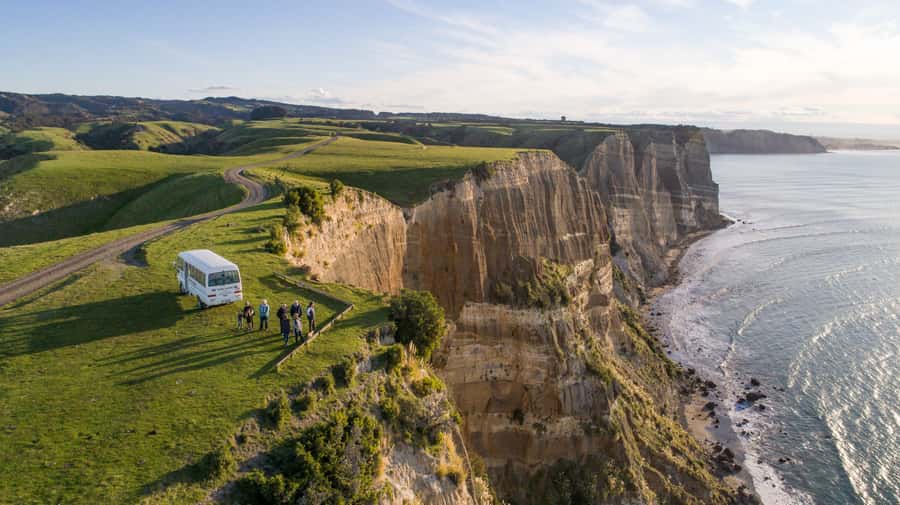
- Thousands of gannets at eye level: The colony contains around 20,000 birds, with adults and chicks packed into orderly nesting rows.
- No strenuous walk required: An air-conditioned 4×4 coach takes you across private land and close to the colony.
- The drive is part of the tour: Expect views of cliffs, farmland, forest, reserves, and other native birds along the way.
- Best season is September to early April: Chicks are present in December and January, while September shows the adults returning to prepare nests.
- Guides make a real difference: Commentary combines bird facts with Maori legends, local stories, conservation work, and humor.
- Bring warmth and patience: The cape can be chilly and windy, and the road may be bumpy or slow in places.
Reaching Cape Kidnappers from Te Awanga
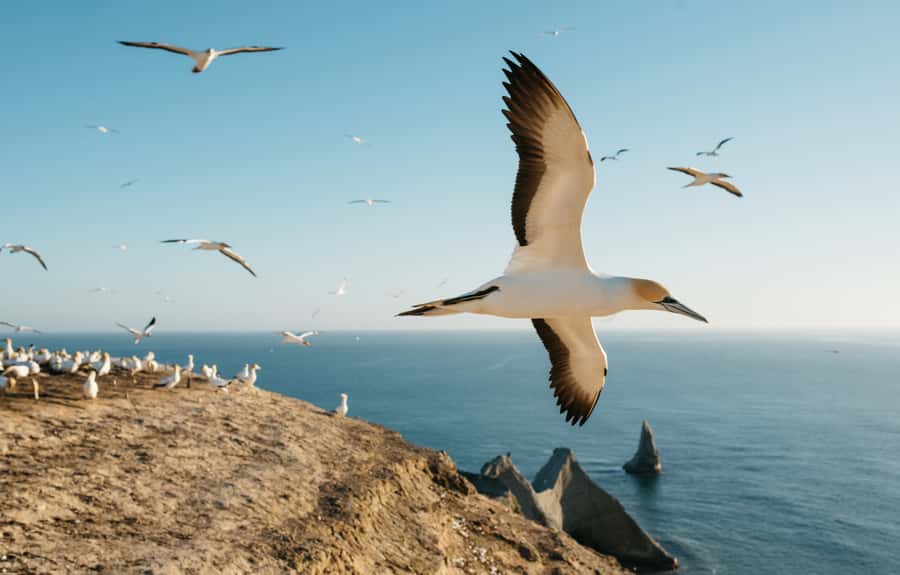
The tour begins at Gannet Safaris Overland, 396 Clifton Road in Te Awanga. Look for the Gannet Safaris sign beside the road. Hotel pickup and drop-off are not included, so you need to arrange your own way to the meeting point.
From there, you board a comfortable air-conditioned 4×4 coach for the journey toward the cape. This is not simply a shuttle ride. Your driver-guide provides a running commentary as the road crosses private land and passes through the wider Cape Kidnappers area.
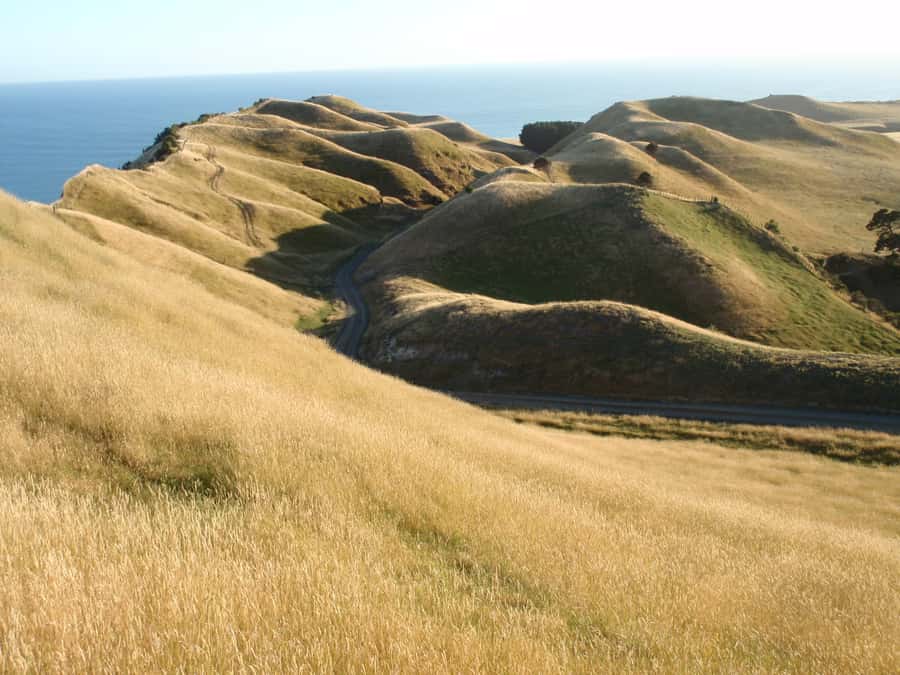
The scenery changes along the way. You may look across open farmland, coastal cliffs, production forest, and protected native areas. The geological formations are a major part of the outing, and several stops provide views across this dramatic part of Hawke’s Bay.
The road is one of the tour’s small adventures. Some sections are steep or bumpy, although the driver handles them in the coach rather than asking you to walk. One practical point is worth knowing: people sitting in the back row may hear the commentary less clearly, and the suspension can feel more noticeable there. If you have a choice of seat, sitting closer to the guide should make the ride more comfortable.
A few more to weigh up in Napier
- Top-Rated Hawke’s Bay Wine Tour – Small Group
★ 5.0 · 256 reviews - Shore Excursion: Scenic Rafting from Napier
★ 5.0 · 179 reviews - Guided 10am Morning Art Deco Walk From Napier Art Deco Trust
★ 4.5 · 167 reviews
Forest, reserves, and local stories along the route
The Cape Kidnappers outing is stronger because it gives you more than a single bird stop. Along the way, you visit a native New Zealand forest and view a predator-proof reserve. These places help explain the work required to protect native wildlife in New Zealand.
The reserve also gives you a chance to look for other species. Sightings can include native birds such as kaka, tui, rifleman, and saddleback, though no particular bird can be guaranteed. The presence of these birds adds another layer to the trip, especially if you care about conservation as much as photography.
Your guide also puts the area into human context. Maori legends and local stories form part of the commentary, along with accounts of the land and the families connected with it. Some guides have grown up locally or worked on the surrounding farms, so the information is not limited to memorized bird facts.
Jan has been praised for mixing local knowledge with a warm, entertaining style. Marcus has been noted for funny, clear commentary, while Trevor has made the drive feel like an important part of the outing rather than time spent waiting for the main attraction. The exact guide changes, but the quality of the commentary is one of the strongest reasons to choose this tour.
Arriving at the gannet colony
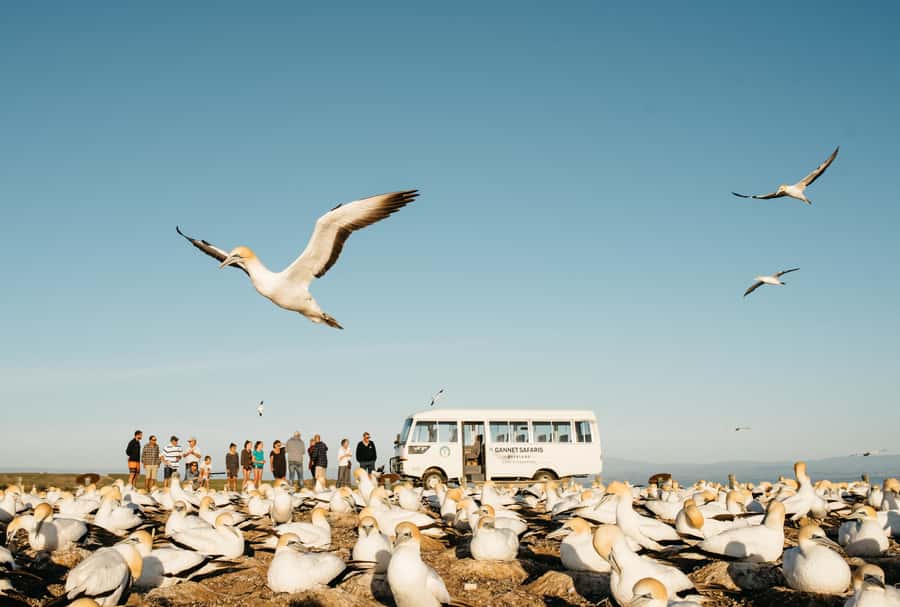
The main stop is Cape Kidnappers, home to what is described as the largest and most accessible mainland gannet colony in the world. Around 20,000 birds gather here, creating a scene that is both beautiful and wonderfully noisy.
You do not view the colony from a distant lookout. The coach takes you close to the nesting area, within a few feet of the birds. That proximity is what makes the experience special. You can see their pale gold crowns, black eye markings, long pointed bills, and broad wings without needing binoculars.
Gannets belong to the booby family. Adults return from the air with fish, then settle among rows of nests and chicks. Pairs preen and perform a recognition ritual, a striking little dance that helps them identify one another amid thousands of similar-looking birds.
Above you, the adults sweep and turn with wingspans of roughly six feet, or two meters. Below, the colony is busy with feeding, calling, grooming, and nest protection. You may find yourself watching one pair closely, then looking up to see dozens more arriving from the sea.
The birds are wild, so the correct experience is close observation, not touching or feeding. The tour keeps the safety of both people and birds in mind, which also protects the natural behavior that makes the colony worth seeing.
Choosing the right month for chicks and courtship
The colony can be viewed from September through early April. Your timing changes what you are likely to see.
In September, the gannets return from their winter migration and begin preparing nests. This is a good period for watching courtship and the start of the breeding season. The colony may feel less crowded with young birds than it does later in the season, but adult activity remains the focus.
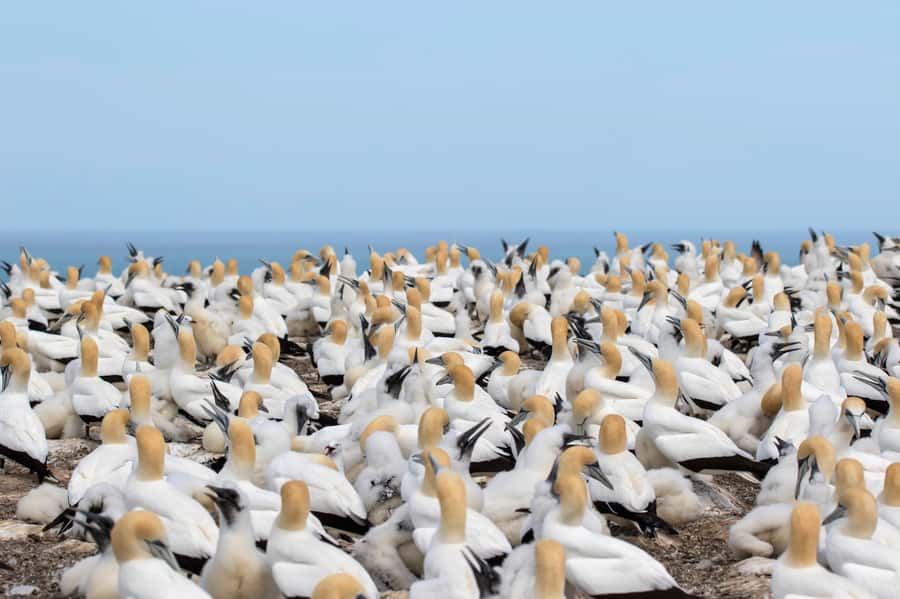
December and January bring chicks. The young birds are especially noticeable as they grow and are fed by their parents. January has been singled out as a particularly appealing time for seeing newly hatched chicks, although the colony is impressive throughout the season.
By late April, the chicks have been fattened for their first flight and leave for warmer climates. Since the regular viewing season ends in early April, check availability carefully if your visit falls later in the month.
The colony can be smelly. Thousands of seabirds living close together produce a strong natural odor, especially when you are standing only a few feet away. That is not a flaw in the tour, but it is a useful warning if you are sensitive to smells.
A completely different sort of day out:
- Napier: Afternoon Winery Tour Tasting at 3 Great Wineries
★ 4.7 · 147 reviews - Napier: Afternoon Wine Tasting + visit Silky Oaks Chocolates
★ 5.0 · 135 reviews - Napier: Art-Deco + Te Mata Peak+ Garden Walk + Wine Tasting
★ 4.7 · 99 reviews - Napier E-bike Hire
★ 5.0 · 99 reviews
Why the no-walking format matters
Cape Kidnappers is a good choice for anyone who wants a major wildlife sight without a long hike. The coach takes you almost to the viewing area, and walking is not required if you do not want to walk.
That makes the tour suitable for people who prefer to conserve their energy, families with children, and anyone who finds steep or uneven ground difficult. One point needs careful wording: no required walking does not mean every part of the property is perfectly flat. A small amount of walking may still be useful at stops, and one person found part of the track dauntingly steep. Ask the guide for help if a section feels uncomfortable.
The lack of a long walk also gives you more time with the birds. You are not using the morning on a trail to reach the colony, then rushing away to return. The trip is built around getting you there efficiently and allowing a proper period for watching and photography.
Comfort is generally good, thanks to the air-conditioned vehicle. Still, the road can be bumpy, and the coach may feel warm if the air conditioning is switched off. Seats in the back row can be less comfortable and make the commentary harder to hear. These are manageable issues, but they matter if you are sensitive to motion or need clear audio.
Photography and the rhythm of the visit
You get excellent photo opportunities because the gannets are close and the colony is active. A telephoto lens is not essential for basic pictures, although it can help you frame birds in flight or isolate a parent and chick.
The best approach is to spend a few minutes simply watching before taking photos. The recognition dance, the arrival of adults with fish, and the sudden movement of birds above the cliffs are easy to miss if you are focused only on your camera.
The bright crowns and black eye markings photograph well, especially when an adult turns its head toward you. Chicks offer a different subject, with their softer coloring and ungainly movements. Keep your equipment protected from wind and be prepared for the birds to move quickly.
A light refreshment, such as a hot drink and biscuit, is included. This is a small touch, but it matters on a windy day. One person specifically appreciated the hot cuppa after chilled fingers at the cape. Food is not included, so do not treat the refreshment as a meal.
Is $59 good value for three hours?
At $59, the price is reasonable for what you receive. The fee covers three hours, air-conditioned 4×4 transport, a driver-guide, the gannet viewing, access across private land, light refreshments, and stops connected with the forest, reserve, and scenery.
The value is clearest if you do not have another practical way to reach the colony. You are not paying only for a ride. You are gaining access to private areas, avoiding a long walk, and getting interpretation about the birds, local Maori stories, conservation, and the surrounding property.
The tour also compares favorably with a private outing if your main goal is the gannet colony. One person considered a private trip to see additional endangered species but did not have enough time. That suggests a useful choice: book this standard tour for the colony and general nature experience, or allow more time and investigate a private option if rare species are your main priority.
The main value question is transport. If you are already near Te Awanga and want an accessible, focused wildlife morning, the price makes sense. If you are staying in Napier, remember that hotel transfers are not included, so add the cost and time of reaching the meeting point.
Who will enjoy this Cape Kidnappers tour most?
I would choose this outing if you want a memorable New Zealand wildlife encounter without committing to a demanding hike. It suits bird lovers, photographers, families, older visitors, and anyone interested in how predator control supports native species.
It is also a strong option for people who enjoy learning while they travel. The best part may not be a single fact about gannets, but the way the guide links the birds with the land, farms, forest, Maori stories, and conservation projects.
You should think twice if you dislike bumpy roads, crowded vehicles, or strong bird smells. The coach is comfortable, but it is not a luxury vehicle, and some seats may feel tight. People at the back may also struggle to hear every word of the commentary.
This tour is not available as a cruise ship excursion through the standard booking arrangement. Cruise ship passengers need to use the operator’s separate excursion option on its website. That distinction is important because a tight port schedule leaves little room for confusion.
Practical tips for a better morning
Wear comfortable shoes even though a long walk is not required. They will help at the viewing area and at scenic stops.
Pack a jacket or jumper. The cape is exposed and can feel cold even when Napier is mild. Wind is a recurring feature, not a rare inconvenience.
Try to sit near the front or middle of the coach if possible. You are more likely to hear the live commentary clearly and may feel less of the road’s movement.
Allow time to enjoy the drive. The ride can feel long if you are thinking only about the colony, but the scenery and stories are part of the experience. The journey crosses areas that are not normally open for casual public access.
Book between September and early April for the standard viewing season. Choose December or January if seeing chicks is especially important to you, while remembering that wildlife timing can vary.
The tour has free cancellation up to 24 hours before departure, and you can reserve now and pay later. Starting times vary, so check availability for your date.
Should you book it?
Yes, if you want close-up gannets, good scenery, and a wildlife outing that does not demand a strenuous walk. The colony is the star, but the tour earns its price through access across private land and guides who bring local history and conservation to life.
I would book it during the September to early April season, bring warm clothes, and expect a bumpy ride rather than a polished luxury transfer. If your priority is endangered species beyond the gannets, ask about a private option. For most visitors to Hawke’s Bay, though, this three-hour trip offers a rare chance to see thousands of wild seabirds at remarkably close range.
FAQ
Where does the Cape Kidnappers gannet tour meet?
The meeting point is Gannet Safaris Overland Ltd at 396 Clifton Road, Te Awanga 4172, New Zealand. Look for the Gannet Safaris sign beside the road.
How long does the tour last?
The tour lasts three hours. Starting times vary, so check availability for your chosen date.
Is walking required?
No. Walking is not required if you do not want to walk. The air-conditioned 4×4 coach takes you close to the gannet colony, although comfortable shoes are still recommended for stops.
When can I see the gannets?
The birds can be seen from September through early April. They return in September to prepare nests, chicks arrive during December and January, and the young birds leave for warmer climates in late April.
What should I bring?
Bring comfortable shoes and a jacket or jumper. The cape can be windy and chilly, even when the weather feels warmer elsewhere.
Are hotel transfers or food included?
Hotel pickup and drop-off are not included, and food is not included. The tour does include light refreshments, such as a hot drink and biscuit. Cruise ship passengers need to book the operator’s separate cruise excursion directly through its website.
Just added in Napier
- Napier: Shore Excursion with Wine Tasting and Platter★ 5.0 · 2 reviews
- Napier: Highlights & Tour Exploring the Best of this Region★ 4.6 · 11 reviews
- Napier: Cruise Self-Guided Cycle Ride to Winery – Half Day★ 4.6 · 19 reviews
- Napier: Art Deco Bike Ride and Wineries Loop★ 4.0 · 19 reviews
- Napier: National Aquarium of New Zealand General Admission★ 4.8 · 4 reviews
- Hawke’s Bay: Self Guided Coast to Vineyards Cycle Tour★ 4.9 · 29 reviews
- Hawkes Bay: Half-Day Wine Tour with Tastings and Cheeseboard★ 5.0 · 6 reviews
- Napier: Taste Hawke’s Bay – A sweet treat food tour★ 5.0 · 2 reviews
Napier Tours, compared.
Guided 10am Morning Art Deco Walk From Napier Art Deco Trust
Read our review →
Afternoon Winery Tour Tasting at 3 Great Wineries
Read our review →
Afternoon Wine Tasting + visit Silky Oaks Chocolates
Read our review →
Art-Deco + Te Mata Peak+ Garden Walk + Wine Tasting
Read our review →
Shore Excursion: Napier/ Hawke’s Bay & Premium Wineries tour
Read our review →Browse the lists this tour appears in