
REVIEW · HISTORICAL TOURS
Olveston Historic Home Guided Tour
A mansion can tell a city’s story. Olveston Historic Home makes early 20th-century Dunedin unusually easy to understand, thanks to its compact guided tour, original contents, and the story of the merchant family who lived there. I especially like the small groups, which make it easier to hear the guide, and the chance to see Japanese ceramics, old furniture, paintings, and even a 1922 Fiat in their proper setting. The main drawback is the steep hill leading to the house, which may be tiring if you have mobility concerns.
I also like that your ticket includes more than a quick look indoors. After the guided visit, you can spend time in the one-acre gardens, take in views toward Dunedin and Otago Harbour, and browse the locally made goods in the gift shop. The visit is advertised as about one hour, though the detailed timing allows roughly 1 hour 15 minutes, so I would keep at least that much time free.
In This Review
- Key Points Before You Go
- Why Olveston Feels Different From an Ordinary House Museum
- Arriving at 42 Royal Terrace
- Walking Through the 1906 Jacobean Home
- Art, Ceramics, and Objects With a Story
- The Family Story Behind the Rooms
- The Garden, Dunedin Views, and the 1922 Fiat
- How Much Time and Money Should You Allow?
- Who Will Enjoy Olveston Most?
- Booking, Cancellation, and Practical Tips
- Should You Book the Olveston Historic Home Tour?
- FAQ
- How long does the Olveston Historic Home tour take?
- Where does the tour begin?
- Is hotel pickup included?
- How large are the tour groups?
- Can I explore the gardens after the tour?
- Can I take photographs inside Olveston?
- Are there any footwear restrictions?
- What happens if I need to cancel?
Key Points Before You Go
- See a 1906 mansion with its original contents: Olveston preserves the home, furnishings, art, and household objects of one Dunedin family.
- Expect a small guided group: Tours are capped at 15 people, with some groups divided further to make listening and questions easier.
- Look for the 1922 Fiat 510 Tourer: The family bought this early motorcar, and it remains one of the memorable objects on the grounds.
- Allow time for the garden: The one-acre garden is recognized as a Garden of National Significance and is open for independent wandering after the tour.
- Ask before taking photographs: Photography may require permission, so check with staff rather than assuming cameras are allowed.
- Wear sensible shoes: Stiletto heels are not permitted because they can damage the wooden floors and original floor coverings.
Why Olveston Feels Different From an Ordinary House Museum
Many historic houses are attractive but oddly quiet. You see polished rooms, a few labels, and a collection of furniture without understanding the people who used it. Olveston works better because the house, objects, and family story remain closely linked.
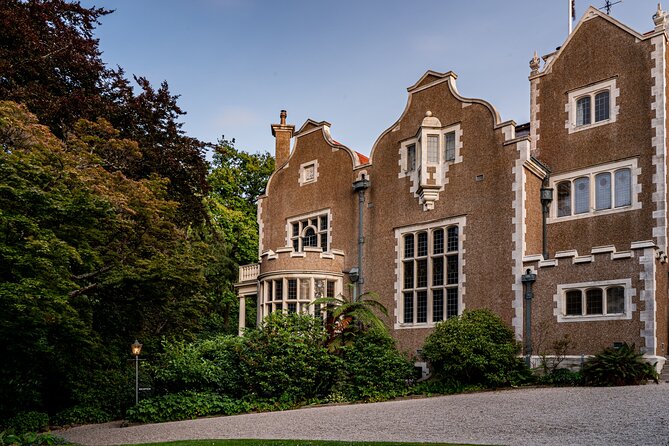
The home was built for a wealthy merchant family in Dunedin, a city shaped by the Otago gold rush and early 20th-century trade. It was completed in 1906 by English architect Sir Ernest George, and its Jacobean-style design gives the exterior and interiors a formal, substantial feel.
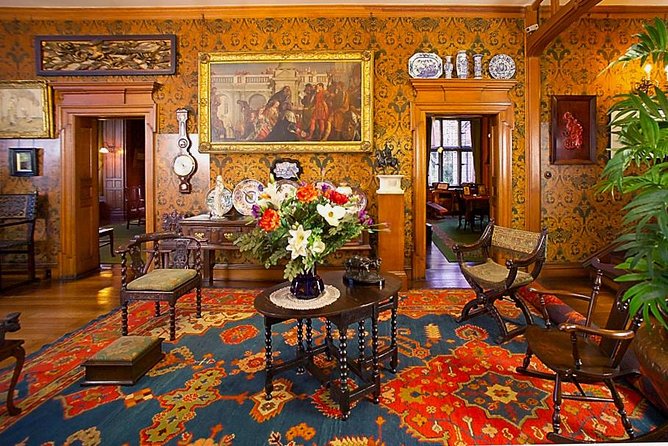
The important point is that Olveston was not assembled later as a display. The house retains its original contents, including more than 120 works of art. That gives the rooms a sense of daily life rather than a collection of unrelated antiques.
Your guide helps explain why particular objects matter. A piece of furniture is not simply old. A Japanese ceramic is part of the family’s wider taste and international outlook. A practical household feature reveals how technology and comfort were changing in Edwardian Dunedin.
I find this kind of context especially useful if you are not already an expert in historic architecture. You do not need to know the difference between Jacobean and Victorian design before arriving. The guide supplies the background as you move from room to room.
More History Tours in Dunedin
- Heritage City and Larnach Castle Van tour with Historian Guide
★ 5.0 · 65 reviews - Heritage Dunedin City Walking Guided Tour
★ 4.5 · 48 reviews - Private Guided Tour of Dunedin City Heritage and Unique Wildlife and Scenery
★ 5.0 · 36 reviews
Arriving at 42 Royal Terrace
Olveston Historic Home is at 42 Royal Terrace, just outside central Dunedin. It is close to public transportation, and the visit begins and ends at the house, with no hotel pickup or drop-off included.
The approach deserves a little planning. One visitor described the walk up as a steep hill, and that is useful advice if you are arriving on foot. I would not treat the short distance from central Dunedin as the whole story. The slope can make the journey feel longer, particularly in wet weather or if you are carrying luggage.
Parking may be available at the side or behind the building if the nearby spaces are full. The information provided does not promise a reserved space, so allow a little time to sort out arrival rather than racing to the start.
Once inside, the small-group format is a real advantage. The maximum is 15 people, and some groups have been divided into smaller parties of about 12. That matters in a historic home because rooms can be compact, voices can carry poorly, and the best details are often in the guide’s explanation rather than on a large sign.
Walking Through the 1906 Jacobean Home
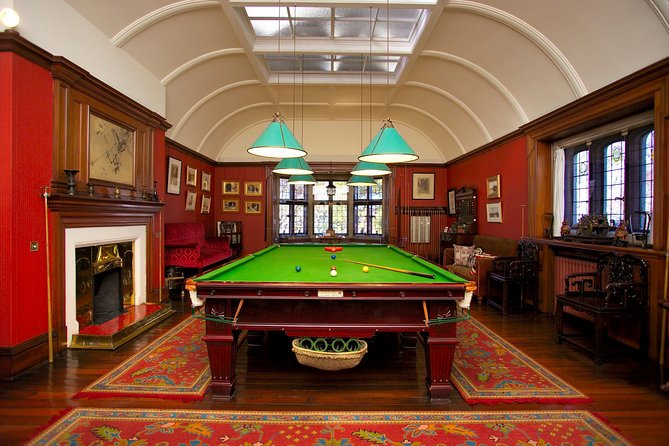
The indoor portion takes you through more than 13 rooms within the larger 35-room mansion. You will not inspect every room in the building, but the route gives you a strong sense of how the household operated.
The architecture sets the tone. Sir Ernest George designed a house that looked serious and established, fitting the position of a prosperous Dunedin merchant family. The style is formal, but the objects and household details stop the building from feeling stiff or distant.
This is where a guide adds real value. You hear how the family lived in the early 1900s, how the rooms were used, and how the home reflected their status and interests. Good guides also help you notice small practical details that are easy to miss when walking alone.
One particularly memorable part of the house is the evidence of modern comfort. The collection includes household features such as heated towel rails, radiators, and well-equipped kitchen supplies. These details show that the house was not only designed to impress. It was built to function for a family accustomed to comfort and convenience.
You may also notice the contrast between formal family spaces and the old upstairs and downstairs system. Olveston offers a clear look at the social structure of the period, where domestic work and family life occupied different parts of the house.
That contrast is one reason I would not rush through. The grand rooms catch your eye first, but the practical details often explain the home more clearly than the expensive objects do.
Art, Ceramics, and Objects With a Story
Olveston’s collection is a major reason to choose the guided visit rather than simply walking around the exterior. The house contains more than 120 works of art, including rare 15th-century Italian paintings and an impressive collection of Japanese ceramics.
The international range is striking. The family spent two years traveling around the world buying furniture and household objects for the home. That trip helps explain why the interiors feel connected to Europe, Asia, and other parts of the world rather than only to New Zealand.
I like the way this turns the house into a record of travel as well as wealth. The objects show what the family valued, what they wanted to bring back, and how international collecting shaped an Edwardian home in Dunedin.
A guide can also put the art in proportion. You do not have to identify every maker or period to appreciate the rooms. Instead, you learn how the objects fit together and how the collection reflects the family’s tastes.
Photography is an important practical issue. Permission may be needed before you take pictures, so ask staff at the start. If you are hoping to document every room, this may disappoint you. If you are prepared to look carefully and listen, the restriction also encourages you to pay attention to the house itself rather than viewing it mainly through a phone screen.
A completely different sort of day out:
- Clearwater Wildlife Tours (small group 10max) Otago Peninsula
★ 5.0 · 531 reviews - Speight’s Brewery Tour & Guided Tasting
★ 5.0 · 508 reviews - Guided Evening Penguin Viewing Otago Peninsula, Dunedin, New Zealand
★ 5.0 · 471 reviews - Larnach Castle and Gardens Admission Ticket
★ 4.5 · 279 reviews
The Family Story Behind the Rooms
Olveston becomes more meaningful when you understand that only the original family lived there. The home was later donated and preserved for Dunedin, allowing you to see an intact family setting rather than a residence reconstructed from scattered objects.
The Theomin family’s story is tied to Dunedin’s growth and to the city’s merchant culture. The house gives you a close look at how a prosperous family lived at a time when Dunedin was an important town in Otago.
The tour also shows how forward-looking some aspects of the home were. The heating, bathroom fittings, kitchen equipment, and other practical features reveal a household keeping up with modern life while maintaining a formal Edwardian appearance.
I find that balance more interesting than a simple display of luxury. Olveston is not just about grand rooms and expensive art. It is also about plumbing, heating, domestic work, transport, and the everyday systems that made a large home run.
The guide’s personality can shape the experience. Guides such as Kevin and Kay have been praised for making the family story clear, friendly, and occasionally humorous. Kevin is particularly good at chatting with a small group as the tour progresses, while Kay has been described as passionate about the house and its past.
Guide quality can vary on any scheduled tour, but the format gives you a good chance to ask questions. If a particular room, object, or family detail catches your attention, speak up when there is a natural pause.
The Garden, Dunedin Views, and the 1922 Fiat
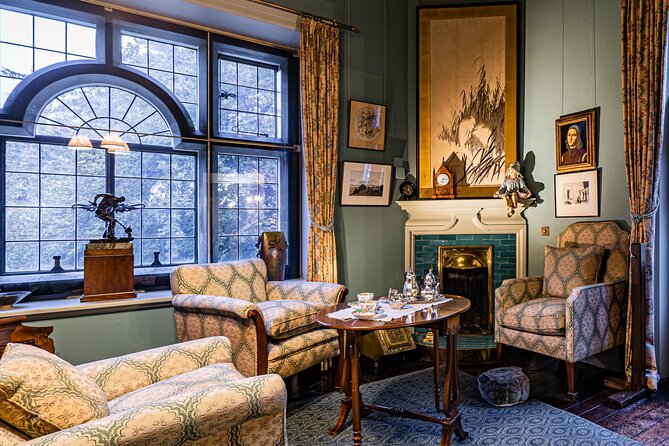
After the indoor tour, you have free time to explore the grounds. This is not a rushed walk past a narrow strip of lawn. Olveston has a one-acre garden recognized as a Garden of National Significance.
The gardens are described as intimate and well maintained, with views over Dunedin and Otago Harbour. I would save at least 15 minutes for this part, even if you are mainly interested in the house. The outdoor space gives you time to absorb what you have seen indoors and offers a different view of the property.
Look for the restored Fiat 510 Tourer, bought by the family in 1922. It is a small but telling detail. The motorcar connects the house to the changing world outside, when private cars were becoming part of upper-class life and travel was no longer limited to trains, ships, and horse-drawn transport.
The garden is also a useful pause after the guided rooms. Historic-house tours can involve standing close together and concentrating on a steady stream of information. The free time outdoors lets you move at your own pace, take in the setting, and decide which details you want to remember.
The gift shop offers locally made items. It is not a major part of the experience, but it gives you a chance to support local makers and take home something less generic than a standard souvenir.
How Much Time and Money Should You Allow?
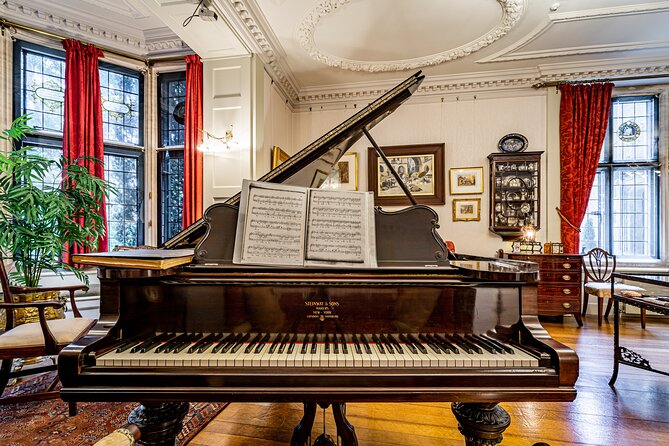
The listed price is $16.13 per person, which is strong value for a guided visit to a preserved 35-room mansion with original contents, a substantial art collection, gardens, and a local guide.
The value is not just the admission. A self-guided walk might show you the furniture, but it could leave you wondering who used the rooms, why the family collected certain objects, and how the house fitted into Dunedin society. The guide supplies that missing connection.
The standard duration is about one hour, while the detailed timing gives 1 hour 15 minutes including the visit. I would use the longer figure when planning your day. Add extra time if you want to enjoy the garden, look at the Fiat, or browse the shop.
For cruise passengers, the location and short duration make Olveston a practical Dunedin stop, provided your schedule allows time for the walk or transport to Royal Terrace. It does not include hotel or port pickup, so you are responsible for getting there and returning to your next activity.
The tour is also a good choice for a spare morning or afternoon in Dunedin. It is long enough to feel substantial but short enough to combine with another central activity, assuming you account for travel time and the hill.
Who Will Enjoy Olveston Most?

I would recommend this experience to you if you enjoy historic buildings, domestic design, art, old technology, or social history. You do not need a special interest in any one of those subjects because the tour brings them together.
It suits families too. The rooms offer plenty to look at, and the collection includes unusual household features that can make the past feel concrete. Younger children may find a long explanation of architecture less appealing, but the car, bathrooms, kitchen details, and stories of family life provide more approachable points of interest.
It is especially useful for anyone who prefers a guided explanation to reading signs. The staff are friendly and well informed, and the smaller groups make it easier to hear and ask questions.
I would be more cautious if you have difficulty walking uphill or standing for much of an hour. Most people can take part, and no health restrictions are listed, but the steep approach is worth taking seriously. You should also avoid stiletto heels to protect the original floors and floor coverings.
If you want complete freedom to wander indoors, take unlimited photographs, or explore every room alone, this may not be the right fit. The guided route and photography rule place some limits on independence.
Booking, Cancellation, and Practical Tips
Prebooking secures your place inside the house, which is sensible for a small-group attraction. Confirmation is provided when you book, and mobile tickets are accepted.
You can cancel for a full refund if you do so at least 24 hours before the local start time. Cancellations or changes made less than 24 hours ahead are not accepted for a refund.
A few simple choices will improve the visit:
- Wear comfortable shoes for the steep approach and indoor standing.
- Do not wear stiletto heels.
- Ask about photography before taking pictures.
- Arrive with enough time to find parking or walk up from central Dunedin.
- Keep 15 minutes free after the guided portion for the garden and Fiat.
- Ask questions during the tour, particularly about the family, art, and household technology.
Should You Book the Olveston Historic Home Tour?
Yes, if you want a focused and affordable look at Dunedin’s Edwardian past. The combination of an intact family home, original contents, international art, practical household details, and a good local guide gives the visit more substance than its short duration suggests.
Book it if you value explanation and preservation. The strongest part is the way guides such as Kevin and Kay connect the rooms to the people who lived there. Add the garden, harbour views, and 1922 Fiat, and you have a well-rounded stop for a modest price.
Skip it only if steep walking is a serious problem, you dislike guided tours, or you need unrestricted indoor photography. For most people spending time in Dunedin, Olveston is an easy recommendation and one of the city’s most worthwhile heritage visits.
FAQ
How long does the Olveston Historic Home tour take?
The tour is advertised at about one hour, while the detailed visit timing allows approximately 1 hour 15 minutes. You should allow extra time if you want to explore the garden and gift shop.
Where does the tour begin?
The tour begins at Olveston Historic Home, 42 Royal Terrace, Central Dunedin, Dunedin 9016, New Zealand. The activity ends at the same meeting point.
Is hotel pickup included?
No. Hotel pickup and drop-off are not included, so you must make your own way to Royal Terrace.
How large are the tour groups?
The maximum group size is 15 people. Some groups may be divided into smaller parties, making it easier to hear the guide and ask questions.
Can I explore the gardens after the tour?
Yes. After the guided indoor visit, you have free time to explore Olveston’s one-acre garden and grounds independently.
Can I take photographs inside Olveston?
Photography may require permission. Ask the staff before taking photographs inside the house.
Are there any footwear restrictions?
Yes. Stiletto heels are not allowed because they may damage the wooden floors and original floor coverings.
What happens if I need to cancel?
You can receive a full refund if you cancel at least 24 hours before the experience start time. Cancellations or changes made less than 24 hours before the start are not accepted for a refund.
Just added in Dunedin
- 5 Day South Island New Zealand Private Tour from Dunedin★ 5.0 · 2 reviews
- Queenstown to Dunedin Incl Taieri Gorge Train (One-Way)★ 4.3 · 3 reviews
- Queenstown: Southern Highlights – 3 Days & 2 Nights★ 5.0 · 2 reviews
- Private Dunedin City Highlights and Otago Peninsula Day Tour★ 4.3 · 7 reviews
- From Dunedin: City, Otago Peninsula & Albatross Guided Tour★ 4.7 · 35 reviews
- Dunedin: Peninsula with Lanarch Castle gardens & Olveston★ 5.0 · 8 reviews
- Dunedin: Scenic Railway Tour Through the Taieri Gorge★ 4.7 · 73 reviews
- Dunedin: Small Group City Highlights Tour★ 5.0 · 3 reviews
Historical Tours, compared.


All Blacks Experience: Interactive Guided Cultural Tour
Read our review →
Skippers Canyon 4WD Heritage half day Tour from Queenstown
Read our review →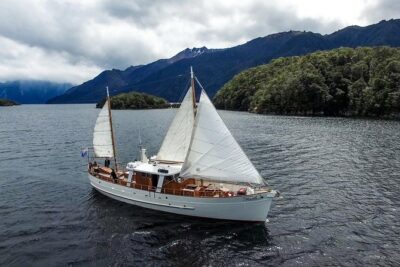
Scenic Cruise & Guided Walk on Historic Motor Yacht Lake Te Anau
Read our review →
Tauranga Shore Excursion: History & Kiwifruit Tasting – 4 Hours
Read our review →
Skip the Line:WWI & WWII Combo Exhibitions at the Omaka Aviation Heritage Centre
Read our review →Scenic Cruise & Guided walk on Historic Motor Yacht Lake Te Anau
Read our review →
Heritage City and Larnach Castle Van tour with Historian Guide
Read our review →Browse the lists this tour appears in