
REVIEW · GLACIER TOURS
The Adventurer: Tasman Glacier Heli-hike
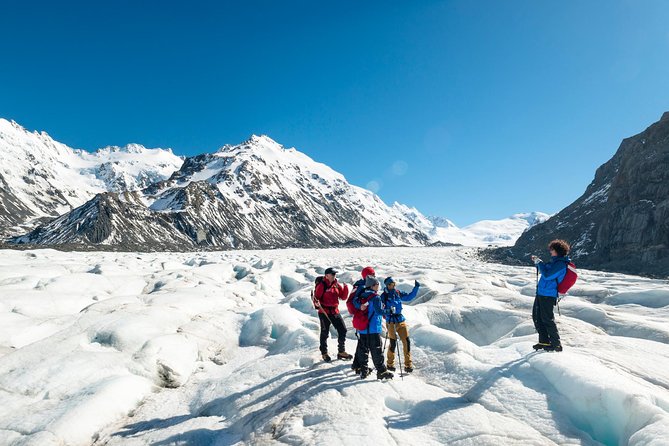
Feel the ice beneath your boots. The Tasman Glacier Heli-hike combines two scenic helicopter flights with a guided walk across remote glacier ice, giving you a close look at blue-white holes, tunnels, caves, fresh snow, and strange ice formations beneath Aoraki/Mount Cook. I especially like the small group limit of 11 and the fact that boots, wool socks, crampons, poles, and waterproof clothing are provided.
I also like the care taken with changing conditions. Guides such as Richard, Hunter, Fiona, Flav, Pawel, and Anna have been praised for safety, clear explanations, and finding interesting features on the ice. The main drawback is simple: at $572.23 per person, this is a major splurge, and poor weather can change or cancel your plans.
In This Review
- Key things to know before you book
- Why the Tasman Glacier Heli-hike feels different
- Starting at Mount Cook Airport
- The first helicopter flight over Aoraki/Mount Cook
- Landing on the Tasman Glacier
- Exploring blue holes, tunnels, and fresh snow
- The guides make the difference
- Clothing, fitness, and what to pack
- Is $572.23 good value?
- Weather and cancellation rules
- Who should book this adventure?
- Should you book the Tasman Glacier Heli-hike?
- FAQ
- Where does the Tasman Glacier Heli-hike start?
- Where does the experience finish?
- How long does the heli-hike take?
- What is included in the price?
- Do I need to bring glacier equipment?
- What clothing should I wear?
- Is the tour suitable for all fitness levels?
- What happens if bad weather cancels the tour?
- Can I cancel my booking?
Key things to know before you book
- Helicopter access saves your legs: You reach a remote section of Tasman Glacier in minutes rather than spending hours on a demanding overland approach.
- Aoraki/Mount Cook is part of the show: The flights include views and a fly-by of New Zealand’s highest peak.
- You walk on real moving ice: Crampons or winter snowshoes let you cross snowfields and inspect ice formations that are otherwise hard to reach.
- Gear is supplied: Leather boots, wool socks, poles, waterproof outerwear, and glacier equipment are included.
- Conditions control the schedule: The helicopter cannot fly in poor weather, and departure times cannot be delayed for late arrivals.
- It suits reasonably fit visitors: You need a moderate level of fitness and enough warmth for high-altitude conditions.
Why the Tasman Glacier Heli-hike feels different
A visit to Aoraki/Mount Cook usually gives you grand mountain views from roads, tracks, and lookout points. This trip changes the scale. Instead of simply looking at Tasman Glacier from a distance, you land on it and walk across its ice.
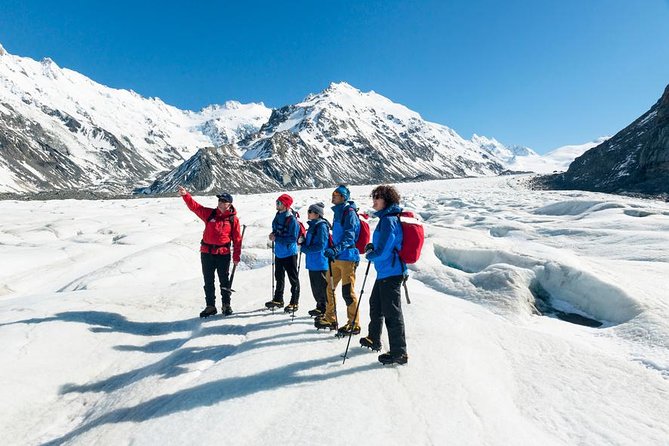
That difference matters. From the valley, a glacier can look like a broad strip of dirty snow and rock. Up close, it becomes a collection of details: rippled blue ice, holes filled with water, narrow tunnels, fresh snow, and walls that change shape as the ice moves. Your guide uses crampons or snowshoes and may cut steps into the ice, using practical mountain skills passed down through New Zealand guiding traditions.
The helicopter is not just transport. It gives you a fast sweep over the glacier and the surrounding peaks before landing high on the ice at about 4,265 feet, or 1,300 metres. The return flight adds another scenic view, and the pilot may make a close fly-by of a glacier on a mountain face when conditions allow.
The result is a compact adventure with several distinct parts: flight, glacier landing, equipment fitting, guided exploration, and another flight back to Mount Cook Airport.
More glacier trips in Mount Cook:
- Mount Cook, Lake Tekapo and Tasman Glacier Tour from Christchurch
★ 5.0 · 353 reviews - Mt Cook & Tasman Glacier lookout Small Group Tour from Queenstown
★ 5.0 · 296 reviews - Mount Cook: Ski Plane and Helicopter Glacier Combo Flight
★ 4.6 · 271 reviews
Starting at Mount Cook Airport
You meet at Mount Cook Airport on Mount Cook Road in the Canterbury Region. The activity ends back at the same meeting point, which keeps the day easy if you are staying around Aoraki/Mount Cook Village or passing through the area by car.
Allow time before departure to check in, sort your clothing, and listen to the safety instructions. The operator follows strict helicopter scheduling, so the departure time is not flexible. If you arrive late and the space cannot be resold, you can be charged the full cost of the trip.
That rule may feel severe, but helicopter operations run on tight timing. The practical advice is clear: arrive early, keep your clothing and personal items organized, and do not plan a last-minute stop before the airport.
The group size is limited to 11 people. That is small enough for the guide to keep an eye on everyone while explaining the ice. It also helps during photography stops, when a large group can turn a quiet glacier into a queue beside a blue hole.
The first helicopter flight over Aoraki/Mount Cook
The outward flight gives you the first major reward before your boots even touch the ice. You fly toward a remote part of Tasman Glacier, with views of Aoraki/Mount Cook, New Zealand’s highest peak, and the surrounding mountain country.
The exact route depends on weather and flying conditions, but the point is access. A helicopter can place you on high glacier terrain that would require a far longer and harder approach on foot. For someone with limited time in the region, that makes this experience possible without turning the entire day into a major mountaineering effort.
Seating can affect how much you see through the windows. The company has rearranged seats so everyone gets either a front position or a window view on one of the two flights. That is a thoughtful touch, since helicopter cabins can make everyone quietly compete for the best angle.
Keep your camera ready, but do not let the first flight become a frantic photo session. The views change quickly, and the return flight gives you another chance. Sunglasses are important too, since snow and ice reflect strong light even when the air feels cold.
Landing on the Tasman Glacier
After landing, you will be fitted with the equipment needed for the ice. Crampons are used when conditions call for them, while snowshoes may be supplied in winter. Adjustable walking poles help with balance, especially on uneven snow and sloping ice.
The included leather boots and wool socks are useful because ordinary walking shoes are not enough here. You also receive a waterproof jacket and over-trousers, with a harness available if required. The supplied kit keeps the packing list manageable, though you still need to bring suitable layers underneath.
At this point, the experience becomes slower and more careful. Your guide explains how to move on the ice and how to behave around openings, slopes, and unstable areas. You are not simply released onto the glacier to wander. The guide chooses the route and sets the pace.
That structure is valuable for first-time glacier walkers. You can focus on what you are seeing rather than worrying about every foot placement. It also means the exact sights vary from one outing to another, because ice caves and openings change with temperature, snow, and glacier movement.
More Mount Cook trips:
- Mount Cook: Scenic Helicopter Flight with Alpine Landing
★ 4.8 · 442 reviews - Mt Cook Small Group Scenic Day Tour from Queenstown
★ 5.0 · 407 reviews - From Christchurch: Mount Cook & Lake Tekapo Day Tour & Lunch
★ 4.6 · 405 reviews - Tekapo Shuttle: Mt Cook Day Tour via Pukaki & Tasman Lake
★ 4.8 · 307 reviews
Exploring blue holes, tunnels, and fresh snow
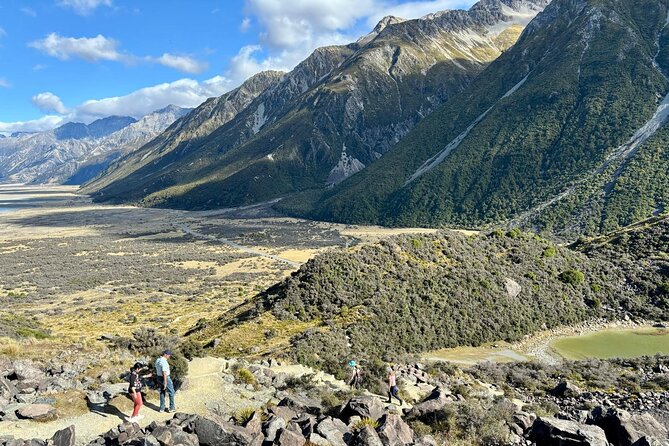
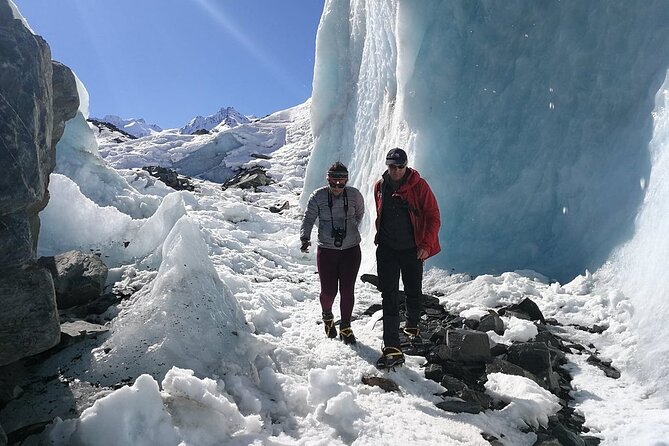
The glacier walk is the heart of the experience. Guides look for formations that show how water and ice shape the surface. Depending on the day, you might see an ice tunnel, enter a cave, look down into a blue-white hole, or watch water move beneath the ice.
Some outings have included a descent of about 10 feet into a blue-white opening, with water surging below. Other highlights have included drinking glacier water and making a cold slushie from glacier ice. These details give the walk a playful edge, but they also reveal the glacier as an active place rather than a frozen museum piece.
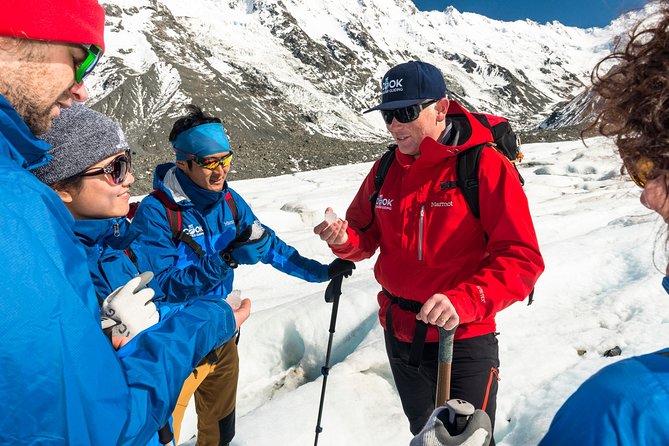
You may also watch small avalanches or see freshly fallen snow. The guide’s role is especially important here. Richard has been praised for finding interesting sights and keeping the walk enjoyable, while Hunter has been singled out for combining safety with a sense of fun. Fiona has also been praised for her clear explanations and strong command of the outing.
Do not expect a fixed list of sights. A glacier changes constantly, and a feature seen one week may be blocked or unsafe the next. That uncertainty is part of the appeal, but it also means you should judge the trip by the quality of the access and guiding rather than by one promised cave or tunnel.
The guides make the difference
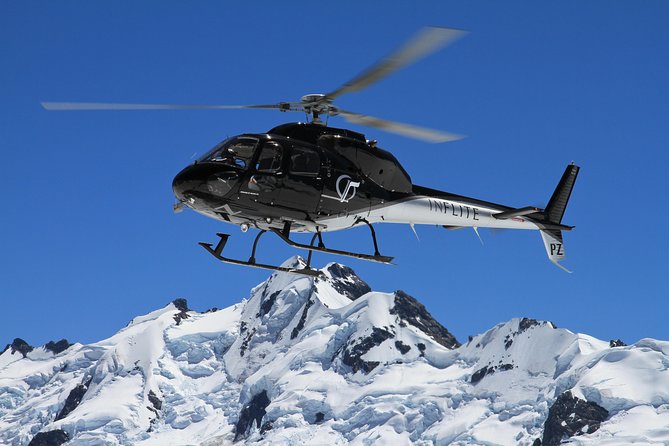
A helicopter flight can be thrilling on its own, but the guide determines whether the glacier walk becomes a real experience or just an expensive photo stop. Here, the strongest feedback centers on the guiding.
Richard is often praised for his enthusiasm, attention, and ability to find unusual features. Hunter has been noted for making the walk both safe and entertaining. Flav has been appreciated for allowing time to take pictures while pointing out plenty of interesting details. Pawel has been praised for clear explanations and keeping the hike fun.
Anna has also received praise for making the outing safe and informative, particularly after a rescheduled booking. These comments point to a useful strength: the experience is not built around speed. The guide has room to stop, explain, check the group, and adapt the route.
That matters if you want more than a helicopter ride with a short walk attached. Ask questions while you are on the glacier. You will get more from the trip if you want to understand how the ice forms, where water travels, and why the route changes.
Clothing, fitness, and what to pack
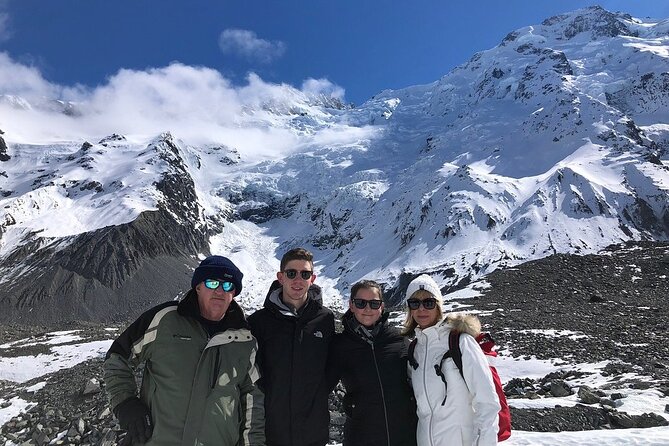
You should bring three or four warm upper-body layers, warm trousers, sunglasses, sun protection, a hat, gloves, water, and snacks. Do not wear jeans. They hold moisture and are a poor choice for cold conditions.
The supplied outerwear helps, but it does not replace proper clothing underneath. Think in layers rather than one thick coat. You may feel cold during the flight, then warm up while walking, and cool down again during a photo stop.
A moderate level of physical fitness is required. The hike involves walking on snow and ice with crampons or snowshoes, and the terrain can be uneven. You do not need to be a mountaineer, but you should be comfortable walking for roughly the glacier portion of a three-hour outing.
Some descriptions of the day refer to about two hours on the Tasman Glacier, within an overall experience of approximately three hours. The exact time on the ice can change with weather, safety, landing conditions, and the route available that day.
Is $572.23 good value?
At $572.23 per person, this is not a casual add-on. It costs more than a standard scenic flight because you are paying for two helicopter journeys, specialist equipment, a professional guide, and access to terrain that is difficult to reach by ordinary walking.
I think the price makes the most sense if you have limited time around Aoraki/Mount Cook and want one high-impact activity. You get both aerial views and time at ground level on the glacier. A scenic flight alone would give you the mountains from above, while a valley walk would leave you far from the ice. This combines the two.
The value is weaker if you dislike flying, want a long full-day hike, or mainly want a quick photograph from a glacier. Weather can also affect the return you get for your money. You might have a clear flight and a richly featured walk, or a shorter route with fewer formations if conditions shift.
The strong safety focus, supplied gear, and small group help justify the cost. So does the flexibility shown when weather or road closures cause trouble. Some bookings have been moved to another time or date so people could still take part when conditions improved.
Weather and cancellation rules
Good weather is essential. If the helicopter cannot operate safely, you will be offered another date or a full refund. If the minimum number of participants is not reached and the operator cancels, you will also be offered an alternative or a full refund.
You can cancel for a full refund if you do so at least 24 hours before the local start time. Cancellations or changes made inside that 24-hour window are not refunded or accepted.
Weather decisions may happen close to departure. That can be frustrating if you have arranged a tight itinerary, but waiting is sensible for a helicopter and glacier activity. Keep your plans flexible, especially if you have only one possible day in the area.
Who should book this adventure?
I would recommend it to you if you want a genuine ice experience without committing to a major mountaineering expedition. It suits active couples, small groups, and anyone who values a guide-led outing with strong scenery and unusual details.
It is also a good choice for first-time helicopter passengers. The flight is short enough to fit into a wider Mount Cook visit, while the glacier portion gives the day substance. If you are taking a South Island road trip, this could become the trip’s defining adventure.
I would hesitate if you are uncomfortable with variable weather, cannot walk steadily on uneven ground, or need a fixed departure with no room for change. The price also deserves serious thought. You are paying for rarity, access, aircraft time, and specialist guiding, not just a walk.
Should you book the Tasman Glacier Heli-hike?
Yes, if your budget allows and you want to experience Tasman Glacier from the ice rather than from a distant viewpoint. The best parts are the combination of two flights, the close look at changing ice formations, and the guides who turn a cold walk into an engaging lesson in mountain conditions.
Book it with flexible plans, arrive early, dress properly, and expect the exact glacier route to depend on nature. For a high-cost activity, that is a fair trade. You get a rare chance to walk on remote Tasman Glacier, see Aoraki/Mount Cook from the air, and explore a place that ordinary sightseeing cannot reach.
FAQ
Where does the Tasman Glacier Heli-hike start?
The activity starts at Mount Cook Airport on Mount Cook Road in the Canterbury Region of New Zealand.
Where does the experience finish?
It finishes back at the Mount Cook Airport meeting point.
How long does the heli-hike take?
The experience lasts approximately three hours. The glacier walk itself may take about two hours, depending on conditions and the route.
What is included in the price?
The price includes two scenic helicopter flights, a professional guide, leather boots, wool socks, a waterproof jacket, over-trousers, adjustable walking poles, crampons, and snowshoes in winter when needed. A harness is included if required.
Do I need to bring glacier equipment?
No. Crampons or snowshoes, boots, poles, and waterproof outerwear are provided. You still need warm clothing, sunglasses, sun protection, a hat, gloves, water, and snacks.
What clothing should I wear?
Bring three or four warm upper-body layers and warm trousers. Jeans are not recommended. You should also bring a hat, gloves, sunglasses, and sun protection.
Is the tour suitable for all fitness levels?
No. A moderate level of physical fitness is required because you will walk on snow and ice using crampons or snowshoes.
What happens if bad weather cancels the tour?
You will be offered an alternative date or a full refund if poor weather prevents the activity from operating.
Can I cancel my booking?
You can cancel up to 24 hours before the local start time for a full refund. Cancellations and changes made less than 24 hours before departure are not accepted or refunded.
More Hiking Trips in Mount Cook
- Mount Cook: 3-Hour Tasman Glacier Helicopter Ride and Hike
★ 4.9 · 235 reviews - Mount Cook: 3 Hour Heli Hike to the Tasman Glacier
★ 4.7 · 218 reviews - Mt Cook Small Group Tour & Heli Hike Combo from Queenstown
★ 5.0 · 64 reviews - From Queenstown: Mount Cook Heli-Hike and Bus Tour Combo
★ 4.8 · 42 reviews
Just added in Mount Cook
- Christchurch to Queenstown via Lake Tekapo and Mt Cook (1 way)★ 4.5 · 60 reviews
- Private Mt Cook Day Tour From Christchurch via Lake Tekapo★ 4.5 · 5 reviews
- Mt Cook & Tekapo Day Tour from Christchurch (lunch included)★ 5.0 · 145 reviews
- Christchurch to Mt Cook via Tekapo (1 way) (Small Group)★ 4.5 · 8 reviews
- Explore Mount Cook from Christchurch★ 4.5 · 34 reviews
- Lake Tekapo Stargazing & Mount Cook 2-Day Tour from Christchurch★ 5.0 · 4 reviews
- Christchurch to Queenstown One Way Tour Via Lake Tekapo & Mt Cook★ 5.0 · 10 reviews
- Christchurch to Queenstown One-Way Tour via Mt Cook & Lake Tekapo★ 4.5 · 76 reviews
Glacier Tours, compared.
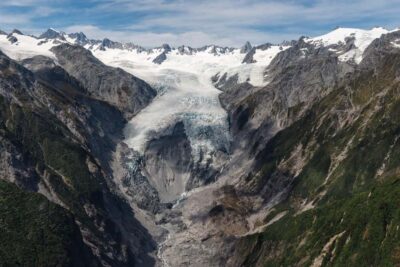
Franz Josef Glacier: Helicopter Flight & Alpine Landing
Read our review →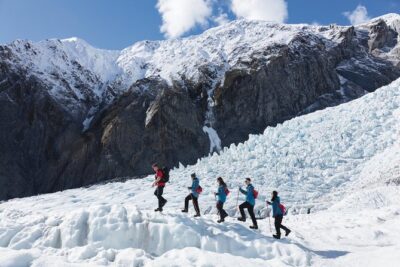
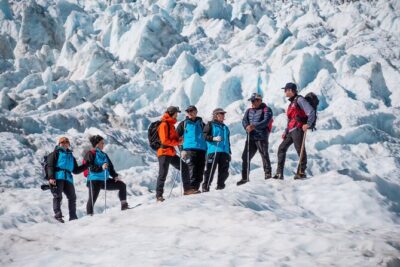
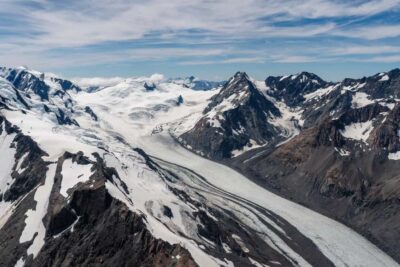
Small-Group Kayak Adventure from Franz Josef Glacier
Read our review →
Mount Cook, Lake Tekapo and Tasman Glacier Tour from Christchurch
Read our review →
Franz Josef & Fox Glaciers Helicopter Flight & Snow Landing
Read our review →
Pilot’s Choice: 2 Glaciers & Snow Landing – 35min
Read our review →Browse the lists this tour appears in