
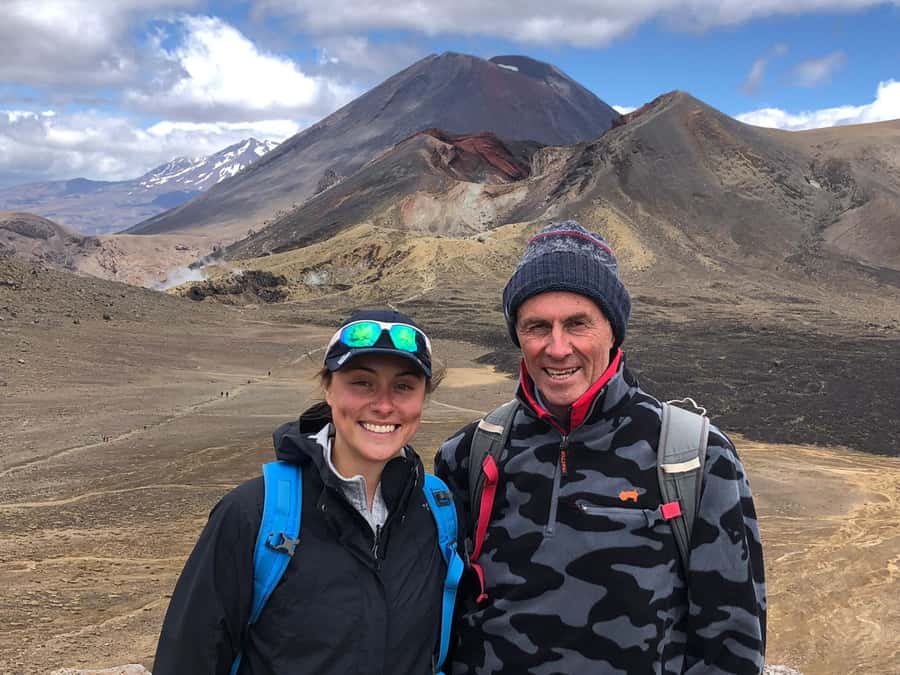
REVIEW · TONGARIRO ALPINE CROSSING TOURS
Tongariro Alpine Crossing: Premium Guided Hike
Volcanic drama begins with every step. The Tongariro Alpine Crossing takes you between Mt. Ngauruhoe and Mt. Tongariro, past red craters, mineral-stained slopes, mountain springs, and the famous Emerald and Blue Lakes. At $254 per person, this is not a cheap walk, but the guide, transport, safety support, and up to $60 of clothing and footwear hire make the price easier to justify.
I especially like the route flexibility, since the guide can use alternate paths to avoid some of the busiest sections while still reaching the major sights. I also like the care shown by the guides. Kayla, Ty, Stu, Hannah, Hiro, and Kenny are among the guides praised for pacing, encouragement, local knowledge, and practical help. The main caution is simple: this is a hard, weather-dependent hike, and reaching the Ketatahi end is not guaranteed.
In This Review
- The essential points before you book
- Starting at Adrift Tongariro in National Park
- Walking into Tongariro’s volcanic country
- Mt. Ngauruhoe, Mt. Tongariro, and Mt. Ruapehu
- The red craters and mineral colours
- Emerald Lakes and Blue Lake
- Summer walking: bright views and fast weather changes
- Winter snow, crampons, and ice axes
- Why the guide matters on this hike
- The physical challenge: prepare for the descent
- Is $254 per person good value?
- Practical clothing and packing advice
- Who should book this guided crossing?
- Should you book the Adrift Tongariro hike?
- FAQ
- Where does the Tongariro Alpine Crossing tour begin?
- How long does the experience last?
- What is included in the price?
- Is lunch included?
- Do I need alpine experience?
- How fit do I need to be?
- Is the full crossing guaranteed?
- Are winter crampons and ice axes provided?
- Can I join if I am travelling alone?
- Can I cancel for a refund?
The essential points before you book
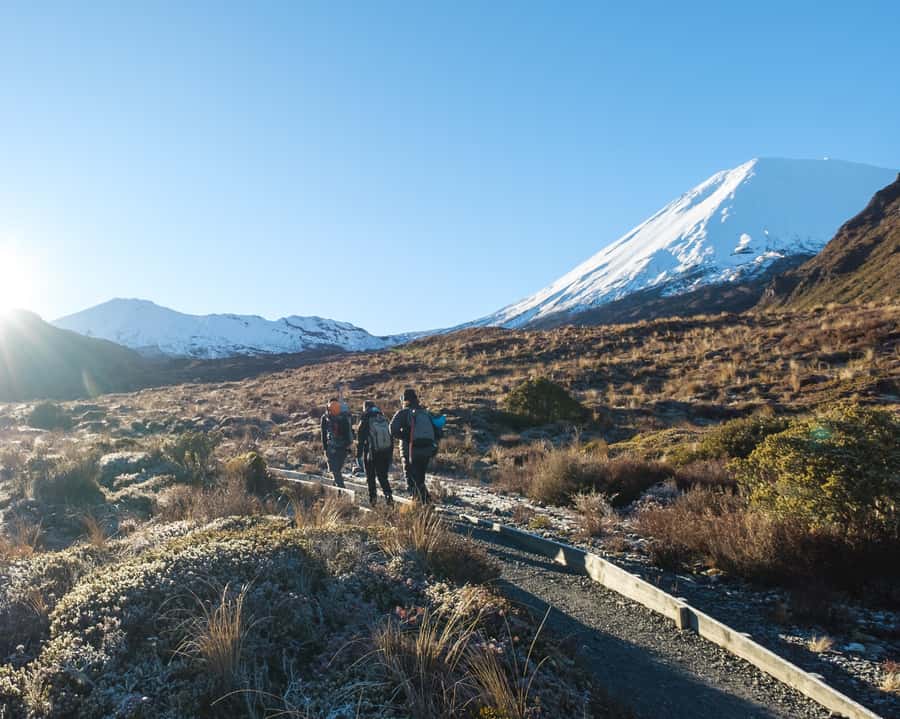
- An eight-hour alpine hike: Add two 25-minute van rides, and you have a nine-hour day from the Adrift Tongariro base.
- The weather controls the route: Wind, ice, avalanche risk, hypothermia, and poor visibility can change the plan.
- Summer is not always easy: Warm sun can turn into cold, wind, rain, or snow with little warning.
- Winter equipment is supplied: Crampons and ice axes are available when conditions call for them.
- You need reasonable fitness: No alpine background is needed, but the long uphill and downhill sections demand stamina.
- Lunch is your responsibility: Bring food, snacks, and 1 to 2 litres of water.
Starting at Adrift Tongariro in National Park
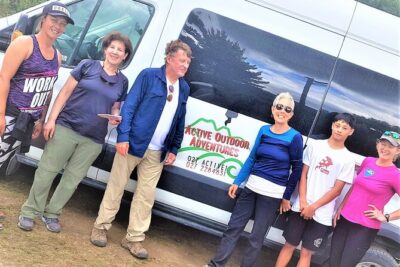
Your day begins at the Adrift Tongariro base and shop at 53 Carroll Street in National Park. The operator provides transport from the base to the start of the hike and back again, with each van journey taking about 25 minutes.
That short transfer matters. You do not need to arrange your own transport to the trailhead, and you can use the ride to settle your layers, check your food, and listen to the guide’s instructions. The walk itself lasts about eight hours, so this is a full-day commitment rather than a quick morning outing.
The base also handles personal equipment hire. Up to $60 of clothing and footwear hire is included, which is useful if you are arriving in New Zealand without proper hiking gear. In winter, crampons and ice axes are supplied when needed. Bring your own daypack, lunch, water, medication, and weather protection.
The age minimum is 12. The operator accepts individual and group bookings, and solo participants can book because minimum numbers are generally met, especially on good-weather days. If you are staying in Taupo, Turangi, or Whakapapa Village, return transport is available for an extra charge, with a minimum of two people.
More Tongariro crossings:
- Premium Tongariro Crossing Guided Group Walk
★ 4.5 · 221 reviews - Tongariro Crossing Park & Ride (Ketetahi)
★ 4.0 · 98 reviews - Tongariro Alpine Crossing One Way Shuttle from Ketetahi
★ 4.0 · 68 reviews
Walking into Tongariro’s volcanic country
The crossing is famous because it does not offer just one type of scenery. You move through native bush, open volcanic slopes, rough lava-like rock, craters, springs, and brightly coloured lakes. The changing surfaces and colours give the hike much of its appeal.
The guide explains why the craters look different. They were active at different times, and minerals released from the Earth’s crust have left shades linked to sulphur, aluminium, silica, and other deposits. You are not simply walking toward a viewpoint. You are passing through a record of volcanic activity written into the ground.
The native bush sections offer a welcome change from the exposed mountain. In the open areas, wind and sun can make the walk feel severe. In the bush, you get more shelter and a clearer sense of New Zealand’s plant life. The route’s variety also helps break up the long day.
You should expect a steady physical effort. One first-time hiker described the crossing as especially tough on the descent, while another experienced hiker developed severe quad cramps. The guide helped with walking advice, electrolyte gels, and sugar gummies. That kind of support is a real advantage over walking alone.
Mt. Ngauruhoe, Mt. Tongariro, and Mt. Ruapehu
Mt. Ngauruhoe is one of the trip’s great visual rewards. Lord of the Rings fans may recognise it as the mountain used for Mt. Doom, and the surrounding volcanic terrain can easily suggest the stark setting of Mordor.
The activity is described as a walk between Mt. Ngauruhoe and Mt. Tongariro, with views toward Mt. Ruapehu as well. These peaks give the crossing its scale. You are not simply walking across a hilltop trail. You are moving through a high volcanic zone framed by major mountains.
The views depend heavily on conditions. On a clear day, the mountains and craters give the walk its full force. In cloud, rain, or snow, the experience becomes quieter and more severe. One group reached the summit area just as the cloud cleared, receiving a short but memorable reward after a demanding climb.
Do not book this only for a guaranteed summit photograph. Guides make decisions based on safety, and a cloud-covered or wind-battered day may limit what you see. The volcanic forms still have interest in poor weather, but the views may not match your hopes.
The red craters and mineral colours
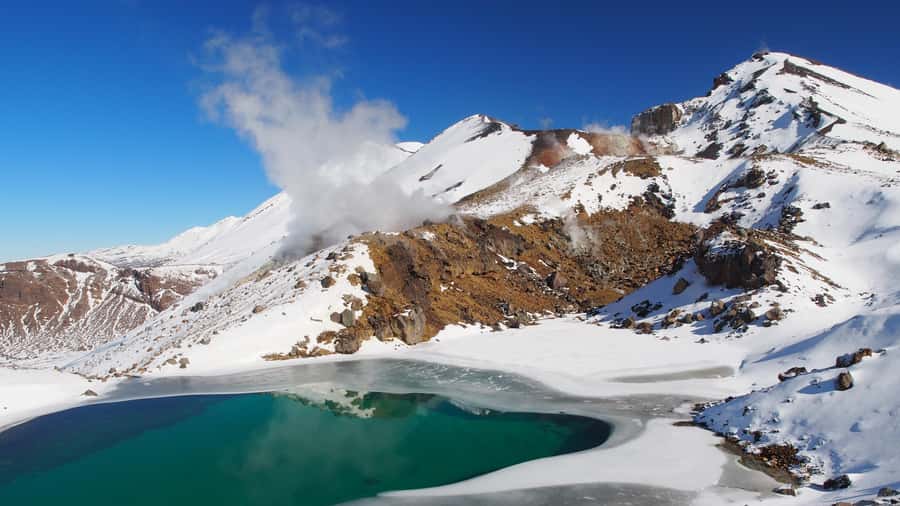
The red craters are among the most striking parts of the crossing. Their colour comes from the volcanic materials and mineral deposits, and it contrasts sharply with the dark rock around them.
This is where a guide adds real value. You can walk past a red slope and admire it, but a guide can explain the difference between the crater forms, the timing of volcanic activity, and the materials that produced the colours. The English-language guiding is especially useful for turning unusual scenery into something you can understand.
The route also passes scoured volcanic rocks and mountain springs. These details keep the walk from becoming a simple sequence of big viewpoints. I like that the experience makes room for small features underfoot, since the ground itself tells much of the story.
Crowds can gather around the most popular sights. The guide may use alternative paths, helping you experience the major places without spending the entire day in a line of walkers. This does not mean you will have the mountain to yourself, but it can make the day feel less cramped.
More Hiking Trips in New Zealand:
- Franz Josef Glacier Heli-Hike
★ 4.5 · 618 reviews - Heli Hike Fox Glacier
★ 5.0 · 563 reviews - Queen Charlotte Track: Cruise & Self-Guided Hike from Picton
★ 4.8 · 383 reviews - Franz Josef: 2.5 Hour Glacier Hike with Helicopter Transfer
★ 4.7 · 322 reviews
Emerald Lakes and Blue Lake
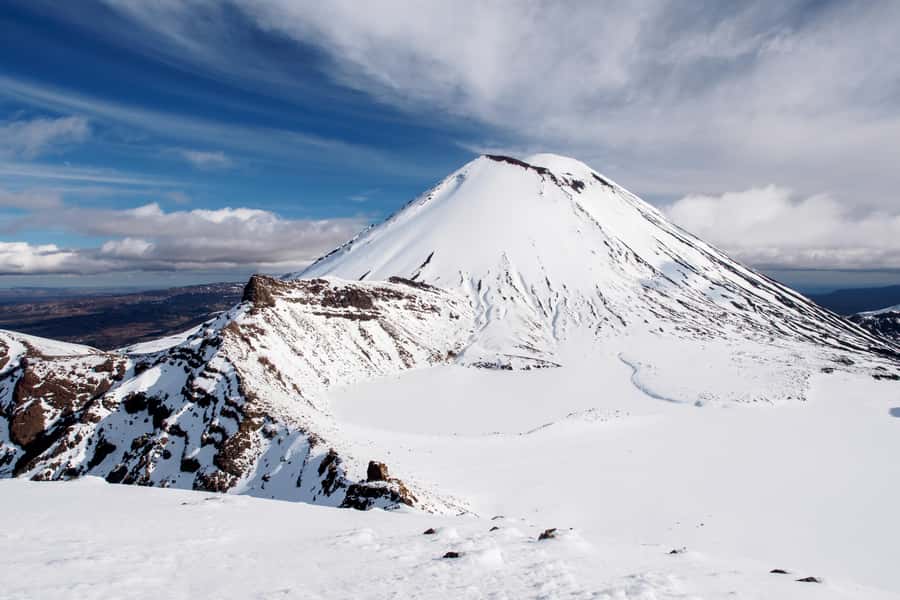
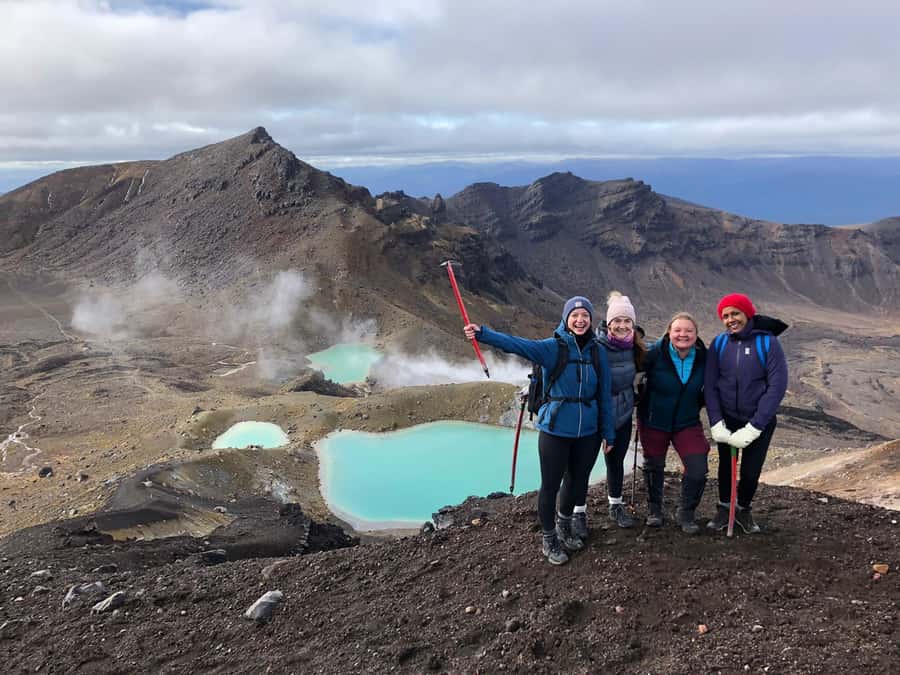
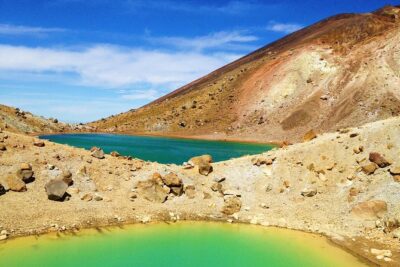
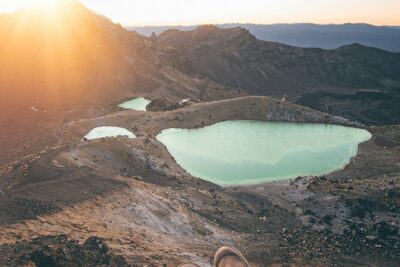
The Emerald Lakes are the visual centre of the crossing. Their bright colour against the volcanic slopes creates one of New Zealand’s most recognisable mountain scenes. The colour is tied to mineral deposits, which makes the lakes beautiful and geologically interesting at the same time.
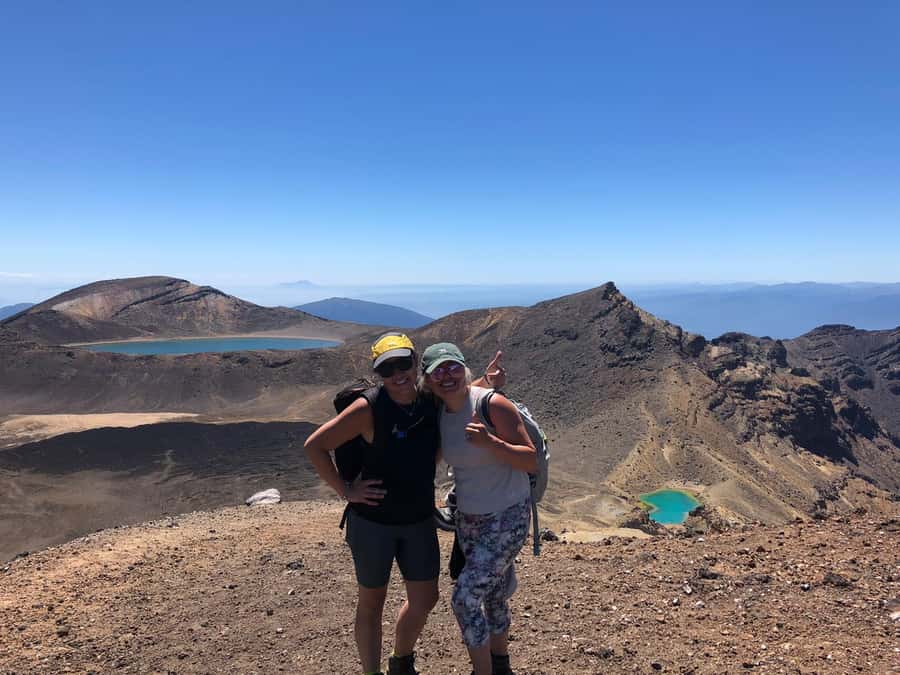
The Blue Lake offers a different look. Together, the lakes give the hike a strong middle section, especially after the effort of reaching the higher parts of the route. You should allow time to appreciate the contrast between the lakes, the red craters, and the dark volcanic rock.
The approach can be exposed, and the weather may change quickly. Strong wind can affect decisions around exposed sections and may prevent the group from continuing across a particular area. One participant specifically warned that you may not know if a gorge crossing is possible until you are high on the route.
This is an important point about a guided alpine hike: the iconic places are goals, not promises. The guide may modify the route or turn back if the conditions become unsafe. That can be disappointing, but it is better than treating a scenic photograph as more important than the group’s safety.
Summer walking: bright views and fast weather changes
Summer usually gives you the best chance of seeing the volcanic colours and lakes clearly, but it does not turn the crossing into an easy stroll. You still need hiking shoes, a waterproof raincoat, walking trousers, sun protection, and several warm layers.
Bring 1 to 2 litres of water. Pack a lunch and snacks that you can eat without much fuss. Sunglasses, a sun hat, sunscreen, insect repellent, personal medication, and a daypack belong in your basic kit.
The most useful clothing plan is layered. A light top plus two warm layers made from wool, merino, thermal fabric, fleece, or softshell material gives you options when the temperature shifts. You want to add or remove layers without stopping for a long gear change.
Summer sun can make the first part feel deceptively comfortable. Wind higher up can change that quickly. A waterproof jacket is not optional, even if the morning begins clear.
Winter snow, crampons, and ice axes
Winter brings a different version of Tongariro. Snow covers the volcanic surfaces, the light changes, and the route can feel more remote because there are fewer people around. You may enjoy a cleaner view of the mountain environment, but the cold adds serious demands.
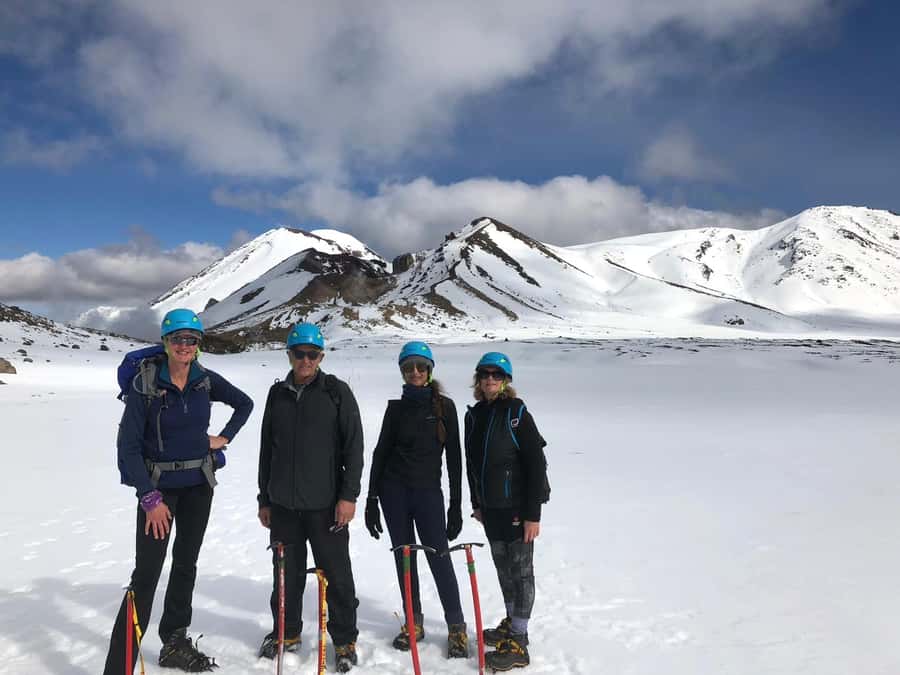
No alpine experience is required. The guides provide training and tuition on the day, and crampons and ice axes are supplied if winter conditions require them. You still need to follow instructions closely and remain aware of cold, ice, wind, and fatigue.
Your winter clothing list should include thermal long underwear or walking trousers with over-trousers, three warm upper layers, a waterproof raincoat, a warm hat, and gloves. Keep sunscreen and sunglasses in your pack, since snow can intensify glare.
One winter group completed the route in excellent snowy conditions, while another had to modify the walk because of the weather and the pace of the group. A separate outing went ahead as a blizzard approached, with the group finishing in just over six hours to get ahead of the storm. That account also shows the downside of pushing through severe weather: rain gear eventually failed to keep the group fully dry.
The lesson is clear. Winter can be wonderful, but you should be comfortable with a route change or an early finish. A guide can reduce risk, not remove it.
Why the guide matters on this hike
The strongest reason to pay for this experience is not simply transport. It is the support you receive when the day becomes harder than expected.
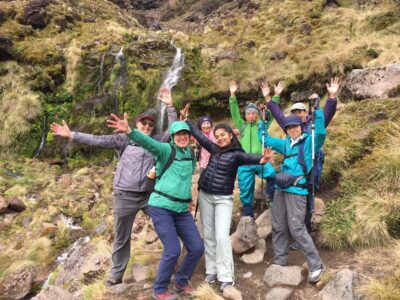
Guides are praised for adjusting the pace, offering rest stops, helping with cramps, encouraging tired walkers, and explaining local culture. Ty was singled out for sharing Maori culture, while Stu was praised for keeping the group motivated. Hiro helped slower walkers stay supported, and Kenny brought long experience in extreme conditions and park rescue work.
That does not mean every person will walk at the same speed. A group tour must balance different fitness levels, and one participant could not complete the full route after becoming unwell. The guide arranged a pickup and drove that person back to their accommodation, which shows the practical value of having trained support nearby.
You should tell the guide about fitness concerns before starting. There may be route or pacing options to discuss. If completing every metre is your highest priority, ask about a private tour, since a group’s pace and conditions can affect the final distance.
The physical challenge: prepare for the descent
The crossing requires a reasonable fitness level, and the downhill sections may be harder than you expect. Tired legs, steep ground, loose volcanic surfaces, and changing weather can combine to make the final hours uncomfortable.
I would prepare by wearing broken-in hiking shoes and bringing food you will actually eat. Snacks with sugar and electrolytes can help when fatigue or cramping appears. Walking poles are not listed as standard equipment, so bring your own if you rely on them. One hiker received walking sticks from another person in the group, but you should not count on that happening.
Do not let the word one-day fool you. An eight-hour walk is a serious outing, especially if you have limited hiking experience. One first-time hiker finished exhausted but considered it worth the effort. That is a fair description of the crossing: rewarding, but not gentle.
Children under 12 cannot join. For older children and teenagers, the key question is stamina, not just age. Everyone in the group needs to manage a long day outdoors.
Is $254 per person good value?
At $254 per person, the price is high for a day hike. The value depends on what you need.
It makes more sense if you lack transport, winter equipment, suitable clothing, or confidence in changing alpine conditions. The price includes the guide, transport between the base and activity, up to $60 of clothing and footwear hire, and winter crampons and ice axes when required.
You are still responsible for lunch, snacks, water, and some personal outdoor clothing. Return transfers from Taupo, Turangi, and Whakapapa Village cost extra, so include that in your budget before booking.
For a strong, well-equipped hiker staying near the route, a self-guided option may cost less. But you would also take on the route decisions, weather assessment, equipment choices, and emergency planning. I think the guided price is easiest to defend for first-time alpine walkers, solo bookers, winter visitors, and anyone uncertain about the conditions.
Practical clothing and packing advice
Pack for four seasons, even in summer. The supplied list is long for a reason.
- Warm and breathable clothing
- A waterproof windbreaker or raincoat
- Hiking shoes or boots
- Hiking pants or walking trousers
- Thermal layers
- Sun hat, warm hat, gloves, and sunglasses
- Sunscreen and insect repellent
- 1 to 2 litres of water
- Packed lunch and snacks
- Daypack
- Personal medication
- Quick-dry clothing
You can hire personal footwear and clothing at Adrift Tongariro. Ask about this before the walk rather than arriving with casual shoes and hoping the weather stays kind.
Cancellation is flexible enough for careful planning: you can cancel up to 14 days in advance for a full refund. Check the available start times when booking, since the day lasts nine hours in total.
Who should book this guided crossing?
I would recommend it to you if you want the famous volcanic sights but do not want to manage the route alone. It is also a good fit if you are travelling solo, visiting in winter, short on equipment, or unsure how to judge alpine weather.
You will probably appreciate the guide most if you have some hiking experience but not much alpine experience. You can focus on the craters, lakes, mountains, and native bush while the guide handles route choices and safety decisions.
I would hesitate if you want a relaxed walk, dislike changing plans, or have limited stamina. The crossing can be modified, and the Ketatahi finish is not guaranteed. If reaching the far end is essential, a private arrangement may give you more control, though weather still has the final say.
Should you book the Adrift Tongariro hike?
Book it if you want strong support on New Zealand’s most famous one-day hike and accept that nature sets the schedule. The best parts are the volcanic colours, the Emerald and Blue Lakes, the views toward Mt. Ngauruhoe, Mt. Tongariro, and Mt. Ruapehu, and the guides’ calm help when people struggle.
Do not book it expecting an easy scenic walk or a guaranteed full crossing. You need reasonable fitness, proper layers, food, water, and patience when conditions change. For the right person, the $254 price buys more than a ride to a trailhead. It buys guidance on a demanding mountain day, and that can make the difference between a tough adventure and a miserable one.
FAQ
Where does the Tongariro Alpine Crossing tour begin?
It begins at the Adrift Tongariro Base and Shop, 53 Carroll Street, National Park 3948, New Zealand.
How long does the experience last?
The full experience lasts about nine hours. This includes two van journeys of about 25 minutes each and roughly eight hours of guided hiking.
What is included in the price?
The price includes an English-speaking guide, transport between the Adrift Tongariro base and the activity, up to $60 of clothing and footwear hire, and crampons and ice axes if winter conditions require them.
Is lunch included?
No. You need to bring a packed lunch, snacks, and 1 to 2 litres of water.
Do I need alpine experience?
No alpine experience is required. The guide provides training and tuition on the day, including instruction for winter equipment when needed.
How fit do I need to be?
You need a reasonable fitness level because the walk lasts about eight hours and includes demanding uphill and downhill sections. Tell the guide about fitness concerns before starting so options can be discussed.
Is the full crossing guaranteed?
No. Reaching the Ketatahi end is not guaranteed. Weather, avalanche risk, ice, wind, hypothermia, and other safety concerns determine the route.
Are winter crampons and ice axes provided?
Yes. Adrift Tongariro supplies crampons and ice axes when winter conditions require them.
Can I join if I am travelling alone?
Yes. Individual bookings are accepted, and the operator generally meets minimum numbers, especially on good-weather days.
Can I cancel for a refund?
Yes. You can cancel up to 14 days in advance for a full refund.
Just added in New Zealand
- Creative Wheel Throwing Pottery Class in Coromandel★ 4.0 · 2 reviews
- Coromandel Adventure and Wildlife Boat Tour to Aldermen Islands★ 5.0 · 9 reviews
- Wine trail and Christchurch City – Luxury, Small Group Tour★ 5.0 · 15 reviews
- 5 Day South Island New Zealand Private Tour from Dunedin★ 5.0 · 2 reviews
- Waipara Wine Trail Tour From Christchurch★ 5.0 · 1 review
- Willowbank Wildlife Reserve Day Entry★ 4.5 · 94 reviews
- Waipara Wine Trail Private Group Tour From Christchurch★ 5.0 · 1 review
- Waimakariri River Jet Boating from Christchurch★ 4.0 · 9 reviews
Tongariro Alpine Crossing Tours, compared.
Tongariro Alpine Crossing One Way Shuttle from Ketetahi
Read our review →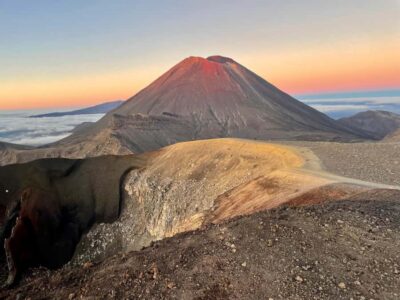
Tongariro Alpine Crossing: Round-Trip Shuttle Service
Read our review →
Tongariro Crossing : PRIVATE TRANSFER Leaving AUCKLAND
Read our review →
Browse the lists this tour appears in