
REVIEW · BAY OF ISLANDS TOURS
Waitangi Treaty Grounds: 2-Day Pass
History comes alive beside the Bay of Islands. I like this pass because it combines a clear guided introduction with time to explore at your own pace, and the Māori cultural performance adds real warmth and energy to a serious place. The two museums, carved meeting house, historic buildings, and huge ceremonial waka give you plenty to see beyond the treaty-signing site itself. The main drawback is that the grounds are spread out, with uneven surfaces and some walking required.
I also like that your $41 admission covers two consecutive days. You can take the guided tour and performance on the first day, then return for the museums, bush walks, and views without rushing. Guides such as James and Roze have been praised for making difficult history understandable, funny, and personal, though the 50-minute tour may leave you wishing for more time with them.
In This Review
- Key points to know before you go
- Why Waitangi matters to New Zealand
- Starting at the visitor center in Waitangi
- The 50-minute guided tour
- Standing where the treaty was signed
- Te Kōngahu Museum of Waitangi
- Te Rau Aroha Museum and the wartime story
- The carved meeting house and Māori performance
- The waka and heritage buildings
- Bush walks and Bay of Islands views
- How long should you allow?
- Is the $41 pass good value?
- Who will enjoy this experience most?
- Practical plan for your two days
- Should you book the Waitangi Treaty Grounds pass?
- FAQ
- How long is the guided tour?
- How long is the Māori cultural performance?
- Can I use the pass on two separate days?
- What is included in the $41 admission?
- How do I reach Waitangi Treaty Grounds from Paihia?
- Is the site wheelchair accessible?
Key points to know before you go
- The treaty site is only one part of the visit: Plan time for two museums, heritage buildings, bush walks, and the waka.
- The 50-minute guided tour gives essential context: Headsets help you hear the local guide clearly as you move around the grounds.
- The Māori performance is a real highlight: Expect poi, weaponry, stick games, singing, and a haka inside a carved meeting house.
- Two days make the $41 price easier to justify: You can split the visit instead of trying to see everything in one long stop.
- Paihia is close by: The grounds are about a 25-minute walk or two-minute drive from Paihia.
- Allow for uneven paths: The site is wheelchair accessible, but some surfaces may be difficult for wheelchair users or anyone with limited mobility.
Why Waitangi matters to New Zealand
Waitangi is the place where New Zealand’s most important founding document was signed. The Treaty of Waitangi was agreed between representatives of the British Crown and Māori chiefs, and the grounds preserve the setting where that moment took place.
The site is important because the treaty is not just an old document in a glass case. Its meaning, translations, promises, and later disputes still shape New Zealand. A good visit should leave you with more than a quick photograph beside a historic marker. It should help you understand why the treaty carries both hope and pain.
The introductory film is a useful first step. It gives you the basic story before you walk through the grounds, which matters because the history can be difficult to follow if you arrive with no background. I recommend watching it even if you think you already know the broad outline.
The treaty was prepared in both English and Māori, and differences between the versions became deeply important. The Māori text was understood by many chiefs as an agreement that protected authority and shared responsibility. The English wording did not convey every point in the same way. That gap is central to understanding later conflict.
The site presents this history seriously, but the tone is not dry. Local guides use stories and humor to keep the tour moving while still addressing the ways the treaty has not been honored. That balance is one of the strongest parts of the experience.
More Bay of Islands trips:
- Paihia/Russell: Hole in the Rock Cruise with 2 Island Stops
★ 4.8 · 1,002 reviews - Paihia/Russell: Hole in the Rock, Dolphins & Island Cruise
★ 4.6 · 821 reviews - Hole in the Rock Cruise & Island Tour – with two island stopovers
★ 5.0 · 701 reviews
Starting at the visitor center in Waitangi
Your visit begins at the Waitangi Treaty Grounds Visitor Center on Tau Henare Drive. From Paihia, you can walk along the waterfront road, continue through the roundabout, cross the one-lane bridge, and follow the signs. The walk takes about 25 minutes. By car, it is roughly two minutes from Paihia.
The grounds are open from 9am to 5pm. Check the available starting times when you book, since the guided tour and performance run at set times. I would arrive early enough to watch the introductory film and get oriented before the walking portion begins.
The pass is valid for two consecutive days, not two visits at any point during your holiday. That detail is easy to overlook. If you are staying in Paihia, this is a simple place to split across two mornings or afternoons.
The ticket includes the guided tour, headsets, the cultural performance, both museums, the historic buildings, the ceremonial waka, and general access to the site. There is also a cafe, which is useful if rain arrives or you need a break. It has been praised for reasonably priced food, though opening hours may vary, so I would not build your entire meal plan around it.
The 50-minute guided tour
The guided tour gives the grounds a human voice. Instead of wandering from building to building with only labels to read, you hear the story from a local guide and move through the important places in a logical order.
Headsets are provided, which is a small but useful touch. Groups can spread out a little, and you are less likely to miss a sentence when the wind picks up or someone nearby is talking.
The strongest guides make the past feel close without turning it into a lecture. James has been praised for his friendly manner, humor, and Māori perspective. Roze was remembered for explaining historical information clearly and holding the group’s attention. The quality of a tour always depends partly on the individual guide, but the format gives you a helpful foundation.
Expect stories about the treaty signing, the people involved, Māori traditions, and the continuing meaning of the agreement. The guide may also explain details that are easy to miss when you explore alone.
One limitation is the time. Fifty minutes is enough to orient you, but not enough to answer every question or explore each building in detail. I would treat the tour as your introduction, not the complete visit. Use the second day to return to exhibits or spots that went by too quickly.
Standing where the treaty was signed
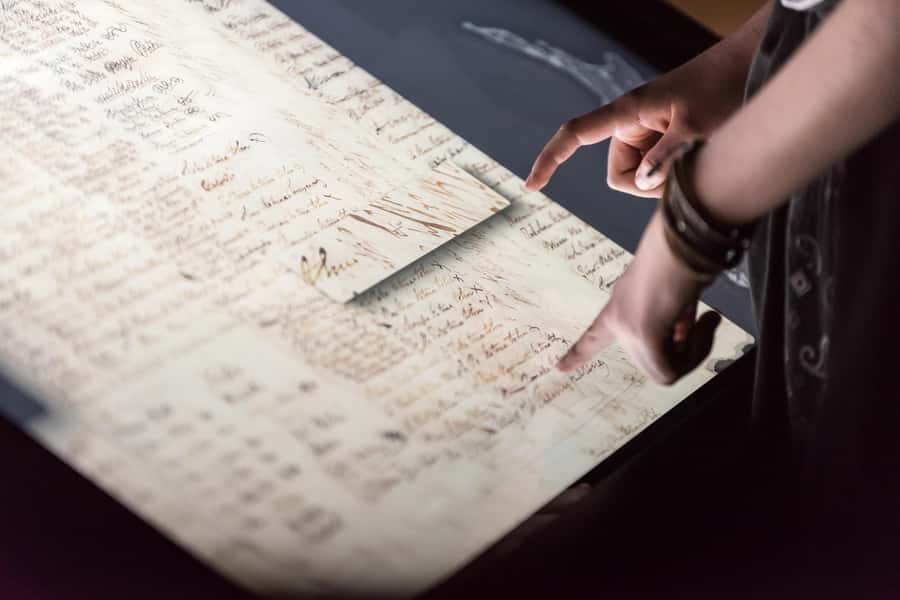
The treaty-signing area is the emotional center of the grounds. You can stand in the place where the document was signed and consider the scale of the event, including the gathering of around 500 chiefs.
The setting is more than a symbolic photo stop. It helps connect the treaty to the people and decisions involved. The site gives you room to pause, listen, and think about the difference between the original intentions and what followed.
You will not get a simple story with a tidy ending. That is a strength. The grounds recognize the treaty as a foundation for New Zealand while also addressing the damage caused when its promises were ignored or interpreted unevenly.
I recommend taking a little quiet time here after the guide moves on. The busier parts of the visit are lively, especially the performance, so this pause helps balance the day.
A completely different sort of day out:
- The Rock Adventure Overnight Cruise
★ 5.0 · 457 reviews - From Paihia: Scenic Cruise with Roberton Island Stopover
★ 4.8 · 332 reviews - Paihia: Glass Bottom Boat Tour to the Hole in the Rock
★ 4.7 · 319 reviews - Waitangi Treaty Grounds Admission
★ 4.5 · 314 reviews
Te Kōngahu Museum of Waitangi
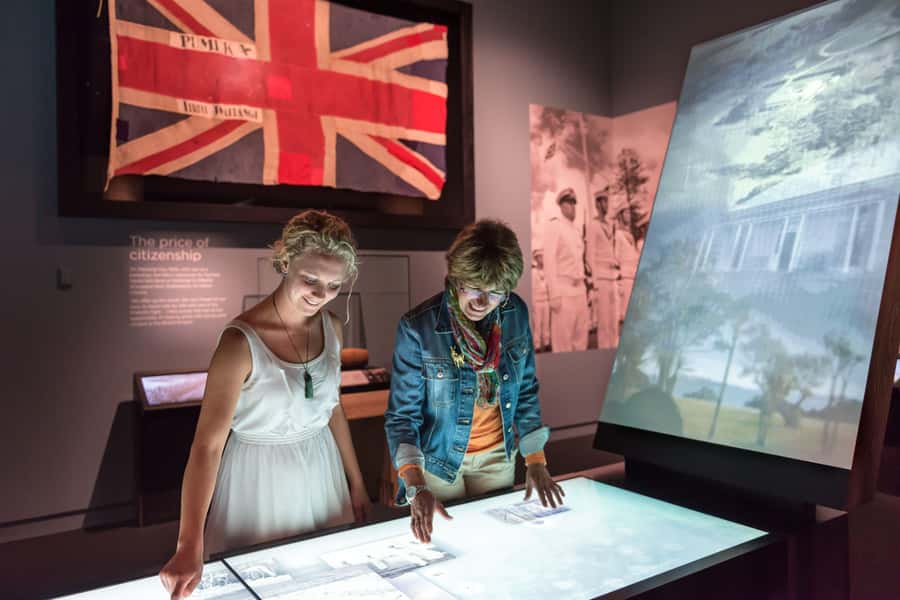
Te Kōngahu Museum of Waitangi focuses on the treaty and the meaning surrounding it. Permanent and changing displays use multimedia, visual material, and taonga, or treasured cultural objects, to give the story more depth.
This museum is especially useful after the guided tour. You will recognize names, places, and ideas from the walk, then see them explained through objects and displays. If you read every panel, you could spend a large part of your visit here.
The museum does not reduce Māori culture to decoration. It places objects within their cultural and historical setting. That makes the visit more valuable than simply admiring carved work or ceremonial items without understanding their purpose.
Give yourself time here instead of racing through it before the performance. If you use the pass over two days, this is an ideal place to visit when you want a quieter pace.
Te Rau Aroha Museum and the wartime story
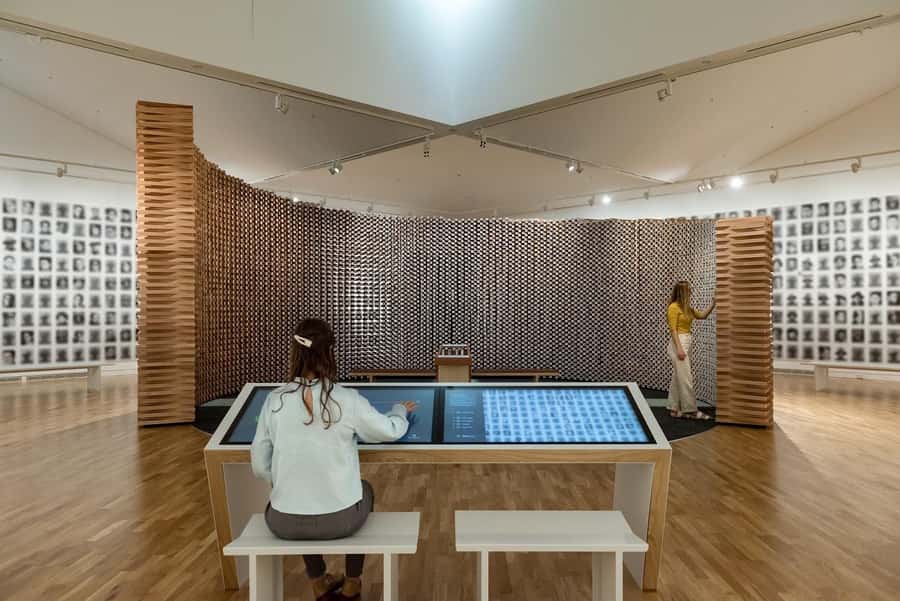
Te Rau Aroha Museum tells the story of Māori involvement in the First and Second World Wars. It adds another side to the national story by showing how Māori communities served, sacrificed, and carried their own identity into military history.
This museum has made a strong impression because it is moving as well as informative. The displays help you see war history through Māori experience, rather than treating Māori participation as a small footnote.
I would not skip it, even if your main interest is the treaty. It broadens the visit and shows how questions of identity, service, loyalty, and recognition continued long after the signing at Waitangi.
The two museums also make the pass useful in poor weather. If rain limits your time on the paths, you can still have a worthwhile day indoors, then return for outdoor sightseeing when conditions improve.
The carved meeting house and Māori performance
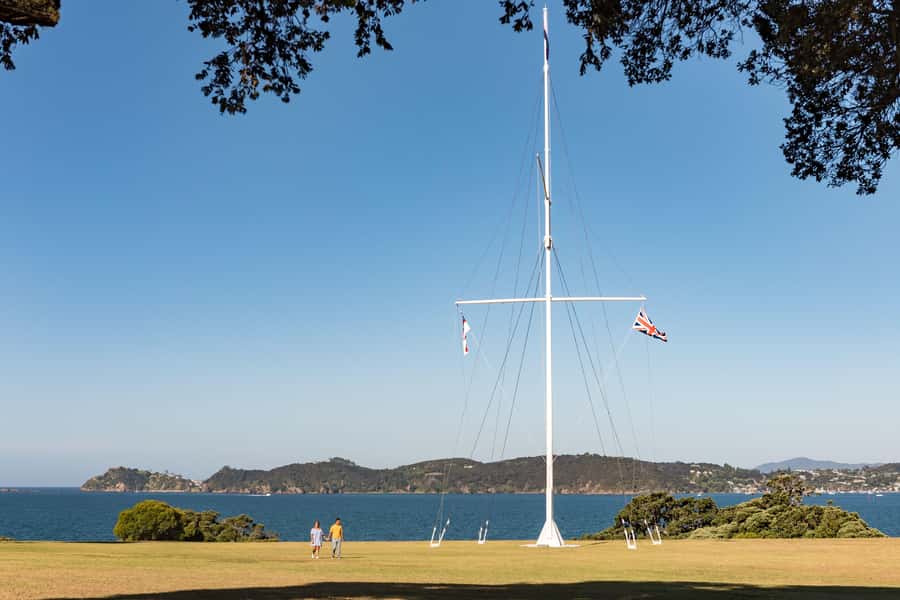
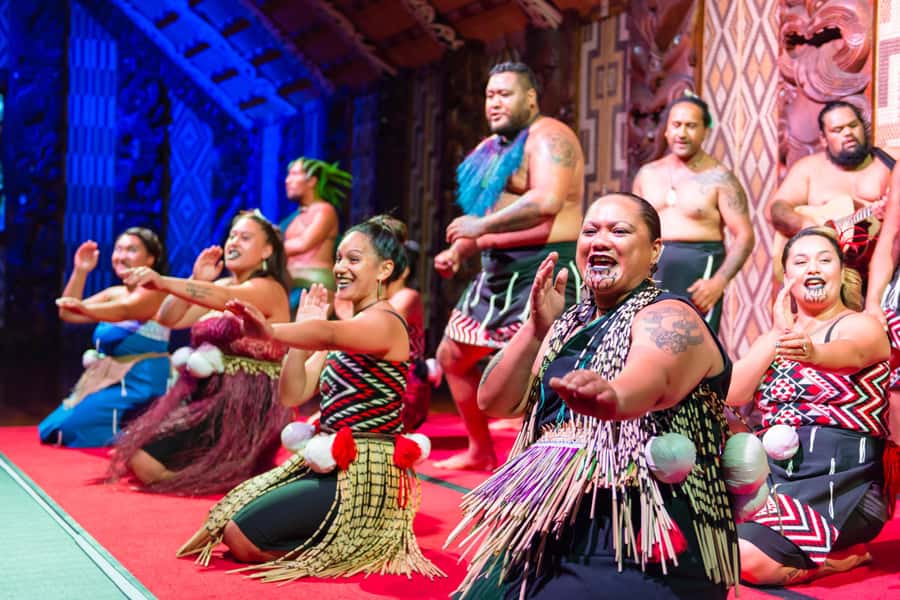
The 30-minute Māori cultural performance takes place in the magnificently carved meeting house. The performing arts group Te Pitowhenua welcomes you with a traditional pōwhiri, then presents a fast-moving program of Māori song, movement, and ceremony.
Expect poi twirling, traditional weapon demonstrations, stick games, strong harmonies, and a haka. The performance is energetic and entertaining, but it is not just a show added to fill the schedule. The welcome and the meeting house provide cultural context, and the performance gives you a direct sense of Māori arts and expression.
This is one of the parts I would plan around. The singing can be powerful, and the haka brings a burst of force after the more reflective museum experience. Several people have described the performance as moving enough to give them goosebumps.
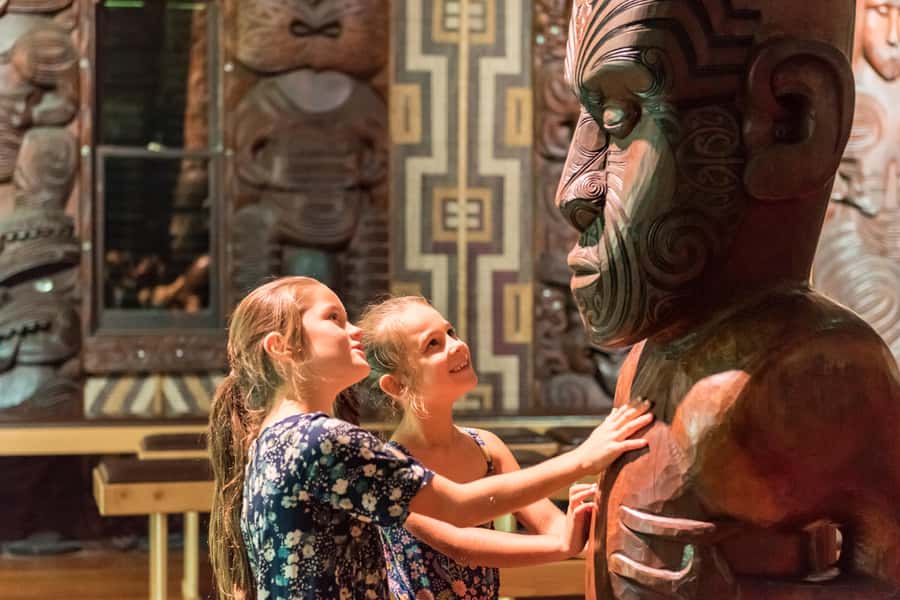
The room itself matters. The carvings and meeting-house setting make the performance feel connected to place rather than staged in a generic theater. You are asked to enter respectfully and pay attention to the welcome.
The performance lasts 30 minutes, so it fits neatly into a half-day visit. If you have young children, the movement, music, and visual action may hold their attention better than the museum panels. Children must still be accompanied by an adult, and unaccompanied minors are not allowed.
The waka and heritage buildings
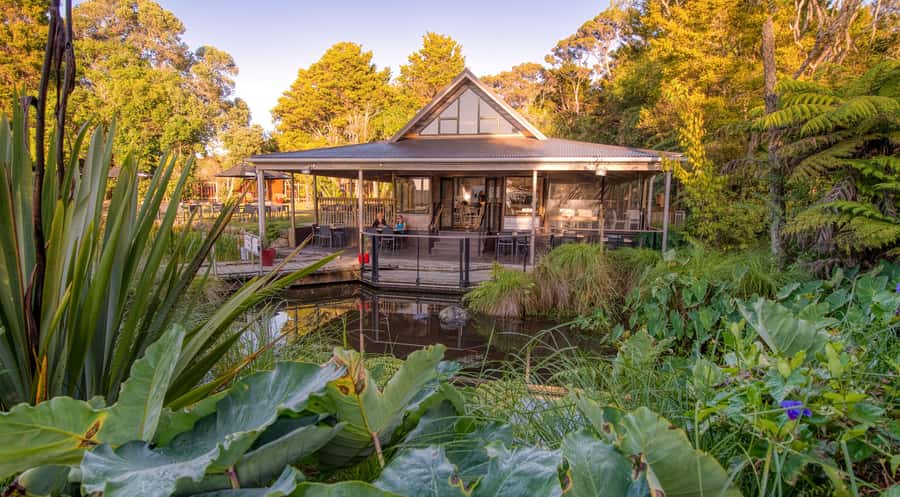
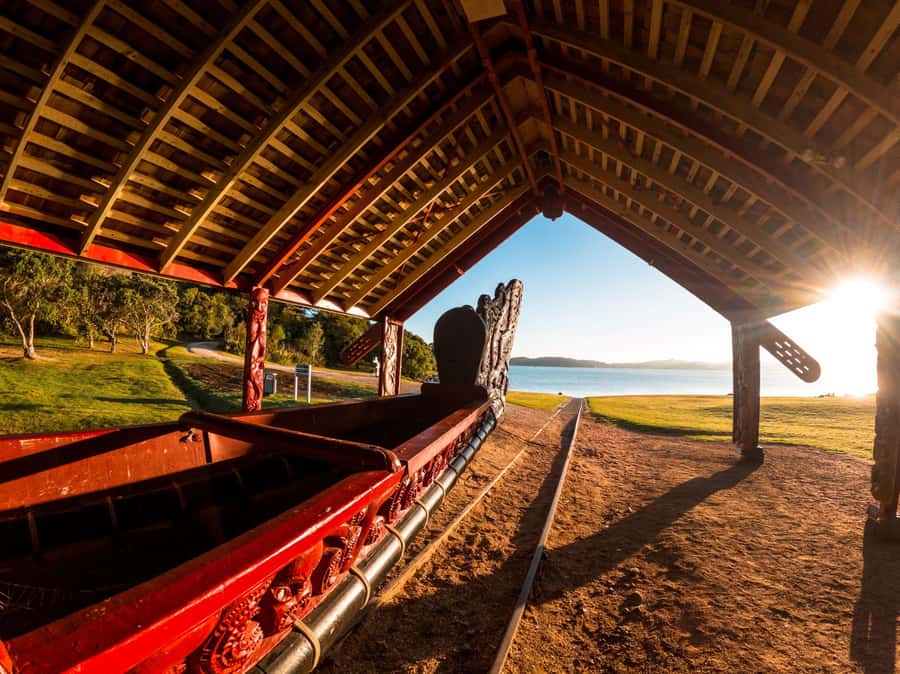
One of the most memorable objects on the grounds is the world’s largest ceremonial war canoe, or waka. Its size is impressive, but the real value comes from understanding its role in ceremony, community, and Māori identity.
Take time to look at the carvings and construction rather than treating it as a quick photo stop. The waka connects the site to seafaring traditions and to the importance of the Bay of Islands as a place of movement, contact, and political activity.
The heritage buildings add another layer. Together with the treaty site, meeting house, museum displays, and waka, they turn the grounds into a place you can explore in sections. You are not simply walking to one monument and leaving.
The buildings and outdoor sites may be spread farther apart than you expect. Wear comfortable shoes and allow time between scheduled activities. The site is wheelchair accessible, but uneven surfaces can be challenging, so anyone with limited mobility should plan the route carefully.
Bush walks and Bay of Islands views
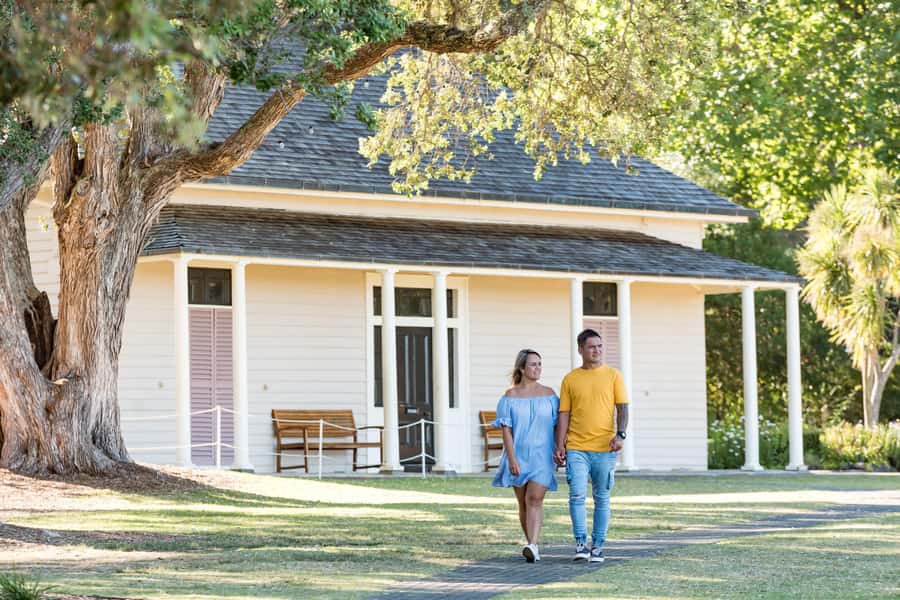
The self-guided bush walks are a good reason to keep the pass for a second day. They give you a break from displays and guided commentary while offering panoramic views over the Bay of Islands.
The walks are not the main historical attraction, but they help you understand why the grounds were chosen and why the setting feels so memorable. From the higher viewpoints, the water and surrounding coastline give the visit a strong sense of place.
A moderate level of fitness is recommended. The information does not specify every walk’s length or difficulty, so I would allow extra time and expect uneven ground. If you have limited mobility, focus on the more accessible parts of the grounds and ask staff for current route advice.
Weather will affect this part of your day. Rain can make paths less pleasant, but you can shelter at the cafe and spend time in the museums. One visit was cut short by rain, while another found the cafe a welcome place to warm up and eat. The pass gives you the useful option of returning when the weather is better.
How long should you allow?
You can get a good introduction in about four hours. That is enough time for the guided tour, cultural performance, a museum, and several outdoor sights if your schedule is tight.
I would prefer a full day. The grounds have enough variety that rushing would undercut the point of coming here. You want time for both museums, the waka, the treaty site, the historic buildings, the views, and a proper pause between activities.
The two-day format is the best feature for independent planners. On day one, take the guided tour and performance while using the remaining time for the main outdoor sites. On day two, return for anything you missed, then read the museums at a slower pace and take a bush walk if conditions are good.
If you are visiting from a cruise ship, timing needs more care. The grounds are close enough to Paihia for a short transfer, but you must match the scheduled tour and performance with your ship’s departure time.
Is the $41 pass good value?
At $41 per person, the pass is good value if you use the included parts. The price covers two days of admission, the 50-minute guided tour, headsets, the 30-minute performance, two museums, heritage buildings, the waka, and the grounds.
The value is weaker if you only have time for a quick walk and one photo. The site is designed for a longer visit, and much of the cost is tied to the museums, performance, and guided interpretation.
For a family, the total cost can rise quickly, so I would plan to spend enough time there to make the ticket count. A full day, or two shorter visits, gives you far better value than a hurried stop.
Pay close attention to the ticket category when booking. One customer had selected a New Zealand resident pass without realizing it and had to pay an additional NZ$30 on site. Check that the price and eligibility match your situation before confirming.
The reserve-now, pay-later option and cancellation up to 24 hours before the visit add useful flexibility. These policies can change, so check the current terms at booking.
Who will enjoy this experience most?
I would recommend the Waitangi Treaty Grounds to anyone who wants to understand New Zealand beyond scenery and beaches. It is particularly useful for first-time visitors who need a clear introduction to the treaty and Māori culture.
Families can enjoy the performance, waka, outdoor space, and stories, though the site may be tiring for small children if you try to cover everything in one stretch. History fans will want the museums, while culture-focused visitors may place the performance first.
This is also a good stop for New Zealand residents bringing overseas family or friends. The site connects national history with living Māori culture, rather than presenting the past as something finished.
You might choose another activity if you want only a short, light attraction or if uneven paths and moderate walking are a serious concern. The grounds are accessible, but accessibility does not mean every surface is smooth or effortless.
Practical plan for your two days
I would use the pass this way:
- Arrive in the morning and watch the introductory film.
- Join the 50-minute guided tour with the headset.
- Visit the treaty-signing site, waka, and key heritage buildings.
- Attend the 30-minute Māori cultural performance.
- Eat at the cafe or take a break in the grounds.
- Spend the remaining time in either museum.
- Return the next day for the second museum, bush walks, views, and anything you passed too quickly.
Bring comfortable shoes and allow flexibility around the weather. The grounds open at 9am and close at 5pm, so you have a broad window, but the scheduled activities determine the shape of your day.
Should you book the Waitangi Treaty Grounds pass?
Yes, if you want a substantial cultural and historical experience in the Bay of Islands. I would book it for the combination of the local guide, two museums, Māori performance, ceremonial waka, and outdoor setting. The guide may be the person who makes the visit click, so if you get someone with the warmth and humor reported from James or Roze, give the tour your full attention.
Use the two-day validity. That is what turns this from an expensive admission into a worthwhile visit. If you have only a couple of hours, prioritize the guided tour, performance, treaty site, and one museum. If you have a full day or more, the pass gives you enough material to stay busy without forcing you to rush.
FAQ
How long is the guided tour?
The guided tour lasts 50 minutes. Headsets are provided, and the live tour is conducted in English.
How long is the Māori cultural performance?
The Māori cultural performance lasts 30 minutes. It includes a pōwhiri welcome, poi twirling, Māori weaponry, stick games, singing, and a haka.
Can I use the pass on two separate days?
Yes. The pass is valid for two consecutive days. It cannot be split across two unrelated dates.
What is included in the $41 admission?
Admission includes access to the Waitangi Treaty Grounds, the 50-minute guided tour, headsets, the 30-minute cultural performance, Te Kōngahu Museum of Waitangi, Te Rau Aroha Museum, heritage buildings, the ceremonial waka, and the wider grounds.
How do I reach Waitangi Treaty Grounds from Paihia?
The grounds are about a 25-minute walk or a two-minute drive from Paihia. Follow the waterfront road through Paihia, continue across the one-lane bridge, and follow the signs to the visitor center.
Is the site wheelchair accessible?
Yes, the site is wheelchair accessible. You should still expect uneven surfaces, which may be difficult for some wheelchair users or people with limited mobility. A moderate level of physical fitness is recommended.
Just added in Paihia
- The Rock Adventure Day Cruise★ 4.8 · 7 reviews
- From Paihia: The Rock Adventure Overnight Cruise★ 5.0 · 8 reviews
- Bay of Islands: Full-Day Tall Ship Sailing Excursion★ 4.9 · 147 reviews
- Shore Excursion to Historic Kerikeri including Lunch★ 4.9 · 6 reviews
- Paihia: Hole in the Rock Fast Boat with Island Stopover★ 4.5 · 10 reviews
- Paihia: Hole in the Rock Fast Boat Ocean Adventure★ 4.7 · 132 reviews
- Paihia: Bay of Islands Dolphin Eco Cruise & Island Stopover★ 4.8 · 12 reviews
- Paihia: Bay of Islands Trike Tour Experience★ 4.9 · 160 reviews
Bay of Islands Tours, compared.
Paihia/Russell: Hole in the Rock Cruise with 2 Island Stops
Read our review →
Paihia/Russell: Hole in the Rock, Dolphins & Island Cruise
Read our review →
Hole in the Rock Cruise & Island Tour – with two island stopovers
Read our review →
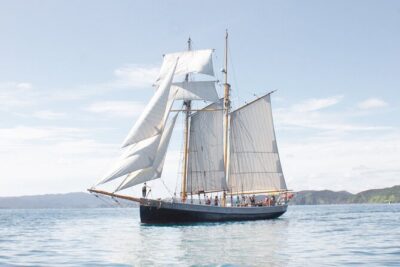
Bay of Islands Tall Ship Sailing on R. Tucker Thompson Including BBQ Lunch
Read our review →

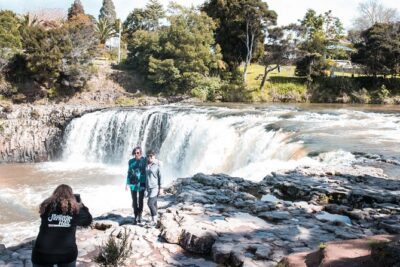
Bay of Islands Glow Worm Caves & Scenic Shore Excursion
Read our review →Browse the lists this tour appears in