
REVIEW · WANAKA TOURS
Wanaka: 4-Hour Intermediate Waterfall Cable Climb
Waterfalls make excellent climbing partners. This four-hour adventure near Lake Wanaka takes you 320 meters up the rock beside rushing water, using fixed cables, iron rungs, pegs, ladders, and suspension bridges. It is a rare way to reach cliffs and pools that would otherwise be off-limits.
I like the tiny guide groups, with no more than five people per guide, and I like the way the route mixes exposed climbing with mountain views, lunch, and a possible swim beneath a 60-meter waterfall. The main catch is simple: this is continuous vertical climbing for much of the ascent, not a gentle hike with occasional scrambling.
You do not need previous climbing experience. You do need steady nerves, full body mobility, and a moderate level of fitness. If heights unsettle you badly, pay close attention to that warning. You will be responsible for clipping yourself into the cable system as you climb, with your guide close by to teach and check your technique.
In This Review
- Key things to know before you climb
- Reaching the waterfalls west of Wanaka
- Starting with a practice climb
- Climbing 320 meters beside the falls
- Suspension bridges and exposed cliff sections
- The upper waterfall, lunch, and a cold dip
- The 45-minute descent back to the gate
- Is $224 a fair price?
- Who should book this waterfall climb?
- Practical tips for a better four hours
- FAQ
- How long does the waterfall cable climb take?
- How high do you climb?
- Do I need previous climbing experience?
- How many people are in each group?
- What equipment is included?
- What should I bring?
- Can I swim during the experience?
- Who cannot take part?
- Should you book the Wanaka waterfall climb?
Key things to know before you climb
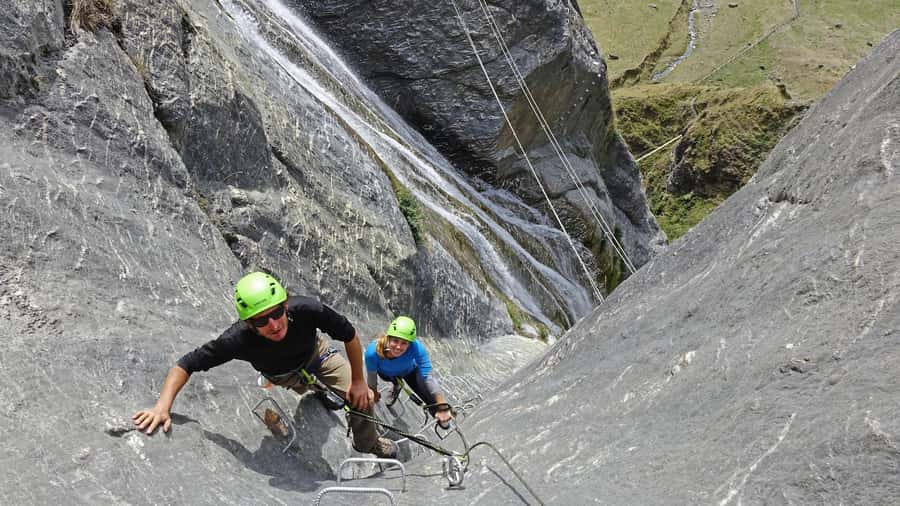
- 320 meters of vertical climbing: The intermediate route uses fixed cables, metal rungs, pegs, ladders, and bridges beside cascading waterfalls.
- Small groups matter: Each guide leads no more than five people, giving you room to move and time to ask for help.
- The summit includes lunch and a waterfall stop: After the climb, you can relax beside a 60-meter waterfall, eat, enjoy the views, and possibly take a cold swim.
- The route is exposed: You cross suspension bridges and climb open cliffs, so comfort with heights is more important than formal climbing experience.
- Bring water and outdoor clothing: A water bottle is not included. Comfortable hiking shoes, swimwear, weather-appropriate clothing, and sun protection are sensible.
- Plan about 20 minutes from Wanaka: The meeting point is beside two waterfalls on Wanaka-Mount Aspiring Road, before the Treble Cone turnoff.
Reaching the waterfalls west of Wanaka
The meeting point is part of the practical challenge. From Wanaka town, follow Wanaka-Mount Aspiring Road west along the lake toward Treble Cone Ski Field and Mount Aspiring National Park. After about 20 minutes, look for a cattle stop and pull out immediately on the left, in front of two waterfalls.
You are looking for a locked farm gate with the activity provider’s sign. If you reach the ski field road or a gravel road, you have gone too far. This is not a town-center meeting point, so allow time to find it without rushing.
The remote setting helps explain the appeal. You are not climbing on an indoor wall or a crowded tourist platform. The route begins beside real farmland, open mountain country, and flowing water. At the same time, the meeting point means you need to arrange your own way there. The supplied information does not include transport from Wanaka.
Wear your outdoor clothes from the start. You will need comfortable shoes and hiking shoes with a good grip, plus clothing suited to changing weather. Pack swimwear if you want to use the pool near the upper waterfall, and bring your own water bottle because water is not included.
A few more to weigh up in Wanaka
- Wildwire Wanaka- Level 2 (4 Hours)
★ 5.0 · 467 reviews - Bike the Wanaka and Hawea Trails
★ 5.0 · 346 reviews - Lake Wanaka Happy Hour Cruise
★ 4.6 · 313 reviews
Starting with a practice climb
At Twin Falls Waterfall, your guide begins with a safety briefing. You receive a helmet and climbing harness, then try a short practice route at the base of the waterfall.
This introductory climb is more important than it may sound. The equipment is designed to make a difficult route possible, but you still need to learn how to move along the cable, place your feet on the rungs, and manage your own connection to the safety system. The guide will help you learn the process before you reach the more exposed sections.
You do not need climbing experience, but you should take the practice seriously. The route asks you to make repeated movements while standing on narrow metal steps and rock footholds. A calm, careful approach will serve you better than brute strength.
The small group size is a real benefit here. With no more than five people per guide, instruction can remain personal. Guides named in the feedback include Ollie, Sarah, Ryan, Dolce, Connor, Tongi, Blair, Brandon, and Nolan. The specific guide depends on the day, but the consistent theme is patient instruction and a strong focus on safety.
Climbing 320 meters beside the falls
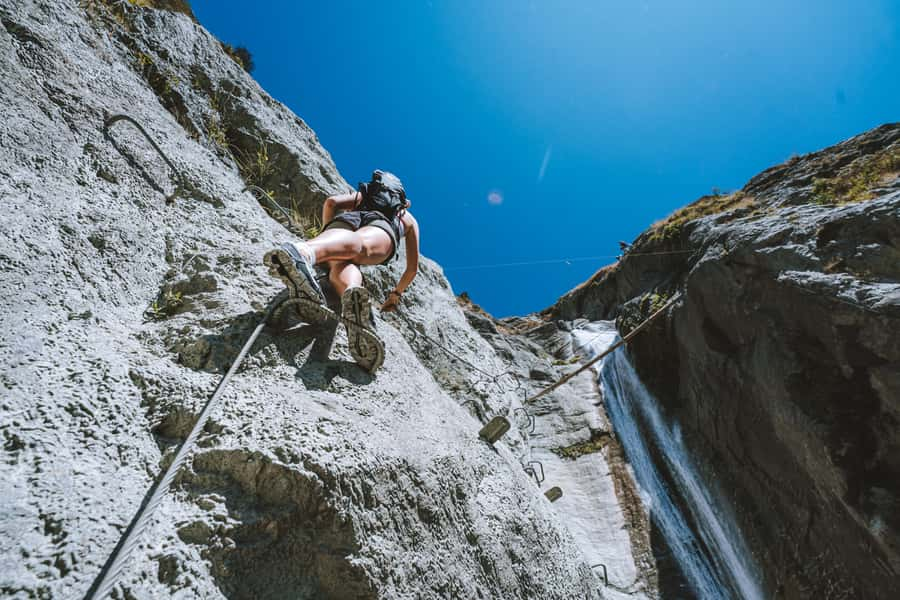
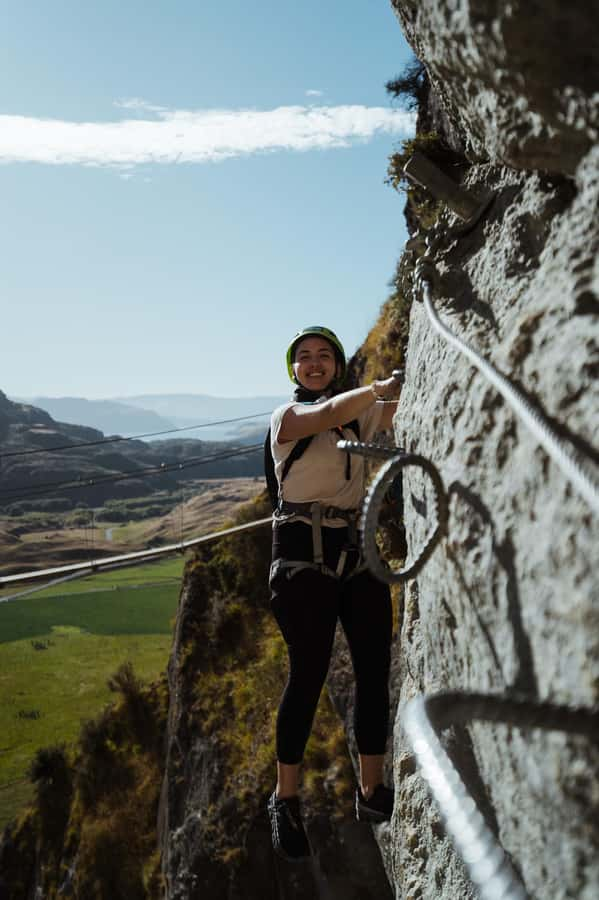
Once you are comfortable with the practice route, the intermediate climb begins in earnest. You follow fixed cables and metal hardware up 320 meters of vertical cliff, moving beside waterfalls and blue pools.
This is a via ferrata-style experience, although the supplied description calls it a waterfall cable climb. Iron rungs, pegs, ladders, and bridges turn the rock face into a route you can follow. You are not simply walking uphill. Much of the time, you are pulling yourself upward, shifting your weight from one foothold to another, and staying connected to the cable.
The route delivers a useful mix of physical work and scenery. You may focus on the next rung, then look out and see farmland, mountain slopes, and the lakes around Wanaka. That change in scale is part of the fun. One moment you are concentrating on your hands and feet. The next, you are looking across a huge sweep of country.
The climb is described as intermediate, but that label should not make it sound easy. One person who completed the route found it extremely challenging, while another considered it not too physically demanding but said the fear factor took time to settle. Both reactions make sense. Your fitness helps, but exposure may be the bigger test.
You should also expect a fairly steady series of climbs rather than long stretches of flat hiking between sections. One person specifically wished for more walking between levels and less continuous rung climbing. If you are hoping for a standard hike with a few climbing highlights, this may feel more demanding than expected.
Suspension bridges and exposed cliff sections
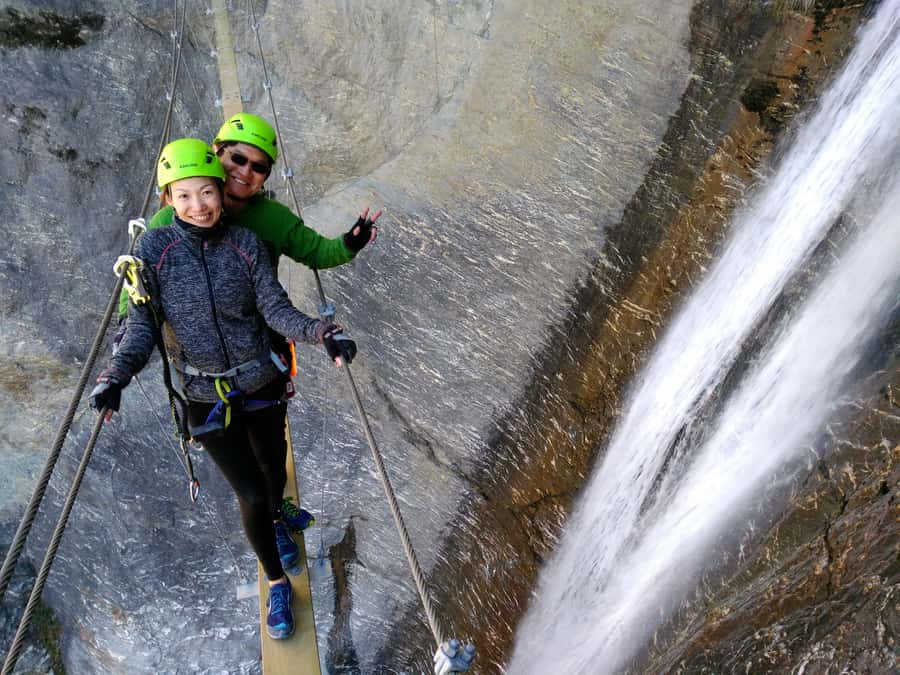
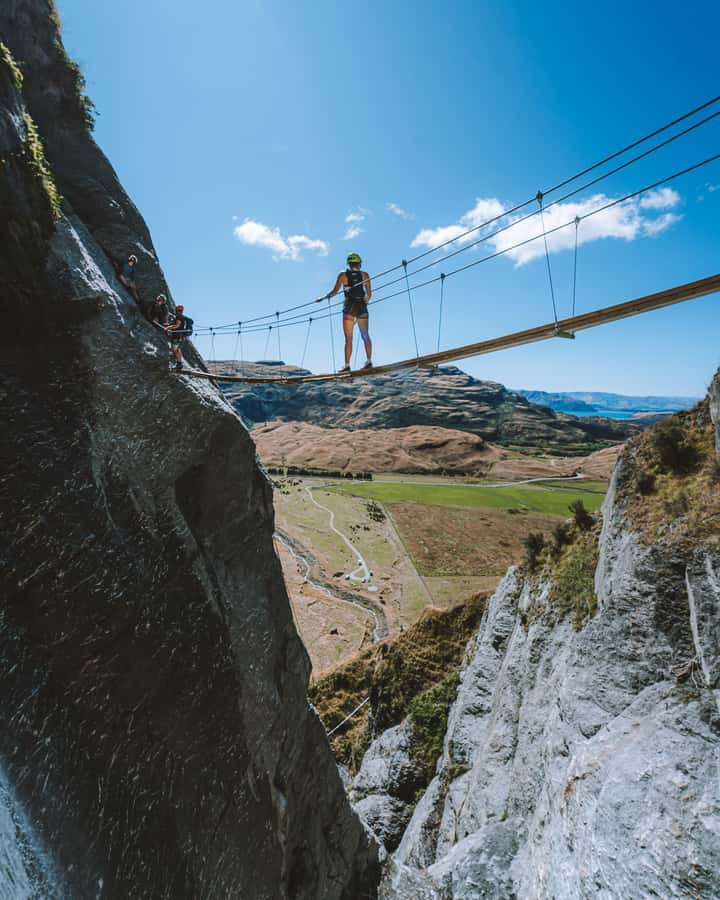
The suspension bridges provide some of the clearest snapshots of what makes this activity different. You cross above pools and beside falling water, with the cable route keeping you attached as you move across.
A bridge next to a large cascading waterfall offers a natural place for a memorable photo. The position is dramatic, but it is also exposed. If you are nervous with heights, pause, listen to your guide, and move at a measured pace. You are not expected to race across.
The exposure is not just a visual trick. You are responsible for hooking yourself into the climbing system as you go. Your guide assists and supervises, but you still need to stay alert and follow the process each time. This is why full body mobility and a moderate fitness level are required.
The guides appear to be a major part of the experience. Reports describe them as friendly, patient, encouraging, and careful with younger climbers and older adults. One group included people aged 13 to 45, while an older couple completed the climb without difficulty. That does not mean the route suits everyone, but it does show that age alone is not the deciding factor.
The key question is how you respond to heights and sustained effort. Being nervous but able to stay calm is one thing. Freezing or panicking on an exposed section is another. The route is best for someone willing to take responsibility for their own movements while accepting active support from a guide.
A completely different sort of day out:
- Small Group Jet Boat Adventure on the Clutha River from Wanaka
★ 5.0 · 302 reviews - Wanaka: Water Taxi & Mou Waho Island Tour
★ 4.8 · 299 reviews - Cardrona High Country Pub Trail Horse Trek (Intermediate level+)
★ 5.0 · 269 reviews - Queenstown: Small Group Mt Cook Day Tour
★ 4.7 · 262 reviews
The upper waterfall, lunch, and a cold dip
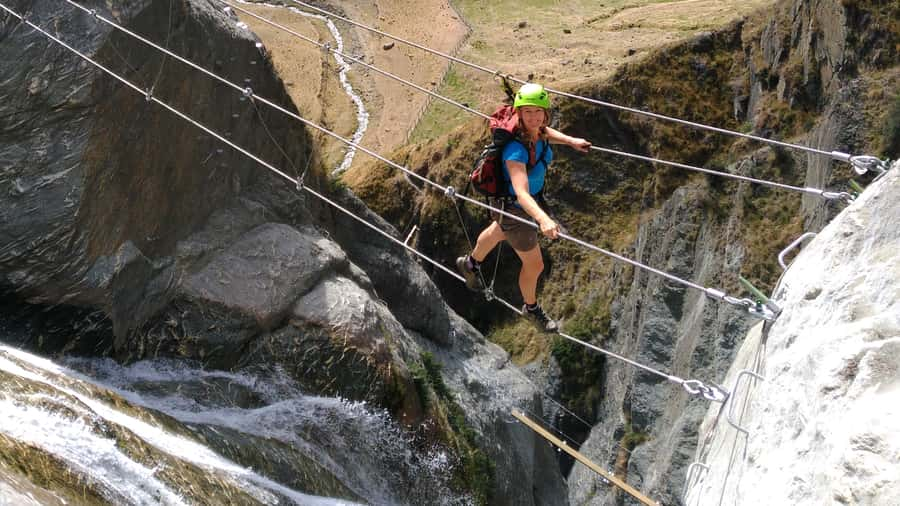
At the top of the climb, you reach the base of a 60-meter waterfall. This is where the experience changes pace. After the vertical work, you can sit down for lunch and take in the views over the surrounding mountains, farmland, and lake country.
Lunch is included, which adds useful value to a four-hour activity. You are not expected to finish the climb and immediately fend for yourself. The meal also gives your arms and legs a proper break before the descent.
A quick swim is possible for those who want it. The water is described in the feedback as a cold dip, so bring swimwear but do not expect a warm-water retreat. Even if you skip the swim, the waterfall stop gives you time to enjoy the setting without constantly thinking about the next rung.
This pause is one of the best parts of the design. The climb is not just a technical challenge from start to finish. You get a reward at the upper waterfall, along with a chance to look back at the route and appreciate how far you have come.
Bring a camera only if you can secure it. A GoPro attached to your person is recommended. A phone in a waterproof bag clipped to a pack is another practical option, based on advice from someone who completed the climb. Guides also take some photos and email them afterward, though you should treat your own camera as your responsibility.
The 45-minute descent back to the gate
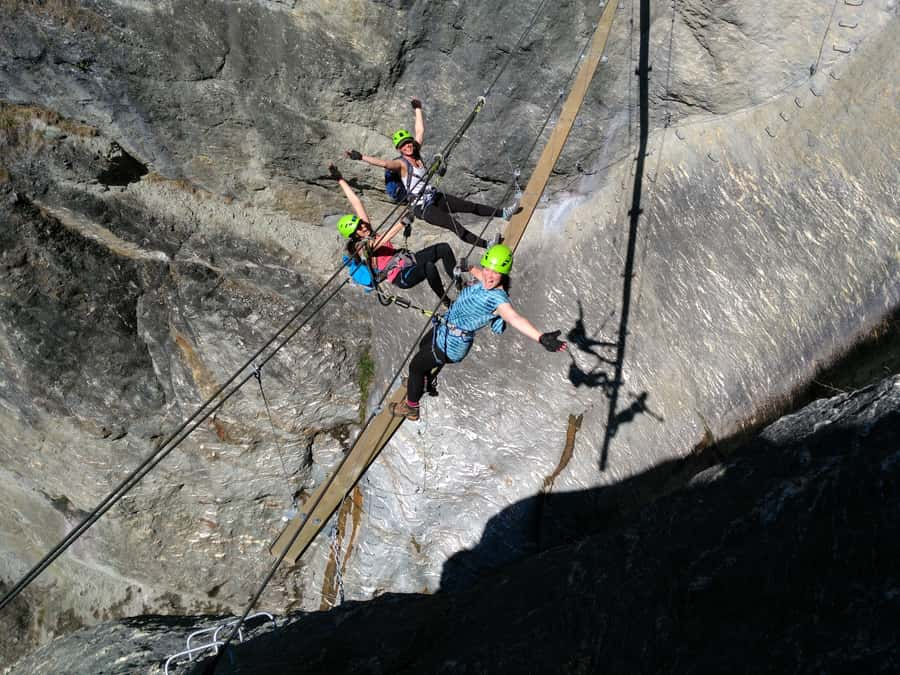
After lunch and the waterfall stop, the descent takes about 45 minutes. Going down may sound easier, but descending a steep route can place different demands on your legs and concentration.
You will still need to use care on the cables, rungs, and ladders. Tired arms and legs can make simple movements feel less precise, so keep your pace controlled. The short descent is a welcome contrast to the long climb upward, but it is not a free walk downhill.
The return completes the four-hour schedule. Allow enough time afterward to change or dry off if you take a swim. Since the experience begins and ends at the waterfall meeting point, you will need your own transport back to Wanaka or onward toward Treble Cone and Mount Aspiring National Park.
Is $224 a fair price?
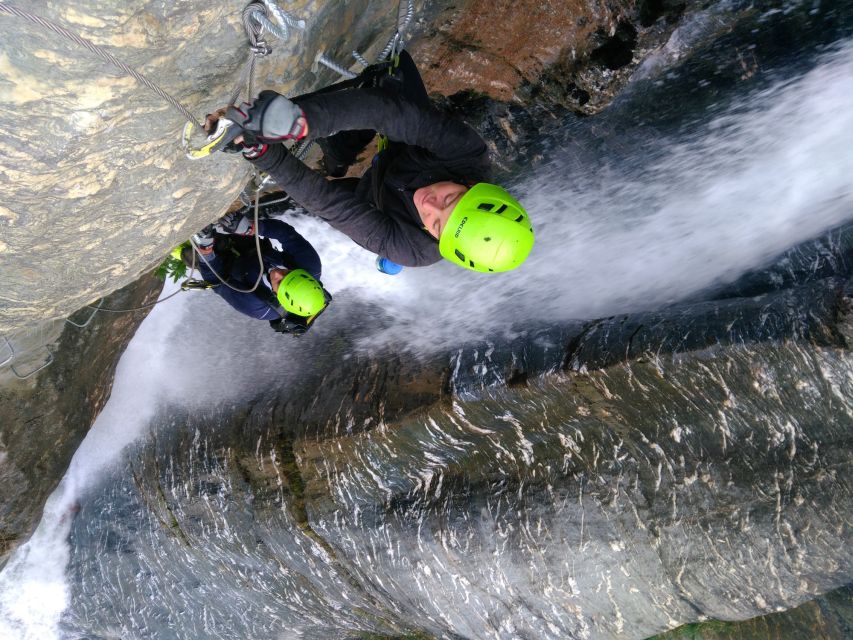
At $224 per person, this is not a budget half-day outing. It is also more than a simple scenic walk because the price includes an expert guide, climbing equipment, safety briefing, practice climb, lunch, and a specialized route that requires fixed infrastructure and close supervision.
I think the value is strongest if you want a serious activity rather than a passive view. The small guide ratio is important, the safety equipment is included, and the route offers experiences you cannot get from a normal trail: exposed bridges, waterfall-side climbing, blue pools, and a 320-meter ascent.
The value is weaker if you mainly want a relaxed nature excursion. Four hours of sustained climbing is a substantial commitment, and one person found the route more continuously vertical than expected. You are paying for challenge, access, and guidance, not for a leisurely walk.
The perfect rating from 66 recorded ratings and the many comments about excellent guides suggest that the service is a strong point. Still, a perfect score does not remove the physical demands. Read the fitness and height warnings honestly before booking.
Free cancellation up to 24 hours before the activity and the option to reserve now and pay later make planning easier. Starting times vary, so check availability when you choose your date.
Who should book this waterfall climb?
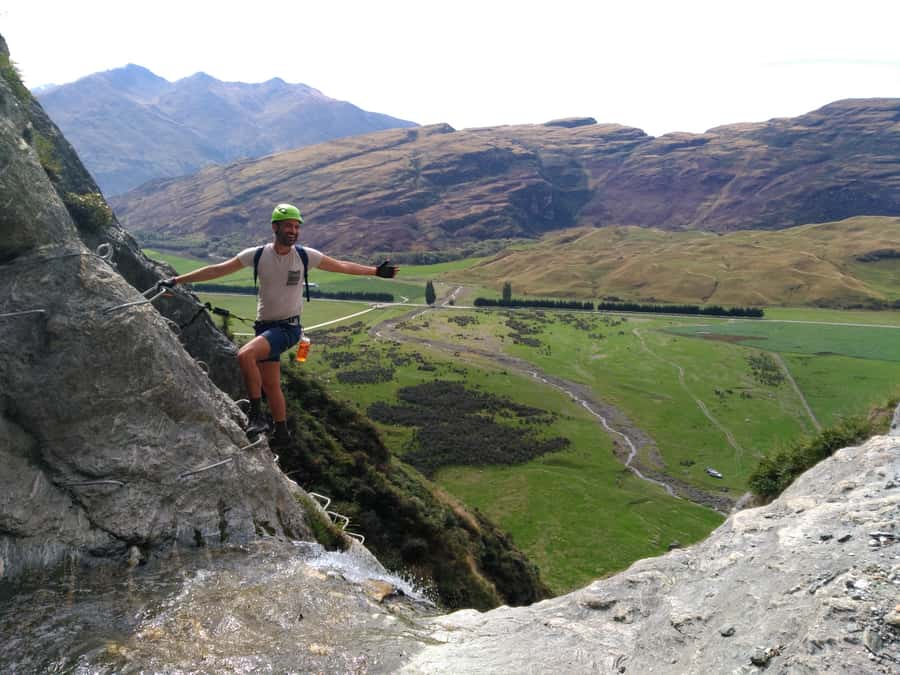
I would recommend it to you if you want an active Wanaka experience with a clear sense of achievement. It suits people who enjoy trying something new, can handle sustained climbing, and are comfortable following safety instructions in an exposed setting.
It is particularly well suited to:
- Adults and children aged 10 or older who meet the mobility and fitness requirements
- People with no climbing background who want a guided introduction
- Experienced climbers looking for a distinctive New Zealand route
- Families with older children and teenagers who can stay focused
- Couples and friends who prefer memorable challenges to standard sightseeing
- Anyone who wants dramatic photos without committing to a full mountaineering trip
It is not suitable for children under 10, pregnant women, or anyone under 40 kilograms. Full body mobility is required. The supplied information does not list a separate accessibility route, so you should contact the provider if you have a mobility concern.
This is also not the right choice if you cannot stay calm at height. You do not need to love heights, but you need to manage your reaction and keep working through the safety routine.
Practical tips for a better four hours
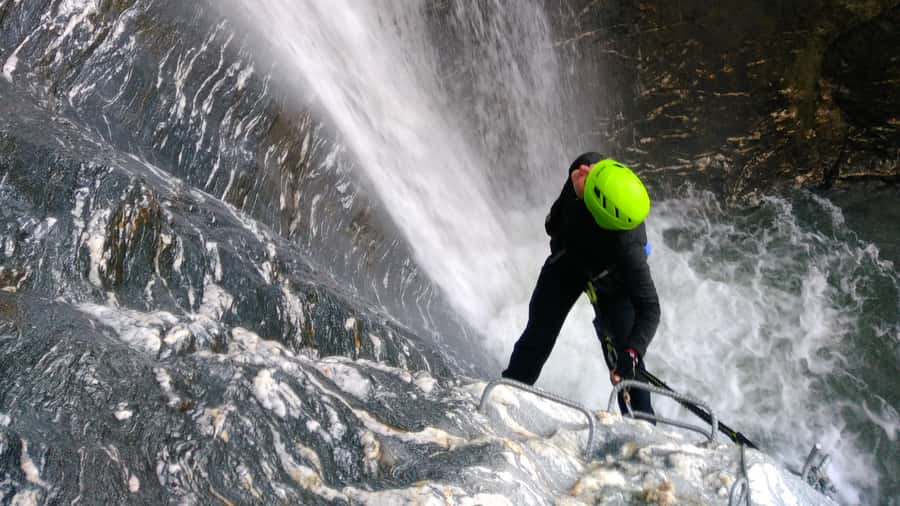
Bring more water than you think you need, since it is not included. Wear proper hiking shoes, use sun protection, and bring weather-appropriate outdoor clothing. The route includes water, rock, metal hardware, and changing conditions, so leave delicate clothing at home.
Pack swimwear if the upper waterfall appeals to you. You can also skip the swim and enjoy lunch beside the falls. A secure camera setup is best, especially if you want photos while keeping both hands available for climbing.
Use the storage area at the base for items you do not need during the climb. Keep essential belongings attached securely, and follow the guide’s instructions about cameras and packs.
Most of all, take the practice climb seriously. Learn the clipping system slowly, ask questions, and avoid trying to prove anything. The guides are there to help you complete the route safely, not to hurry you through it.
FAQ
How long does the waterfall cable climb take?
The experience lasts four hours in total. This includes the safety briefing, practice climb, ascent, lunch stop, and approximately 45-minute descent.
How high do you climb?
The intermediate route climbs 320 meters of vertical cliffs. At the upper section, you reach the base of a 60-meter waterfall.
Do I need previous climbing experience?
No. Previous climbing experience is not required. The guide provides a safety briefing, equipment, and an introductory training climb before you begin the main route.
How many people are in each group?
Each guide leads a group of no more than five people. This allows the guide to provide close supervision during the climbing sections.
What equipment is included?
The activity includes climbing safety equipment, including a helmet and harness, as well as the safety briefing and practice climb. An expert guide and lunch are also included.
What should I bring?
Bring comfortable shoes, hiking shoes, swimwear, weather-appropriate clothing, outdoor clothing, and a water bottle. A camera is allowed at your own risk, and a GoPro attached to your person is recommended.
Can I swim during the experience?
You may have the opportunity to take a quick swim at the waterfall near the top of the climb. The water is described as a cold dip, so swimwear is useful if you want to try it.
Who cannot take part?
The activity is not suitable for children under 10, pregnant women, or people under 40 kilograms. It also requires full body mobility and a moderate level of fitness.
Should you book the Wanaka waterfall climb?
Book it if you want Wanaka’s scenery with a physical challenge attached. The combination of a 320-meter climb, waterfall pools, suspension bridges, lunch, and a cold dip gives you a much stronger memory than a standard lookout stop.
Skip it if you want an easy half-day walk, dislike exposed heights, or prefer to spend your time moving at ground level. For everyone else, the $224 price is defensible because it covers specialist equipment, a small group, an expert guide, and access to a remarkable route.
If you can stay calm, keep your body moving, and accept that the climb is more rung-heavy than hike-heavy, this is one of the most distinctive active experiences near Wanaka.
Just added in Wanaka
- Wanaka: Scenic Hot Air Balloon Flight★ 4.7 · 6 reviews
- Wanaka: Tandem Paragliding Experience★ 4.9 · 93 reviews
- Wānaka: Scenic Helicopter Flight Wānaka Max★ 5.0 · 11 reviews
- Wanaka: Self-Guided Regular MTB – Lake Hawea to Lake Wanaka★ 4.8 · 40 reviews
- Wanaka: Mou Waho Island Boat Tour and Nature Walk★ 4.5 · 2 reviews
- Wanaka: Rob Roy Glacier Guided Hike with Lunch★ 5.0 · 3 reviews
- Wanaka: Scenic Helicopter Flight with Glacier Experience★ 5.0 · 42 reviews
- Wanaka: Mt Aspiring and Glaciers Scenic Flight★ 5.0 · 2 reviews
Wanaka Tours, compared.
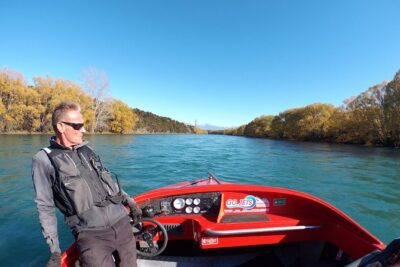
Small Group Jet Boat Adventure on the Clutha River from Wanaka
Read our review →
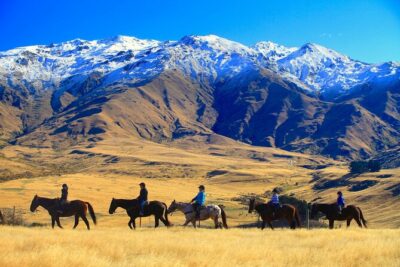
Cardrona High Country Pub Trail Horse Trek (Intermediate level+)
Read our review →
Browse the lists this tour appears in