
REVIEW · SKYDIVING
Auckland: 13000, 16000, or 18000-Foot Tandem Skydive
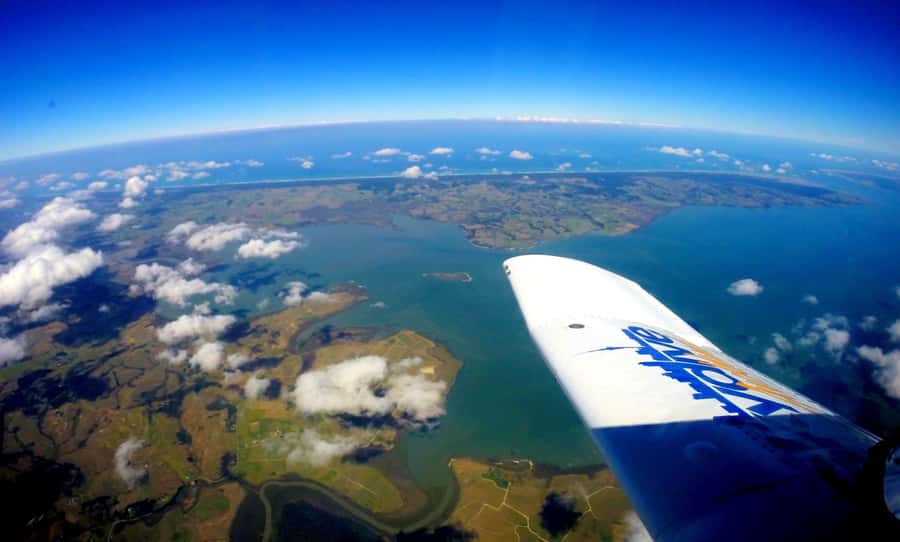
The plane climbs, and Auckland shrinks below. This tandem parachute jump from Parakai gives you a choice of 13,000, 16,000, or 18,000 feet, with up to 75 seconds of freefall at speeds reaching 200 km/hr. I like the wide coastal views, which can include Waiheke Island, Great Barrier Island, Mount Ruapehu, and Mount Taranaki. I also like the calm, reassuring crew, with instructors such as Owen, Aaron, James, Mitch, and Erin repeatedly praised for helping first-timers relax.
The main drawback is weather. Winter cloud, wind, or poor visibility can delay your jump by several hours, so do not schedule this too tightly against another Auckland activity. The price begins at $206 per person, but photographs and video cost extra, and there may be little food nearby while you wait.
In This Review
- Key points before you book
- From Auckland City to Parakai in about 45 minutes
- Check-in, preparation, and the waiting game
- The aircraft ride gives you time to look around
- The door opens, and the real decision arrives
- The parachute descent and return to the viewing deck
- Photos and video are worth considering
- Is $206 good value?
- Who should book this Auckland jump?
- Should you book it?
- FAQ
- Where does the Auckland tandem jump take place?
- How long does the activity take?
- Which jump heights are available?
- How long is the freefall?
- How fast do you travel?
- What might I see from the aircraft?
- Is equipment provided?
- Are photos and video included?
- Is there a weight limit?
- Can children or teenagers take part?
- What footwear should I wear?
- Can friends and family watch?
- Can I cancel my booking?
- Is the activity wheelchair accessible?
Key points before you book
- Choose your altitude carefully: The 18,000-foot option gives you the longest possible freefall, while 13,000 feet offers a lower-cost way to try the experience.
- Expect three hours at the base: Much of this time covers check-in, safety preparation, the scenic aircraft ride, and waiting for suitable weather.
- Look east and west: On a clear day, you may see Auckland’s two coastlines, Waiheke Island, Great Barrier Island, Mount Ruapehu, or Mount Taranaki.
- The crew is a major strength: Instructors are praised for calm briefings, friendly support, and professional handling from the aircraft to the ground.
- Bring a support crew if you like: Friends and family can watch from the viewing deck, positioned so they can see you return.
- Plan for add-ons and delays: Photo and video packages are available for purchase on the day, while weather can alter your schedule.
From Auckland City to Parakai in about 45 minutes
Skydive Auckland operates from Parakai, around a 45-minute drive from Auckland City. That makes this one of the easier high-adrenaline activities to fit into an Auckland visit, but it is still a half-day commitment once you include preparation, the aircraft ride, the jump, and the return to the base.
You meet at Skydive Auckland rather than at a central Auckland attraction. The supplied information does not include a transfer from the city, so you should plan your own way to Parakai unless your booking specifically adds transport. Allow extra time for the drive, especially if your schedule includes a fixed event later in the day.
The site has a viewing deck for friends and family. This is a useful touch. A nervous jumper can bring a small support crew, and those who prefer to keep their feet on the ground still get a clear part in the occasion. The deck is also helpful if you want someone else to handle phones, bags, and post-jump congratulations.
The activity is listed as wheelchair accessible, though the information provided does not explain which parts of the aircraft boarding or landing process may require assistance. If access is important for you, confirm the practical arrangements before booking.
More skydives in Auckland:
- Skydive Auckland
★ 5.0 · 1,516 reviews - NZONE Skydive Queenstown
★ 4.5 · 1,438 reviews - Queenstown: Tandem Skydive Experience
★ 4.8 · 475 reviews
Check-in, preparation, and the waiting game
The full experience takes about three hours, but that does not mean three hours in the air. You will spend time getting ready, receiving instructions, waiting for the aircraft, riding to altitude, and returning to the base after the parachute opens.
The crew’s approach is one of the strongest parts of the operation. First-timers describe clear explanations and a friendly manner that helps take the edge off the nerves. That matters because the hard part is often not the freefall itself. It is the few minutes beforehand, when your brain has plenty of time to ask why you agreed to this.
The instructors handle the jump as a tandem experience, so you are attached to a trained professional throughout the flight, freefall, parachute descent, and landing. Names praised for putting people at ease include Owen, Aaron, James, Mitch, Erin, and Ballsy and Sam. Your assigned instructor may be someone else, but the pattern is clear: personal reassurance is a central part of the service.
Wear closed-toe shoes. Open-toed shoes are not allowed. The weight limit is 100 kilograms, or 220 pounds, and the activity is not suitable during pregnancy.
Weather is the one factor you cannot control. One jump scheduled for 9 a.m. did not take place until around noon because of weather. Another person waited through gloomy winter conditions before finally getting the 18,000-foot jump. That can be frustrating, particularly if you have made a special trip to Parakai, but the delay is a practical part of an outdoor aircraft activity.
Bring patience, warm clothing for the wait, and perhaps a snack. One person specifically found the lack of nearby food inconvenient and was hungry by the end. A café was reportedly being built at the time, but you should not rely on that being available when you arrive.
The aircraft ride gives you time to look around
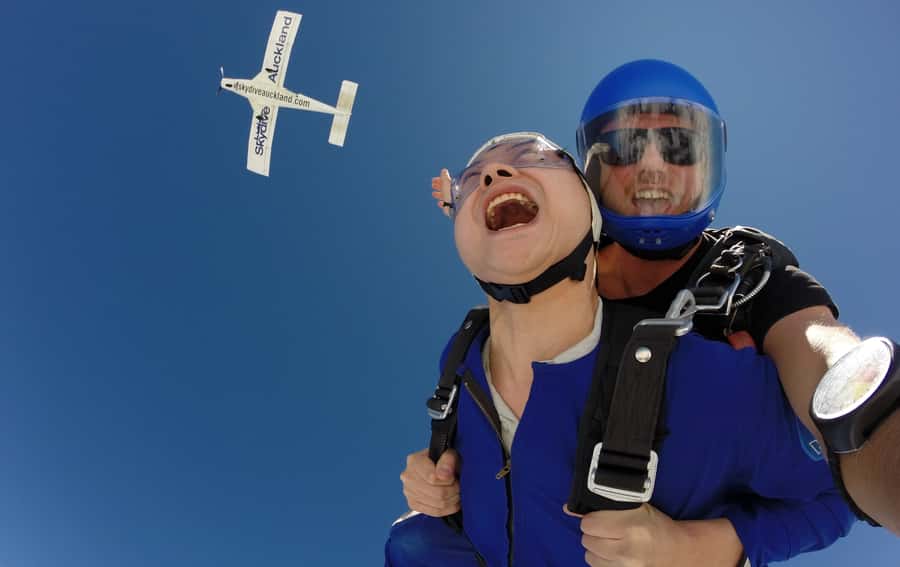
Once conditions are suitable, you board the aircraft and climb above Auckland. The ascent is more than a short prelude to the main event. It gives you time to look at the coastline, settle your breathing, and understand how high you are going.
At 13,000 feet, you get the shortest of the three listed altitude options. It still offers the essential experience: a fast freefall, a parachute descent, and a large view of northern New Zealand. This choice can suit you if the lower price matters, if you want the thrill without choosing the maximum altitude, or if you are trying a tandem jump for the first time.
At 16,000 feet, you gain more height and a longer possible freefall. It is a useful middle option for someone who wants more time in the air but does not feel the need to select the highest package.
At 18,000 feet, you reach the highest option offered here. The extra height is not merely a number on the booking page. It gives you more time in freefall and more time to absorb the views before the parachute opens. Several people who chose this level considered it worth paying more for, especially because the scenery becomes part of the whole event rather than a quick glimpse.
The exact views depend on weather and visibility. On a clear day, you may see Waiheke Island and Great Barrier Island, along with both Auckland coastlines. Farther-off landmarks can include Mount Ruapehu and Mount Taranaki. Do not book this expecting a guaranteed checklist of peaks and islands. Book it for the chance to see a remarkable sweep of New Zealand from above.
The door opens, and the real decision arrives
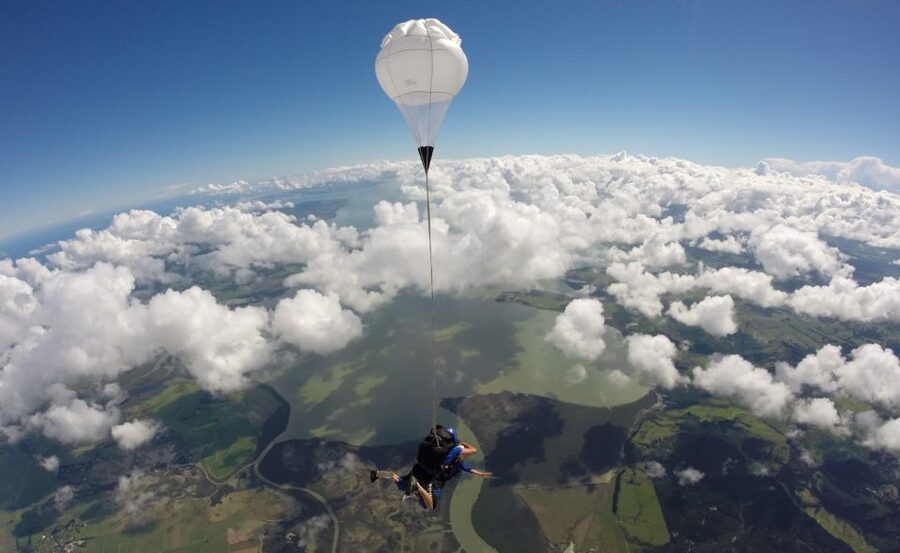
At your selected altitude, the aircraft door opens. You are secured to your tandem instructor, and the next part happens quickly.
Freefall can last up to 75 seconds, depending on the altitude option and the jump profile. You can reach speeds of up to 200 km/hr. That is fast enough to turn the first few seconds into a blast of wind and noise, followed by the strange sensation of floating above the coast.
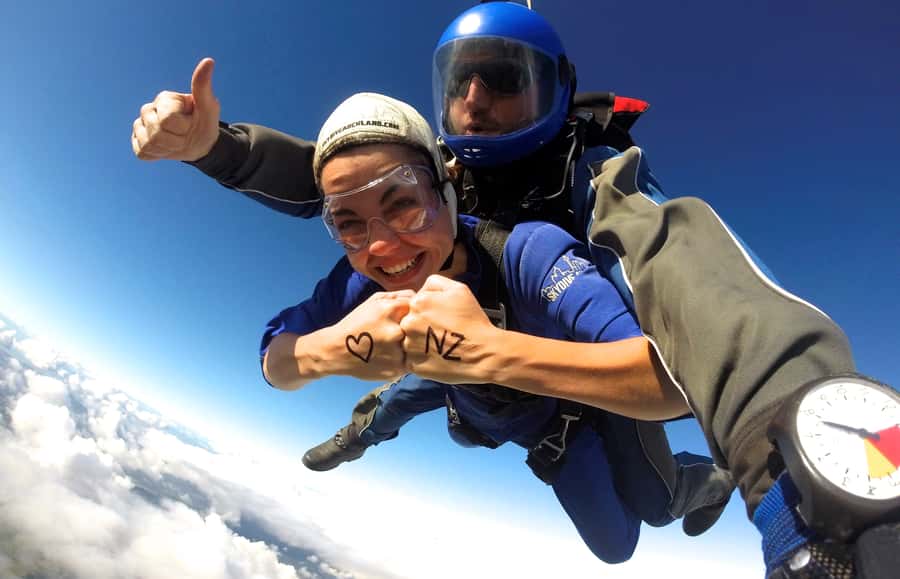
Your instructor controls the technical work. You need to follow the briefing, hold the required body position, and pay attention to instructions. The crew’s calm attitude is important here. Several first-timers arrived nervous and left saying the jump felt more fun than frightening.
At 18,000 feet, one person described passing through cloud with ice crystals striking the face and temperatures below zero inside the cloud. That is a vivid reminder that conditions at altitude are not the same as conditions at the ground. The cold and wind can be intense, so listen carefully during preparation and dress sensibly for the time before boarding.
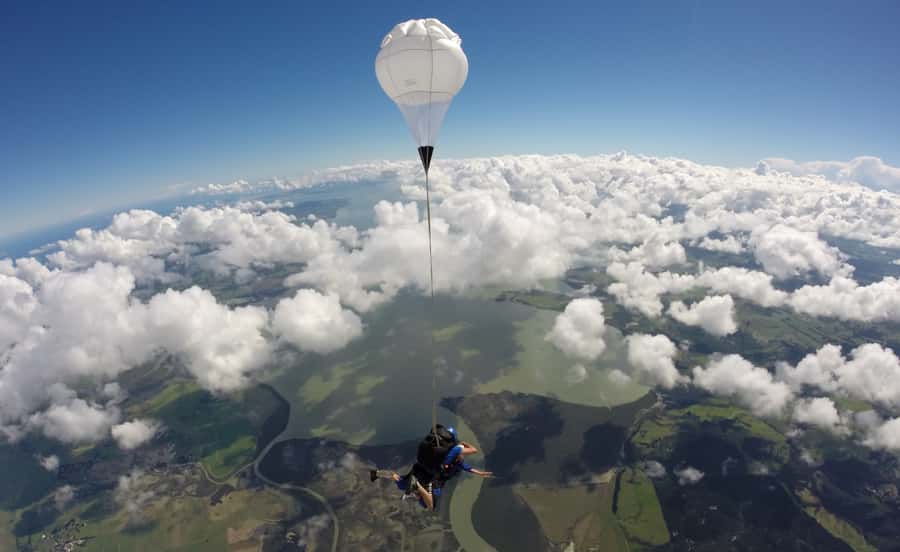
The experience is not all frantic motion. Once the parachute opens, the atmosphere changes. The noise drops, the speed eases, and you get a quieter view in every direction. This is when you can really look at the islands, coast, and open sea. For many people, the peaceful parachute descent becomes as memorable as the freefall.
A few more to weigh up in Auckland
- Waiheke Island: Ferry & Hop-On Hop-Off Explorer Bus Tickets
★ 4.6 · 3,311 reviews - Hobbiton & Waitomo Caves Guided Day Trip from Auckland incl lunch
★ 5.0 · 2,677 reviews - From Auckland: Hobbiton & Waitomo Caves Day Trip with Lunch
★ 4.9 · 2,505 reviews - Auckland Dolphin and Whale Watching Eco-Safari Cruise
★ 4.5 · 1,790 reviews
The parachute descent and return to the viewing deck
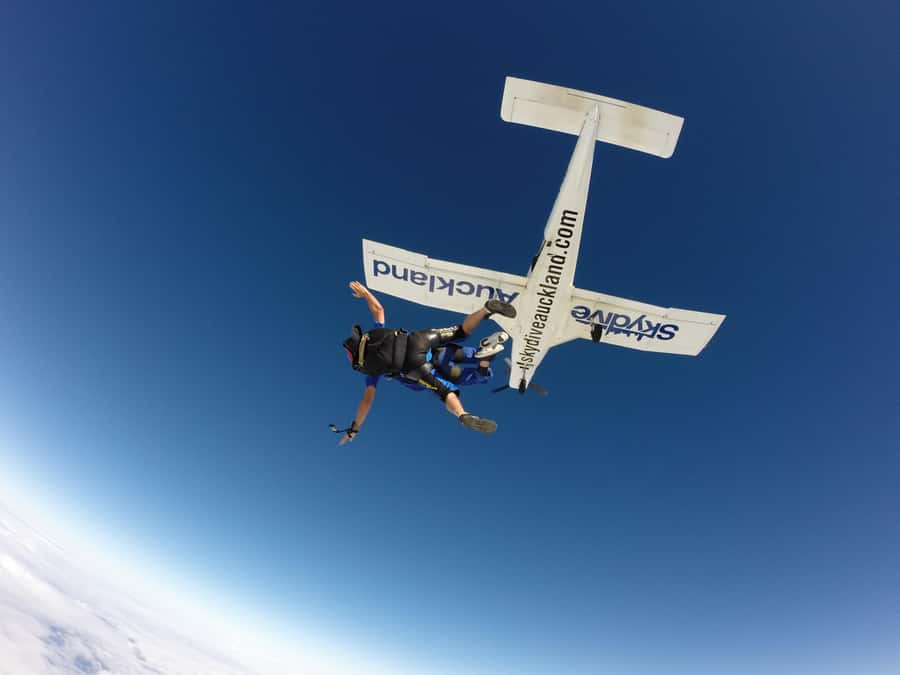
The descent gives you a chance to recover from the first rush. You may have time to take in the view, enjoy the feeling of suspended flight, and watch the ground grow closer.
Some instructors add small turns, flips, or other playful movements when conditions allow. One person specifically praised instructors Simon and Owen for adding tricks while still handling the jump safely. These extras are not the main reason to book, and you should not assume they are guaranteed, but they can add a fun personal touch.
The landing completes the active part of the experience, but it is not the end of your time at the base. You return your equipment, reunite with your support crew, and have a chance to talk through what just happened. The entire process is designed to be approachable for a first attempt, not only for experienced thrill-seekers.
Photos and video are worth considering
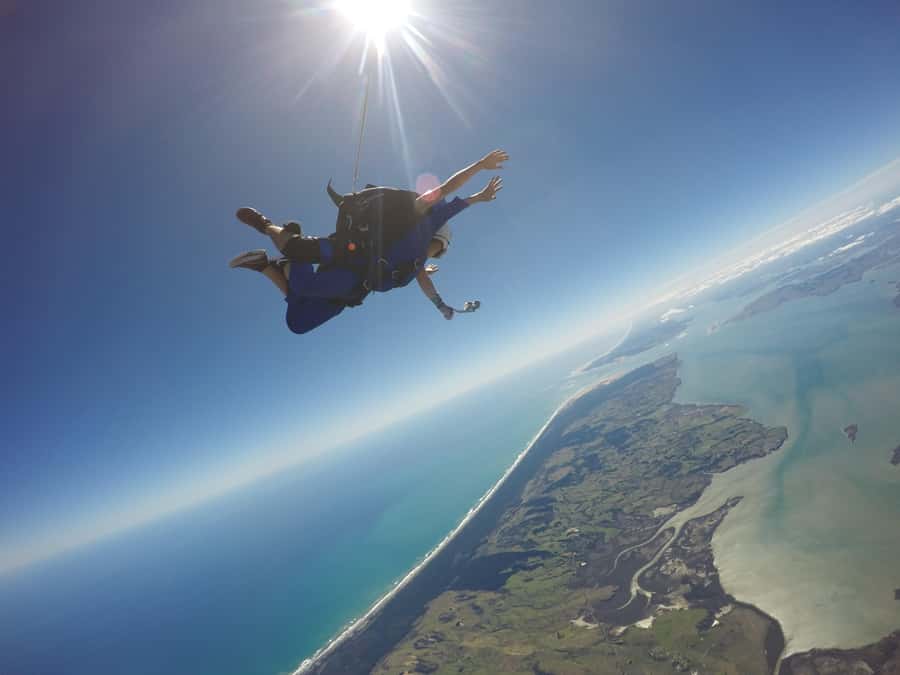
Photo and video packages are not included in the $206 starting price. They are available to purchase on the day, so you should treat them as an optional extra rather than an unexpected part of the base cost.
I would think about this before arriving. You will not be in a good position to document the freefall yourself, and a phone cannot capture the event from the same angle as a dedicated camera. If this is a once-only occasion, the extra cost may feel worthwhile. If you are focused on keeping the price down, the jump itself remains the central experience.
One useful detail is the reported turnaround time. A package purchased by one pair was delivered within about 15 minutes of landing. That means you may be able to watch the footage before leaving instead of waiting until the next day.
The footage can also help you remember details that pass quickly in the moment: the aircraft door, the first rush of air, the coastline below, and the calmer parachute descent. Still, ask about the current package price before committing, since the supplied information does not state the additional cost.
Is $206 good value?
At $206 per person, the base price is reasonable for a three-hour aircraft-based experience, but value depends on what you want from the day.
The 13,000-foot option is the sensible choice if you want the main thrill at the lowest listed price. You still receive the aircraft ride, tandem equipment, instructor, freefall, and parachute descent. The 18,000-foot option costs more if selected, but it gives you the highest altitude and the longest possible freefall, up to 75 seconds.
You should also budget for photos and video if you know you will want a record of the jump. That can change the total cost considerably, so compare the full amount rather than focusing only on the starting price.
For a birthday, major milestone, or long-planned New Zealand adventure, the price may be easier to justify. For a tight budget, the experience is less essential than Auckland’s free attractions and day walks, and weather delays can consume much of a day without guaranteeing a jump.
The 4.9 rating from 151 ratings points to a very consistent customer experience. The most praised features are not just the thrill. People repeatedly value the welcoming staff, the clear preparation, the sense of safety, and the views.
Who should book this Auckland jump?
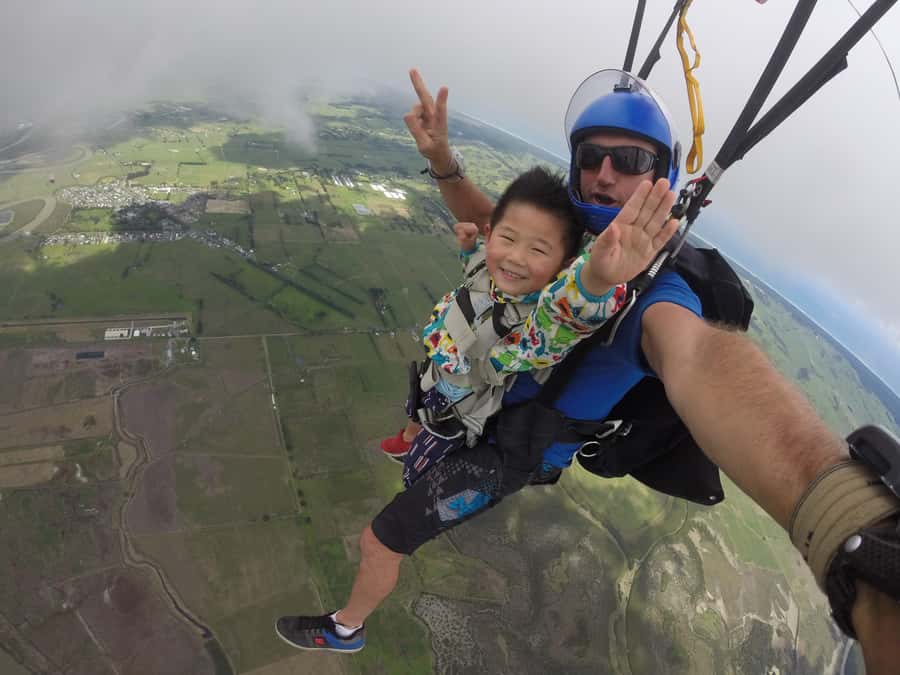
This is best for you if you want a major physical thrill but prefer to have a professional manage the technical side. It also suits first-timers who are nervous, since the crew puts clear instructions and reassurance at the center of the experience.
Choose it for a special occasion if you want something more memorable than a standard sightseeing stop. The views give the jump a strong sense of place. You are not simply falling from an aircraft over an anonymous field. You may be looking across Auckland’s coastal setting, islands, and distant volcanic peaks.
It is less suitable if you have only a narrow window in Auckland. Weather may delay the activity, and the stated duration is three hours before travel time is added. It is also not appropriate for anyone over 100 kilograms, anyone who is pregnant, or anyone unable to meet the footwear requirement.
People under 18 can take part, but they need a parent or guardian or a signed waiver. The 18,000-foot option is limited to people aged 12 and older. English is the listed activity language.
Free cancellation is available up to 24 hours before the scheduled time, and you can reserve now and pay later. These terms help if your plans are still changing, but they do not remove the risk of weather delays on the day.
Should you book it?
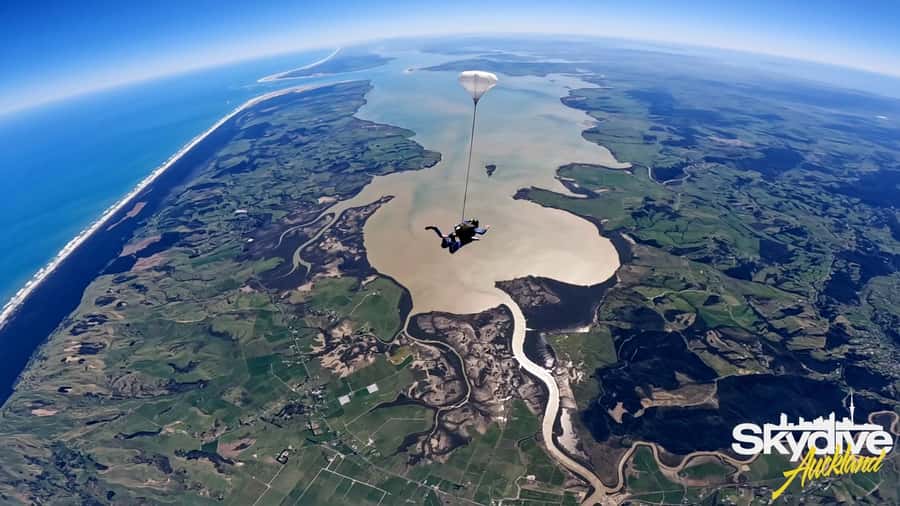
Book this if you want a serious thrill, broad New Zealand views, and a crew that knows how to steady a nervous first-timer. I would choose the 18,000-foot option if the budget allows and the jump is a major highlight of your trip. The extra altitude gives you the longest possible freefall and a stronger sense of occasion.
Choose 13,000 feet if price matters more than maximum airtime. Pick a day with flexibility, bring a snack, wear closed-toe shoes, and decide in advance if you want photos and video. With those details handled, this is one of the most memorable ways to see Auckland from above.
FAQ
Where does the Auckland tandem jump take place?
The activity takes place at Skydive Auckland in Parakai, on New Zealand’s North Island. Parakai is about a 45-minute drive from Auckland City.
How long does the activity take?
The stated duration is three hours. This includes preparation, the aircraft ride, the jump, the parachute descent, and time at the base.
Which jump heights are available?
You can choose from 13,000 feet, 16,000 feet, or 18,000 feet. The exact altitude depends on the option you book.
How long is the freefall?
The freefall lasts up to 75 seconds. The maximum time depends on the altitude option.
How fast do you travel?
You can reach speeds of up to 200 km/hr during freefall.
What might I see from the aircraft?
On a clear day, you may see Auckland’s East and West coastlines, Waiheke Island, Great Barrier Island, Mount Ruapehu, or Mount Taranaki.
Is equipment provided?
Yes. The selected 13,000, 16,000, or 18,000-foot tandem jump and all required equipment are included.
Are photos and video included?
No. Photo and video packages are optional extras available to purchase on the day.
Is there a weight limit?
Yes. The maximum weight is 100 kilograms, or 220 pounds. The activity is not suitable for people over that limit.
Can children or teenagers take part?
There is no general age limit, but anyone under 18 must bring a parent or guardian or provide a signed waiver. The 18,000-foot option is limited to people aged 12 and older.
What footwear should I wear?
Open-toed shoes are not allowed. Wear closed-toe shoes.
Can friends and family watch?
Yes. A viewing deck is positioned so friends and family can watch the landing.
Can I cancel my booking?
You can cancel up to 24 hours in advance for a full refund. The reserve-now-and-pay-later option also lets you hold a place without paying immediately.
Is the activity wheelchair accessible?
Yes, it is listed as wheelchair accessible. The supplied information does not provide further details about the boarding or landing arrangements, so confirm those needs before booking.
Just added in Auckland
- Yonder Star Sailing Yacht★ 5.0 · 2 reviews
- Auckland Airport Private One-Way or Round-Trip Transfer★ 4.5 · 14 reviews
- Zombie Bite Escape Room Experiences★ 5.0 · 54 reviews
- Kumeu Wine Region Shuttle from Auckland★ 4.5 · 19 reviews
- Auckland’s Wild West Coast & Black Sand Beaches Tour inc Lunch★ 5.0 · 12 reviews
- Wētā Workshop Unleashed Tour – Mandarin Speaking Guide★ 5.0 · 2 reviews
- Vineyards Honey and Black Sand Beaches from Auckland★ 5.0 · 93 reviews
- West Coast Wilderness Experience – Private Tour From Auckland★ 5.0 · 1 review
Skydiving, compared.
15,000ft Tandem Skydive in Tauranga – Bay of Plenty
Read our review →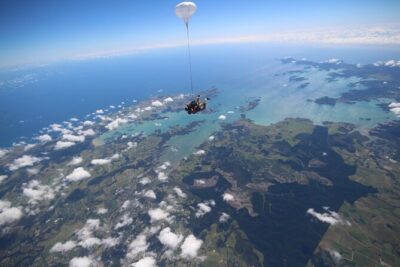
Browse the lists this tour appears in