
REVIEW · WHALE WATCHING
Auckland Dolphin and Whale Watching Eco-Safari Cruise
Wild animals set the schedule here. This 4.5-hour cruise takes you from Auckland’s Viaduct Harbour into the Hauraki Gulf Marine Park, where you might see bottlenose dolphins, Bryde’s whales, seals, blue penguins, sharks, and rare seabirds. I like the marine research connection and the fact that each ticket supports marine mammal conservation.
I also like the custom-built catamaran, which gives you indoor and outdoor viewing areas, plus expert commentary from marine research scientists. The main catch is simple: no whale or dolphin sighting is guaranteed, and a full boat can feel crowded when everyone rushes to the rail.
In This Review
- Key points before you book
- Leaving Auckland from Viaduct Harbour
- Crossing Waitematā Harbour beneath the bridge
- Rangitoto and the islands of the gulf
- Searching for dolphins and Bryde’s whales
- Blue penguins, seals, sharks, and seabirds
- Marine scientists give the cruise a purpose
- What the four and a half hours really feel like
- Is $135.91 good value?
- Who should book this Auckland cruise?
- Practical ways to make the day better
- Should you book the Auckland Dolphin and Whale Watching Eco-Safari?
- FAQ
- Where does the Auckland Dolphin and Whale Watching Eco-Safari Cruise depart?
- How long does the cruise last?
- What animals might I see?
- What happens if no marine mammals are seen?
- Is food included?
- What should I bring?
Key points before you book
- A 4.5-hour trip from downtown Auckland: You leave from the New Zealand Maritime Museum at Viaduct Harbour, so there is no long transfer from the city center.
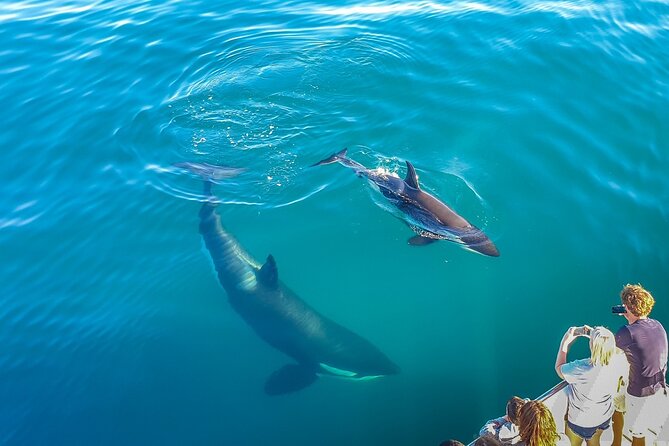
- Wildlife can include more than whales: Dolphins are frequently seen, while sightings may also include seals, blue penguins, sharks, Bryde’s whales, and several seabird species.
- Research is part of the experience: Onboard marine scientists explain local wildlife and share information about conservation work.
- The catamaran has indoor and outdoor viewing: The 65-foot, 20-meter vessel is designed for watching from several areas, though seating can become tight at full capacity.
- Weather matters: Bring warm layers, weatherproof clothing, sunscreen, and a hat with a chin strap. The wind can make the boat feel much colder than Auckland’s waterfront.
- A free return trip may be offered: If you see no marine mammals, you can go again on another day at no extra charge.
Leaving Auckland from Viaduct Harbour
You meet the crew at the New Zealand Maritime Museum in Auckland’s Eastern Viaduct area. This is a handy departure point if you are staying in central Auckland, and the cruise returns to the same place after roughly four and a half hours.
Check-in closes 15 minutes before departure. Do not treat that as a loose suggestion. If you arrive late, you risk losing your allocated seat.
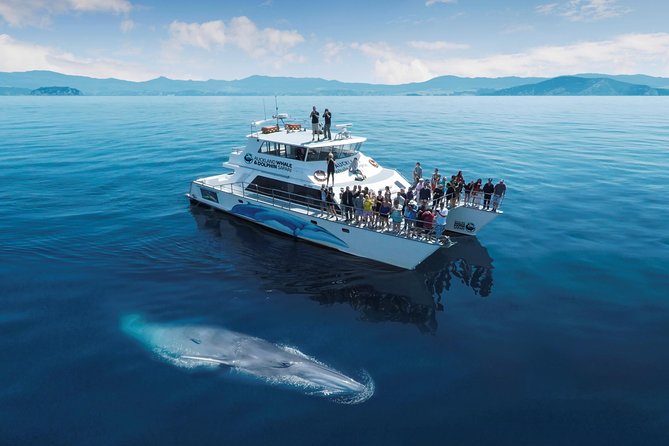
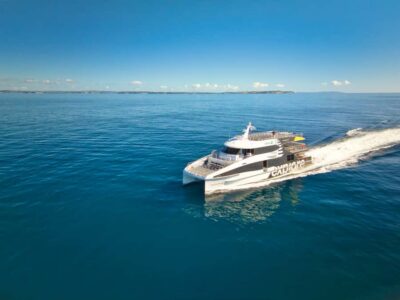
The boat is a custom-built 65-foot catamaran. That matters because a catamaran generally offers a broad, stable platform for viewing, and the vessel has both covered and open-air areas. One useful detail from the trip experience is that the front deck can be the best place when the boat is moving, but it is also exposed to wind and spray.
You can buy snacks and drinks onboard, and toilets are available. Food and drinks are not included in the ticket price, so bring your own water or budget for the onboard shop.
The boat can carry up to 99 people. That is a substantial group for a wildlife outing. On a calm day, the vessel gives you room to move around and find a good view. When the boat is full, though, the most popular rail positions go quickly. If you leave your place to get a drink, you may not find the same spot when you return.
More Boat Trips in Auckland
- Auckland: Whale and Dolphin Watching Half-Day Eco Cruise
★ 4.5 · 1,072 reviews - Auckland Harbour Sailboat Cruise Including Three Course Dinner
★ 4.5 · 476 reviews - America’s Cup 2-Hour Sailing Experience Waitemata Harbour
★ 4.8 · 370 reviews
Crossing Waitematā Harbour beneath the bridge
The first part of the route gives you an enjoyable introduction to Auckland from the water. The boat moves through Waitematā Harbour and passes the Auckland Harbour Bridge, with city views gradually giving way to islands and open water.
This section is less about wildlife and more about getting oriented. You see how close Auckland is to the Hauraki Gulf Marine Park, a protected marine area with five marine preserves and a wide spread of islands.
The changing scenery helps keep the early part of the trip interesting, especially if the animals are not yet cooperating. You can settle in, listen to the safety instructions, and get a feel for the conditions before the boat reaches more open water.
Do not assume the sea will be gentle because the harbor looks calm. Several hours on open water can be choppy, and some people may find the ride tiring. If you are prone to seasickness, the most sensible approach is to prepare before departure, choose a stable viewing position, and avoid arriving hungry.
Rangitoto and the islands of the gulf
Rangitoto Island is one of the most recognizable sights on the Auckland horizon. Its volcanic form gives the cruise a strong sense of place, and seeing it from the water offers a different view from the usual city lookout or ferry crossing.
The route also includes views toward Motuihe Island, Motutapu Island, and Tiritiri Matangi Island. The cruise does not present these stops as shore visits. Instead, they form part of the wider setting as the crew searches the waters around the islands.
That distinction is important. You are booking a wildlife cruise, not an island-hopping trip. You will spend the time onboard, watching the sea and listening for updates from the crew.
The Hauraki Gulf is valued here not only for its scenery but also for its variety of marine habitats. The crew talks about the park, the species found in the area, and the research carried out with local marine scientists. That commentary gives the cruise more purpose than simply racing around until somebody spots a fin.
Searching for dolphins and Bryde’s whales
The wildlife search is the heart of the day. The crew tracks species that use these waters, including bottlenose dolphins and Bryde’s whales, a whale species native to New Zealand.
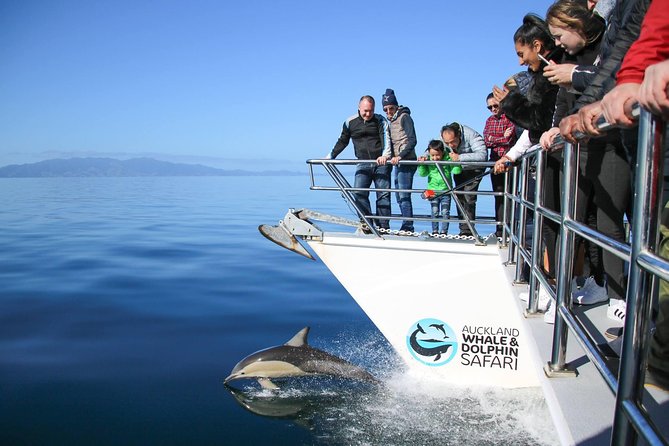
Dolphins are often the most reliable highlight. The boat may encounter a single pod or several groups, and sightings can last only a few minutes or continue for around half an hour. When dolphins choose to swim and play near the bow, the viewing can be spectacular, with repeated appearances close to the boat.
You should keep your camera ready, but do not spend the whole trip staring at a screen. Wildlife appears without much warning, and a short glimpse through your own eyes is worth more than a shaky video.
Whales are less predictable. Some trips produce several sightings, while others produce none. A whale may surface briefly and disappear before the boat reaches a good viewing position. The crew will make a strong effort to find marine mammals, but it cannot control where wild animals travel or how long they remain visible.
The company offers a complimentary return trip if no marine mammals are seen. That is a fair policy, though it has limited value if you are visiting Auckland from overseas and will not return. If your schedule allows, the policy gives you a useful second chance.
More whale watching from Auckland:
- Auckland: Tikapa Moana Whales, Dolphins and Islands Cruise
★ 3.9 · 292 reviews - Auckland: Tikapa Moana Dolphin, Whale and Island Cruise
★ 4.0 · 17 reviews - Kaikoura: Whale Watching Cruise
★ 4.6 · 3,089 reviews - Whale Watching in Kaikoura by Boat
★ 4.5 · 2,906 reviews
Blue penguins, seals, sharks, and seabirds
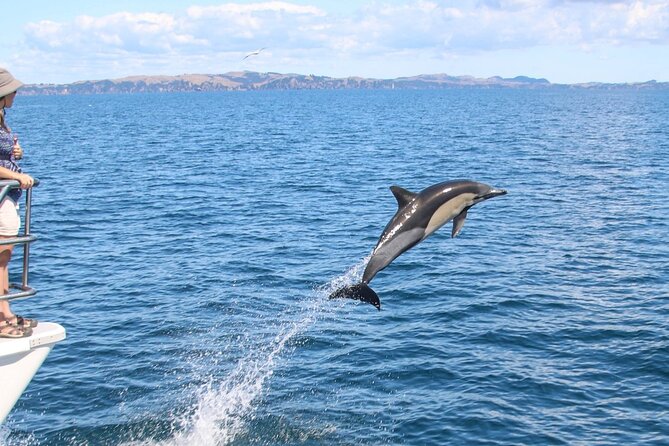
A whale and dolphin trip can reward you with much more than its title suggests. Blue penguins may appear near the water, while seals can turn up among the other marine life.
The birdwatching adds another layer. Keep an eye out for Australasian gannets, petrels, shearwaters, and white-fronted terns. Gannets are especially enjoyable to watch as they fly above the water and plunge after fish, while smaller seabirds can be harder to identify from a moving boat.
There have also been sightings of hammerhead sharks and large groups of birds working over feeding activity. These encounters are not promised, but they show why it is wise to stay alert even after the main wildlife search seems quiet.
Bring binoculars if you have them. The boat may provide close views of dolphins, but seabirds and distant blows from whales can be much easier to identify with magnification.
Marine scientists give the cruise a purpose
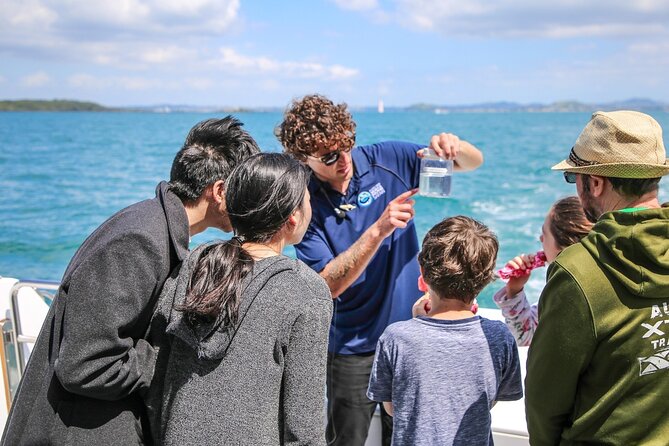
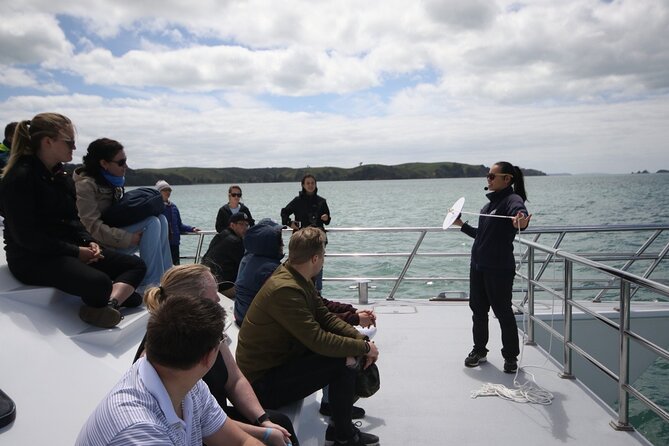
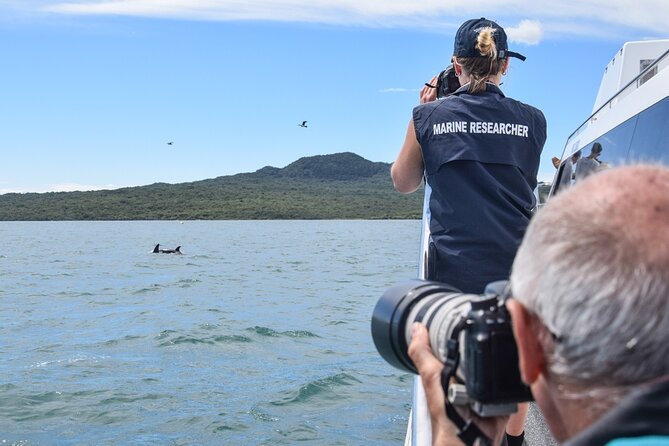
The strongest feature of this experience is the research and conservation work woven into the trip. The onboard team shares information about the animals, the marine park, and the whales being tracked.
That makes the waiting time useful. Instead of simply hearing repeated instructions to look left or right, you learn why the Hauraki Gulf matters and how researchers gather information about marine mammals.
Each ticket contributes directly to marine mammal conservation. I see that as a real value, particularly because wildlife tours can otherwise feel like entertainment with little connection to the places they visit.
The crew also aims to give animals space and let them decide how close to come. That is the right approach. A good sighting is not worth chasing an animal into distress, and the crew’s care around wildlife is an important part of the experience.
The quality of the commentary may depend on where you sit and how busy the boat is. Some people have found that announcements over the microphone can be too quiet from the rear or open areas. If the educational side matters to you, move closer to the speaker when practical and tell a crew member if you cannot hear.
What the four and a half hours really feel like
This is not a quick harbor ride with guaranteed entertainment. It is a half-day commitment to searching a large marine area.
On a successful trip, the time passes quickly. Dolphins may hold everyone’s attention for long stretches, and a whale sighting can change the mood of the entire boat. Add island views, seabirds, seals, and the crew’s commentary, and the cruise feels full.
On a quiet trip, the same duration can feel long. You may spend much of the time watching open water, riding through chop, and waiting for news from the crew. Even then, the views and research commentary provide some return, but you should book this with realistic expectations.
The boat is often described as stable and comfortable, but stability is not the same as stillness. Rough conditions can make the trip demanding, especially for children or anyone sensitive to motion. Warm layers are essential, even in good Auckland weather. Add weatherproof gear, flat-soled shoes, sunglasses, sunscreen, and a secure hat.
A hat with a chin strap is a practical choice. An ordinary loose hat can quickly become an offering to the Hauraki Gulf.
Is $135.91 good value?
At $135.91 per person, this is not a cheap way to spend an afternoon. The value depends on what you want from the outing.
For a simple boat ride, the price may feel high. You are paying for four and a half hours on the water, a purpose-built catamaran, a local guide, research commentary, the chance to see several marine species, and a direct contribution to conservation.
The value improves if you see dolphins, whales, or several kinds of wildlife. It also improves if you care about learning how marine research works rather than simply collecting photographs.
The value drops if you need a guaranteed whale sighting, dislike choppy water, or have only a short time in Auckland. You also need to account for food and drinks, which cost extra, and transport to the Viaduct Harbour, since hotel pickup and drop-off are not included.
A full boat can make the price feel less attractive if you spend much of the trip competing for rail space. Still, the catamaran provides multiple viewing areas, and the crew asks people to rotate so others can see when animals appear.
Who should book this Auckland cruise?
I would recommend it to anyone who enjoys wildlife, boats, seabirds, and open-water scenery. It works particularly well for families who can manage a long outing, couples looking for something beyond Auckland’s museums, and anyone interested in conservation.
It also suits you if you can accept uncertainty. The best mindset is to treat a whale sighting as a bonus, not a contract. Dolphins are often seen, but even they can stay away on a particular day.
I would be more cautious if you have limited mobility, strong seasickness concerns, or a fixed schedule that cannot absorb a four and a half hour activity. Service animals are allowed, and most people can participate, but the combination of wind, movement, stairs or crowded viewing areas may affect your comfort.
The maximum group size of 99 is worth considering. If you want a quiet, private wildlife trip, this is not that. If you are happy sharing the experience and taking turns at the rail, the group setting is manageable.
Practical ways to make the day better
Arrive early enough to check in without rushing. Since check-in closes 15 minutes before departure, build in time to find the New Zealand Maritime Museum meeting point.
Dress for the sea, not just the Auckland forecast. Wear warm layers and weatherproof clothing, then add sunscreen and sunglasses. The sun can be strong even when the wind makes the air feel cool.
Use flat-soled shoes and secure loose items. Keep your camera and binoculars easy to reach, but do not block your own view by filming constantly.
If the boat is busy, be polite and share the best viewing positions. The crew may ask people to rotate, but good manners from everyone make the wildlife encounters better for the whole boat.
Finally, allow the outing to be about more than the tick-box sighting. The islands, seabirds, marine science, and changing weather are all part of the Hauraki Gulf experience.
Should you book the Auckland Dolphin and Whale Watching Eco-Safari?
Yes, if you want an educational wildlife cruise with a real conservation link and can handle the possibility of a quiet day. The crew makes a serious effort, the route is scenic, and dolphin encounters can be exceptional.
Book with caution if your entire decision depends on seeing a whale. The cruise cannot guarantee that outcome, and a complimentary return ticket may not help if you are leaving Auckland soon.
For most visitors with half a day to spare, I think the combination of marine research, island scenery, seabirds, and possible dolphin encounters makes this a worthwhile Auckland outing. Just dress warmly, arrive early, and let the wild animals have the final word.
FAQ
Where does the Auckland Dolphin and Whale Watching Eco-Safari Cruise depart?
The cruise departs from Eastern Viaduct near the New Zealand Maritime Museum in Auckland Central. It returns to the same meeting point at the end of the activity.
How long does the cruise last?
The experience lasts approximately 4 hours and 30 minutes.
What animals might I see?
Possible sightings include whales, bottlenose dolphins, seals, blue penguins, sharks, Australasian gannets, petrels, shearwaters, and white-fronted terns. Sightings are not guaranteed.
What happens if no marine mammals are seen?
If you do not see any marine mammals during the trip, you can go again on another day at no extra charge. This may be less useful if you are visiting from overseas and cannot return to Auckland.
Is food included?
Food and drinks are not included in the ticket price. Snacks and drinks are available to purchase onboard, and toilets are available.
What should I bring?
Bring warm layers, weatherproof clothing, a sun hat with a chin strap, sunscreen, sunglasses, a camera, binoculars, and flat-soled shoes. Check-in closes 15 minutes before the stated departure time.
More Dolphin Watching from Auckland
- Auckland: Bay of Islands Day Tour with Dolphin Cruise
★ 5.0 · 11 reviews - Akaroa Dolphins ~ Harbour Nature Cruise
★ 5.0 · 2,143 reviews - Paihia/Russell: Hole in the Rock, Dolphins & Island Cruise
★ 4.6 · 821 reviews - Akaroa: Dolphin Nature Cruise
★ 4.9 · 440 reviews
Just added in Auckland
- Yonder Star Sailing Yacht★ 5.0 · 2 reviews
- Auckland Airport Private One-Way or Round-Trip Transfer★ 4.5 · 14 reviews
- Zombie Bite Escape Room Experiences★ 5.0 · 54 reviews
- Kumeu Wine Region Shuttle from Auckland★ 4.5 · 19 reviews
- Auckland’s Wild West Coast & Black Sand Beaches Tour inc Lunch★ 5.0 · 12 reviews
- Wētā Workshop Unleashed Tour – Mandarin Speaking Guide★ 5.0 · 2 reviews
- Vineyards Honey and Black Sand Beaches from Auckland★ 5.0 · 93 reviews
- West Coast Wilderness Experience – Private Tour From Auckland★ 5.0 · 1 review
Whale Watching, compared.
Whale and Dolphin Watching Half-Day Eco Cruise
Read our review →
Tikapa Moana Whales, Dolphins and Islands Cruise
Read our review →
Kaikōura Whale Watching Scenic Flight (40 Minutes)
Read our review →
Browse the lists this tour appears in