REVIEW · AUCKLAND TOURS
Auckland to Rangitoto Island Ferry
Volcanic rock meets big harbor views. The Rangitoto ferry trip gives you a simple half-day escape from Auckland, with a short cruise across the Hauraki Gulf and the chance to walk up a symmetrical volcanic cone that rises 260 meters above the water. I like the easy access from downtown and the unusual mix of black lava, native bush, sandy coves, and wide city views.
I also like that you can make the outing as active or as relaxed as you wish. Walk to the summit, explore lava caves, or stay near the wharf and enjoy the island at a slower pace. The main drawback is planning: there are no shops on Rangitoto, and the ferry schedule leaves little room for delays if you want to make the most of your visit.
In This Review
- Key points to know before you go
- Why Rangitoto makes a good Auckland half-day
- Leaving from Auckland’s downtown ferry terminal
- The 25-minute cruise across the Hauraki Gulf
- Walking from the wharf to Rangitoto’s summit
- Lava fields, native bush, and the island’s unusual feel
- Lava caves and the problem of limited time
- Ferry only or tractor-pulled wagon?
- What the guides add
- Is $37.23 good value?
- Food, water, weather, and what to carry
- Who should book this outing?
- Should you book the Auckland to Rangitoto ferry?
- FAQ
- Where does the Rangitoto ferry leave from?
- How long is the ferry ride to Rangitoto Island?
- How long does the full experience last?
- Is the return ferry included?
- Does the ticket include hotel pickup and drop-off?
- Can I buy food on Rangitoto Island?
- Is the summit walk required?
- How difficult is the walk to the summit?
- Should I bring water and sunscreen?
- What happens if I need to cancel?
Key points to know before you go
- The ferry takes about 25 minutes from Auckland’s downtown terminal across the Hauraki Gulf.
- The summit walk takes about an hour at an easy pace, with boardwalk stairs and a steep final section.
- Food, water, sunscreen, and rubbish bags matter, since the island has no shops or bins.
- Lava caves can be explored if time allows, but organized transport may leave little spare time.
- The listed price is $37.23 per person for a return ferry ticket, making it a reasonably priced independent outing.
- Check your exact booking details carefully, since some descriptions and past arrangements refer to a tractor-pulled wagon, while the included service listed here is the return ferry.
Why Rangitoto makes a good Auckland half-day
Rangitoto is hard to miss from Auckland. Its clean volcanic cone rises from the Hauraki Gulf, looking almost too neat to be real. The island is close enough for a quick outing, yet once you leave the city behind, the open water and rough volcanic ground give you a strong sense of getting away.
This is not a sightseeing tour packed with attractions. It is a nature trip built around one striking place. You come for the volcano, the views, the lava formations, and the chance to walk through native bush on an island with no cafés, souvenir shops, or busy roads.
That simplicity is part of the appeal. You set your own pace and decide how much walking you want to do. The summit is the obvious goal, but you can also enjoy the lower paths and views from the base if stairs are not suitable for you.
The outing lasts about four hours, including the boat ride and time on the island. That makes it a useful choice if you have only part of a day in Auckland. It also means you need to watch the clock. Missing the return ferry may leave you waiting for a later sailing.
A few more to weigh up in Auckland
- Waiheke Island: Ferry & Hop-On Hop-Off Explorer Bus Tickets
★ 4.6 · 3,311 reviews - Hobbiton & Waitomo Caves Guided Day Trip from Auckland incl lunch
★ 5.0 · 2,677 reviews - From Auckland: Hobbiton & Waitomo Caves Day Trip with Lunch
★ 4.9 · 2,505 reviews
Leaving from Auckland’s downtown ferry terminal
The meeting point is the Downtown Terminal on Quay Street in Auckland Central. This is convenient if you are staying in the central city or arriving by cruise ship, but you should allow time to find the correct boarding area.
One practical issue has caused confusion: ferry boarding can involve changing from the ticket or voucher area to the actual departure pier. The supplied information identifies the downtown terminal, but some passengers had trouble finding the correct pier and learning that a ticket exchange or printed ticket was required.
Do not arrive at the last moment. Give yourself enough time to locate the ticket window, confirm the pier, and board calmly. If your voucher is a mobile ticket, keep it easy to access on your phone. If the ferry company requires a printed ticket or exchange, sort that out before boarding time.
The ferry operator is Fullers360. The listed group limit is 24 people, although the ferry itself may carry more passengers outside the specific activity arrangement. Busy holiday sailings can feel crowded, so an early departure may be a sensible choice if you want more time on the island.
The 25-minute cruise across the Hauraki Gulf
The crossing to Rangitoto takes about 25 minutes. It is short, but it is not just transport. You get changing views of Auckland’s waterfront, the harbor, and the volcanic island ahead.
As the city recedes, Rangitoto’s shape becomes more dramatic. The dark volcanic shoreline contrasts with the water, while patches of green bush soften the island’s rough rock. The ferry ride also gives you a useful first look at the summit route and the scale of the island.
Food and drinks may be purchased on the ferry en route to Rangitoto, but do not rely on that as your main supply. The safest plan is to board with enough water and snacks for your entire outing. Once you reach the island, there are no shops.
The return sailing is part of the same booking. Pay attention to the time and ferry instructions when you arrive. Several people found the island portion rushed when a morning ferry was delayed, so a late start can make the walk, caves, and return crossing harder to fit together.
Walking from the wharf to Rangitoto’s summit
The walk to the summit takes about an hour at an easy pace, though the exact time depends on your fitness, stops, and the conditions underfoot. The route includes boardwalk stairs, lava rock, and a steeper section near the top.
One account describes roughly 350 stairs and a final climb of about 15 minutes. The precise count and timing may vary, but the message is clear: this is not a flat stroll. Supportive shoes are important because loose or uneven volcanic rock can be slippery. Several people reported seeing slips and scrapes, so sandals or smooth-soled shoes are a poor choice.
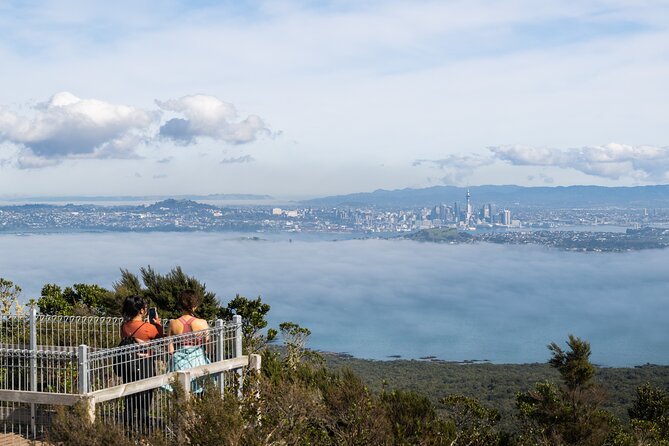
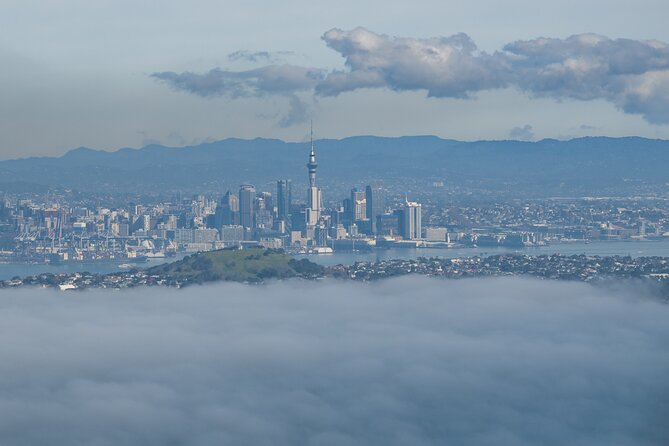
The climb is rewarding because the views open up as you rise. You can look back toward Auckland and across the Hauraki Gulf, with the summit providing the broadest outlook. On a clear day, this is the best reason to make the effort.
The route is partly shaded, which helps in strong sun. Still, bring sunscreen and a hat. Weather can shift quickly, too. One outing included heavy rain and strong wind near the summit, with ponchos handed out for protection. A light waterproof layer is a wise addition even when the morning looks fine.
If you do not want to climb, you can remain near the base and enjoy the island’s views. The summit walk is optional. That makes the trip more flexible for families or mixed-ability groups, although the island’s paths and stairs are not suitable for everyone with limited mobility.
A completely different sort of day out:
- Auckland Dolphin and Whale Watching Eco-Safari Cruise
★ 4.5 · 1,790 reviews - Skydive Auckland
★ 5.0 · 1,516 reviews - Auckland: Hobbiton Movie Set Day Trip with Festive Lunch
★ 4.8 · 1,431 reviews - Hobbiton Movie Set Small Group Tour from Auckland
★ 5.0 · 1,380 reviews
Lava fields, native bush, and the island’s unusual feel
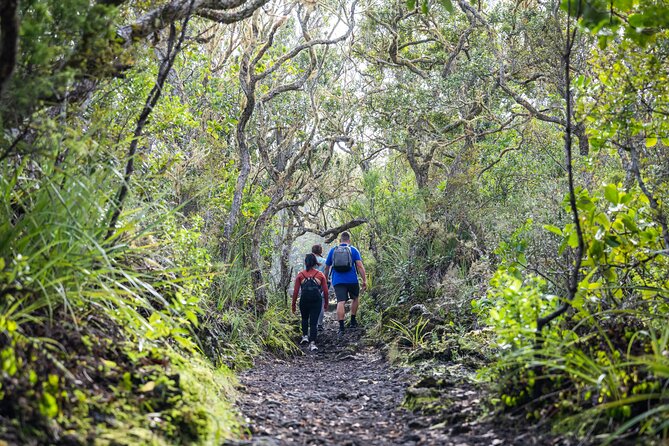
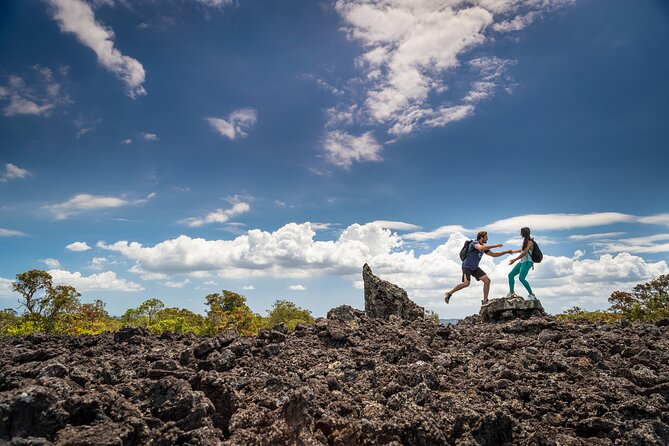
Rangitoto is most interesting when you pay attention to the ground. Lava fields spread across parts of the island in rough, dark shapes that look unlike ordinary coastal rock. Native bush grows through and around these volcanic areas, creating a sharp contrast between hard black stone and soft green foliage.
The experience is visual and geological rather than activity-packed. You may find the scenery fascinating, especially if volcanic land is new to you. If you expect a long list of attractions, however, the island can feel repetitive. The main pleasures are walking, looking, and noticing how plants have taken hold in the old lava.
Sandy coves add another change of texture. The island is not simply a cone and a trail. It also has shoreline views, bush paths, exposed rock, and quiet places to pause.
The island’s conservation setting helps preserve this character. You will not find a row of cafés or commercial attractions interrupting the natural setting. The tradeoff is that you must carry what you need and take your rubbish back with you.
Lava caves and the problem of limited time
The lava caves are one of the most distinctive optional detours. Bring a flashlight if you plan to explore them independently, although you should not assume the main organized route will include enough time for this stop.
This is where the four-hour schedule matters. A ferry crossing, summit walk, pauses for views, and return boarding can use most of your available time. Some organized arrangements have focused on major island points but left no time for the caves. Other people found they had spare time near the terminal, suggesting that timing can vary with the ferry and the day’s schedule.
If the caves are a priority, ask specifically how much time you will have before you commit to a route or transport option. Do not leave the summit for the last few minutes. The ferry will not wait for a late hiker.
The same advice applies to the island museum near the ferry terminal. It can be easy to overlook, especially if your attention is on boarding or the summit path. If it is open during your visit, allow time for it before returning to Auckland.
Ferry only or tractor-pulled wagon?
The information supplied for this experience lists a return Rangitoto ferry as the included service. Yet several accounts describe a tractor-pulled wagon or 4WD-style road train on the island, with a guide providing commentary about geology, plant life, conservation, and island history.
That distinction is important. A wagon ride can reduce the amount of uphill walking and may suit families or anyone who wants to see more of the island with less physical effort. It is also described as bumpy and rocky, which is part of the fun for some people and uncomfortable for others.
The wagon may take you through lava areas and leave a shorter walk to the summit. One account describes about half an hour of walking from the wagon route to the viewpoint. Another says the transport covered most of the available time, leaving limited opportunity for trails and caves.
Because the included features here specify only the return ferry, check your confirmation carefully to see if an island transport option is actually included. If you want the tractor-pulled ride, book that particular option rather than assuming every ferry ticket includes it. It may sell out, particularly during busy periods.
If you choose the ferry independently, you have more freedom to set your own pace. If you choose a guided wagon option, you gain commentary and easier access across rough ground, but you may have less time for side paths.
What the guides add
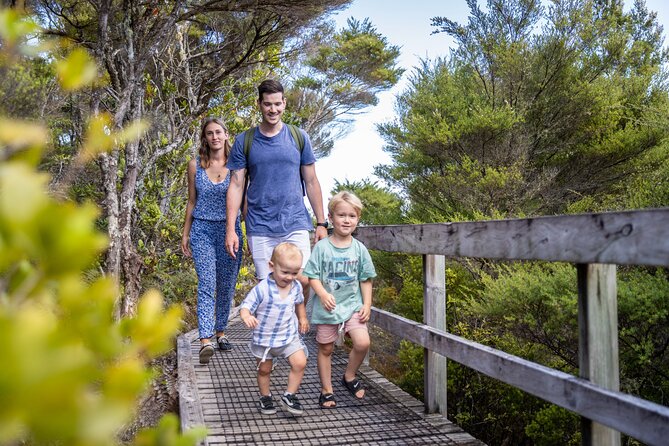
When a guide is included, the commentary can make the island more meaningful. Good guiding connects the lava under your feet with Rangitoto’s formation, plant life, conservation work, and human history.
Mark, also referred to as Mac, received special praise for his friendly humor and lively explanations. Other guides were described as pleasant, helpful, and informative, with the dry humor often associated with New Zealand guiding.
The quality may vary by departure and guide. One person found the guide adequate but less impressive than others, while another felt rushed and was discouraged from visiting the caves despite having time left near the terminal.
That makes the guided option best for you if you want context without reading signs or planning every turn. Independent walkers may prefer more control, especially if the summit and lava caves matter more than a fixed route.
Is $37.23 good value?
At $37.23 per person, the return ferry is a fair price for a straightforward Auckland island outing. You are paying for the harbor crossing and the convenience of a scheduled return, not for meals, hotel transport, or a full guided day.
The value is strongest if you want a memorable natural setting without arranging a complicated trip. The short crossing saves time, and the summit gives you a major view for a relatively modest outlay.
The price is less appealing if you expect a packed guided tour, extensive transport around the island, or included food. Those features are not part of the listed inclusions. Carrying your own supplies is essential, and any wagon or guided add-on should be confirmed separately.
The outing also offers good value for active families and independent walkers. You can choose how much to do, rather than paying for a long list of stops you may not care about.
Food, water, weather, and what to carry
Pack as if you are spending the whole day without a shop. Bring:
- Plenty of water
- Snacks or a packed lunch
- Sunscreen and a hat
- Supportive walking shoes
- A light rain layer or poncho
- A flashlight if you plan to look into the lava caves
- A bag for carrying your rubbish back
The no-shop rule is not a minor detail. One person tried to cancel after discovering there was no food or water on the island and lost the fare because the cancellation window had passed. Read the practical information before your travel date, not while standing on the wharf.
Weather can change the feel of the trip. Sun makes the exposed lava hot and tiring, while rain can make the rock slick and the summit windy. The walk is more comfortable when you are prepared for both.
Who should book this outing?
I would choose this trip if you want a compact nature escape from Auckland, enjoy walking, and like the idea of visiting a real volcanic island rather than another city attraction.
It suits:
- First-time visitors with half a day available
- Hikers who want a manageable but worthwhile climb
- Families who can carry their own food and water
- People who enjoy geology, conservation, and wide harbor views
- Cruise passengers who can carefully match the ferry schedule to ship departure
- Independent visitors who prefer a simple return ticket
I would think twice if you dislike stairs, uneven rock, bumpy transport, or strict return times. The base area may still work for you, but the summit is the main payoff. You should also avoid booking at the last minute if your plans are uncertain, since cancellations are fully refundable only when made at least three full days before the start time. Changes or cancellations within three days are not refunded.
Should you book the Auckland to Rangitoto ferry?
Yes, if you prepare properly. The combination of a 25-minute harbor cruise, volcanic rock, native bush, lava caves, and summit views gives you a memorable change from Auckland’s streets. The price is reasonable, and the ferry makes the island easy to reach.
Book it with realistic expectations. This is not a resort island and not a tightly packed sightseeing circuit. Bring food, water, sun protection, and good shoes. Confirm the exact return ferry, check whether a tractor-pulled wagon is included, and leave a safety margin before boarding.
If you want Auckland’s most striking short walk and do not mind carrying your own lunch, Rangitoto is a strong choice. If you want a relaxed boat ride with almost no walking, enjoy the base area and skip the summit.
FAQ
Where does the Rangitoto ferry leave from?
The experience starts at the Downtown Terminal on Quay Street in Auckland Central, Auckland 1010.
How long is the ferry ride to Rangitoto Island?
The cruise from Auckland city to Rangitoto takes about 25 minutes.
How long does the full experience last?
The experience lasts approximately four hours, including the ferry trip and time on Rangitoto Island.
Is the return ferry included?
Yes. The listed inclusion is a return Rangitoto ferry.
Does the ticket include hotel pickup and drop-off?
No. Hotel pickup and drop-off are not included.
Can I buy food on Rangitoto Island?
No shops are located on the island. Food and drinks may be purchased on the ferry while traveling to Rangitoto, but you should bring enough supplies for the visit.
Is the summit walk required?
No. The summit walk is optional. You can stay near the base and enjoy the views if you do not want to climb.
How difficult is the walk to the summit?
The walk takes about an hour at an easy pace and includes boardwalk stairs. The route also crosses volcanic rock and includes a steep section, so supportive shoes are recommended.
Should I bring water and sunscreen?
Yes. You should bring enough water, snacks, and sunscreen for the day because there are no shops on Rangitoto.
What happens if I need to cancel?
You can receive a full refund if you cancel at least three full days before the experience start time. Cancellations or changes made within three days are not refunded.
Just added in Auckland
- Yonder Star Sailing Yacht★ 5.0 · 2 reviews
- Auckland Airport Private One-Way or Round-Trip Transfer★ 4.5 · 14 reviews
- Zombie Bite Escape Room Experiences★ 5.0 · 54 reviews
- Kumeu Wine Region Shuttle from Auckland★ 4.5 · 19 reviews
- Auckland’s Wild West Coast & Black Sand Beaches Tour inc Lunch★ 5.0 · 12 reviews
- Vineyards Honey and Black Sand Beaches from Auckland★ 5.0 · 93 reviews
- Wētā Workshop Unleashed Tour – Mandarin Speaking Guide★ 5.0 · 2 reviews
- West Coast Wilderness Experience – Private Tour From Auckland★ 5.0 · 1 review
Auckland Tours, compared.
Waiheke Island: Ferry & Hop-On Hop-Off Explorer Bus Tickets
Read our review →
Hobbiton & Waitomo Caves Guided Day Trip from Auckland incl lunch
Read our review →
Hobbiton & Waitomo Caves Day Trip with Lunch
Read our review →
Auckland Dolphin and Whale Watching Eco-Safari Cruise
Read our review →
Hobbiton Movie Set Day Trip with Festive Lunch
Read our review →
Hobbiton Movie Set Small Group Tour from Auckland
Read our review →