
REVIEW · HISTORICAL TOURS
Auckland Walking Tour: Small-Group History & Culture Experience
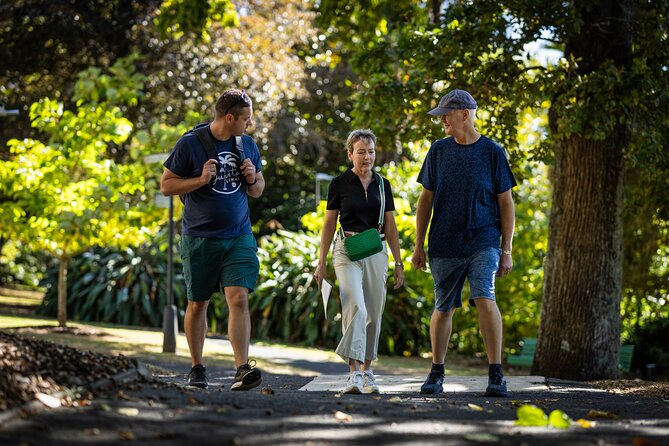
Auckland’s story begins long before its skyline. This three-hour walk connects Māori legends, volcanic origins, and colonial history as you move from leafy Albert Park to the Waitematā Harbour. I like the small group limit of six, which should make it easier to ask questions, keep a comfortable pace, and hear the guide clearly.
I also like the way the route mixes major sights with quieter corners, including Emily Place Reserve, the University of Auckland Clock Tower, and public art around Britomart. The main consideration is simple: this is a walking tour, not a bus ride, so you should be ready to spend about three hours on foot, with only brief stops at several locations.
The guide, Paula, receives especially warm praise for her clear explanations, personal stories about life in New Zealand, and attention to walking pace. She also shares suggestions for places to eat, drink, shop, and continue exploring after the tour. At $73.23 per person, the price is reasonable if you want a personal introduction to central Auckland rather than a quick checklist of landmarks.
In This Review
- Key points to know before booking
- Why this Auckland walk is more than a sightseeing checklist
- Starting at Khartoum Place and entering Albert Park
- The University of Auckland Clock Tower and Old Government House
- Emily Place Reserve and Lord Freyberg’s statue
- Britomart’s public art and modern Auckland
- Queens Wharf, the Viaduct, and the Waitematā Harbour
- The guide’s role makes the small group matter
- What the $73.23 price buys you
- Who should book this three-hour experience
- Timing, meeting point, and cancellation details
- Final decision: is Auckland Story worth booking?
- FAQ
- How long is the Auckland walking tour?
- How many people can join the tour?
- Where does the tour begin?
- Where does the tour end?
- What places does the tour visit?
- Is admission included for the attractions?
- Are service animals allowed?
- Can I cancel for a full refund?
Key points to know before booking
- Small group capped at six: This is the tour’s biggest practical advantage. You get a more personal walk and a better chance to speak with Paula.
- Auckland’s past is told in layers: Māori stories, volcanic origins, pioneering people, women’s suffrage, and major events all appear along the route.
- The route links city sights and waterfront views: You walk from Khartoum Place through Albert Park, Britomart, Queens Wharf, and the Viaduct area.
- Paula focuses on comfort: She adjusts the pace and includes breaks, which matters during a three-hour city walk.
- Useful local advice comes with the history: You receive tips for food, drinks, shopping, and things to do after the tour.
- The tour ends near the Hilton Hotel: The finishing point is 143 Quay Street, beside the waterfront.
Why this Auckland walk is more than a sightseeing checklist
Many city walks simply point out buildings and move on. This one aims to explain how Auckland became the city you see today. The route connects natural forces, Māori culture, colonial government, public memory, and modern waterfront life.
That approach is useful because Auckland can feel scattered at first. The central city has parks, university buildings, commercial streets, public art, old government sites, the Sky Tower, and a broad harbourfront. A guide helps you place these pieces in order.
The tour also gives attention to Tāmaki Makaurau, the Māori name for Auckland. Māori legends and the area’s volcanic beginnings are part of the story, rather than an afterthought added to a standard city walk. That gives the route more cultural weight and helps you see the city as a place with a long past, not simply a modern New Zealand business center.
The group size should shape the experience. With no more than six people, Paula can stop to explain a detail, answer questions, or slow down when needed. That is a different experience from walking behind a guide in a large crowd. The tradeoff is that the tour may not suit you if you prefer to explore at your own speed or spend a long time inside one attraction.
More History Tours in Auckland
- Auckland: All Blacks Experience Guided Cultural Tour
★ 4.7 · 453 reviews - All Blacks Experience: Interactive Guided Cultural Tour
★ 4.5 · 228 reviews - Auckland Historic Bar Tour
★ 5.0 · 54 reviews
Starting at Khartoum Place and entering Albert Park
The walk begins at Khartoum Place in central Auckland. This is a useful starting point because the route soon reaches Albert Park, where the guide can set the tone for the whole experience.
You wind through Albert Park for about 10 minutes. The stop is free, and the park provides a calmer opening than beginning beside traffic or a crowded waterfront. Here, the focus is likely to be on Auckland’s setting, its volcanic origins, and the people and events that shaped the city.
The park stop is brief, so do not expect a long garden visit. Instead, think of it as a place to get your bearings while the larger story begins. Comfortable shoes are a good idea from the start. Three hours of walking can feel easy in short sections, but the total time adds up.
The University of Auckland Clock Tower and Old Government House
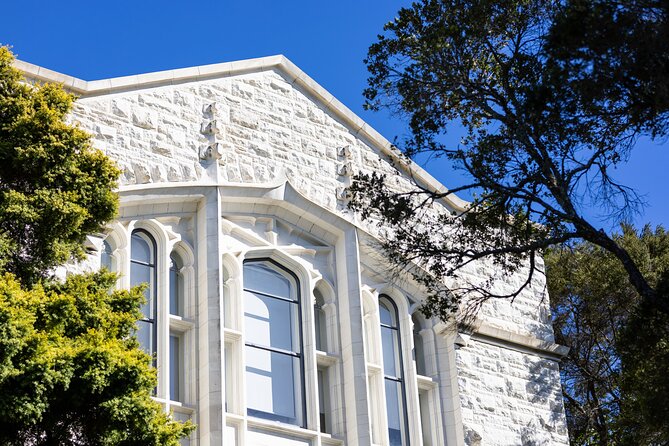
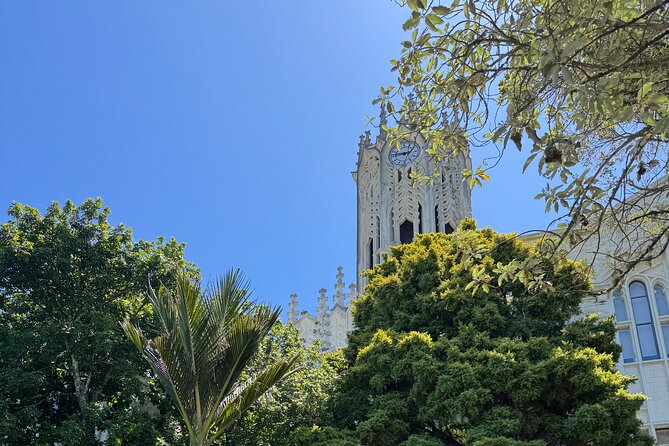
From Albert Park, the walk continues through the University of Auckland grounds. You spend about 10 minutes seeing the Clock Tower, a distinctive piece of the city’s architecture and one of the route’s more characterful stops.
University grounds give the tour a different mood. You move away from parks and public streets into an institutional setting tied to Auckland’s development. The Clock Tower also adds visual variety to a route that later turns toward modern waterfront buildings.
The next stop is Old Government House, where the visit lasts about five minutes. This is a short pause to hear about its history. The stop will appeal to you if you like understanding how government and public institutions developed in New Zealand, though the brief timing means the guide’s explanation is more important than an extended look around.
These first stops show the tour’s rhythm. You are not spending 30 minutes at every attraction. Instead, Paula uses a series of short visits to build a connected story while keeping the group moving across central Auckland.
Emily Place Reserve and Lord Freyberg’s statue
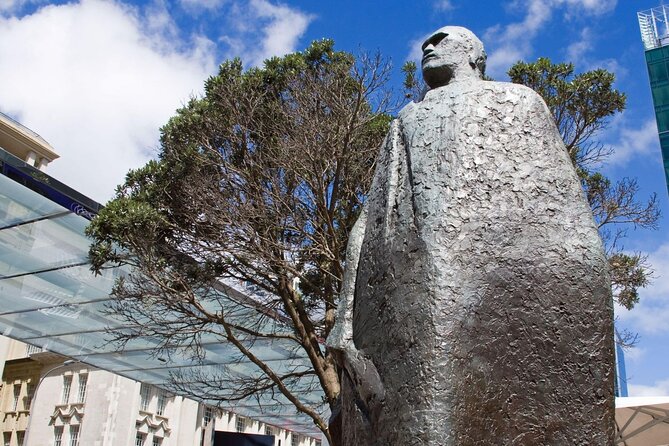
Emily Place Reserve is another quick stop, listed at about five minutes. Small city reserves can be easy to miss when you explore alone, so including one helps reveal the less obvious parts of central Auckland.
The route then pauses at the Lord Freyberg statue for another five minutes. This adds a public memorial and military history element to the walk. It also gives you a chance to consider how Auckland remembers important figures and events through statues and civic spaces.
These stops may be less visually dramatic than the Sky Tower or harbour, but they are important to the tour’s style. The experience is built around details that you might pass without noticing. If you want only major attractions, these brief pauses could feel less exciting. If you enjoy the small clues that explain a city, they add value.
The tour also includes a short-distance view of the Sky Tower. You do not need a ticket for the tower as part of this experience, and the point is to see it within the city rather than visit the observation decks. That keeps the focus on Auckland’s streets and history, not on a separate paid attraction.
More Walking Tours in Auckland
- Waiheke Island: Zipline And Forest Walk
★ 5.0 · 483 reviews - Auckland: Flavours of our City Food Walk
★ 5.0 · 371 reviews - Auckland: Flavours of the City Walking Food Tour
★ 4.8 · 202 reviews - Auckland Small-Group Walking Tour with Treats
★ 5.0 · 182 reviews
Britomart’s public art and modern Auckland
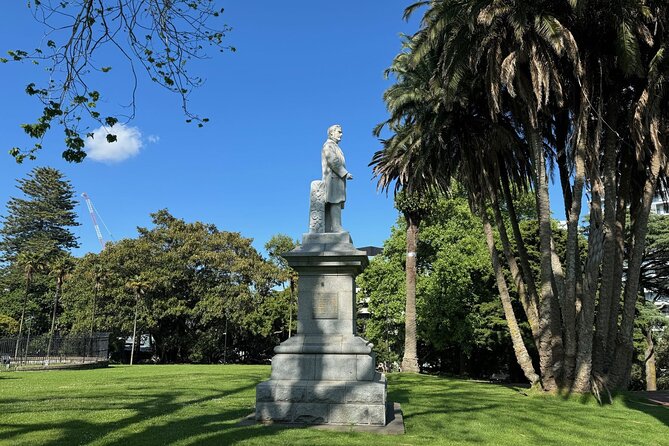
Britomart marks a shift in the walk. After parks, university grounds, historic buildings, and statues, you reach a modern city district known for public art and contemporary urban design.
You spend about 10 minutes here, with free admission. The guide points out public art displays and explains the area as part of present-day Auckland. This is a useful contrast with Old Government House and the older parts of the route. The city is not presented as a museum frozen in the past. It continues to change, and Britomart shows that change clearly.
Public art is often easier to appreciate with local context. On your own, you might notice a sculpture or installation but miss why it is there. Paula’s role is to give those pieces a place in the broader story.
This is also a good point to ask for practical advice. Paula provides suggestions for eating, drinking, and shopping, and the tour’s location makes those tips useful for the rest of your stay. Her website also offers ideas for things to do after the walk, according to the information provided. I would treat this as one of the tour’s strongest extras because good local advice can save you time later.
Queens Wharf, the Viaduct, and the Waitematā Harbour
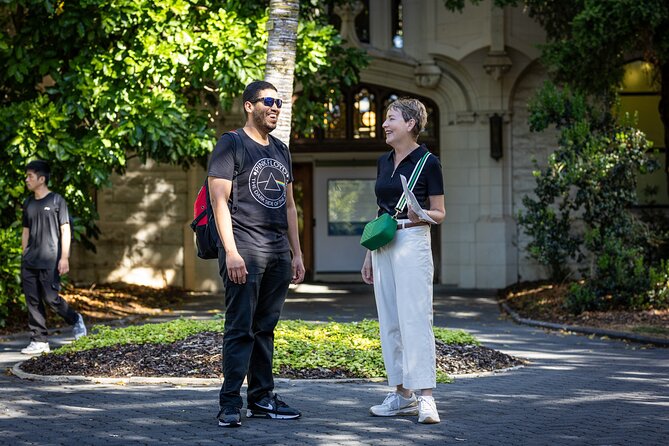
The final part of the walk heads toward the waterfront. Queens Wharf provides views across Waitematā Harbour, and the tour ends at 143 Quay Street, close to the Hilton Hotel.
The harbour finish gives the tour a satisfying change of pace. You have spent the earlier part of the walk moving through parks, civic sites, university grounds, and city streets. At the water, Auckland’s location becomes clear. The harbour is not just a pretty ending. It helps explain why this city developed where it did and why maritime activity remains central to its identity.
The wider waterfront section includes views of the Viaduct Harbour, an America’s Cup yacht, and the New Zealand Maritime Museum. These are notable sights, but it is important to understand the format. The tour is a guided walk with brief stops, not a museum admission package or an America’s Cup yacht visit. The emphasis is on seeing these places and hearing their stories from outside or along the route.
Queens Wharf is also the point where the tour’s practical value becomes clear. You finish in an area with harbour views and close access to central Auckland. If you are staying near the waterfront, the ending is convenient. If you have another appointment immediately afterward, allow some flexibility because the duration is approximately three hours.
The guide’s role makes the small group matter
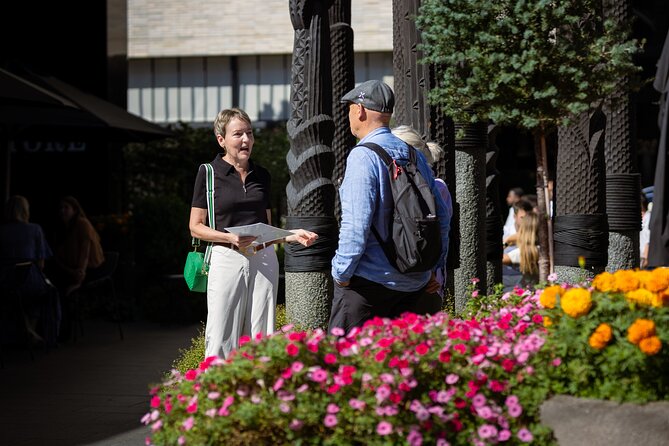
Paula is the main reason this experience feels personal rather than standard. The strongest praise focuses on three things: clear information, personal stories about living in New Zealand, and careful attention to comfort.
A three-hour history walk can become tiring if the guide rushes or talks without pause. Paula reportedly adds breaks when needed and adjusts the pace. That matters if you are not used to long city walks, or if your group includes people with different energy levels.
Her personal stories also give the tour a local voice. A list of dates and buildings has limits. Stories connected to daily life can help you understand how New Zealand’s past relates to the country you are visiting now.
The six-person maximum supports this style. You should be able to hear the guide, ask questions, and remain connected to the group. It also means the walk may feel more conversational than a large scheduled tour.
At the same time, the experience depends heavily on the guide’s storytelling. That is not a flaw, but it is worth knowing. You are paying for interpretation and company as much as for the route itself. If you would rather use an audio guide and stop whenever you want, this is probably not the right format.
What the $73.23 price buys you
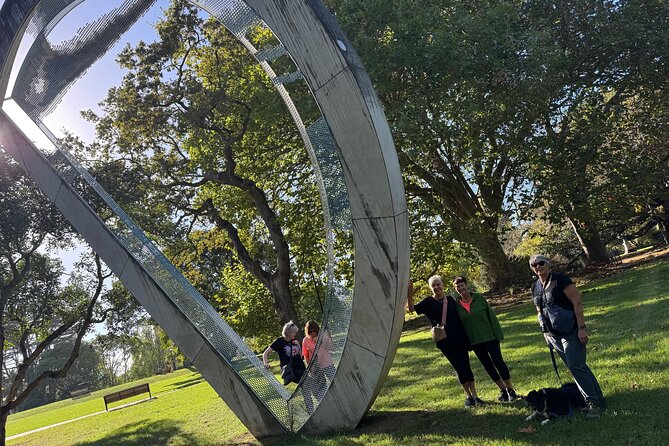
The tour costs $73.23 per person. Since the route uses free public places, the price is not paying for entrance tickets. You are paying for a three-hour guided experience, a very small group, local context, and practical advice for the rest of your visit.
That can be good value if Auckland is new to you. In one morning or afternoon, you see historic sites, university architecture, public art, the Sky Tower from a distance, maritime landmarks, and the harbour. You also gain a basic framework for exploring the city on your own afterward.
The value is strongest for first-time visitors who want orientation without a large group. It is also useful at the beginning of a stay, since Paula’s suggestions for food, drinks, shopping, and later activities can help you plan the following days.
The price is harder to justify if you already know central Auckland well, dislike guided commentary, or want extended time inside attractions. The tour does not include admission to the Auckland Art Gallery or New Zealand Maritime Museum, and the listed stops are generally short. You should see it as a storytelling walk, not an attraction pass.
Who should book this three-hour experience
I would recommend it most strongly to:
- First-time visitors who want Auckland explained in a clear sequence
- People interested in Māori stories and New Zealand culture
- Cruise passengers with time to see central Auckland before or after sailing
- Solo visitors or couples who prefer a small, conversational group
- Anyone who wants food, drink, shopping, and sightseeing suggestions from a local guide
- People who enjoy public art, civic history, and overlooked city details
It may be less suitable if you have limited mobility or do not want to walk for around three hours. The information says most people can participate and service animals are allowed, but it does not provide a detailed route assessment or promise step-free access at every point. If that matters to you, ask before booking.
The tour is also not designed for a long visit at each landmark. You will see many places, but you will not have the time to explore every one in depth. Plan a separate visit if you want to enter a museum, spend time at the art gallery, or go up the Sky Tower.
Timing, meeting point, and cancellation details
You meet at Khartoum Place in Auckland Central and finish at 143 Quay Street near the Hilton Hotel. Both points are near public transportation, which makes the tour fairly easy to fit into a day of sightseeing.
Confirmation is sent when you book, and the tour accepts mobile tickets. The maximum group size is six people. Free cancellation is available if you cancel at least 24 hours before the local start time. Cancellations made later, along with changes made within that 24-hour window, are not accepted for a refund.
The route includes a break for refreshments, but the supplied details do not state that a drink or snack is included in the price. Plan to pay for your own refreshments unless the provider tells you otherwise.
Final decision: is Auckland Story worth booking?
Yes, if you want Auckland explained by a local guide in a group small enough to feel personal. The best features are Paula’s clear storytelling, her attention to walking pace, and the way the route connects Māori culture, civic history, public art, and the waterfront.
The main limitation is the brief nature of several stops. You see a lot in three hours, but you do not receive extended visits or attraction admissions. Book this as an orientation walk and a source of local advice, not as a full museum tour.
The 100 percent recommendation rate and five-star rating from 10 ratings point to a consistently positive experience, though the sample is small. If you value personal guidance, practical tips, and a manageable group, $73.23 is a fair price for a strong introduction to central Auckland.
FAQ
How long is the Auckland walking tour?
The tour lasts approximately three hours.
How many people can join the tour?
The maximum group size is six people.
Where does the tour begin?
The meeting point is Khartoum Place, Auckland Central, Auckland 1010, New Zealand.
Where does the tour end?
The tour ends at 143 Quay Street, Auckland Central, Auckland 1010, close to the Hilton Hotel.
What places does the tour visit?
The route includes Albert Park, the University of Auckland grounds and Clock Tower, Old Government House, Emily Place Reserve, Lord Freyberg’s statue, Britomart, and Queens Wharf. You also see the Sky Tower from a short distance and waterfront sights including an America’s Cup yacht and the New Zealand Maritime Museum.
Is admission included for the attractions?
The listed stops are free or viewed as part of the walk. The experience does not state that admission to the Auckland Art Gallery, Sky Tower, or New Zealand Maritime Museum is included.
Are service animals allowed?
Yes, service animals are allowed.
Can I cancel for a full refund?
Yes. You must cancel at least 24 hours before the experience start time for a full refund. Late cancellations and changes made within 24 hours are not accepted.
Just added in Auckland
- Yonder Star Sailing Yacht★ 5.0 · 2 reviews
- Auckland Airport Private One-Way or Round-Trip Transfer★ 4.5 · 14 reviews
- Zombie Bite Escape Room Experiences★ 5.0 · 54 reviews
- Kumeu Wine Region Shuttle from Auckland★ 4.5 · 19 reviews
- Auckland’s Wild West Coast & Black Sand Beaches Tour inc Lunch★ 5.0 · 12 reviews
- Vineyards Honey and Black Sand Beaches from Auckland★ 5.0 · 93 reviews
- Wētā Workshop Unleashed Tour – Mandarin Speaking Guide★ 5.0 · 2 reviews
- West Coast Wilderness Experience – Private Tour From Auckland★ 5.0 · 1 review
Historical Tours, compared.
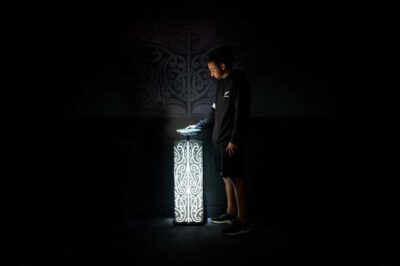
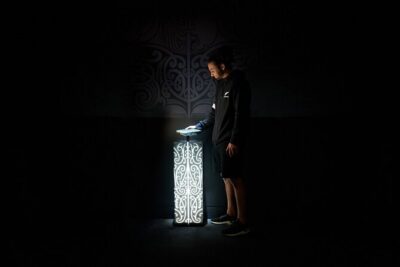
All Blacks Experience: Interactive Guided Cultural Tour
Read our review →
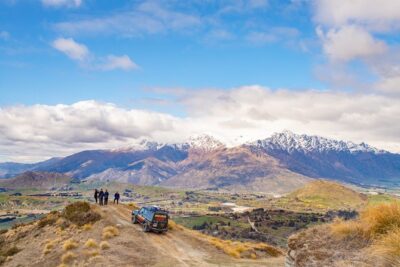
Skippers Canyon 4WD Heritage half day Tour from Queenstown
Read our review →
Scenic Cruise & Guided Walk on Historic Motor Yacht Lake Te Anau
Read our review →
Tauranga Shore Excursion: History & Kiwifruit Tasting – 4 Hours
Read our review →
Skip the Line:WWI & WWII Combo Exhibitions at the Omaka Aviation Heritage Centre
Read our review →Scenic Cruise & Guided walk on Historic Motor Yacht Lake Te Anau
Read our review →Browse the lists this tour appears in