
REVIEW · KAYAK TRIPS IN AUCKLAND
Bioluminescence Kayak Tour – Est. 1994
The sea becomes a sky of stars. This two-hour Auckland kayak trip takes you into the dark waters around Long Bay and the Okura Marine Reserve, where tiny plankton can flash blue as your paddle or hand stirs the water. I like the patient instruction for beginners and the small one-guide-to-six-participant ratio, which makes night kayaking feel manageable rather than nerve-racking.
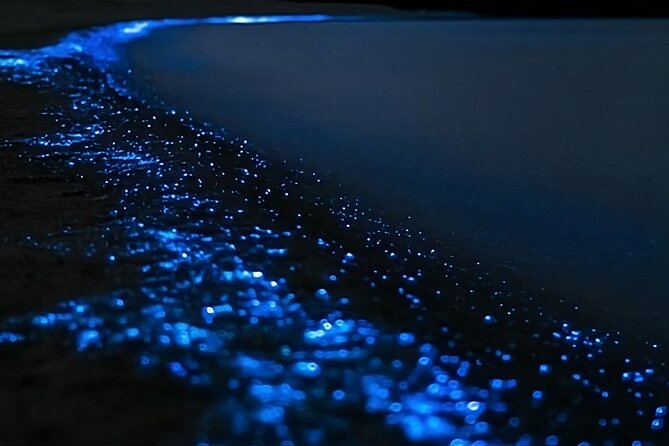
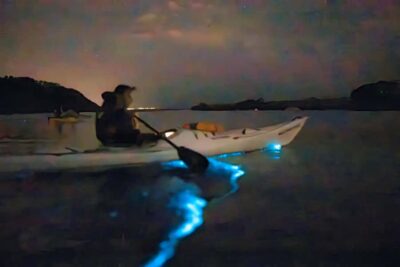
I also like that the tour supplies the kayak, paddle, and safety equipment, so you do not need to assemble a kit before coming. The main thing to keep in mind is that the glow can be subtle. Conditions matter, and some evenings produce only brief sparks instead of the bright blue display shown in promotional images.
In This Review
- Quick points before you book
- What this Auckland night kayak is really like
- Meeting in Rosedale and reaching the water
- Learning to kayak before darkness takes over
- Entering Long Bay and the Okura Marine Reserve
- When the plankton starts to sparkle
- The stars, birds, and quiet water
- Is $73.85 fair for two hours?
- What to wear and what to bring
- Weather, cancellations, and timing
- Who will enjoy this most?
- Should you book the glowing paddle?
- FAQ
- Do I need previous kayaking experience?
- How long does the tour last?
- Where does the tour meet?
- Where does the kayaking take place?
- Is kayaking and safety equipment included?
- How many people are in each guide group?
- What happens if bad weather cancels the tour?
Quick points before you book
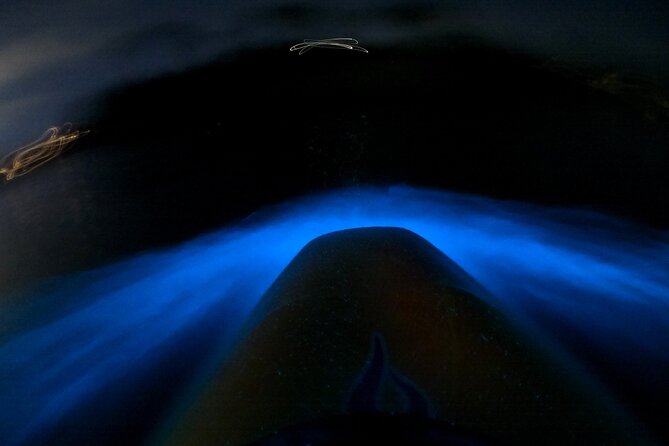
- The glow appears when the water moves: Paddle strokes, splashes, and waves can trigger the blue flashes.
- Long Bay and Okura Marine Reserve provide the setting: You paddle protected coastal waters, not an open-ocean route.
- Beginners are welcome: Guides teach the basic kayak skills and handle safety before you set off.
- The group ratio is strong: One guide serves up to six people, with a maximum group size of 24.
- Your meeting location matters: The starting point is 2/20 Ascension Place in Rosedale, while the exact paddling site is confirmed within 10 kilometres of the Mairangi Bay store by 3:30 p.m. on the day.
- Bring a change of clothes: Several people ended up wet, and jeans are not suitable for the activity.
What this Auckland night kayak is really like
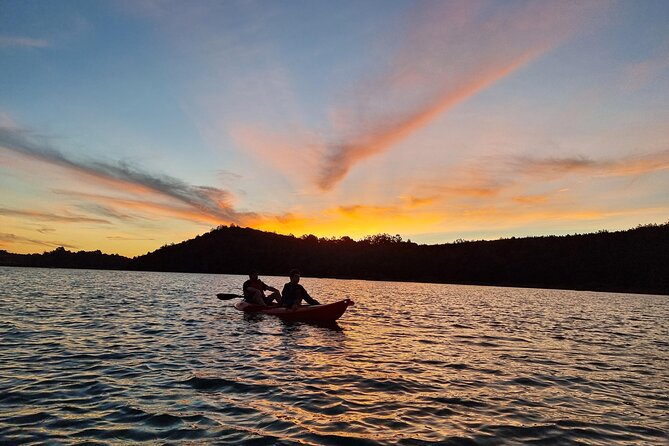
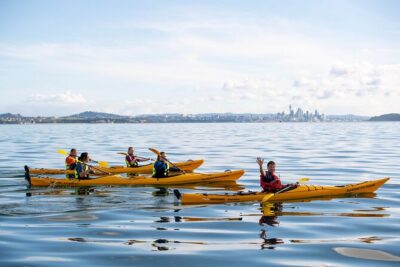
This is not a sightseeing cruise with a few glowing waves thrown in. You are doing the work, slowly paddling through dark coastal water and watching for flashes around your boat. That physical part is important because the plankton generally lights up when disturbed.
The tour lasts about two hours. That is enough time to learn the basics, get comfortable in the kayak, and spend a good stretch of the outing in darkness without turning the evening into an endurance test. I like this length for a first night paddle. You get the unusual part of the activity without committing half a day to it.
The setting is the protected water around Long Bay and the Okura Marine Reserve. At night, you lose much of the coastal scenery, but you gain a quieter mood. The sound of paddles, the Hauraki Gulf, native birds, and the occasional flash in the water become the main event.
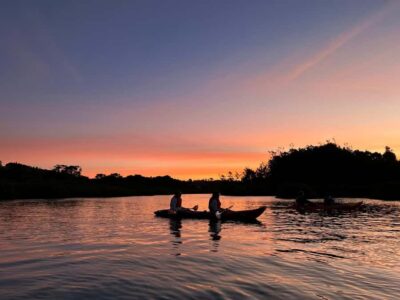
Some trips begin while there is still a little daylight, then continue into the darker part of the evening. That can help first-time kayakers get settled before the light disappears. It also means you may get a glimpse of the coast before the stars and plankton take over.
More Kayak Trips in Auckland
- Auckland: Night Kayak Tour in Glowing Bioluminescent Waters
★ 4.9 · 259 reviews - Sunset kayak tour to Rangitoto Island
★ 5.0 · 168 reviews - Day sea kayak tour Rangitoto Island
★ 5.0 · 79 reviews
Meeting in Rosedale and reaching the water
The stated meeting point is 2/20 Ascension Place, Rosedale, Auckland 0632. The tour operates within a 6-mile, or 10-kilometre, radius of the North Shore Canoe & Kayak Store in Mairangi Bay, and the exact location is confirmed before 3:30 p.m. on the day of your tour.
That arrangement is practical because the best launch point can depend on conditions. It does require you to pay attention to the day-of-tour message. Do not simply assume that the address where you meet is also the beach where you paddle.
Public transport is possible. One participant used an Auckland bus to reach the meeting point and an Uber afterward. That gives you a workable option if you do not have a car, although you should allow time for the return journey and avoid assuming that a late-night bus will suit your schedule.
The tour returns to the meeting point at the end. The area is near public transportation, but the information provided does not give a fixed bus timetable or promise a particular transfer service. If you are staying in central Auckland, an Uber or taxi may be the simplest way back after the night activity.
Learning to kayak before darkness takes over
You do not need previous kayaking experience. The guides provide tuition and safety advice, then help you get set up in either a stable sea kayak or a sit-on-top kayak.
That stability is a real plus for beginners. A night paddle can feel more intimidating than a daytime outing because you cannot see as far around you. Having a boat designed for steady coastal paddling, plus a guide nearby, makes the first few strokes less stressful.
The guides receive strong praise for being friendly, calm, and clear. Eloise was singled out for her safety knowledge and useful paddling tips, while Josh, Elena, Paul, Gareth, Madison, Peter, Ben, Keith, Maddy, Sam, and others have been praised for helping people feel comfortable. Guide teams can change, but the pattern is clear: instruction and personal attention are major strengths of this outing.
The one-to-six ratio is especially useful here. A maximum of 24 people sounds fairly large when viewed alone, but the guide ratio keeps each small group within reach of help. If you have never kayaked, you can ask questions without shouting across a crowded beach.
One small practical warning: getting out of the kayak may be harder than getting in. That point came up more than once, so listen closely to the instructions at the end. If your back is sensitive, ask for a kayak with a backrest before launching. That simple request could make the evening much more comfortable.
Entering Long Bay and the Okura Marine Reserve
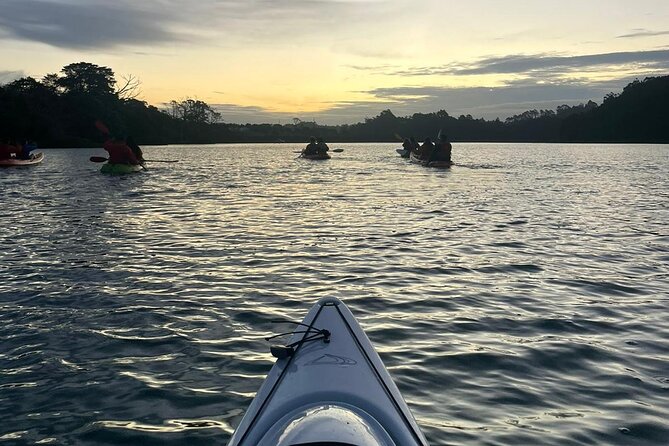
The stated paddling stop is Canoe & Kayak Adventures, with the outing taking place in the protected waters of Long Bay and the Okura Marine Reserve. The protection matters because sheltered water is better suited to a beginner-friendly night paddle than an exposed stretch of coast.
You will not be racing along the shore. The point is to move at a relaxed pace, learn how the water responds, and search for the plankton. The guides may point out areas where the glow is more active, including water near mangroves. One especially memorable description was of flashes appearing around the mangroves while stars showed overhead.
The darkness changes how you see the place. During the day, Long Bay and the surrounding coast offer the scenery. At night, you notice the water surface, the sky, and the sounds around you. A few participants also reported seeing glow worms, though that should be treated as a lucky extra rather than a promised part of the tour.
The guides also explain the science behind bioluminescence and discuss conservation in the area. That adds value because you are not simply being shown a special effect. You learn that the blue light comes from living organisms and that the glow varies with natural conditions.
A completely different sort of day out:
- Waiheke Island: Ferry & Hop-On Hop-Off Explorer Bus Tickets
★ 4.6 · 3,311 reviews - Hobbiton & Waitomo Caves Guided Day Trip from Auckland incl lunch
★ 5.0 · 2,677 reviews - From Auckland: Hobbiton & Waitomo Caves Day Trip with Lunch
★ 4.9 · 2,505 reviews - Auckland Dolphin and Whale Watching Eco-Safari Cruise
★ 4.5 · 1,790 reviews
When the plankton starts to sparkle
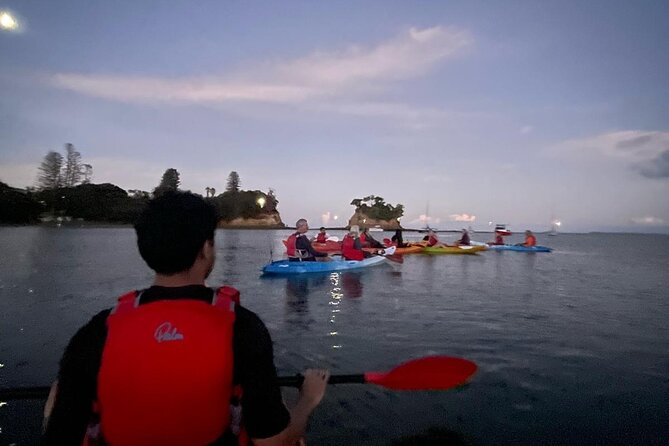
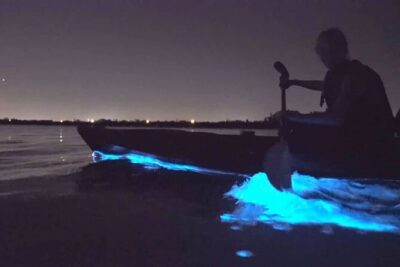
The best part arrives when the water begins to flash. A paddle stroke can create a small blue trail. A wave can break into scattered sparks. With enough activity, the surface may look like underwater stars, or like tiny fireworks around the kayak.
The effect is often brief and delicate. It does not shine continuously like an electric light, and it usually needs movement to appear. That is why the experience can feel magical on one night and modest on another.
This is the most important expectation to set before paying. The tour cannot guarantee a bright display, and the amount of visible bioluminescence depends on conditions. Some people saw plenty of blue light and described the water as glowing around every stroke. Others found only a few half-second flashes and felt that the photos set an unrealistic expectation.
I would book this for the full night setting, not only for the plankton. You may get a strong display, but you are also paying for a calm coastal paddle under the stars, a lesson from qualified guides, and the chance to see a natural event that cannot be switched on for every departure.
The darkness also makes photography difficult. Phone cameras generally struggle to capture the weak glow from a moving kayak. You may get a dark, blurry clip instead of the blue spectacle you saw with your own eyes. Treat the outing as something to watch directly, not a photo session.
The stars, birds, and quiet water
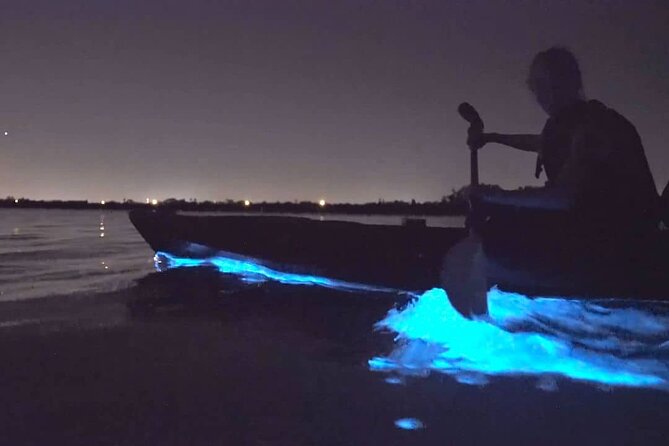
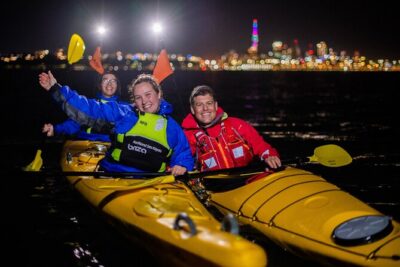
Several people enjoyed the sky as much as the water. On a clear night, you may see stars and perhaps planets while the plankton flickers below. That contrast gives the tour much of its character: sky above, dark sea around you, and small points of light appearing whenever the water moves.
Native birds and the sounds of the Hauraki Gulf add to the setting. You are still close to Auckland, but the harsh city lights are less intrusive once you are on the water. This is a good way to spend an evening if you want something more memorable than another restaurant meal.
The trade-off is that you cannot fully appreciate the coast after dark. If you want clear views of beaches, cliffs, and marine scenery, a daytime kayak tour may suit you better. The operator also offers daytime tours with clear-bottom kayaks, according to the information provided, which would be the better choice for seeing below the surface in daylight.
Is $73.85 fair for two hours?
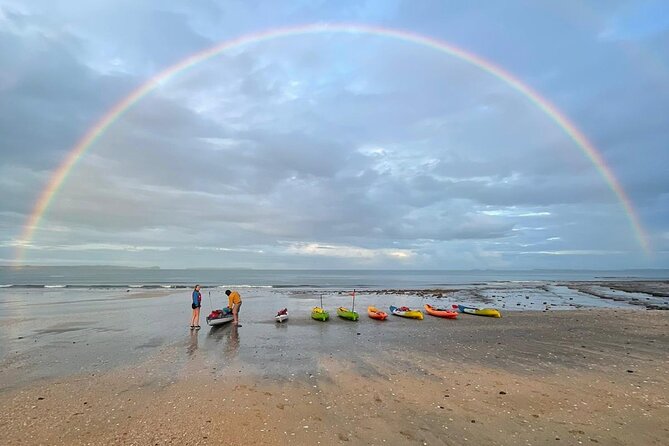
At $73.85 per person, the price is reasonable for a guided activity that includes the kayak, paddle, safety equipment, instruction, and a two-hour outing. You are not paying only for access to the water. You are also paying for suitable equipment, a qualified guide, and a small working group.
The value is strongest if you are new to kayaking or do not want to arrange equipment yourself. The guide-to-participant ratio gives the tour more personal attention than a large group outing, and the safety support matters more at night than it would during a casual daytime paddle.
The value is less certain if you want a guaranteed, bright bioluminescence show. Natural light events are unpredictable. If the plankton is faint, the trip becomes a pleasant night kayak with occasional sparks rather than a constant blue spectacle.
I would consider the price worthwhile if you see the bioluminescence as one part of the evening. If your only goal is dramatic blue water for photographs, you may come away disappointed, especially since the glow is hard to record with a phone.
What to wear and what to bring
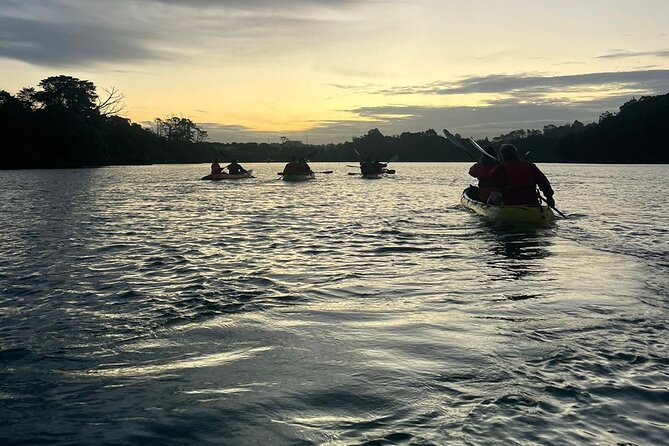
The safest assumption is that you will get wet. One outing continued through a short rainstorm, and even on calmer evenings paddle drips and splashes can reach you. Wear clothing that can handle water and bring a full change for afterward.
Avoid jeans. They are uncomfortable when wet and were specifically a problem for one participant, who needed spare clothing from guide Sam. Quick-drying clothes are the sensible choice.
You should also plan around the changing facilities. The changing areas may not be open after the activity, so do not rely on being able to change at the site late at night. A dry layer and a towel in your vehicle or transport bag will make the return journey easier.
The operator provides all kayaking and safety equipment. You do not need to bring a kayak, paddle, or personal safety kit. The supplied details do not specify a full packing list, so keep your personal items simple and secure.
Weather, cancellations, and timing
Good weather is required. If poor conditions cancel the tour, you can receive a different date or a full refund. One person described being contacted before a bad-weather cancellation and offered alternative dates, which is the kind of flexibility you want when booking an outdoor activity.
A minimum number of participants is also required. If that minimum is not reached, you will be offered another date or activity, or a full refund.
For your own cancellation, you can cancel at least 24 hours before the start time for a full refund. Changes or cancellations inside that 24-hour window are not accepted and are not refunded. The cut-off uses local Auckland time.
Because the exact paddling site is confirmed on the day, keep your phone available and check messages before heading out. Communication has generally been timely, although one person wanted clearer information earlier in the process. That is a small but useful reminder to confirm the meeting details rather than rely on old booking information.
Who will enjoy this most?
I would recommend this outing to:
- First-time kayakers who want a supported introduction
- Couples looking for a quiet evening activity
- Families with participants who can manage a two-hour paddle
- Anyone interested in astronomy, marine life, or unusual natural events
- Auckland visitors who want to get away from central city lights without committing to a full-day trip
You should think twice if you strongly dislike getting wet, have back problems that cannot be managed with a backrest, or need a guaranteed visual spectacle. The tour is active, outdoors, and dependent on weather and plankton conditions.
It is also not the best fit if your priority is daytime scenery. Choose a daylight kayak trip instead if you want to study the coast or look through a clear-bottom boat.
Should you book the glowing paddle?
Book it if you value the whole evening, not just the brightest possible glow. The patient guides, stable kayaks, small working groups, and protected water make this a sensible first kayaking experience. The chance to see blue sparks below a starry sky gives it a memorable edge.
Go with realistic expectations. The plankton may flash brilliantly, or it may appear only in small bursts. Bring dry clothes, protect your back with the right kayak, confirm the launch details before 3:30 p.m., and leave your best photographs to your memory. At $73.85, I think it is good value for a gentle, unusual Auckland night out, especially for beginners.
FAQ
Do I need previous kayaking experience?
No. The guides provide kayaking instruction and safety tuition, and the tour uses stable sea kayaks or sit-on-top kayaks.
How long does the tour last?
The activity lasts approximately two hours and returns to the meeting point afterward.
Where does the tour meet?
The stated meeting point is 2/20 Ascension Place, Rosedale, Auckland 0632, New Zealand.
Where does the kayaking take place?
The night paddle takes place in protected waters around Long Bay and the Okura Marine Reserve, within 10 kilometres of the North Shore Canoe & Kayak Store in Mairangi Bay. The exact location is confirmed before 3:30 p.m. on the tour day.
Is kayaking and safety equipment included?
Yes. The tour includes all kayaking and safety equipment, plus instruction from qualified kayak guides.
How many people are in each guide group?
The guide-to-participant ratio is one guide for up to six people. The total activity has a maximum of 24 participants.
What happens if bad weather cancels the tour?
You will be offered another date or a full refund. If the minimum number of participants is not met, you will also be offered a different date or activity, or a full refund.
Just added in Auckland
- Yonder Star Sailing Yacht★ 5.0 · 2 reviews
- Auckland Airport Private One-Way or Round-Trip Transfer★ 4.5 · 14 reviews
- Zombie Bite Escape Room Experiences★ 5.0 · 54 reviews
- Kumeu Wine Region Shuttle from Auckland★ 4.5 · 19 reviews
- Auckland’s Wild West Coast & Black Sand Beaches Tour inc Lunch★ 5.0 · 12 reviews
- Wētā Workshop Unleashed Tour – Mandarin Speaking Guide★ 5.0 · 2 reviews
- Vineyards Honey and Black Sand Beaches from Auckland★ 5.0 · 93 reviews
- West Coast Wilderness Experience – Private Tour From Auckland★ 5.0 · 1 review
Kayak Trips in Auckland, compared.
Night Kayak Tour in Glowing Bioluminescent Waters
Read our review →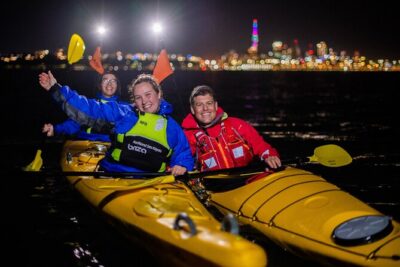
Browse the lists this tour appears in