
REVIEW · WALKING TOURS
Duder Regional Park Walking Tours
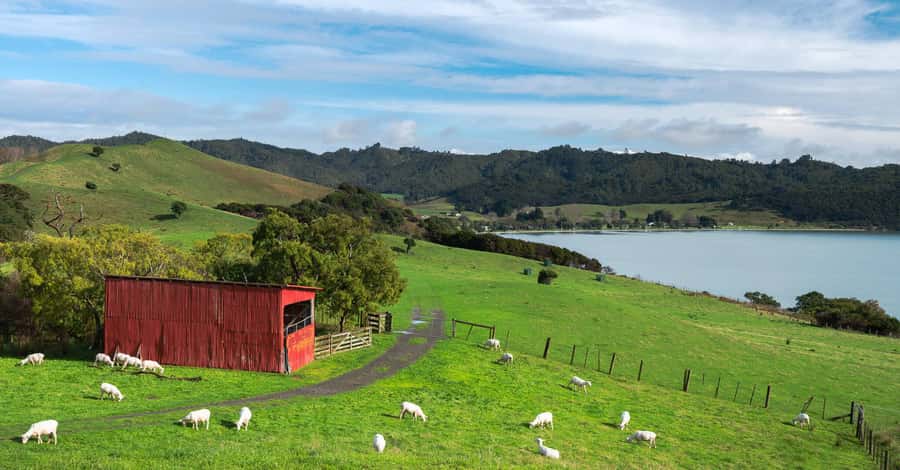
Coastal cliffs meet quiet farmland here. Duder Regional Park offers a pleasing mix of sea views, sandy beaches, native forest, and open grassland, all within a guided walk on Auckland’s eastern coast. I like the changing scenery and the chance to learn how conservation shapes this 148-hectare park. I also like that you can choose a half-day or full-day route instead of being locked into one pace. The main drawback is practical: transport is not included unless arranged in advance.
This is a private English-language experience, priced at $345 per person, with a guide leading the way and explaining the area’s natural and cultural background. I would consider it good value for walkers who want personal attention and interpretation, but the price may feel high if you only want an independent stroll through the park.
In This Review
- Key points at a glance
- Why Duder Regional Park is worth your time
- Starting at the main car park
- The four-hour loop for a shorter outing
- The eight-hour point walk for serious walkers
- Coastal clifftop views and seabirds
- Forest tracks beneath native trees
- Te Ara Hura and the mixed terrain
- History, geology, and conservation along the way
- What the $345 price really buys
- What to pack for a safer, better walk
- Who should book Duder Regional Park Walking Tours?
- FAQ
- Where is Duder Regional Park Walking Tours located?
- How long does the walking tour last?
- Where do I meet the guide?
- Is transportation included?
- Is the tour private?
- What language is the tour conducted in?
- What should I bring?
- Can I cancel or pay later?
- Should you book this walk?
Key points at a glance
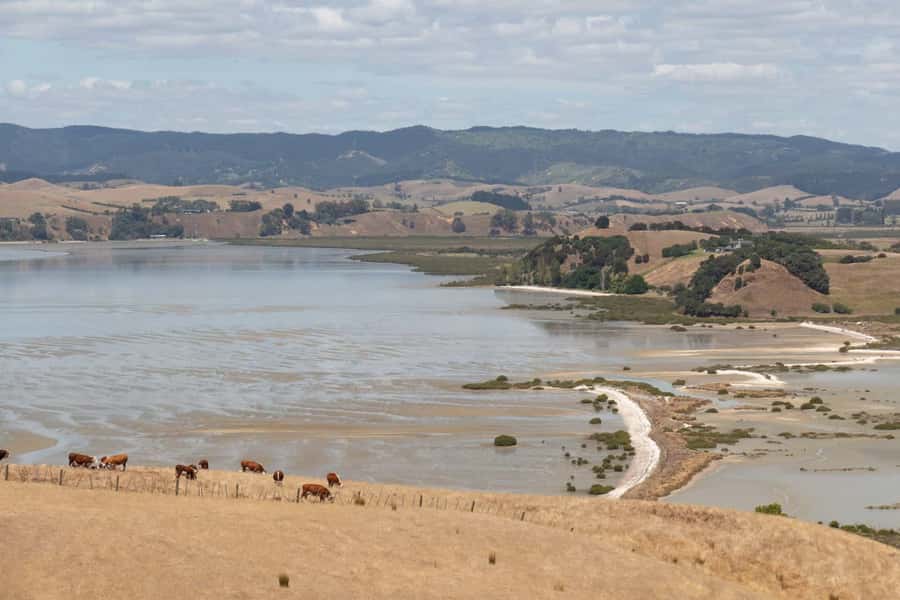
- 148 hectares of varied scenery: Walk between rolling farmland, native forest, coastal cliffs, and sandy beaches.
- Two time choices: Pick a four-hour half-day loop or an eight-hour full-day point walk.
- Private group format: You get a dedicated English-speaking guide rather than joining a large shared party.
- Wildlife and coastal views: Look for native birdlife, with gannets and terns noted along the coastal sections.
- Conservation with the scenery: Guides discuss geology, native plants, human impact, and efforts to protect the area.
- Simple meeting plan: Meet at the main car park, with pickup available only if arranged before the outing.
Why Duder Regional Park is worth your time
Duder Regional Park sits on the eastern coast of New Zealand’s North Island. Its appeal is not one famous monument or a single dramatic viewpoint. Instead, you get a compact sample of several environments in one outing: open farmland, forest tracks, sea cliffs, beaches, and broad coastal views.
That variety matters on a walking tour. A route that spends hours in one setting can begin to feel repetitive, especially in changeable weather. At Duder, the scenery should shift as you move between the park’s different areas. One moment you may be crossing open grassland, and later you may be under native trees or looking over the coast.
I also like the scale of the park. At 148 hectares, it is large enough to feel like a proper day outdoors but contained enough for a guided visit to cover meaningful ground. The route choices let you decide how much time and energy you want to give it.
The park also has a useful educational side. Your guide can explain the area’s geology, the role of coastal habitats, and why native plants and birds need protection. That turns the walk into more than a scenic exercise. You begin to understand why this particular stretch of coast matters.
More Walking Tours in Auckland
- Waiheke Island: Zipline And Forest Walk
★ 5.0 · 483 reviews - Auckland: Flavours of our City Food Walk
★ 5.0 · 371 reviews - Auckland: Flavours of the City Walking Food Tour
★ 4.8 · 202 reviews
Starting at the main car park
The tour begins at the main car park at Duder Regional Park and finishes back at Duder Regional Park. That makes the meeting plan straightforward if you have your own transport, but it is an important detail for visitors staying elsewhere in Auckland.
Pickup is not automatically included. You need to arrange it before the trip, and the price information does not include transport unless you and the provider agree on it in advance. I would settle this point before paying, particularly if you are not hiring a car.
The direct start and finish also make the day easier to plan. You are not being dropped at one trailhead and collected at another. For the half-day loop, this should be especially convenient because you return to the same place after the walk.
The tour is listed as a private group experience. That is useful if you want the guide to adjust explanations, walking speed, or the amount of time spent discussing the park. It also makes the $345 per-person cost easier to assess for a small group that values personal service. For a solo participant, the price requires more thought.
The four-hour loop for a shorter outing
The half-day option lasts four hours and follows a loop walk. This is the sensible choice if you want a substantial outing but still need part of the day for other Auckland plans.
A four-hour walk is not a quick photo stop. You should expect enough time to move through more than one part of the park and listen to explanations along the route. The loop format also avoids a complicated return arrangement, since you come back to the starting point.
The half-day option may suit you if:
- You want scenery and local information without committing a full day.
- You have limited time in Auckland.
- You prefer a moderate outing in uncertain weather.
- You are interested in the park but do not need every available trail section.
The exact walking sequence can depend on the conditions and the guide’s plan. The supplied details describe coastal, forest, and open-country sections, but do not promise a fixed set of stops for every departure. I would ask the provider which route is planned when booking, especially if a particular setting matters most to you.
The eight-hour point walk for serious walkers
The full-day option lasts eight hours and follows a point walk. It is designed for people who want to give Duder a full day rather than simply sample the park.
An eight-hour outdoor outing asks more of you. You need suitable shoes, enough water, warm clothing, rain gear, and any personal medication. Weather can change the feel of a coastal walk quickly, so I would treat the clothing list as essential rather than optional.
The longer format should give you more time to experience the park’s different settings. It is the better match if you want to see coastal sections, forest tracks, and open grasslands in one day, or if you enjoy walking at a steady pace with plenty of time for interpretation.
The tradeoff is clear. A full day provides more scenery and more time with the guide, but it leaves less room for other plans. It may also be too much if you are not used to long walks or if wet conditions are expected. The provider describes the activity as adventurous and warns about hazards including rocks, trees, water, wildlife, heights, and weather.
A completely different sort of day out:
- Waiheke Island: Ferry & Hop-On Hop-Off Explorer Bus Tickets
★ 4.6 · 3,311 reviews - Hobbiton & Waitomo Caves Guided Day Trip from Auckland incl lunch
★ 5.0 · 2,677 reviews - From Auckland: Hobbiton & Waitomo Caves Day Trip with Lunch
★ 4.9 · 2,505 reviews - Auckland Dolphin and Whale Watching Eco-Safari Cruise
★ 4.5 · 1,790 reviews
Coastal clifftop views and seabirds
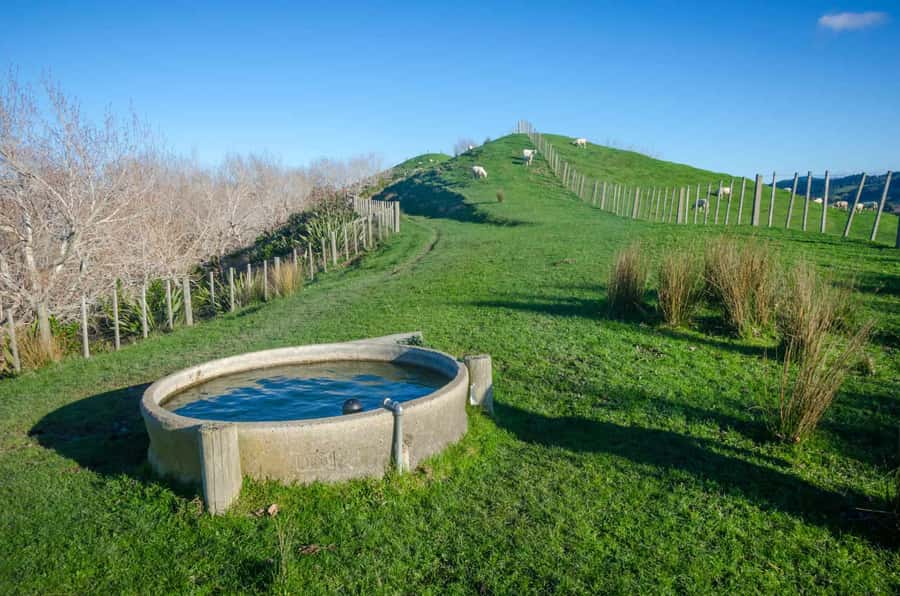
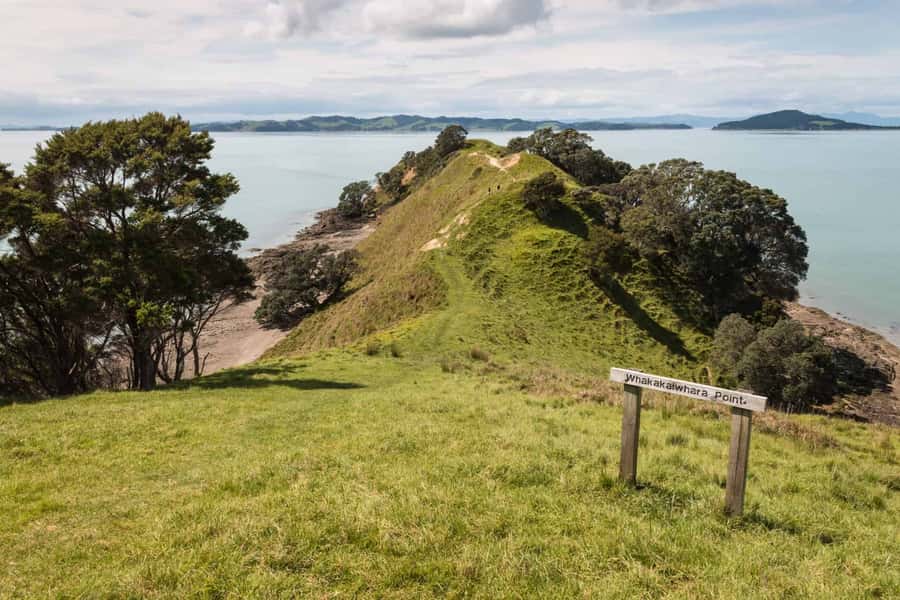
The Duder Coastal Clifftop Trail is the route for broad sea views and exposed coastal scenery. The clifftop setting gives the walk its most dramatic moments, while the mention of gannets and terns adds a wildlife angle.
Gannets and terns are not guaranteed sightings, so I would treat them as possible highlights rather than promised attractions. Still, the chance to watch seabirds over the coast gives the route more character than a simple viewpoint stop.
The guide can explain the coast’s geological past and why coastal conservation matters. That context helps you read the scenery. Cliffs are not only pretty edges to the sea. They are also places shaped by natural forces and affected by erosion, weather, and human activity.
Take care on exposed sections. The safety information specifically identifies heights, rocks, water, and changing weather as possible hazards. Closed-toe shoes are required, and rain gear and warm clothing are sensible even if the forecast looks friendly at breakfast.
Forest tracks beneath native trees
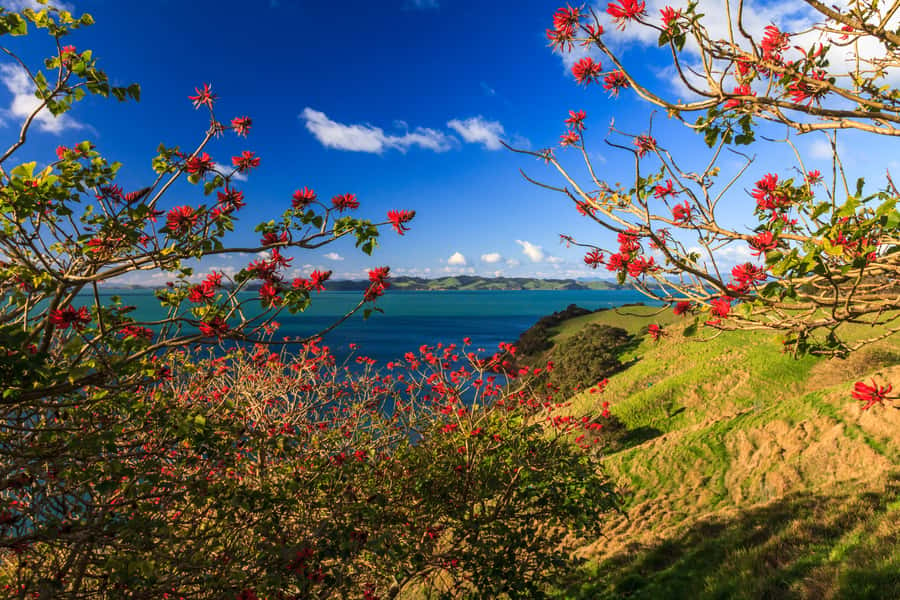
The forest section offers a different mood. Instead of open coastal views, you move among native trees such as pohutukawa and taraire. These trees are named as part of the park’s native flora, and the guide can explain why protecting them matters.
This portion may appeal most to you if you enjoy plants and quieter walking. It gives the tour a useful balance. After open farmland or clifftops, forest tracks provide shade, texture, and a closer look at the park’s plant life.
The conservation message is central here. Guides discuss the effects of human actions on local ecosystems and the need to protect native spaces for future generations. I appreciate that the talk is tied to what you are seeing around you. A discussion beside native trees feels more relevant than a general lecture delivered indoors.
The supplied details do not specify the length, surface, or difficulty of each forest section. If you have concerns about footing or stamina, ask the provider for a current route description before booking. The tour is a guided hike, not a flat city walk.
Te Ara Hura and the mixed terrain
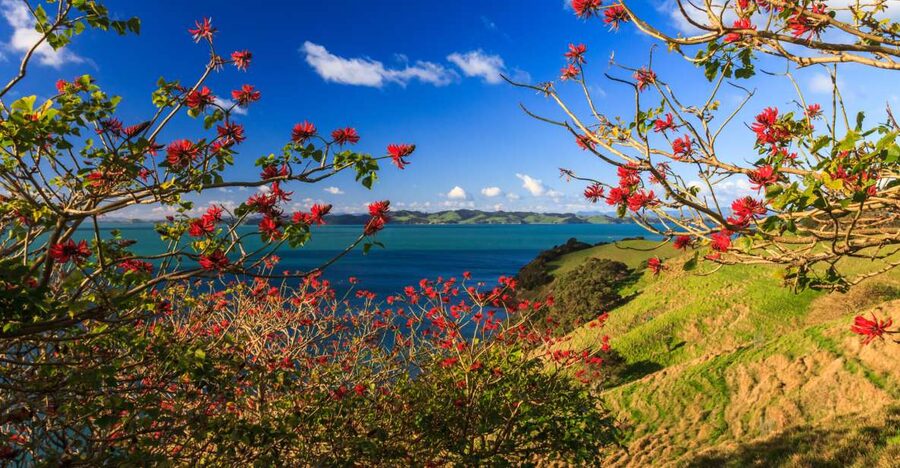
The Duder Te Ara Hura Trail is described as a multi-terrain route. It brings together coastal sections, forest tracks, and open grasslands, making it the broadest expression of what the park offers.
This route is likely to suit you if you want variety more than a single signature view. You can see how the park’s parts fit together rather than treating the coast, forest, and farmland as separate attractions.
The open grasslands also connect the park to its working countryside character. The setting is not just wild bush and cliffs. Rolling farmland is part of the experience, and that mix gives Duder a distinct sense of place.
The route’s varied surfaces are also the reason to prepare properly. Wear closed-toe shoes with a secure fit, carry water, and bring clothing for both wind and rain. The activity information uses the term adventurous and lists risks that can come with uneven ground, water, wildlife, trees, and weather.
History, geology, and conservation along the way
The tour’s educational value is one of its strongest features. You are not simply following a path while a guide points out scenery. The guide explains the park’s natural and cultural background, including geology, coastal protection, native flora, and the effects of human behavior on the environment.
The available information does not provide specific names, dates, or cultural sites, so you should not book this expecting a detailed museum-style history lesson. What you can expect is a broader explanation of how the area developed and why its natural resources deserve care.
I find that approach useful for a regional park. The setting itself is the main attraction, but interpretation gives it meaning. A cliff becomes part of a geological story. A native tree becomes part of a conservation story. Open farmland becomes part of the human story of the region.
The provider also describes the tours as a platform for environmental education. That will appeal to you if you prefer outdoor activities with a purpose. If you only want an unstructured walk, the guided explanations may feel like more information than you need.
What the $345 price really buys
At $345 per person, this is not a budget walk. The price includes a professional guide and a private group format, but not transport unless you arrange it beforehand. Food is not listed as included, so you should plan your own supplies, especially for the eight-hour outing.
The value depends heavily on your group size and interests. A private group that wants a tailored day, local interpretation, and a flexible route may find the cost fair. A solo walker or couple comparing it with a self-guided park visit may find the price harder to justify.
You are paying for more than access to the park. You are paying for a guide’s time, route planning, safety management, and explanations of the area’s ecology and geology. That matters if you want to understand what you are seeing or feel more comfortable walking with a professional.
There is only one verified rating in the supplied feedback. Kemakalom Albert of Nigeria gave the experience five out of five after a January 10, 2024 booking and described it as awesome, perfect, and worth the price. That is a very positive sign, but one response is not enough to prove that every departure will feel the same. I would treat it as encouraging evidence, not a complete record.
What to pack for a safer, better walk
The provider asks you to bring rain gear, water, closed-toe shoes, warm clothing, and personal medication. Every item has a clear purpose here.
Rain gear protects you from more than discomfort. Wet clothing can become a serious problem during a long outing, especially near the coast where conditions may change. Warm layers are useful for exposed clifftops and cooler forest sections.
Water is your responsibility. No meals, drinks, or snacks are listed among the inclusions. For an eight-hour walk, I would bring enough for the full outing and ask the provider if there are refill points or food breaks, since those details are not specified.
The safety information also mentions hypothermia, drowning, falls, falling objects, floods, wildlife, and other possible hazards. This does not mean the walk is reckless. It means you should take the guide’s instructions seriously and understand that outdoor conditions cannot be controlled completely.
Who should book Duder Regional Park Walking Tours?
I would recommend this experience to you if you want:
- A private guided walk instead of an independent route.
- Coastal views combined with forest and farmland.
- A full or half-day outdoor activity near Auckland.
- Explanations of ecology, geology, conservation, and local background.
- A flexible experience for a private group.
- A walk that includes both scenery and environmental education.
I would hesitate if you want a cheap activity, guaranteed wildlife sightings, included transportation, or a precise list of fixed stops. The tour information leaves some route details open, and the price is significant for a park visit.
Fitness is another consideration. The four-hour loop is the easier commitment, but neither option is described as a gentle, accessible stroll. Ask about terrain and current conditions if you have mobility, health, or stamina concerns.
Cancellation is flexible, with a full refund available when you cancel at least 24 hours ahead. You can also reserve now and pay later, which helps if your Auckland schedule is still changing. The tour is conducted in English, and the group is private.
FAQ
Where is Duder Regional Park Walking Tours located?
The experience takes place at Duder Regional Park on New Zealand’s North Island eastern coast.
How long does the walking tour last?
You can choose a four-hour half-day loop walk or an eight-hour full-day point walk. Starting times depend on availability.
Where do I meet the guide?
Meet at the main car park at Duder Regional Park. Pickup is available only if arranged in advance.
Is transportation included?
No. Transport is not included unless you discuss and arrange it with the provider before the trip.
Is the tour private?
Yes. The activity is offered for a private group.
What language is the tour conducted in?
The tour is conducted in English with a live guide.
What should I bring?
Bring rain gear, water, closed-toe shoes, warm clothing, and any personal medication you need.
Can I cancel or pay later?
You can cancel up to 24 hours in advance for a full refund. The reserve-now, pay-later option lets you hold your place without paying immediately.
Should you book this walk?
Book Duder Regional Park Walking Tours if you want a private, guided day outdoors and value the meaning behind the scenery. The combination of cliffs, seabirds, native forest, farmland, and conservation discussion gives the experience more substance than a basic walk.
Choose the four-hour loop if you want a manageable introduction. Choose the eight-hour route if you are prepared for a full day and want the broadest sample of the park. At $345 per person, I would book only after confirming transport, route details, and what food arrangements are expected. For the right group, this can be a thoughtful and scenic Auckland outing. For budget-minded independent walkers, the price may point you toward exploring the park on your own.
Just added in Auckland
- Yonder Star Sailing Yacht★ 5.0 · 2 reviews
- Auckland Airport Private One-Way or Round-Trip Transfer★ 4.5 · 14 reviews
- Zombie Bite Escape Room Experiences★ 5.0 · 54 reviews
- Kumeu Wine Region Shuttle from Auckland★ 4.5 · 19 reviews
- Auckland’s Wild West Coast & Black Sand Beaches Tour inc Lunch★ 5.0 · 12 reviews
- Wētā Workshop Unleashed Tour – Mandarin Speaking Guide★ 5.0 · 2 reviews
- Vineyards Honey and Black Sand Beaches from Auckland★ 5.0 · 93 reviews
- West Coast Wilderness Experience – Private Tour From Auckland★ 5.0 · 1 review
Walking Tours, compared.
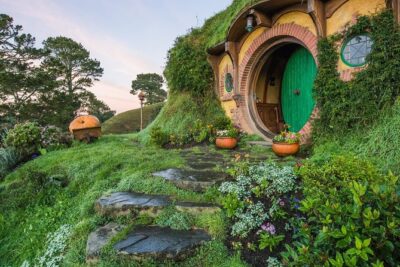
Hobbiton™ Movie Set Walking Tour from Shires Rest
Read our review →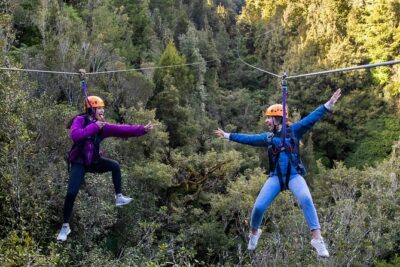
Rotorua’s Ultimate Zipline: 6 ziplines, 400 m Tandem, Cliff Walk
Read our review →
Waitomo Caves: Ruakuri Glowworm Cave Guided Walking Tour
Read our review →
Abel Tasman: Sea Shuttle Cruise and Walking Tour Combo
Read our review →

Browse the lists this tour appears in