REVIEW · AUCKLAND TOURS
Goat Island Experience Advanced Snorkel Tour
Fish may swim right up to you. The Goat Island Advanced Snorkel Tour gives you a close look at New Zealand’s first marine reserve, with coaching in duck diving, a small group capped at 12, and time to keep the equipment for the rest of the day. I like the clear safety focus and the chance to learn more than basic surface snorkeling. I also like that guides introduce the Leigh Coast, the reserve, and the Matheson Bay Rewilding Project before you enter the water.
The main catch is the experience level. You must have snorkeled in the ocean before, understand safety instructions in English, and have a moderate level of fitness. The $58.95 price is fair for a 2-hour-30-minute session, especially since you can continue using the equipment afterward, but this is not the right choice for a first ocean swim.
In This Review
- Key points to know before you book
- Why Goat Island makes a strong snorkel setting
- Starting at 142A Pakiri Road in Leigh
- The first lesson: technique, local context, and safety
- Getting ready with the right equipment
- What you may see below the surface
- Why the advanced group is different
- The value of a $58.95 half-day-style experience
- Who will get the most from this tour
- Weather, cancellations, and practical limits
- What the guide service adds
- Should you book the Goat Island Advanced Snorkel Tour?
- FAQ
- Where does the Goat Island Advanced Snorkel Tour start?
- Where does the experience finish?
- How long does the tour last?
- How much does the tour cost?
- What is the minimum age?
- Do I need previous snorkeling experience?
- Can I cancel for a full refund?
Key points to know before you book
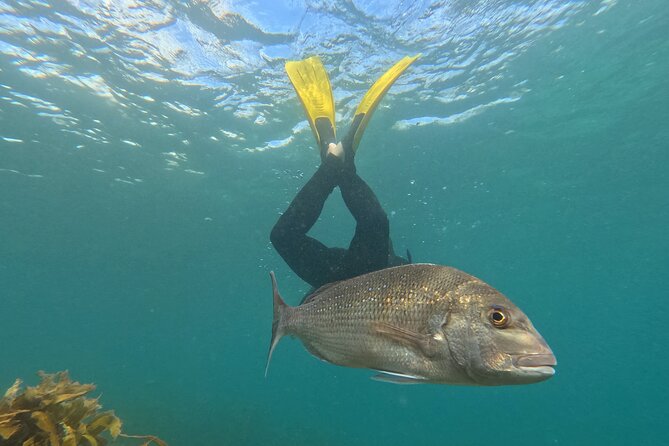
- Duck-diving practice: The advanced group learns to descend below the surface using a weight belt, helping you get a closer look at fish and other sea life.
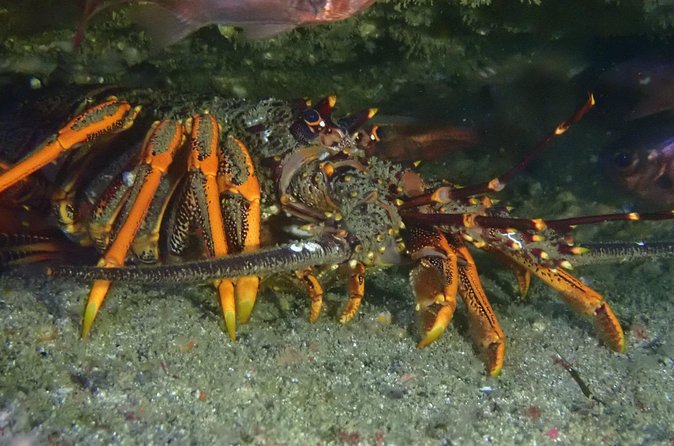
- Goat Island Marine Reserve: You snorkel in New Zealand’s first marine reserve, where blue maomao, snapper, rays, octopus, and crayfish may appear.
- Small group size: A maximum of 12 people gives the dive professional a better chance to watch comfort, technique, and safety.
- Equipment for the day: After the guided session, you can keep using the gear and continue exploring on your own.
- Marine life is not guaranteed: Dolphins and orca sometimes visit, but the regular sights are fish, rays, octopus, kahawai, blue cod, and crayfish.
- Weather matters: Poor conditions can lead to a new date or a full refund.
Why Goat Island makes a strong snorkel setting
Goat Island Marine Reserve is the main reason to choose this activity. It was New Zealand’s first marine reserve, and the tour places you in a protected area known for close encounters with marine life. You are not simply swimming along a beach and hoping something appears. The reserve gives the session a clear purpose: learn how to move safely in the water, then look closely at the creatures living below.
The setting also gives your guide useful material to explain before you enter. You hear about the Leigh Coast, Goat Island, and the Matheson Bay Rewilding Project. That background helps you understand the place as more than a scenic swim. You begin to see the reserve as a carefully protected home for fish and other sea life.
I like that the introduction includes the animals you might see. Blue maomao, large snapper, eagle rays, stingrays, blue cod, octopus, kahawai, and crayfish are all listed as possible encounters. That does not promise a wildlife checklist, but it gives you a better idea of what to watch for once your face is in the water.
A few more to weigh up in Auckland
- Waiheke Island: Ferry & Hop-On Hop-Off Explorer Bus Tickets
★ 4.6 · 3,311 reviews - Hobbiton & Waitomo Caves Guided Day Trip from Auckland incl lunch
★ 5.0 · 2,677 reviews - From Auckland: Hobbiton & Waitomo Caves Day Trip with Lunch
★ 4.9 · 2,505 reviews
Starting at 142A Pakiri Road in Leigh
The tour begins at 142A Pakiri Road in Leigh, 0985, and returns to the same meeting point. The entire activity takes about 2 hours and 30 minutes, with roughly two hours allocated to the main reserve experience.
That return-to-base setup is practical. You do not need to arrange a second pickup point, and you finish where you started. Still, you should allow extra time around the session for arriving, getting ready, and using the equipment afterward.
The activity is mobile-ticket friendly, so you can keep the booking details on your phone. The important preparation is not paperwork. It is making sure you already have some ocean snorkeling experience and can follow the safety briefing in English.
The first lesson: technique, local context, and safety
The session begins with a refresher on snorkeling skills. This is useful even if you have been in the ocean before, since ocean conditions can feel different from a calm pool or a casual beach swim. The guide goes over the basics, then adds the extra skills expected from the advanced group.
You also receive a full safety briefing before entering the water. This is one of the strongest parts of the setup. The guide is not sending you straight out with a mask and snorkel and hoping you manage. You learn what to expect, how the group will operate, and how to stay comfortable in the water.
The safety focus matters because the aim is to spend more time looking below the surface, not worrying about your equipment or position. The professional guide supervises the group and watches for signs that someone is uncomfortable. That care was especially clear in the feedback from people who felt reassured by the instructors, even when they could not swim down very far.
You should still take the entry requirements seriously. This is not a lesson for someone who has never snorkeled in the sea. The tour can support different levels of confidence within the advanced group, but you need a basic foundation before you arrive.
Getting ready with the right equipment
After the briefing, the group makes its way to the water and finishes preparing the equipment. You put on your gear, check that it is comfortable, and get ready to swim out with the group.
A weight belt is used for the duck-diving practice. The purpose is to help you move below the surface and look at marine life from a closer angle. This is a useful skill for anyone who has only watched fish from above, though it also requires calm breathing and comfort in the water.
The guide’s role is important here. You are not expected to force yourself down or copy the strongest swimmer. You can work within your comfort level while receiving instruction from the dive professional. The feedback specifically praises attentive instruction and careful group management, including the way guide Skye made sure people’s needs were met.
That personal attention is easier to provide with a maximum of 12 people. It is still a group activity, not a private lesson, but the limit is small enough for the guide to keep track of the participants.
A completely different sort of day out:
- Auckland Dolphin and Whale Watching Eco-Safari Cruise
★ 4.5 · 1,790 reviews - Skydive Auckland
★ 5.0 · 1,516 reviews - Auckland: Hobbiton Movie Set Day Trip with Festive Lunch
★ 4.8 · 1,431 reviews - Hobbiton Movie Set Small Group Tour from Auckland
★ 5.0 · 1,380 reviews
What you may see below the surface
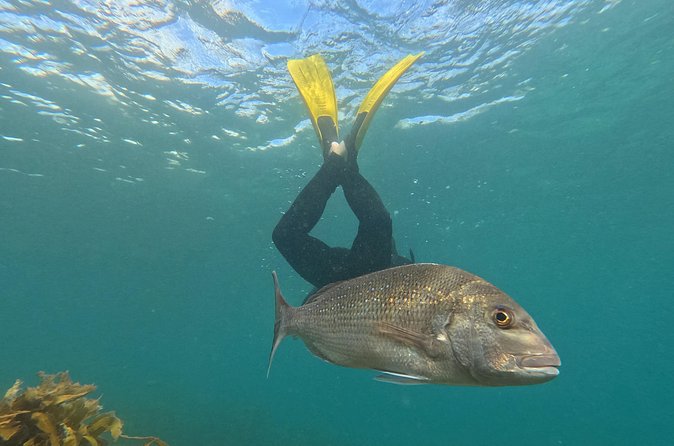
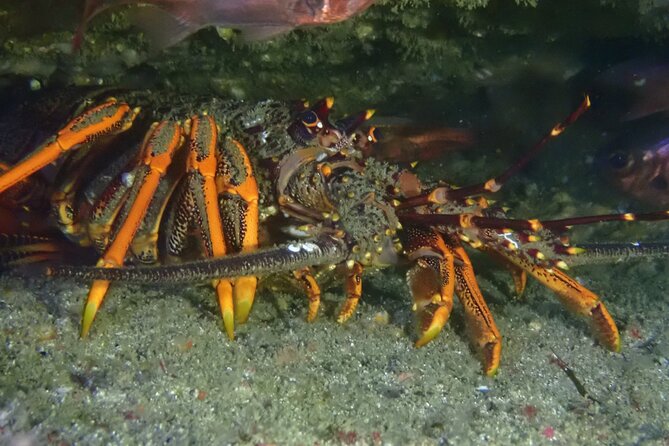
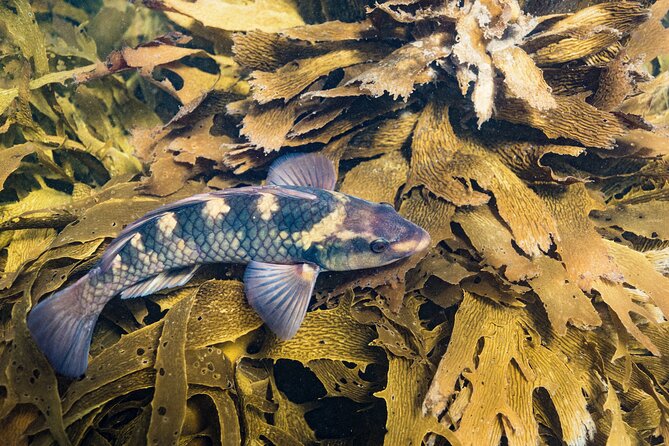
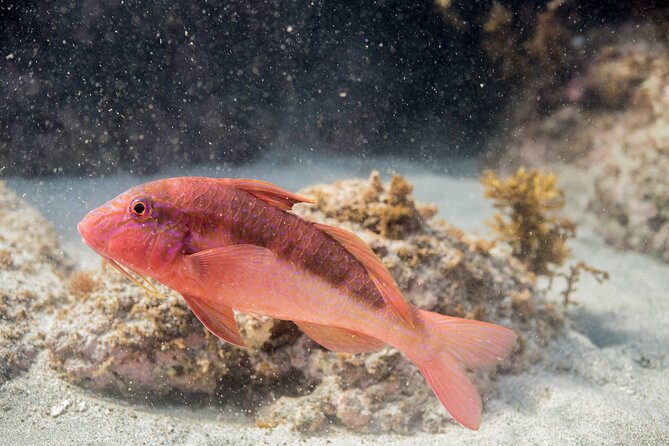
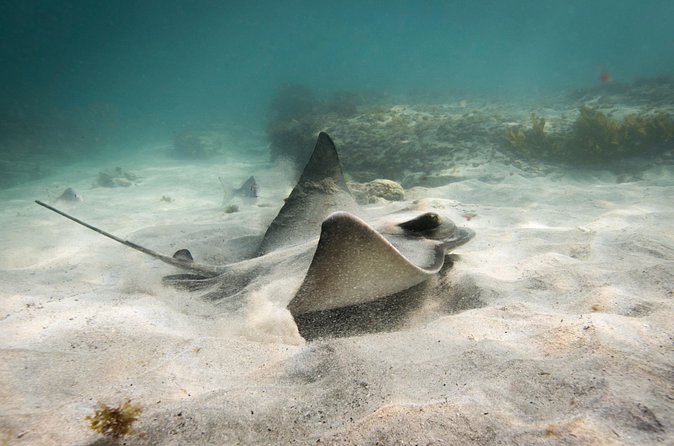
Once you are in Goat Island Marine Reserve, the experience becomes less about instruction and more about observation. Blue maomao and large snapper are among the fish you may meet. Blue cod, kahawai, and crayfish add variety, while octopus can make a sudden appearance if you are looking carefully.
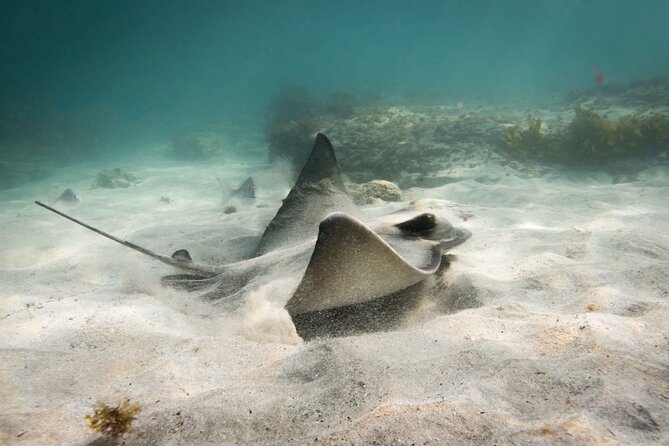
Rays are a particular highlight. The reserve may bring you close to eagle rays and stingrays, and the guide can help you understand what you are seeing. Eagle rays were singled out as a special sight, and I can see why. Their shape and movement make them easy to remember long after the swim ends.
The word may matters here. Wildlife is unpredictable. The tour introduces you to a place where these animals live, but it cannot control which species appear during your session. Dolphins and orca sometimes visit the reserve and may play near snorkelers, but you should treat that as a lucky bonus rather than a promised feature.
The best approach is to focus on the quality of the encounter, not on collecting a certain number of species. Even a session with fish and rays but no dolphin can be a worthwhile use of two hours in the water.
Why the advanced group is different
The advanced option is built around getting closer to the marine life. You learn to duck down or freedive under the guide’s supervision, rather than staying at the surface for the entire session.
That extra skill can change how you see the reserve. A surface view gives you a quick look at passing fish. Going lower, when you are comfortable and properly instructed, may let you examine fish, rock areas, or other sea life more closely. It also gives you a better sense of how much life is beneath you.
This does not mean you need to perform long or dramatic underwater swims. The practical goal is controlled movement and a closer view. If you cannot descend far, the instructors can still help you feel comfortable and included. The positive feedback from participants who struggled to go deep suggests that the staff put comfort ahead of showing off.
You should book this version only if you have snorkeled in the ocean before. The tour is advanced because of the added technique, not because you need to be a competitive swimmer. Still, you need enough water confidence to manage a mask, snorkel, and weight belt while following instructions.
The value of a $58.95 half-day-style experience
At $58.95 per person, the price sits in a reasonable range for a guided marine activity. You receive instruction, safety supervision, access to equipment, and a guided session lasting about 2 hours and 30 minutes.
The strongest value comes after the formal tour. You can use the equipment for the remainder of the day and continue exploring. That makes the price more attractive than a short guided swim where you hand everything back as soon as the group returns.
The value depends on how you use that extra time. If you want only a quick introduction and plan to leave, the price may feel less compelling. If you want to make a full day of exploring Goat Island and the surrounding area, keeping the equipment gives you more freedom.
The small group limit also matters. A group of no more than 12 people allows closer supervision than a large commercial outing. You are paying not just for access to water, but for coaching and a guide who can pay attention to the group’s safety.
Who will get the most from this tour
I would recommend this experience to an adult or teenager aged 12 and older who has already snorkeled in the ocean. It suits you if you want to improve your technique, get below the surface, and learn more about the reserve while you swim.
It is also a good fit if you feel a little uncertain about your ability to descend. The instruction is designed to build comfort, and the guide can watch your progress. You do not need to force yourself to go as deep as someone else.
The tour may suit families with older children, but the age minimum is 12, and every participant must be able to understand the safety instructions in English. A parent should also consider the child’s ocean experience and comfort before booking.
I would not choose it for a complete beginner, someone who has only used a snorkel in a pool, or anyone looking for a dry sightseeing activity. You are entering the water, wearing a weight belt, and taking part in a physically active session.
Weather, cancellations, and practical limits
The experience requires good weather. If poor conditions lead to cancellation, you can choose a different date or receive a full refund. The same applies if the minimum number of participants is not reached.
You can cancel for a full refund if you do so at least 24 hours before the start time. Cancellations made less than 24 hours in advance are not refunded, and late changes are not accepted. The cut-off follows local time in New Zealand.
These rules are fairly simple, but they make timing important. If your plans around Auckland are tight, avoid booking this as the final activity before a flight or long drive. Weather and ocean conditions can affect the day, even when your own schedule cannot change.
What the guide service adds
The guide is central to the experience. In the water, the professional watches the group, helps with safety, and keeps people together. On shore, the guide explains technique and gives context about the coast and reserve.
The strongest praise has been directed at this personal care. Skye was described as attentive and careful about meeting everyone’s needs. That matters in a water activity because a calm guide can make the difference between feeling rushed and enjoying the session.
The instructors also helped less confident swimmers feel comfortable. One participant appreciated the support despite being unable to swim far below the surface. That suggests the staff do not treat the advanced label as a demand to perform. They use it as a chance to teach extra skills while keeping an eye on individual comfort.
Should you book the Goat Island Advanced Snorkel Tour?
Book it if you have ocean snorkeling experience and want more than a surface swim. The duck-down practice, small group, marine reserve setting, and all-day equipment use give the $58.95 cost solid value.
Skip it if you are a first-time snorkeler, dislike physical activities in the sea, or need a guaranteed dolphin or orca encounter. The wildlife is wonderfully unpredictable, and the tour’s real strength is the chance to observe a protected marine environment with careful instruction.
For the right person, this is a focused, well-supported way to meet Goat Island’s underwater life. Arrive ready to listen, stay within your limits, and let the rays, snapper, fish, and perhaps an octopus provide the surprises.
FAQ
Where does the Goat Island Advanced Snorkel Tour start?
It starts at 142A Pakiri Road, Leigh 0985, New Zealand.
Where does the experience finish?
The activity ends back at the same meeting point.
How long does the tour last?
The experience lasts approximately 2 hours and 30 minutes. The main Goat Island portion is listed as two hours.
How much does the tour cost?
The price is $58.95 per person.
What is the minimum age?
The minimum age is 12 years.
Do I need previous snorkeling experience?
Yes. You must have snorkeled in the ocean before. You also need a moderate level of physical fitness and must be able to understand safety instructions in English.
Can I cancel for a full refund?
Yes. You can cancel at least 24 hours before the start time for a full refund. Poor weather or failure to meet the minimum number of participants may also lead to a new date or a full refund.
Just added in Auckland
- Yonder Star Sailing Yacht★ 5.0 · 2 reviews
- Auckland Airport Private One-Way or Round-Trip Transfer★ 4.5 · 14 reviews
- Zombie Bite Escape Room Experiences★ 5.0 · 54 reviews
- Kumeu Wine Region Shuttle from Auckland★ 4.5 · 19 reviews
- Auckland’s Wild West Coast & Black Sand Beaches Tour inc Lunch★ 5.0 · 12 reviews
- Wētā Workshop Unleashed Tour – Mandarin Speaking Guide★ 5.0 · 2 reviews
- Vineyards Honey and Black Sand Beaches from Auckland★ 5.0 · 93 reviews
- West Coast Wilderness Experience – Private Tour From Auckland★ 5.0 · 1 review
Auckland Tours, compared.
Waiheke Island: Ferry & Hop-On Hop-Off Explorer Bus Tickets
Read our review →
Hobbiton & Waitomo Caves Guided Day Trip from Auckland incl lunch
Read our review →
Hobbiton & Waitomo Caves Day Trip with Lunch
Read our review →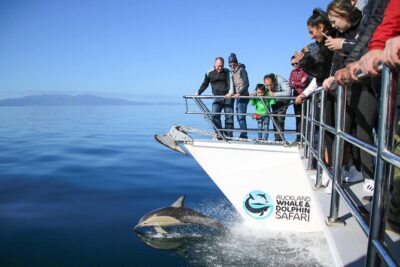
Auckland Dolphin and Whale Watching Eco-Safari Cruise
Read our review →
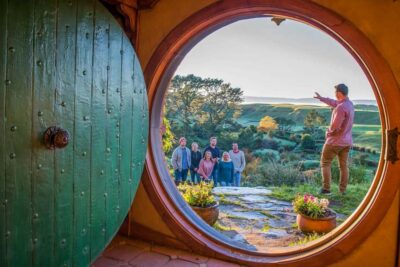
Hobbiton Movie Set Day Trip with Festive Lunch
Read our review →
Hobbiton Movie Set Small Group Tour from Auckland
Read our review →