REVIEW · GUIDED
Goat Island Experience Guided Shore Dive
The fish here are the welcoming committee. Goat Island’s guided shore dive puts you in a protected marine reserve with snapper, blue maomao, stingrays, crayfish, kelp forests, and rocky walls close to Auckland. I like the small maximum group of six, which should make the four-hour outing more personal, and I like the range of possible sites, from eagle ray flats to caves filled with small sea life. The main catch is simple: you must be a certified diver who has been in the water within the past 18 months.
This is not a casual first-time swim. You need proof of certification, a moderate level of fitness, and you must be at least 16. Conditions also matter, since tides and currents decide which sites are safe to enter, and some locations require a surface swim.
In This Review
- Five things to know before you book
- Why Goat Island makes a strong underwater setting
- What the four-hour schedule feels like
- ABC Bay, where fish and kelp share the view
- Shag Rock and the fish-packed kelp
- Waterfall Reef and the southern channel
- Caves for small creatures and close-up searching
- Yellow Sponge Garden and its rocky cracks
- Eagle Ray Flats and the sandy bottom
- The value of a small guided group
- What the wildlife report tells you
- Who should book this shore-based outing
- My booking verdict
- FAQ
- Where does the Goat Island guided shore dive start?
- How long does the experience last?
- How much does the experience cost?
- How many people can join the outing?
- Do I need to be a certified diver?
- What recent experience do I need?
- What is the minimum age?
- Can the route change because of conditions?
- Can I cancel for a refund?
Five things to know before you book
- The whole outing stays inside Goat Island Marine Reserve: You explore from shore rather than from a boat, with marine life protected by New Zealand’s no-take rules.
- Six people is the maximum group size: That is a useful limit for a guided underwater outing, especially when conditions change.
- Several sites offer very different scenery: You might see eagle rays over sand, crayfish in cracks, kelp around Shag Rock, or tiny nudibranchs in the caves.
- Recent water experience is required: You must have used scuba equipment within the last 18 months and bring proof of certification.
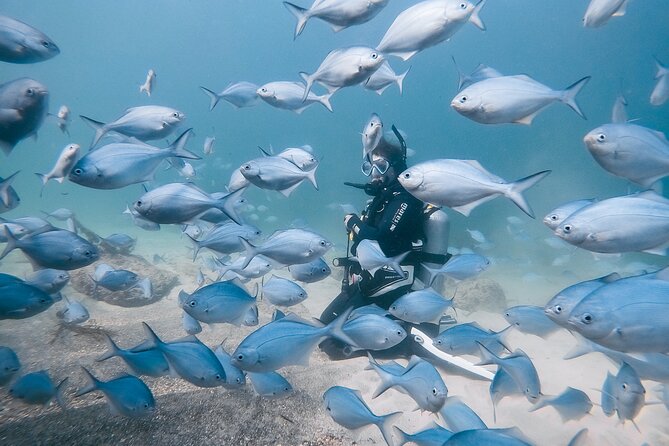
- Wildlife is the main attraction: Snapper, goatfish, trevally, stingrays, eagle rays, octopuses, and schooling fish are all possible sightings.
- The price is $139.63 per person: For a four-hour guided reserve outing with a small group, the cost can be fair, but it makes the most sense if you value local guidance and varied sites.
Why Goat Island makes a strong underwater setting
Goat Island Marine Reserve is the heart of this outing. It is a protected area, so the appeal is not a wreck, a sunken structure, or a long boat ride offshore. The draw is the living water itself, with fish and invertebrates using the rocky shore, kelp, sand, and reefs.
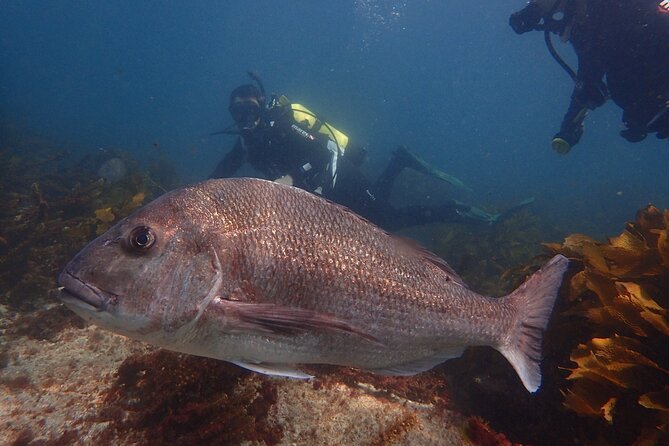
You may encounter snapper, red moki, goatfish, triplefins, parore, kahawai, sweep, silver drummers, and trevally. The fish list matters because it tells you what kind of outing this is. You are not being promised one artificial attraction. You are moving through a working marine habitat where the scene can change from a school of fish to a crayfish tucked under a rock.
The reserve can also bring larger surprises. Octopuses, stingrays, and eagle rays are possible, and dolphins or orcas sometimes pass through. No wildlife sighting is guaranteed, so you should book this for the protected marine setting and the chance to see animals, not for a fixed checklist.
The shore access also changes the rhythm. You are not spending part of the four hours riding to a distant reef. The outing begins and ends at 142A Pakiri Road in Leigh, and the activity returns to that meeting point. That makes the time useful for exploring the reserve itself, though some access points still call for a surface swim.
A few more to weigh up in Auckland
- Waiheke Island: Ferry & Hop-On Hop-Off Explorer Bus Tickets
★ 4.6 · 3,311 reviews - Hobbiton & Waitomo Caves Guided Day Trip from Auckland incl lunch
★ 5.0 · 2,677 reviews - From Auckland: Hobbiton & Waitomo Caves Day Trip with Lunch
★ 4.9 · 2,505 reviews
What the four-hour schedule feels like
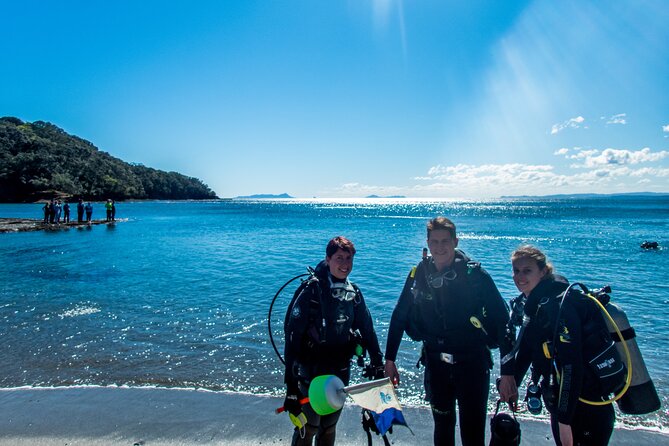
The listed reserve visit is shown as two hours, while the full activity lasts about four hours. That suggests you should allow time beyond the actual underwater portion, including preparation, group arrangements, access from shore, and movement between possible locations. The exact water time is not stated, so do not plan another tight appointment immediately afterward.
The guide chooses the site according to conditions. Current and tide can rule out certain places, and not every location is available on every day. This is a good safety feature, not a weakness. It means the most dramatic-sounding site on the list may not be the one you enter.
A small group of no more than six should help the guide keep track of the group and adjust the plan. It also gives you a better chance to ask questions about what you are seeing. The outing is guided, but the material does not promise a private tour, so expect a shared group rather than one-on-one instruction.
You should arrive ready for a physically active half-day. The moderate fitness requirement is important because shore access and surface swimming can take effort, particularly if conditions require a longer route into a site. Certified underwater ability is assumed, so this is not a lesson for someone who has never used scuba gear.
ABC Bay, where fish and kelp share the view
ABC Bay is described as a place for stingrays and blue maomao, with kelp forests and cliff sides adding structure to the route. It sounds like a strong all-round option because it combines open swimming space with rocky habitat.
The kelp is not just decoration. It creates cover for fish and gives the area a different feel from a bare sandy bottom. Along the cliffs, you can look for animals using cracks and edges, while the bay itself may bring larger fish into view.
This site may suit you if you want variety without focusing only on tiny creatures. The possible stingrays add a little excitement, while blue maomao and other fish give you plenty to watch when larger animals are not present.
Shag Rock and the fish-packed kelp
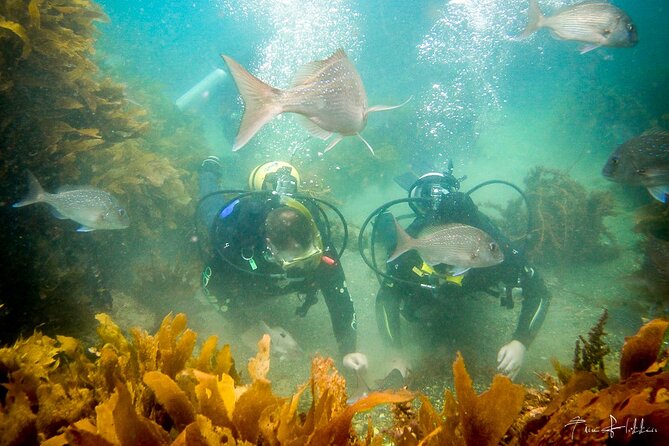
Shag Rock is a large lone rock surrounded by kelp. Isolated rocks often attract fish because they provide shelter and feeding areas, and this location is presented as a favourite with the local fish.
That makes it appealing for anyone who enjoys watching groups of fish rather than slowly searching every crack. The kelp gives the rock a clear identity, and the site may feel more concentrated than a broad open bay.
The limitation is access. Some sites need the right current and tide, and Shag Rock may not be available on every outing. Treat it as a possible highlight rather than a guaranteed stop.
A completely different sort of day out:
- Auckland Dolphin and Whale Watching Eco-Safari Cruise
★ 4.5 · 1,790 reviews - Skydive Auckland
★ 5.0 · 1,516 reviews - Auckland: Hobbiton Movie Set Day Trip with Festive Lunch
★ 4.8 · 1,431 reviews - Hobbiton Movie Set Small Group Tour from Auckland
★ 5.0 · 1,380 reviews
Waterfall Reef and the southern channel
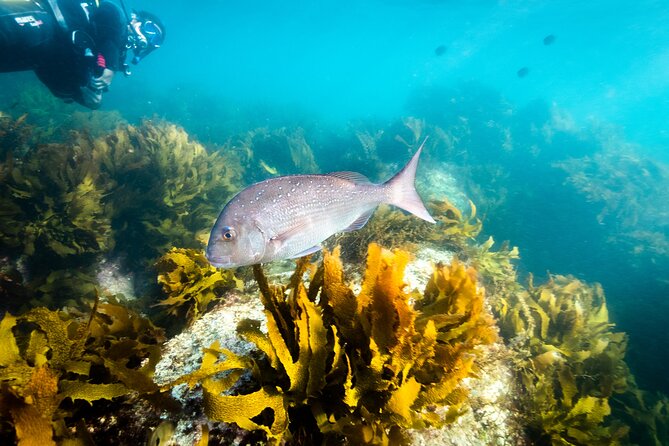
Waterfall Reef lies on the southern side of the channel, where schools of fish and crayfish are the main attractions. Schooling fish can make a site feel active even when larger animals stay out of sight, while crayfish reward a slower look into the rocks.
This is a good match for you if you like switching between open-water views and careful searches along the bottom. Crayfish are easy to miss if you rush, so the guided format has value here. A local guide can point out likely hiding places and help you understand where to direct your attention.
The southern position also highlights the role of conditions. The current must be suitable, and the location may require a surface swim. You should be comfortable with that possibility before booking.
Caves for small creatures and close-up searching
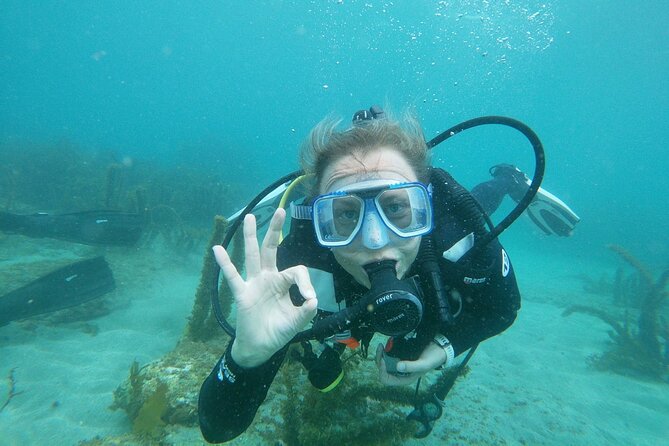
The caves are aimed at people who enjoy invertebrates and macro subjects. Anemones, nudibranchs, and sponges are listed here, which means the reward comes from patience rather than size.
This can be the most absorbing part of the outing if you enjoy finding small details. Nudibranchs in particular can be easy to overlook, and caves give sponges and anemones a sheltered place to grow. You will get more from this site if you are happy to slow down and study the rocks.
There is a practical trade-off. Cave areas can feel more confined than a bay or sand flat, and visibility or access can depend heavily on conditions. The guide may choose another location if the tide or current is not right.
Yellow Sponge Garden and its rocky cracks
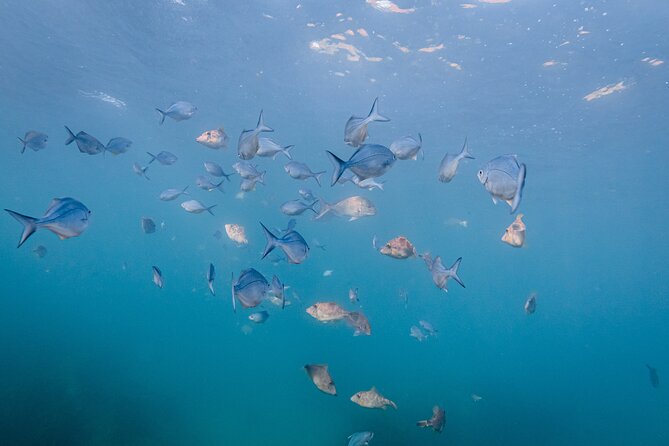
Yellow Sponge Garden offers large crevices covered in kelp. The name points to one visual feature, but the list of possible animals is just as interesting: crayfish, bigeye, and tiny triplefins may be tucked into the structure.
This is a site for careful observation. The best moments may come from spotting something small inside a crack rather than seeing a large animal pass by. If you enjoy looking beneath ledges and along kelp-covered rock, this area could be rewarding.
It also shows why a guided outing can offer more than simply entering the water alone. Without local help, you might swim past the small triplefins or miss a crayfish resting in cover. The guide cannot guarantee sightings, but the site selection and local knowledge can improve your chances.
Eagle Ray Flats and the sandy bottom
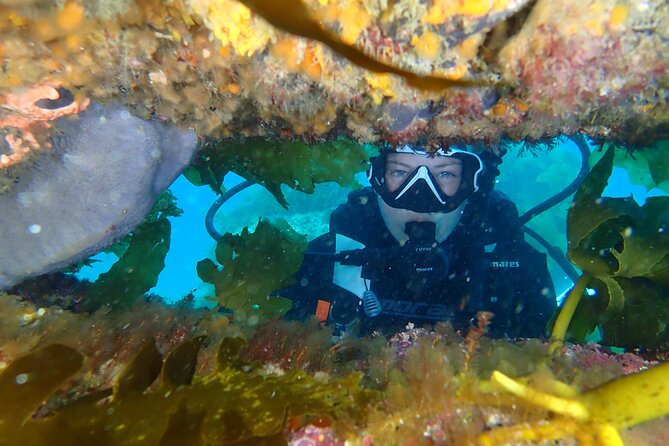
Eagle Ray Flats changes the scenery from rocky walls and kelp to sand. Eagle rays may rest on the bottom, schools of fish feed in the currents, and snapper are known for cruising nearby with curiosity.
For many people, this could be the clearest wildlife highlight. Eagle rays are large and distinctive, and the open sand makes them easier to watch than an animal tucked into a crevice. The fish activity in the current also gives the area motion and variety.
Again, timing matters. Eagle rays are wild animals, and their presence cannot be promised. The site may also depend on the right conditions, so you should enjoy it as a possible feature rather than the sole reason for booking.
The value of a small guided group
At $139.63 per person, this is not the cheapest way to enter the water. The price makes more sense if you want a guide, a limited group, and help choosing among several shore sites inside a protected reserve.
A maximum of six people is a meaningful advantage. A larger group can make it harder to stay together, ask questions, or spend time looking at small animals. Here, the group limit should give the guide room to respond to the conditions and the abilities of the people present.
The value also depends on your experience level. If you are already certified, recently active, and comfortable managing your own equipment and water skills, you may wonder why you need a guided outing. The answer is access to local site knowledge and a plan shaped by the tides and currents. If you are rusty, the guide does not replace recent practice, and the 18-month rule remains firm.
You also need to consider what is included. The supplied details give the price, meeting point, duration, group size, and guide format, but do not specify equipment rental, transport from Auckland, or underwater photography. Confirm those points before paying if they affect your budget.
What the wildlife report tells you
The strongest praise attached to this experience focuses on the team and the wildlife. Michela, Isaac, and Paul are specifically thanked for helping create a memorable outing, with an eagle ray, goatfish, and many other animals seen. That is useful because it points to a friendly, hands-on operation rather than a purely self-directed entry.
A separate family account describes a 10-year-old enjoying a try-dive experience and wanting to return. Do not confuse that with this guided outing’s rules. This activity requires participants to be at least 16 and certified, so the younger child’s try-dive was clearly a different product or arrangement.
The wildlife seen can vary from day to day. You might find snapper and schooling fish close to shore, or spend more time locating crayfish and smaller creatures. The occasional presence of dolphins or orcas is exciting, but it should be treated as luck rather than part of the standard program.
Who should book this shore-based outing
I would point this toward certified divers who want a local marine reserve rather than a boat-based trip. It suits you especially well if you enjoy wildlife watching, kelp, rocky reef, and small creatures as much as dramatic scenery.
It is also a good choice for people who prefer a small group. The six-person limit matters if you want a calmer pace and a better chance to stay connected with the guide.
I would hesitate if you have not used your certification in the past 18 months, dislike surface swimming, or want a guaranteed site. The conditions can change the plan, and the activity expects a moderate level of fitness. It is also not suitable for children under 16 under the stated rules.
Confirmation arrives when you book, and the activity uses a mobile ticket. Free cancellation is available up to 24 hours before the start time. If poor weather cancels the outing, you can receive another date or a full refund. The same choice applies if the minimum number of participants is not met.
My booking verdict
I would book the Goat Island guided shore outing if I were a recently active, certified diver visiting the Auckland area and looking for wildlife in a protected setting. The best reasons are the small group, the range of possible sites, and the chance to see animals from eagle rays and stingrays to nudibranchs and tiny triplefins.
I would not book it expecting a fixed route or guaranteed eagle rays. Conditions control the plan, some sites require a surface swim, and the full four-hour window includes more than time underwater. For the right diver, $139.63 is a reasonable price for local guidance and access to several distinct shore habitats. For a beginner or a diver who needs a refresher, choose a more suitable introductory option instead.
FAQ
Where does the Goat Island guided shore dive start?
It starts at 142A Pakiri Road, Leigh 0985, New Zealand. The activity ends back at the same meeting point.
How long does the experience last?
The full activity lasts approximately four hours. The Goat Island Marine Reserve portion is listed as two hours.
How much does the experience cost?
The listed price is $139.63 per person.
How many people can join the outing?
The maximum group size is six participants.
Do I need to be a certified diver?
Yes. You must be a certified diver and bring proof of certification with you.
What recent experience do I need?
You must have been in the water within the last 18 months.
What is the minimum age?
Participants must be at least 16 years old.
Can the route change because of conditions?
Yes. Currents and tides determine which sites are available, and some sites require a surface swim. Poor weather can also cause the activity to be canceled.
Can I cancel for a refund?
You can cancel at least 24 hours before the start time for a full refund. Cancellations or changes made less than 24 hours before the start time are not accepted for a refund.
Just added in Auckland
- Yonder Star Sailing Yacht★ 5.0 · 2 reviews
- Auckland Airport Private One-Way or Round-Trip Transfer★ 4.5 · 14 reviews
- Zombie Bite Escape Room Experiences★ 5.0 · 54 reviews
- Auckland’s Wild West Coast & Black Sand Beaches Tour inc Lunch★ 5.0 · 12 reviews
- Kumeu Wine Region Shuttle from Auckland★ 4.5 · 19 reviews
- Wētā Workshop Unleashed Tour – Mandarin Speaking Guide★ 5.0 · 2 reviews
- Vineyards Honey and Black Sand Beaches from Auckland★ 5.0 · 93 reviews
- West Coast Wilderness Experience – Private Tour From Auckland★ 5.0 · 1 review
Guided, compared.
Hobbiton & Waitomo Caves Guided Day Trip from Auckland incl lunch
Read our review →
Waitomo Caves: Ruakuri Glowworm Cave Guided Walking Tour
Read our review →