REVIEW · GUIDED
Guided Tour at Pukorokoro Shorebird Centre
Birds can make a wetland unforgettable. The guided tour at Pukorokoro Shorebird Centre brings you into the Robert Findlay Wildlife Reserve, where telescopes help you spot thousands of shorebirds in an internationally significant estuary. I like the close look at birds many people miss, and I like that your admission supports a conservation organisation rather than simply filling a sightseeing timetable.
The tour also explains the remarkable migration of the kuaka, or bar-tailed godwit, in plain, memorable terms. The main consideration is the setting itself: this is a walking visit through a wetland, not a sit-back attraction, and it is not recommended if you have very limited mobility. Good weather is also needed, and the birds are best seen when the tides bring them close.
In This Review
- Five things to know before you go
- Why this shorebird tour is worth your time
- Starting at the Robert Findlay Wildlife Reserve
- Telescopes, bird hides, and the joy of identification
- The kuaka migration story
- What the guides add to the experience
- Timing your visit around the tides
- Practical planning for a comfortable visit
- Who will enjoy this tour most
- Is $31.03 good value?
- Cancellation and weather notes
- Should you book the Pukorokoro Shorebird Centre tour?
- FAQ
- Where does the guided tour take place?
- How long does the tour last?
- What is included in the price?
- Are binoculars provided?
- Is bottled water included?
- Is the tour suitable for people with limited mobility?
- Is this a private tour?
- What happens if bad weather cancels the tour?
Five things to know before you go
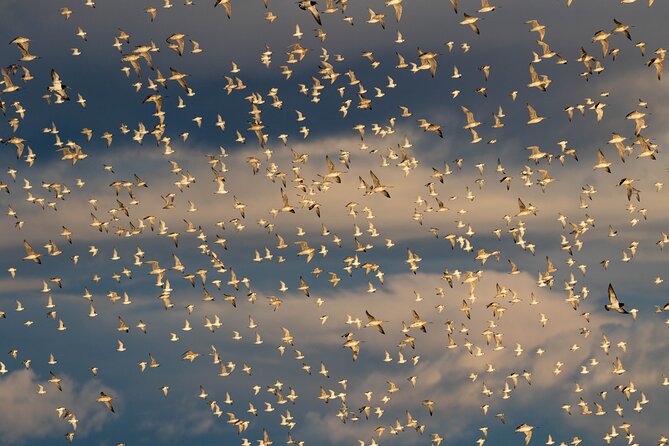
- Thousands of shorebirds in one reserve: Use the supplied telescopes to scan the Robert Findlay Wildlife Reserve and its bird hides.
- Tide-aware wildlife viewing: Tour times are arranged around the tides, when shorebirds are more likely to be present.
- A 90-minute guided walk: The whole experience focuses on the reserve, its hides, estuary, geology, and birdlife.
- Kuaka take centre stage: Learn about the extraordinary migration of bar-tailed godwits and the risks these birds face.
- A small-group private experience: Only your own group takes part, giving you room to ask questions and follow the guide’s pace.
Why this shorebird tour is worth your time
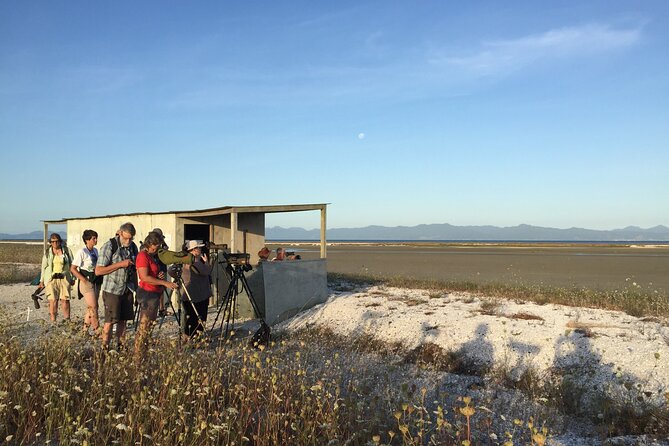
Pukorokoro Shorebird Centre offers a different kind of Auckland-area outing. You are not being rushed from one famous viewpoint to another. Instead, you spend about an hour and a half looking carefully at an estuary and the birds that depend on it.
That slower pace matters. Shorebirds can be easy to overlook because they gather at a distance, often blending into mudflats and open wetland. With a telescope and an experienced guide, those distant shapes become identifiable birds with different bills, colours, habits, and migration stories.
I especially like the mix of natural science and practical conservation. You learn how the estuary works, how its geology helped form a sanctuary, and why these coastal areas matter to birds that travel vast distances. The tour gives you something useful to watch for, not just a pleasant view.
The price is $31.03 per person. That is fair value for a private guided activity lasting roughly 90 minutes, particularly because telescope use and admission to the reserve are included. You are paying for interpretation as much as access. A self-guided visit may show you a wetland, but it may not help you tell a wrybill from a godwit or understand why tide timing controls the bird activity.
The tour is also a direct way to support the centre’s conservation work. That gives the fee a practical purpose, especially if you care about protecting habitat and migratory species.
A few more to weigh up in Auckland
- Waiheke Island: Ferry & Hop-On Hop-Off Explorer Bus Tickets
★ 4.6 · 3,311 reviews - Hobbiton & Waitomo Caves Guided Day Trip from Auckland incl lunch
★ 5.0 · 2,677 reviews - From Auckland: Hobbiton & Waitomo Caves Day Trip with Lunch
★ 4.9 · 2,505 reviews
Starting at the Robert Findlay Wildlife Reserve
The tour centres on the Robert Findlay Wildlife Reserve. The walk takes you around the reserve and onward to the bird hides, with the guide explaining the estuary, its geology, and the shorebirds that use it.
The reserve is important because it is part of an internationally significant wetland. That phrase is not just a grand label. It tells you that this is a place with value well beyond a local birdwatching stop, particularly for species that rely on coastal feeding and resting areas during migration.
Expect the guide to direct your attention outward across the estuary rather than toward a display indoors. You may look across open habitat for movement, shape, and flock behaviour. The supplied telescopes are essential here because many of the birds are likely to be some distance away.
This is where the quality of the explanation makes the largest difference. The bird hides give you a place to pause, but the guide helps turn observation into understanding. You can ask what you are seeing and learn which features separate one species from another.
The walking route is short enough to fit comfortably into a 90-minute visit, but it is still a walking tour. Anyone with very limited mobility should think carefully before booking. The experience is not presented as suitable for every mobility level.
Telescopes, bird hides, and the joy of identification
The included telescopes are one of the strongest reasons to book this experience instead of simply visiting the coast on your own. They let you examine birds that would otherwise remain distant specks.
Bring binoculars if you have them. They are not required, since telescope use is included, but they can make it easier to keep watching birds between turns at the scope. This is especially useful when the flock is active or when several people want to follow the same bird.
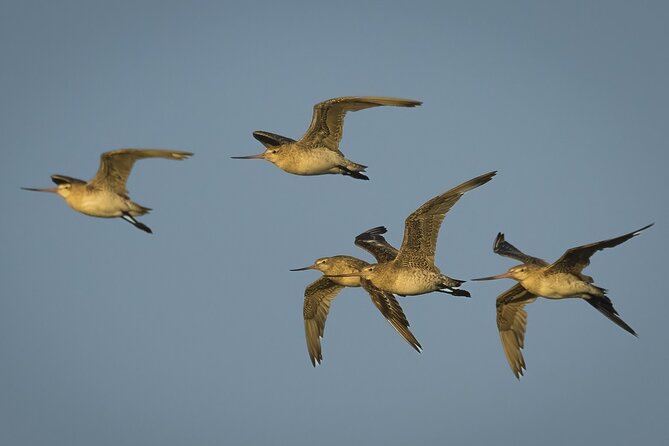
The guides can help you identify species such as wrybills, bar-tailed godwits, red knots, and other migratory shorebirds. The difference between a wrybill and a godwit may not be obvious at first glance, but learning a few clues makes the visit much more rewarding.
I like that the tour does not assume you already know your birds. It suits a keen birdwatcher, but it also works for someone who simply wants to try something unusual. You can arrive with no specialist knowledge and still leave with a better sense of what you saw.
The bird hides add another useful pause point. They provide a focused place to watch the wetland, rather than asking you to wander without direction. Your guide can help you scan methodically, which is often the key to seeing more.
The kuaka migration story
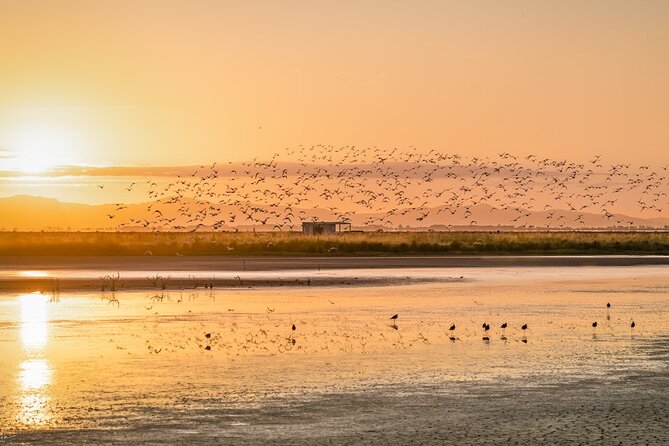
The kuaka, also known as the bar-tailed godwit, is central to the experience. The tour explains the extraordinary journeys these birds make and the challenges they face along the way.
That story gives the birds a much larger presence than their size suggests. A flock feeding in an estuary can look quiet and ordinary until you understand that some of these birds have crossed enormous distances as part of their migration.
The educational side is handled through direct observation. You are not only hearing about migration in the abstract. You are looking across the habitat that these birds need for food and rest, and you are learning why a healthy estuary matters.
The tour also introduces you to the wider shorebird community. Bar-tailed godwits and red knots may draw much of the attention, but other species can be present too. One of the pleasures is seeing how much life occupies what might first appear to be a simple stretch of wetland.
The centre’s conservation focus adds urgency without turning the outing into a lecture. Shorebirds face pressures linked to the places they need along their journeys. By helping you notice the habitat and the birds together, the guide makes conservation feel concrete.
A completely different sort of day out:
- Auckland Dolphin and Whale Watching Eco-Safari Cruise
★ 4.5 · 1,790 reviews - Skydive Auckland
★ 5.0 · 1,516 reviews - Auckland: Hobbiton Movie Set Day Trip with Festive Lunch
★ 4.8 · 1,431 reviews - Hobbiton Movie Set Small Group Tour from Auckland
★ 5.0 · 1,380 reviews
What the guides add to the experience
The strongest praise for this tour centres on the guides’ passion, clarity, and willingness to answer questions. Trudy has led a relaxed and informative Saturday tour, while Chelsea has been praised for friendly explanations and interesting facts about the birds.
Those names are useful if you are deciding what sort of experience to expect. This is not just a telescope pointed at a flock with no explanation. The guide helps you work out what you are looking at and gives the sighting a story.
I value that kind of help because shorebird watching can feel difficult at first. A guide can point out the details you would probably miss, explain why the birds gather where they do, and help you stay focused when the flock is spread across the estuary.
The private format is another plus. Only your group participates, so the experience is more personal than a large coach outing. You can ask questions without feeling that you are holding up a crowd, and the guide can respond to your interests.
The private arrangement does not mean the tour will be physically demanding or highly active. Its appeal is attention, not speed. You spend the time observing, walking to the hides, and learning from the guide.
Timing your visit around the tides
The tide is one of the most important practical details. Tour times are arranged so the birds should be present when you are viewing the reserve. That greatly improves the odds of seeing a large concentration of shorebirds.
This is a good reminder that wildlife tours are controlled by nature, not by a fixed show schedule. Even with careful timing, birds can behave unpredictably. Still, arranging the walk around the tides is a sensible choice and shows that the centre understands its setting.
You should allow the full 90 minutes and avoid treating this as a quick photo stop. The value comes from watching, asking questions, and giving your eyes time to adjust to the open wetland.
Weather matters too. If poor weather forces cancellation, you can choose another date or receive a full refund. If you are planning a tight Auckland itinerary, keep that possibility in mind rather than placing this activity immediately before an important departure.
Practical planning for a comfortable visit
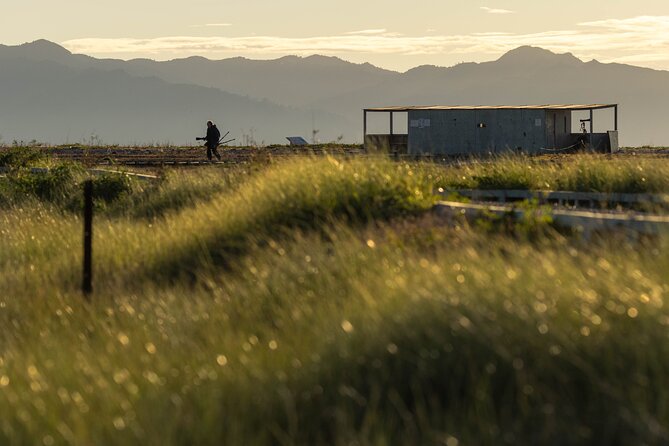
The tour includes telescope use and a guided walk through the reserve. Bottled water is not provided, but you can refill bottles at the centre. Snacks are also not included, and the centre can recommend local places to eat.
That makes it easy to prepare without overcomplicating the visit. Bring your own water bottle, and plan a snack separately if you need one after the walk. The experience itself is focused on the reserve rather than food service.
Comfortable clothing and footwear are sensible choices for a wetland walk, although the supplied information does not specify a required dress code. Your main preparation should be practical: arrive ready to walk, watch at a distance, and spend time outdoors.
The centre also offers comfortable accommodation for overnight stays. That may appeal if you want to give the area more time, especially if your interest in shorebirds goes beyond a single guided visit. An overnight option can also make the centre part of your trip rather than a rushed add-on.
Confirmation is provided when you book, and the activity is suitable for most people. The important exception is limited mobility, since the tour involves walking around the reserve and to the hides.
Who will enjoy this tour most
This experience is a strong choice for bird enthusiasts who want help identifying species and understanding migration. It also suits nature lovers who prefer a quiet, guided outing to a crowded attraction.
Families and first-time birdwatchers may enjoy it because the guide can explain the basics and answer questions. The private format is helpful if your group has mixed levels of interest. One person can ask detailed questions while another simply enjoys seeing thousands of birds in their natural habitat.
Conservation-minded visitors will find extra value here. You are learning about a wetland that supports migratory species while contributing to an organisation committed to protecting them.
The tour is less suitable if you want constant action, close-up animal encounters, or a highly flexible schedule. Shorebirds are viewed through telescopes at a distance, and the experience depends on the tide and weather. If you need an accessible, seated activity, this may not be the right fit.
Is $31.03 good value?
At $31.03 per person, I consider this a worthwhile specialist tour. The fee covers the guided walk, reserve admission, and telescope use, and it supports the work of the shorebird centre.
The value is strongest if you would otherwise struggle to identify birds or understand the wetland. A free visit could give you access to the setting, but it would not necessarily give you the same level of direction or context.
The private format also helps justify the price. Your group receives the guide’s attention rather than joining a large public crowd. If you have even a modest interest in birds, the combination of close telescope views and migration stories should make the 90 minutes feel well spent.
If you are not interested in wildlife or conservation, the fee may seem less attractive. This is a focused experience, not a general sightseeing tour. You should book it because you want to understand the shorebird coast, not simply because you have an empty morning.
Cancellation and weather notes
You can cancel up to 24 hours before the start time for a full refund. Changes made less than 24 hours before the start time are not accepted, and cancellations inside that period are not refunded.
Because the experience requires good weather, a cancellation caused by poor conditions comes with the choice of another date or a full refund. Check the local cut-off time when planning, particularly if you are booking around other activities.
Should you book the Pukorokoro Shorebird Centre tour?
I would book this tour if you want a calm, focused encounter with New Zealand shorebirds and a guide who can make distant birds understandable. The chance to see thousands of birds, use telescopes, visit the hides, and learn about kuaka migration gives the outing real substance.
Bring binoculars if you own them, carry a refillable water bottle, and choose a time that works with your schedule and the tide. Most importantly, allow yourself to slow down. The reward is not a rapid checklist of sights, but the moment an apparently empty estuary becomes full of life.
FAQ
Where does the guided tour take place?
The tour takes place at the Robert Findlay Wildlife Reserve, accessed through the Pukorokoro Miranda Shorebird Centre near Auckland.
How long does the tour last?
The guided walking tour lasts approximately 1 hour and 30 minutes.
What is included in the price?
The price includes admission to the reserve, use of telescopes, and the guided walking tour of the Robert Findlay Wildlife Reserve.
Are binoculars provided?
Telescopes are provided. Binoculars are not listed as included, so you can bring your own if you have them.
Is bottled water included?
No. Bottled water is not included, but you can refill bottles at the centre.
Is the tour suitable for people with limited mobility?
Most people can participate, but the tour is not recommended for people with very limited mobility because it includes walking around the reserve and to the bird hides.
Is this a private tour?
Yes. Only your group participates in the private tour or activity.
What happens if bad weather cancels the tour?
If poor weather causes cancellation, you can choose a different date or receive a full refund. You can also cancel at least 24 hours before the start time for a full refund.
Just added in Auckland
- Yonder Star Sailing Yacht★ 5.0 · 2 reviews
- Auckland Airport Private One-Way or Round-Trip Transfer★ 4.5 · 14 reviews
- Zombie Bite Escape Room Experiences★ 5.0 · 54 reviews
- Kumeu Wine Region Shuttle from Auckland★ 4.5 · 19 reviews
- Auckland’s Wild West Coast & Black Sand Beaches Tour inc Lunch★ 5.0 · 12 reviews
- Wētā Workshop Unleashed Tour – Mandarin Speaking Guide★ 5.0 · 2 reviews
- Vineyards Honey and Black Sand Beaches from Auckland★ 5.0 · 93 reviews
- Wētā Workshop Unleashed – Intro to Scars and Scrapes Workshop★ 5.0 · 5 reviews
Guided, compared.
Hobbiton & Waitomo Caves Guided Day Trip from Auckland incl lunch
Read our review →
Waitomo Caves: Ruakuri Glowworm Cave Guided Walking Tour
Read our review →