
REVIEW · MOUNT COOK TOURS
Skydive Mt. Cook – 70+ Seconds of Freefall from 16,500ft
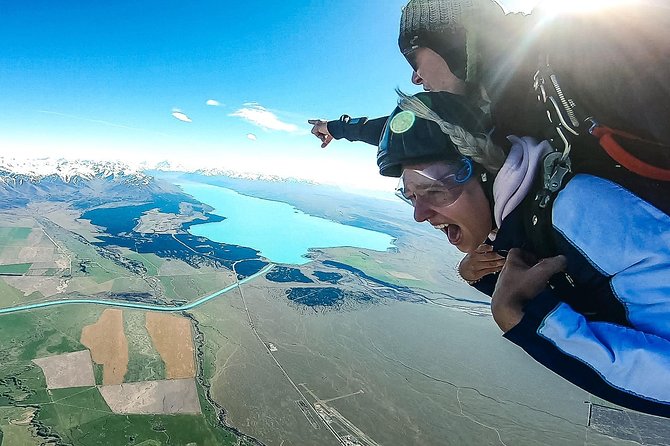
Some views deserve a fearless introduction. This freefall experience near Pukaki gives you a remarkable window over Aoraki/Mt Cook National Park, with snow-capped mountains, glaciers, and bright South Island lakes below. I like the unusually high 16,500-foot jump and the promise of more than 70 seconds of freefall, before a calmer ride back toward the airfield.
I also like the small maximum group size of nine and the warm, upbeat crew. The most praised detail is not a technical feature, but the team’s happy, inspiring attitude, which can make a nerve-racking activity feel more welcoming. The main drawback is simple: this is a weather-dependent experience, so you need some flexibility in your schedule.
In This Review
- Key points at a glance
- Why this jump is about scenery, not just adrenaline
- Arriving at Pukaki Airport
- The two-hour experience, step by step
- What you can see from 16,500 feet
- The crew can make or break the experience
- Is $341.08 a fair price?
- Who will enjoy this most?
- Practical planning before you book
- My verdict: book it for the view and the freefall
- FAQ
- Where does the experience start?
- Where does the experience finish?
- How long does the experience take?
- How high is the jump?
- How long is the freefall?
- What scenery can I see?
- How many people can join?
- Is confirmation provided after booking?
- Can I cancel for a refund?
Key points at a glance
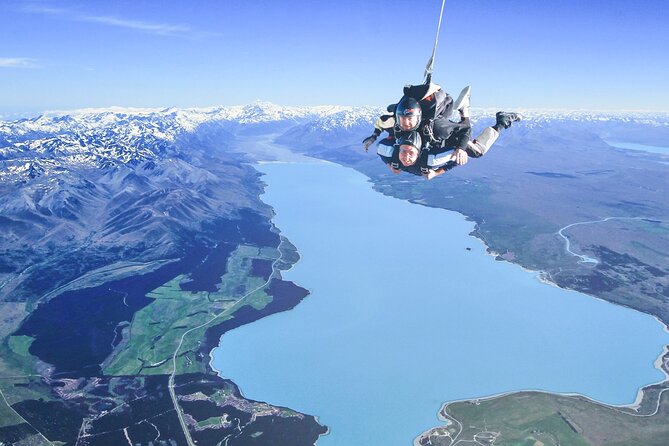
- 16,500-foot altitude: The jump offers more than 70 seconds of freefall, giving you plenty of time to take in the South Island views.
- Aoraki/Mt Cook scenery: Look for snow-covered peaks, glaciers, lakes, and the wider national park from above.
- Pukaki Airport meeting point: You start and finish at Skydive Mount Cook, 2 Swallow Drive, Pukaki Airport.
- Small group limit: The activity accepts a maximum of nine people, which should feel more personal than a large commercial operation.
- Encouraging crew: The team receives especially strong praise for being bubbly, inspiring, and happy to help make the jump more enjoyable.
- Two-hour schedule: Plan about two hours for the full experience, not just the freefall itself.
Why this jump is about scenery, not just adrenaline
Freefall activities can blur together if the setting is an afterthought. This one has a clear advantage: you are not simply dropping over an anonymous patch of ground. The selling point is the view of the Southern Alps, glaciers, lakes, and Aoraki/Mt Cook National Park.
That matters because the scenery gives the experience a sense of place. You are in the Mackenzie Basin area, at a Pukaki airfield, with one of New Zealand’s best-known mountain regions nearby. The activity turns a famous South Island setting into something you see from above rather than from a roadside lookout.
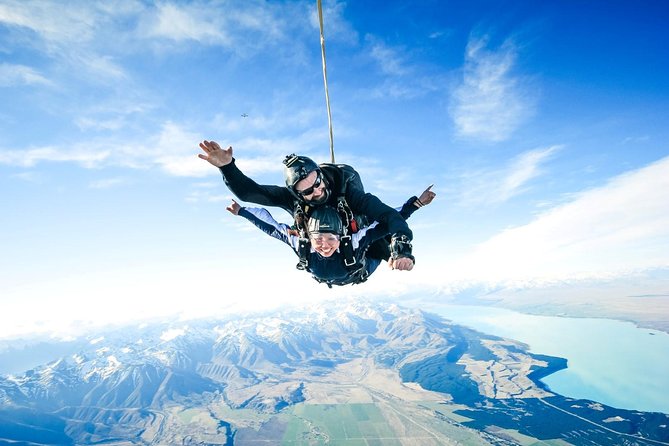
I like that the altitude is specified clearly. At 16,500 feet, the freefall lasts more than 70 seconds. That is a substantial amount of time to experience the sensation, rather than paying for an activity that seems over almost as soon as it begins.
Still, you should know what you are buying. The main product is the airborne experience and the view. The supplied details do not promise transport from your accommodation, meals, a scenic flight without the jump, or any extra stop in Aoraki/Mt Cook National Park. Plan this as a focused two-hour activity at the airfield.
More Mount Cook trips:
- Mount Cook: Scenic Helicopter Flight with Alpine Landing
★ 4.8 · 442 reviews - Mt Cook Small Group Scenic Day Tour from Queenstown
★ 5.0 · 407 reviews - From Christchurch: Mount Cook & Lake Tekapo Day Tour & Lunch
★ 4.6 · 405 reviews
Arriving at Pukaki Airport
Your meeting point is Skydive Mount Cook at 2 Swallow Drive, Pukaki Airport, Pukaki, Twizel 7999, New Zealand. The experience begins and ends there, so you should arrange your own way to the airfield unless separate transport has been confirmed directly with the operator.
The location is useful for a South Island road trip because Pukaki is associated with some of the region’s best mountain views. You can build the activity into a day around the Mackenzie Basin, Twizel, or the Aoraki/Mt Cook area. Just allow enough time to reach the airport without rushing. A late arrival would be a poor way to begin something that already asks for a fair bit of courage.
The airfield setting also keeps the plan straightforward. You are not being collected at one place, driven to another, and sent through several stages of a complicated itinerary. You arrive at the operator’s base, take part in the activity, and return to that same point.
A mobile ticket is accepted, and confirmation is provided when you book. Keep the booking details easy to access on your phone, especially if you are moving around the South Island with limited time.
The two-hour experience, step by step
The total activity takes about two hours. That estimate includes the parts before and after the freefall, so do not read it as two hours in the air.
At the airfield, you can expect the experience to begin with the practical preparation needed for a high-altitude jump. The available details do not specify the exact length of the briefing, the training format, or the aircraft type, so I would not assume a particular procedure. What is clear is that the activity is organized around a 16,500-foot departure and a return to the same meeting point.
The crew’s attitude is an important part of this stage. The strongest praise focuses on the workers being happy, bubbly, and inspiring. That kind of energy is valuable here. You want people who can keep the mood light without treating your nerves as a joke.
Once you reach the jump altitude, the experience changes from preparation to pure freefall. More than 70 seconds gives you time to register the scale of the view. Snow-capped mountains should form the main visual anchor, while glaciers, lakes, and the national park provide contrast below.
After the freefall, the remainder of the airborne portion is calmer, though the supplied information does not state the exact duration of the descent or the landing method. The activity then finishes back at the Pukaki Airport meeting point.
The two-hour estimate makes this easier to fit into a busy itinerary, but I would keep the rest of your day reasonably flexible. Weather can cancel the activity, and even a successful booking may need patience if conditions change.
What you can see from 16,500 feet
The appeal here is the range of scenery packed into one view. You may see snow-capped peaks, glaciers, lakes, and Aoraki/Mt Cook National Park rather than a single mountain framed in isolation.
Aoraki/Mt Cook is the country’s highest mountain, and the surrounding park is known for its grand alpine setting. From the ground, you normally experience that region through roads, walking tracks, and lookout points. From the air, the scale should feel very different. Valleys, ice, water, and rock become part of one wide scene.
The lakes are especially important to the visual experience. Against the pale mountain country, their color can give the view a strong contrast, though the exact appearance depends on light and weather. Clear conditions will always matter more than a promised view on a brochure.
This is also why timing and weather are not minor details. Low cloud could hide the peaks. Strong winds or poor visibility could affect the operation. The operator requires good weather, and if conditions force a cancellation, you are offered another date or a full refund.
You should also temper expectations about what you will personally notice during the freefall. At that speed, some people focus on the sensation rather than calmly studying every glacier and lake. The setting still makes a difference, but this is not a slow sightseeing flight with time to identify every peak.
More skydives in Mount Cook:
- Mount Cook: Tandem Skydive Experience
★ 4.6 · 66 reviews - Skydive Mt. Cook – 45+ Seconds of Freefall from 13,000ft
★ 5.0 · 14 reviews - Skydive Mt. Cook – 20+ Seconds of Freefall from 10,000ft
★ 5.0 · 5 reviews - Skydive Auckland
★ 5.0 · 1,516 reviews
The crew can make or break the experience
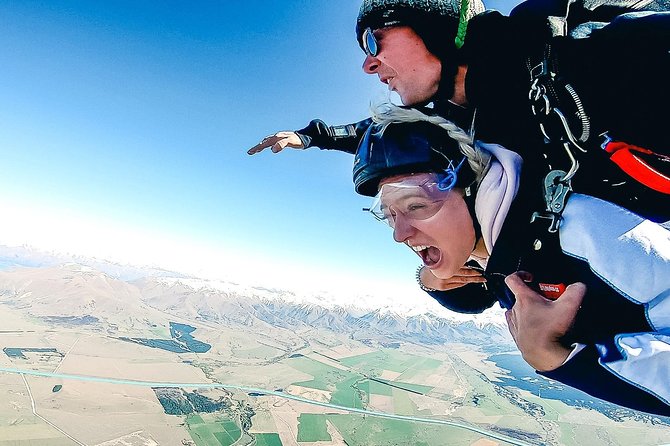
A high-altitude freefall is a serious commitment, even when it is presented as a fun holiday activity. The crew’s manner matters just as much as the scenery. Here, the team is praised for being happy, bubbly, and inspiring, with a direct effect on how enjoyable the jump feels.
That kind of support is worth noting if you are nervous. You do not need a guide who adds drama to the moment. You need clear direction, a calm approach, and enough enthusiasm to keep the experience from feeling cold or mechanical.
The available information does not provide individual guide names, so I cannot point you toward a particular instructor. I can say that the crew is the most warmly praised part of the experience, and that is a useful signal for first-time participants.
The group limit of nine also helps. This is not a huge coach-style attraction with dozens of people waiting around. A smaller operation may give the whole process a more personal feel, although the exact amount of one-to-one attention is not specified.
Is $341.08 a fair price?
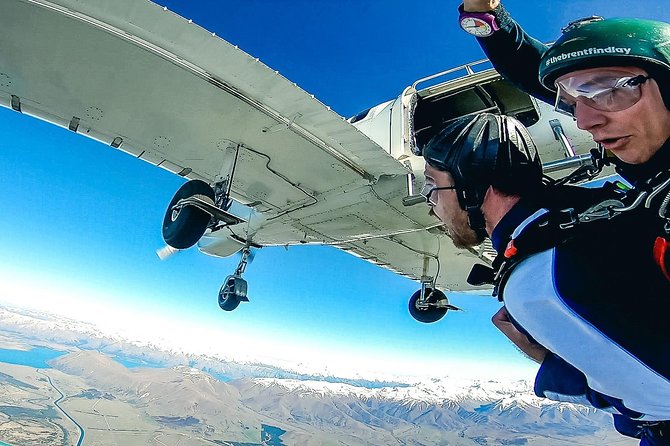
At $341.08 per person, this is a major holiday expense. You should compare it with the value of the setting and the length of the freefall, not just the number on the booking page.
The price buys an experience built around 16,500 feet and more than 70 seconds of freefall, in a part of New Zealand known for mountain and glacier scenery. That combination is the reason the cost can make sense. You are paying for an unusual view and a substantial airborne experience, not only for a brief burst of adrenaline.
I would be more cautious if you are mainly looking for a low-cost thrill. There are cheaper ways to get excitement in New Zealand, and this activity does not appear to include transport, food, or a wider sightseeing program. Its value is strongest if the jump itself is one of your trip’s major goals.
The price also makes weather flexibility important. If your schedule is tight, a cancellation could create a practical problem even though the refund policy protects your money. If you can spare an alternate date, the value is easier to defend.
For a special occasion, a first freefall, or a trip focused on the South Island’s alpine scenery, the price may feel justified. For a family holiday budget or a packed road trip where every activity must deliver several benefits at once, you may decide it is too expensive.
Who will enjoy this most?
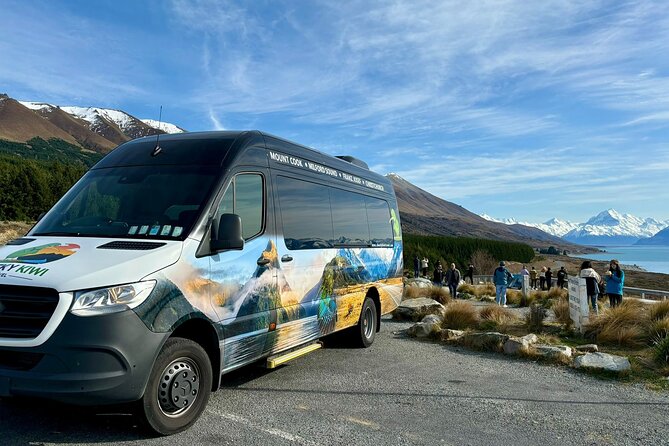
I would recommend this to you if you want a high-altitude freefall with a strong sense of place. The activity suits people who care about seeing mountains, glaciers, lakes, and Aoraki/Mt Cook National Park from an unusual viewpoint.
It also fits an independent South Island itinerary. Since you meet and finish at Pukaki Airport, you can place it into your own route rather than depending on a full-day organized excursion. The two-hour duration helps, though you should still leave room for weather changes.
The small group limit may appeal if you prefer a less crowded experience. The friendly crew is another reason it could suit someone who feels excited but nervous.
I would think twice if you dislike schedule changes, have no flexibility for weather, or are mainly seeking a long sightseeing flight. You should also confirm any personal participation concerns before booking. The published information says most people can participate, but it does not provide detailed medical, age, weight, or fitness requirements.
Practical planning before you book
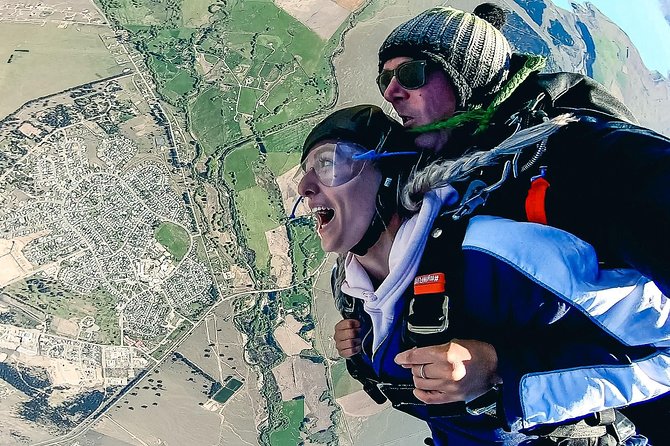
Plan to reach the airfield in Pukaki, not Aoraki/Mt Cook village. The listed start and end point is Skydive Mount Cook at Pukaki Airport, and the activity does not include a stated pickup service.
Keep the booking confirmation on your phone. The ticket is mobile-friendly, and confirmation arrives at the time of booking.
Allow about two hours for the activity itself. Since weather is essential, avoid scheduling a flight, long drive, or fixed attraction immediately afterward. A little breathing room will make the day less stressful.
The maximum group size is nine. That number is small enough to suggest a more contained operation, but it does not guarantee that every part of the experience will be private.
Cancellation is free if you cancel at least 24 hours before the start time. Cancellations or changes made inside that window are not refunded or accepted. The cut-off follows local time. If poor weather cancels the experience, you can choose another date or receive a full refund. If the minimum number of participants is not met, you are offered another date or experience, or a full refund.
Service animals are allowed, and the site is near public transportation. The information also says most people can participate, which is helpful but not a substitute for checking any specific needs with the operator.
My verdict: book it for the view and the freefall
I like this experience because it combines a serious 16,500-foot jump with some of New Zealand’s most memorable mountain scenery. The more than 70 seconds of freefall gives the activity real substance, while the small group limit and cheerful crew add a human touch.
Book it if you have around $341.08 to spend, can reach Pukaki Airport yourself, and have enough flexibility for weather. It is especially suitable if Aoraki/Mt Cook and the South Island’s alpine scenery are central to your trip.
Skip it if you need a guaranteed timetable, a lower-cost activity, or a slow scenic flight with plenty of time to study the view. For the right person, though, this is a powerful way to see the Mackenzie Basin from a completely different angle.
FAQ
Where does the experience start?
It starts at Skydive Mount Cook, 2 Swallow Drive, Pukaki Airport, Pukaki, Twizel 7999, New Zealand.
Where does the experience finish?
The activity ends back at the meeting point at Pukaki Airport.
How long does the experience take?
The total duration is approximately two hours.
How high is the jump?
The jump takes place from 16,500 feet.
How long is the freefall?
The experience includes more than 70 seconds of freefall.
What scenery can I see?
The views include snow-capped mountains, glaciers, lakes, and Aoraki/Mt Cook National Park.
How many people can join?
The maximum group size is nine people.
Is confirmation provided after booking?
Yes. Confirmation is received at the time of booking, and a mobile ticket is available.
Can I cancel for a refund?
Yes. You can cancel at least 24 hours before the start time for a full refund. Poor weather or an unmet minimum number of participants can also lead to an alternate date or a full refund.
Just added in Mount Cook
- Queenstown to Mt Cook Small Group Tour (One-Way)★ 5.0 · 25 reviews
- Queenstown to Christchurch via Mt Cook (1 way) (Small Group)★ 5.0 · 6 reviews
- Queenstown to Lake Tekapo via Mt Cook One-Way Small Group Tour★ 4.5 · 13 reviews
- Queenstown to Christchurch One-Way Tour via Mt Cook & Lake Tekapo★ 4.5 · 134 reviews
- Mount Cook Day Tour from Queenstown★ 4.0 · 63 reviews
- Queenstown to Christchurch One Way Tour Via Lake Tekapo & Mt Cook★ 5.0 · 10 reviews
- Mount Cook Tour: Finish at Queenstown, Christchurch or Dunedin★ 5.0 · 3 reviews
- Mt Cook Tour & Ultimate Alpine Experience Combo from Queenstown★ 4.5 · 51 reviews
Mount Cook Tours, compared.
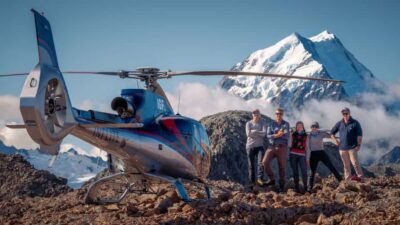
Mount Cook: Scenic Helicopter Flight with Alpine Landing
Read our review →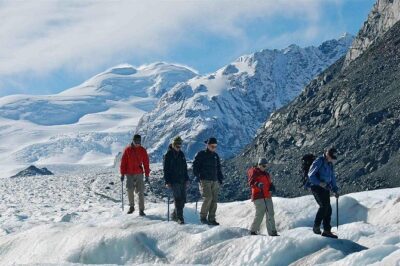
Mt Cook Small Group Scenic Day Tour from Queenstown
Read our review →
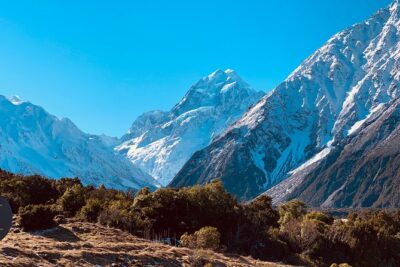
Mount Cook, Lake Tekapo and Tasman Glacier Tour from Christchurch
Read our review →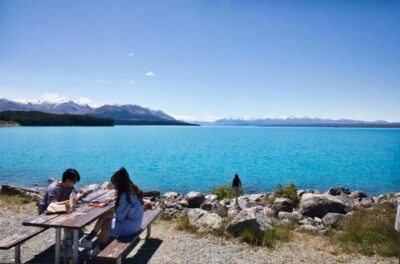
Tekapo Shuttle: Mt Cook Day Tour via Pukaki & Tasman Lake
Read our review →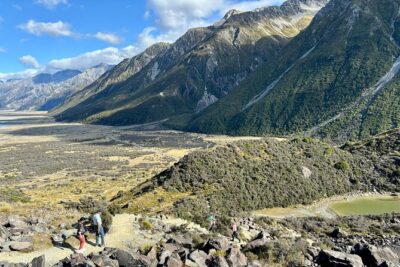
Mt Cook & Tasman Glacier lookout Small Group Tour from Queenstown
Read our review →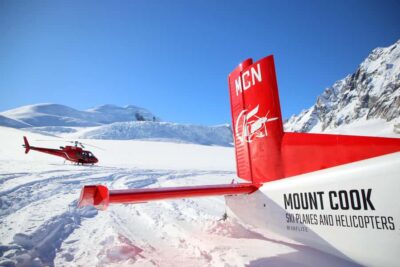
Mount Cook: Ski Plane and Helicopter Glacier Combo Flight
Read our review →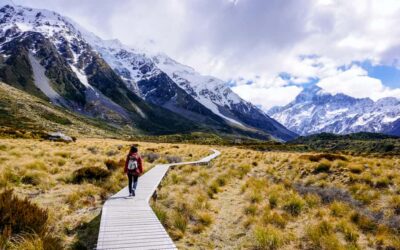
Browse the lists this tour appears in