
REVIEW · SOUTHLAND TOURS
Stewart Island: Wild Kiwi Experiences
Nightfall is when Rakiura comes alive. This four-hour RealNZ outing pairs a sunset cruise around Stewart Island with a guided search for wild tokoeka, the southern brown kiwi. I like the two-part design: you get a chance to spot penguins, seals, sea lions, and seabirds before walking through the forest at night. The guides also add real value, sharing Māori and European stories, local wildlife facts, and practical advice for seeing a kiwi without disturbing it.
The main drawback is simple: kiwis are wild animals, not scheduled performers. You may see several, as some groups have, or none at all. The $154 price feels fair when the wildlife cooperates and the guides are excellent, but you must be comfortable paying for the search itself, not a guaranteed sighting.
In This Review
- Key points before you book
- Starting from Oban, not Bluff
- A sunset cruise among Stewart Island’s wildlife
- Little Glory Cove and the torchlit kiwi walk
- Why seeing a wild tokoeka feels different
- Guides who turn a search into a real experience
- The whare, hot drinks, and southern stars
- Clothing advice that really matters
- Is $154 good value?
- Who should book this Stewart Island tour?
- Should you book the Wild Kiwi Experience?
- FAQ
- Where does the Wild Kiwi Experience depart from?
- How long does the experience last?
- Is seeing a kiwi guaranteed?
- How much walking is involved?
- What should I bring?
- Can children or wheelchair users join?
Key points before you book
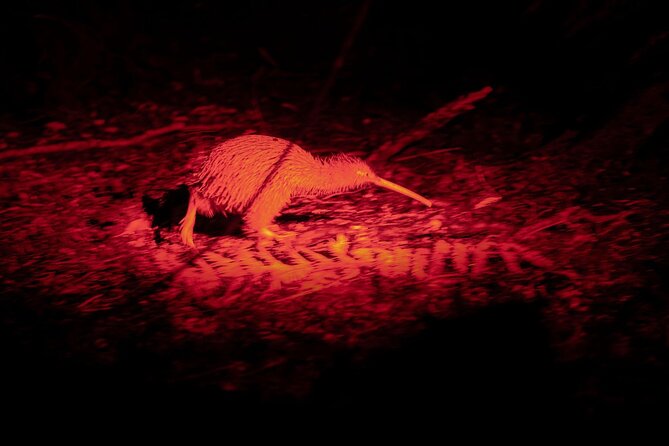
- Wild kiwi search at Little Glory Cove: Walk through forest and along the beach with a torch, looking for tokoeka in their natural habitat.
- Sunset marine cruise first: The boat trip can add penguins, albatrosses, seals, sea lions, and other seabirds before the kiwi walk begins.
- Small group of up to 10: A limited group helps the guides position everyone for a view, though one visitor still felt a smaller group would be better.
- Walking is part of the adventure: Expect about two hours on uneven, sometimes muddy ground, with roughly 1.5 kilometres of independent walking required.
- Warm drinks and stargazing: Cocoa, tea, coffee, biscuits, and a dark beach create a pleasant pause while you look at the southern sky.
- Return to Oban late: The trip leaves from the Visitor Terminal in central Oban, not Bluff, and you need accommodation arranged for that night.
Starting from Oban, not Bluff
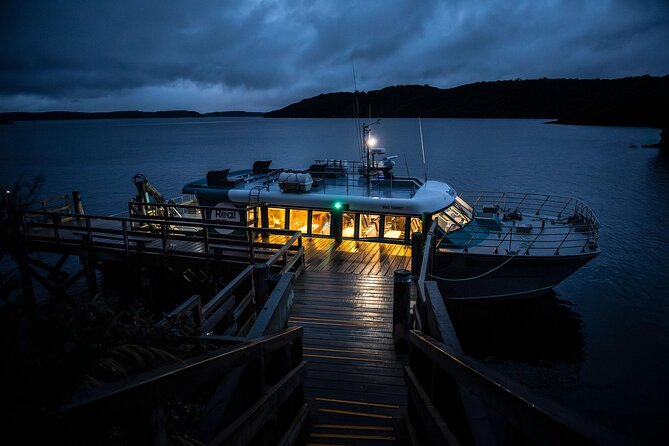
Your evening begins at the Visitor Terminal in Oban, Stewart Island’s main settlement. Arrive 20 minutes early. This detail matters because Stewart Island is commonly reached via Bluff, but this activity does not depart from the mainland ferry terminal.
The exact start time changes with the season and sunset. The usual plan is to leave about 1.5 hours before nightfall, giving the boat portion enough daylight for wildlife watching. You then return to Oban late in the evening, so do not schedule a ferry, flight, or long drive immediately afterward.
The group is limited to 10 people. That is a good size for a quiet nature outing. Guides can keep people together, explain what to look for, and help position everyone when an animal appears. Still, the group is not private, and one person found the group could have been smaller.
A few more to weigh up in Southland
- Stewart Island: Ulva Island Guided Wilderness Walk & Cruise
★ 4.5 · 165 reviews - Stewart Island: Village and Bays Tour
★ 4.8 · 141 reviews - Milford Sound: Self-Guided Milford Track Day Walk
★ 4.5 · 114 reviews
A sunset cruise among Stewart Island’s wildlife
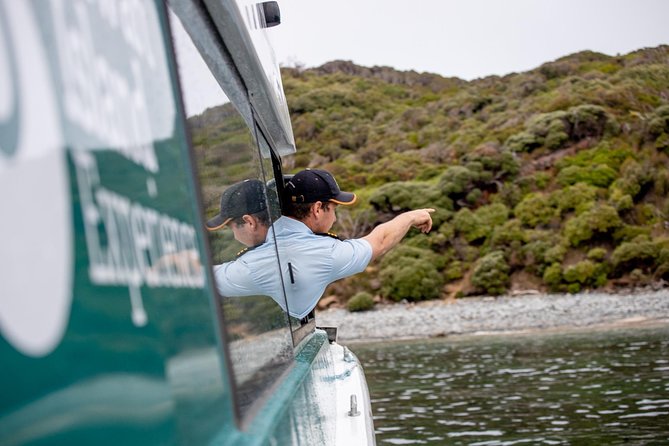
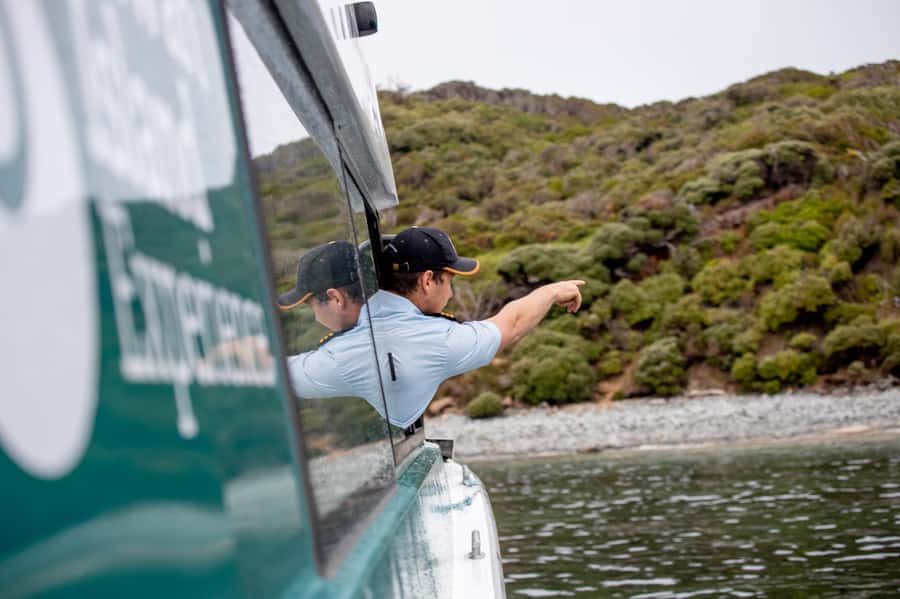
The cruise is not just a transfer to the walking track. It is the first major part of the experience, taking you around nearby islands and coastal areas before darkness settles.
The boat gives you a useful view of Stewart Island’s marine world. Depending on the conditions and animal activity, you might see:
- Little penguins, also called kororā
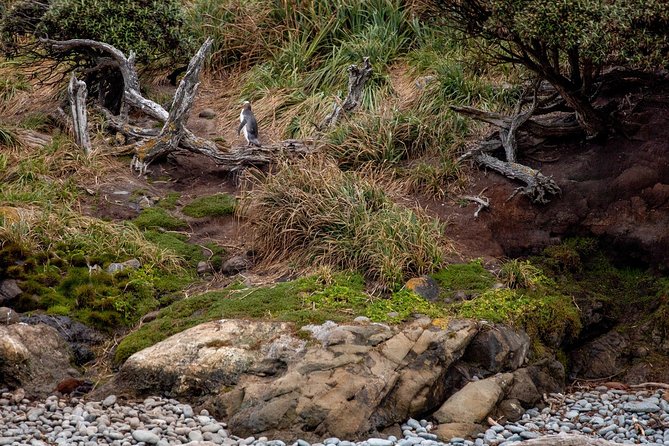
- Yellow-eyed penguins, or hoiho
- Fiordland crested penguins, also called tawaki
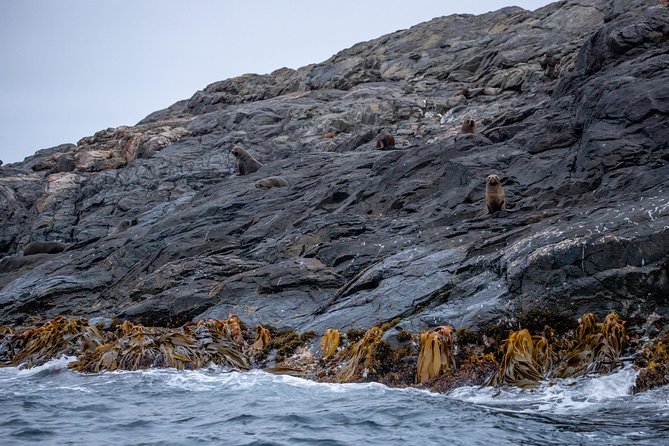
- New Zealand fur seals
- Sea lions
- Albatrosses
- Cape petrels, giant petrels, shags, and other seabirds
Several outings produced an impressive mix of animals. Some groups saw all three penguin types, while others watched albatrosses, seals, and sea lions close to the boat. One cruise included a yellow-eyed penguin, fur seals, sea lions, and several seabirds before the walking portion even began.
That variety is important when judging the price. If the kiwi search is slow, the cruise still gives you a worthwhile wildlife outing. The skipper may turn the boat so people on both sides get a view, and binoculars may be provided, according to one detailed account. Do not treat any particular animal as guaranteed, though. Marine sightings depend on weather, light, and luck.
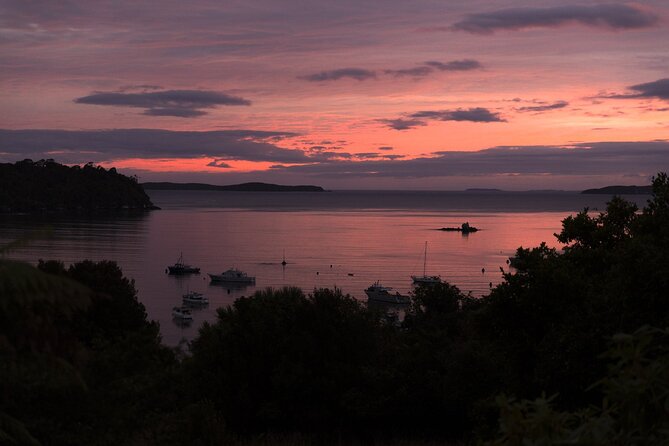
The pre-sunset timing also works well. You can see the coast and islands before the walk, then watch the light fade as the outing shifts from a boat trip into a night search. The change in mood is one of the best features of the trip.
Little Glory Cove and the torchlit kiwi walk
At Little Glory Cove, the focus changes. The guides give a talk about kiwi behavior and explain how the group should move and watch. Then you follow them into the forest and toward the beach with torches.
This is not a fast hike. You move slowly, pause often, and listen for movement. A kiwi may be feeding in the undergrowth, crossing the track, or walking along the sand. Several people described seeing birds just a few feet away, sometimes feeding close to the group for several minutes.
The guides make the difference here. A kiwi can be easy to miss, even when it is nearby. One person explained that without an experienced guide, the group could have walked straight past a feeding bird. The guides also work to give everyone a fair view, rather than letting the first people in line have the whole experience.
Expect uneven and muddy sections. The total walking time is about two hours, split between forest and beach. You need to be able to walk independently for more than 1.5 kilometres across uneven ground. The activity is not suitable for wheelchair users or children under 15.
This is manageable for many people with reasonable fitness, but do not confuse it with a flat stroll. Darkness, wet ground, and the need to move quietly make it more demanding than the distance suggests. Wear hiking shoes or sturdy footwear with good grip.
Why seeing a wild tokoeka feels different
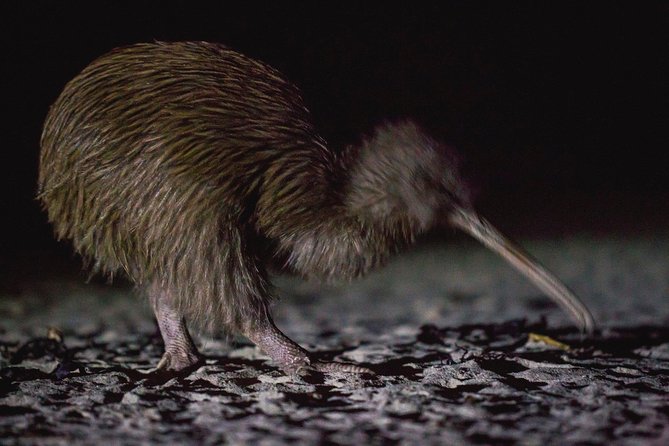
A kiwi encounter in a controlled setting is very different from finding one in its own habitat. Here, you do not know when the bird will appear or how long it will stay. The group may hear a kiwi, find tracks, or spot movement before getting a clear view.
That uncertainty can be frustrating, but it is also the point. The bird is not being fed for display or brought to a viewing area. You are looking for a nocturnal native species in the forest and on the shore where it naturally forages.
Sightings have ranged from no kiwi to five in one evening. Some groups saw one bird for only a short time. Others watched an adult feeding for half an hour or had a kiwi come within a couple of feet. One group saw a large female for around five minutes, while another encountered a bird that stayed near the visitors for about 15 minutes.
The company does not promise a sighting and does not provide a refund if you miss one. Instead, $20 per person goes toward conservation work at Little Glory Cove. That policy will not remove the disappointment of missing the bird, but it gives the unsuccessful search a useful result and supports better protection for the population.
Please follow the rules closely. Flash photography is not allowed. Keep your movements quiet, avoid sudden noise, and do not assume a close bird is comfortable simply because it does not immediately walk away.
A completely different sort of day out:
- Queenstown: Milford Sound Flight and Cruise
★ 4.8 · 111 reviews - From Queenstown: Milford Sound Day Trip with Cruise & Flight
★ 4.9 · 29 reviews - Milford Sound Premium Day Tour and Cruise from Te Anau
★ 4.4 · 11 reviews - Stewart Island: Guided Wilderness Walk
★ 5.0 · 10 reviews
Guides who turn a search into a real experience
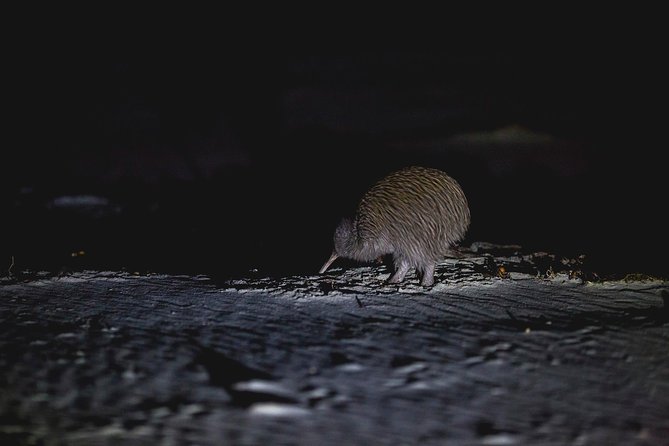
The strongest part of this outing is the guide team. They do more than lead the way with torches. They explain kiwi behavior, identify birds from the boat, share island history, and help the group stay calm and quiet when a bird appears.
Several guides have received especially warm praise, including Natasha, Karen, Sarah, Jane, Jen, and guides called Grace and Henry on earlier outings. Skipper Nick Marshall was also singled out for his work on the boat. Staff names and rosters can change, but the consistent strength of the guiding is clear.
The cultural element adds depth. The Oneke, or The Neck, area has Māori and European connections, and the guides discuss the place before the search. A little te reo Māori and local context can help you understand that you are not simply taking a wildlife excursion. You are visiting a place with a long human and natural story.
The best guides also manage the group well. They make sure people at the back get a chance to see the bird, explain why the group must move carefully, and answer questions without turning the evening into a lecture. That balance matters in a small, quiet environment.
The whare, hot drinks, and southern stars
The cultural encounter version of the trip includes time in a traditional whare, where you can warm up with cocoa, tea, or coffee and have biscuits. This is a small inclusion, but it matters after a damp walk in the dark.
On clear nights, the beach becomes another highlight. With little artificial light, you can look at the stars and southern constellations, including the Southern Cross. Some outings have included the chance to look through a thermoscope, and one group even caught a glimpse of the Aurora Australis.
Do not book this specifically for the aurora or a perfect sky. Clouds and rain are possible, and departures depend on the weather. Still, the stargazing gives the evening a strong finish when conditions cooperate. Even without a kiwi, some people found the smells, sounds, and night air of the bush memorable.
Clothing advice that really matters
Stewart Island weather can change quickly, and the boat is exposed to wind. Bring warm layers, rain gear, and a windproof and waterproof jacket. Insect repellent is also on the recommended packing list.
Use proper hiking shoes, not casual sneakers. Mud and uneven ground are part of the route. You should also bring only what you can carry quietly and comfortably.
One particularly useful tip came from a person who noticed that noisy waterproof fabric can be a problem in the forest. If your jacket or trousers rustle loudly, every arm movement may make sound when the group is trying to stay still. Wear quiet layers if you have them, but keep rain protection available for the boat and wet weather.
Flash photography is forbidden. A phone or camera may be useful if conditions allow, but do not let photography distract you from watching the bird. The guides will help everyone get a view, and the moment may be brief.
Is $154 good value?
At $154 per person, this is not a cheap evening. You are paying for a small-group boat trip, specialist guiding, equipment, conservation support, and access to a remote place that would be difficult to reach independently at night.
I think the value is strong if you want more than a quick kiwi sighting. The cruise can include a serious list of marine species, while the walk gives you a proper introduction to the forest and the island’s night life. The guides are a major part of what you are buying.
The value is weaker if you need certainty. There is no guarantee of a kiwi, and the experience can include rain, mud, wind, or a long search with only tracks and sounds to show for it. You should also budget for accommodation in Oban because of the late return.
A useful way to view the price is as a conservation-minded nature outing with a possible kiwi encounter, not as a ticket to see a kiwi. If the bird appears, the evening may become one of your most memorable New Zealand experiences. If it does not, the cruise, forest walk, cultural stories, and night setting still provide a complete outing.
Who should book this Stewart Island tour?
I would choose this for adults and older teenagers who enjoy wildlife, patient walking, and small-group guiding. It suits people who want to see native animals in the wild and do not mind that nature sets the schedule.
It is especially good for:
- Birdwatchers and wildlife photographers who can work without flash
- Visitors who want to combine a boat trip and forest walk in one evening
- People interested in Māori and European island history
- Hikers comfortable on muddy, uneven tracks
- Anyone willing to support conservation while accepting an uncertain result
I would skip it if you struggle to walk independently over uneven ground, dislike late nights, or need an indoor activity that runs in all weather. It is also not suitable for children under 15 or wheelchair users.
The experience received a 4.8 rating from 177 bookings, and transport earned a perfect score from 89 percent of participants. Those figures fit the practical picture: the boat and staff are dependable strengths, while the kiwi sighting remains outside anyone’s control.
Should you book the Wild Kiwi Experience?
Book it if seeing a wild kiwi is a priority, but arrive with the right expectation. You are paying to search responsibly in a remote setting, not to receive a guaranteed animal encounter.
I especially like the way RealNZ combines the cruise, forest walk, cultural information, conservation contribution, and simple comforts into one evening. The trip has enough substance to remain worthwhile even when the kiwi stays hidden.
Bring quiet warm clothing, solid shoes, and patience. If you do meet a tokoeka on the beach or in the bush, perhaps feeding only a few steps away, you will understand why the uncertainty is part of the reward.
FAQ
Where does the Wild Kiwi Experience depart from?
It departs from the Visitor Terminal in central Oban on Stewart Island. It does not depart from Bluff.
How long does the experience last?
The experience lasts four hours, including the return cruise and the guided walk.
Is seeing a kiwi guaranteed?
No. Kiwis are wild and unpredictable, so there is no guarantee of a sighting. If you do not see one, $20 per person is donated to conservation projects at Little Glory Cove.
How much walking is involved?
Total walking time is about two hours. You need to walk independently for more than 1.5 kilometres on ground that can be uneven and muddy.
What should I bring?
Bring warm clothing, hiking shoes, rain gear, and insect repellent. A windproof and waterproof jacket is especially useful.
Can children or wheelchair users join?
Children under 15 are not permitted, and the activity is not suitable for wheelchair users.
Just added in Southland
- Stewart Island: Guided Wilderness Walk★ 5.0 · 10 reviews
- Milford Sound Premium Day Tour and Cruise from Te Anau★ 4.4 · 11 reviews
- Queenstown: Milford Sound Flight and Cruise★ 4.8 · 111 reviews
- Milford Sound: Glacier and Waterfall Helicopter Experience★ 5.0 · 4 reviews
- Self-Guided Milford Track Day Walk from Lake Te Anau★ 5.0 · 5 reviews
- Invercargill: Day Entry to Bill Richardson Transport World★ 5.0 · 2 reviews
- From Queenstown: Milford Sound Cruise and Scenic Drive★ 5.0 · 8 reviews
- From Queenstown: Milford Sound Day Trip with Cruise & Flight★ 4.9 · 29 reviews
Southland Tours, compared.
Stewart Island: Ulva Island Guided Wilderness Walk & Cruise
Read our review →
Milford Sound Premium Day Tour and Cruise from Te Anau
Read our review →
Browse the lists this tour appears in