
REVIEW · 2-HOUR EXPERIENCES
Wanaka: 2-Hour Beginner Waterfall Cable Climb
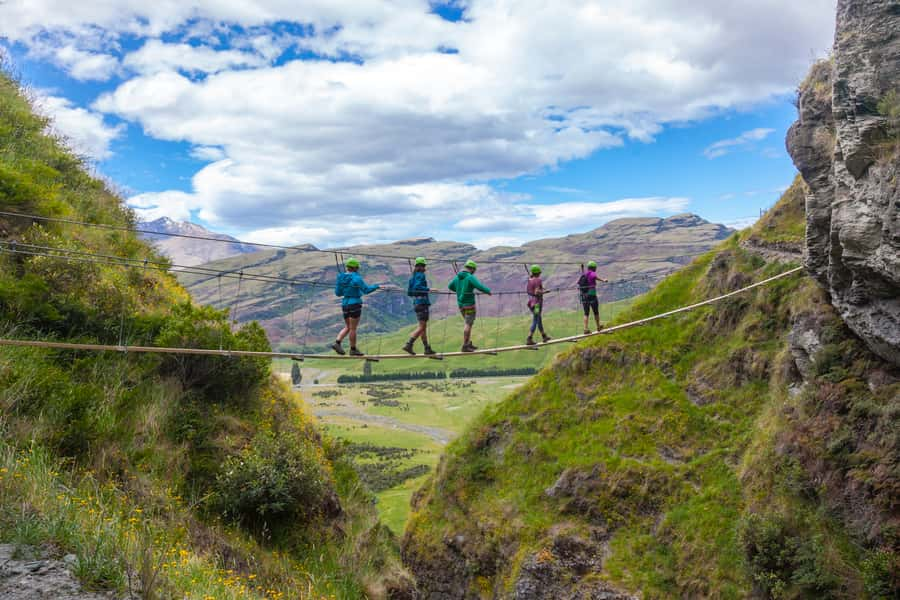
Waterfalls make unusual climbing walls. This three-hour adventure takes you up Twin Falls, about 20 minutes from Wanaka, using fixed cables, metal rungs, ladders, pegs, and suspension bridges. You are not free-climbing. Your harness stays connected to the safety system while you work your way across rock and above pools.
I like the small groups of no more than five per guide, which gives nervous beginners room to ask questions and get help. I also like the mix of climbing and scenery: hidden cascades, mountain views, farmland, and Lake Wanaka all arrive as part of the route. The main caution is simple: this is still a real physical activity with exposure and heights, not a gentle sightseeing walk.
The operator, Wildwire Wanaka, has built a reassuring introduction. Guides such as Rocky, Luke, Maddie, Jasmine, Sarah, Connor, and Liam have earned praise for calm instruction and encouragement. You get a practice climb before the waterfall, and you may have the option to continue to a harder second level if you finish the beginner route with energy and time.
In This Review
- Key points to know before you book
- From Wanaka to Twin Falls in 20 minutes
- The practice wall makes the first step easier
- The Level 1 route combines rock, water, and air
- Mountain views arrive at the top
- The descent is short but still part of the hike
- Why the $118 price can make sense
- How difficult is the beginner climb?
- Guides are the heart of the experience
- What to wear and pack for Twin Falls
- Is it suitable for families and nervous climbers?
- Cancellation, timing, and basic booking facts
- Should you book the Wanaka Waterfall Cable Climb?
- FAQ
- How long does the waterfall cable climb take?
- How far is Twin Falls from Wanaka?
- Where is the meeting point?
- Do I need climbing experience?
- What equipment is included?
- Should I bring my own water bottle?
- Can I wear sandals?
- What is the minimum age?
- Can I continue to a harder climb?
- Can I cancel the booking?
Key points to know before you book
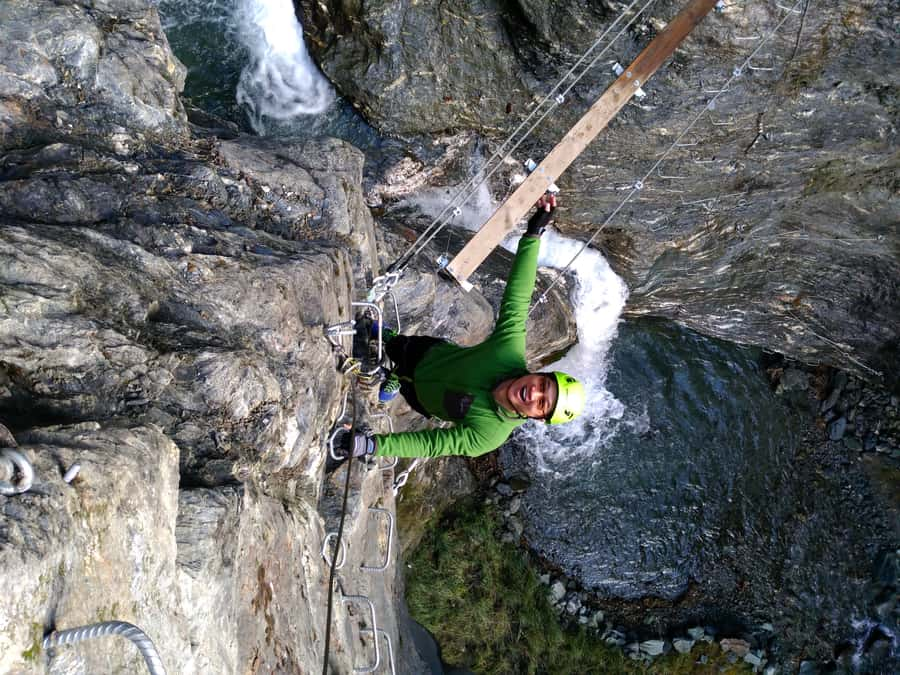
- You climb a working-farm waterfall: Twin Falls is not a staged indoor wall. The route runs through a real rural setting with water, rock, pools, and open mountain views.
- The first climb teaches the system: You practice clipping onto the cable, using the rungs, and moving safely before reaching the main cliff.
- The beginner route takes about one hour: Expect vertical and horizontal sections, ladders, suspension bridges, and waterfall views, followed by a roughly 15-minute descent.
- Guides keep groups small: No more than five participants are assigned to each guide, a useful setup if you are uneasy with heights.
- Level 2 may be available afterward: Several people began with Level 1 and chose to continue once they found the first route manageable.
- You need mobility and moderate fitness: Full-body movement is required, and the activity is not suitable for people with mobility impairments, children under 10, or anyone under 40 kilograms.
From Wanaka to Twin Falls in 20 minutes
The meeting point is at a locked farm gate in front of the waterfalls. Look for the Wildwire sign at the gate, not a town office or transport hub.
From Wanaka, follow Wanaka-Mount Aspiring Road west along the lake. Continue toward Treble Cone Ski Field and Mount Aspiring National Park. After about 20 minutes, you will reach a cattle stop. Pull out immediately to the left, where two large waterfalls are visible.
This rural arrival is part of the appeal, but it also calls for attention. Follow the directions carefully and arrive 15 minutes before your scheduled start. The meeting point is not described as a central Wanaka pickup location, so you should plan your own drive to the farm gate.
At the base, you can leave items you do not need during the climb. Bring only what you want with you, especially if you plan to take photos. A camera is allowed at your own risk. A GoPro should be attached to your body, or you can ask a guide about a helmet with a slide attachment.
A few more to weigh up in Wanaka
- Wildwire Wanaka- Level 2 (4 Hours)
★ 5.0 · 467 reviews - Bike the Wanaka and Hawea Trails
★ 5.0 · 346 reviews - Lake Wanaka Happy Hour Cruise
★ 4.6 · 313 reviews
The practice wall makes the first step easier
After meeting your English-speaking guide, you receive a helmet and harness, then move to a short practice route. This is an important part of the experience, particularly if the words cable climb or via ferrata are new to you.
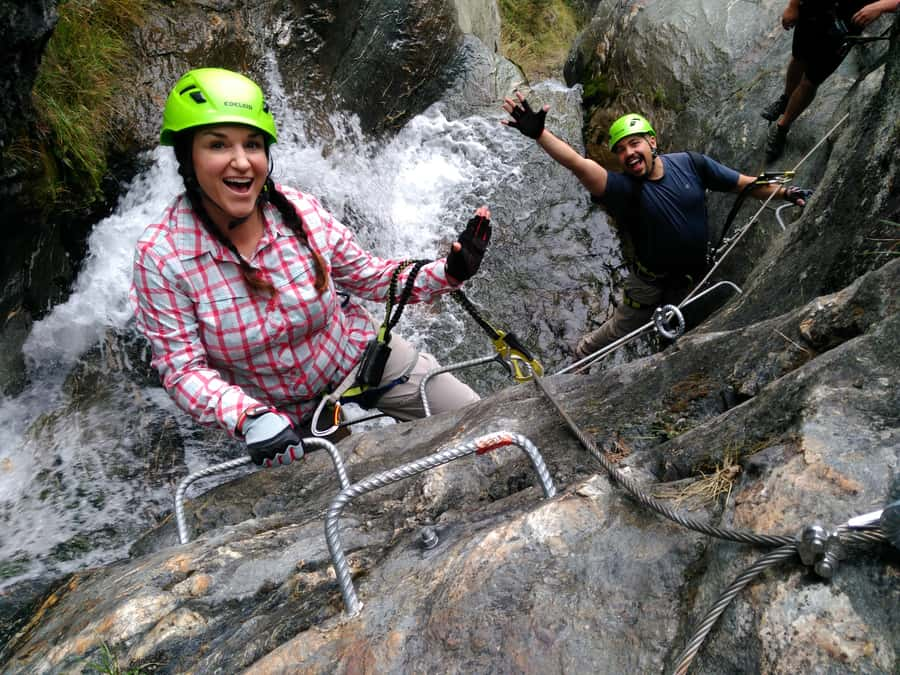
A via ferrata uses fixed safety cables and metal climbing aids. You connect your harness to the cable with carabiners, then use iron rungs, pegs, ladders, and bridges to move along the route. The system lets you climb sections that would not be practical for a beginner using ordinary rock-climbing equipment.
The practice section lets you get used to the basic movements before the ground becomes steep. You learn how the equipment works and what the guide expects from you. Several people with no climbing background found this preparation enough to settle their nerves, while casual indoor climbers also found it a useful introduction to outdoor climbing.
I would pay close attention here rather than treating the briefing as a formality. Your comfort later depends on knowing how to move one carabiner at a time and how to follow the cable system. The guides are there to help, and the experience has earned especially strong praise for safety instruction and calm support.
The Level 1 route combines rock, water, and air
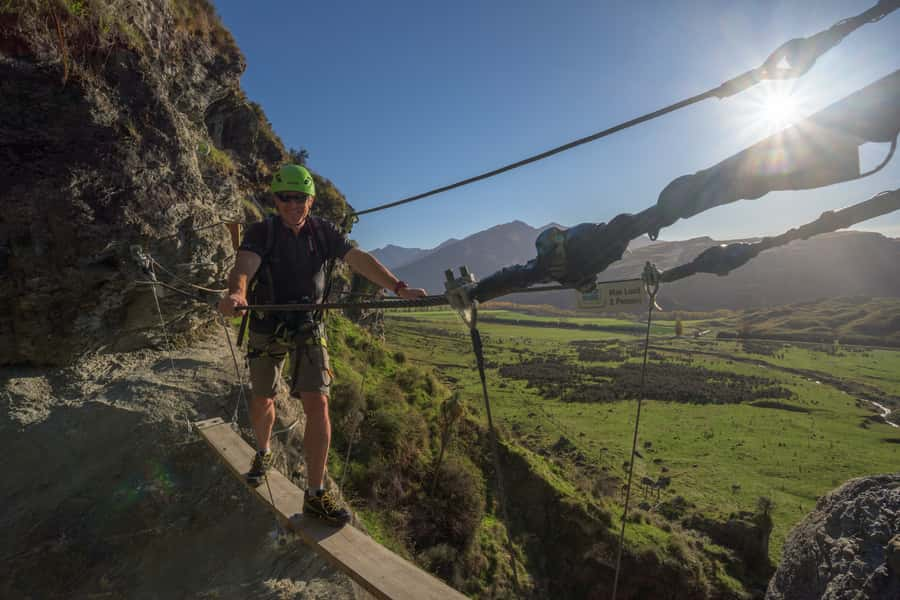
After the practice climb, there is a short walk to the cliffs. Then the main route begins.
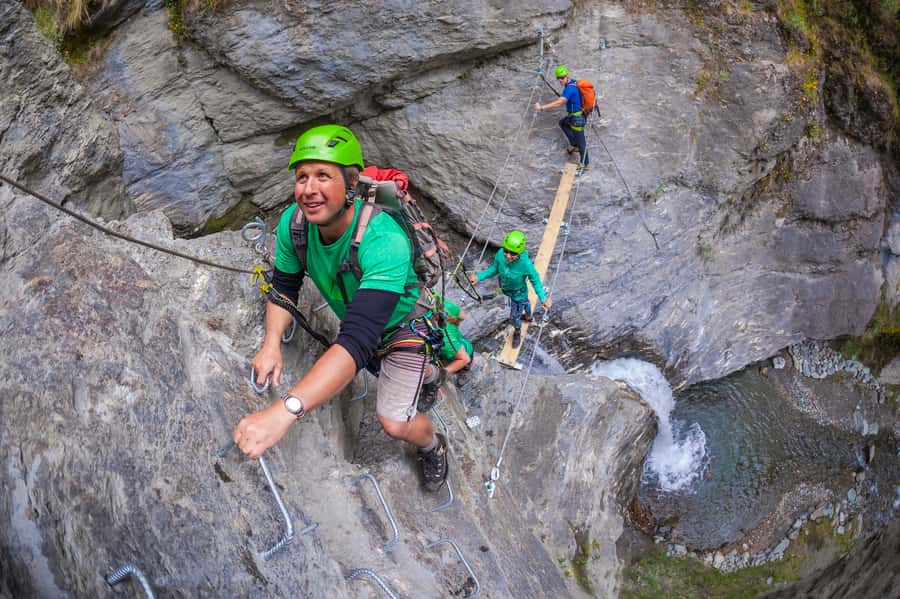
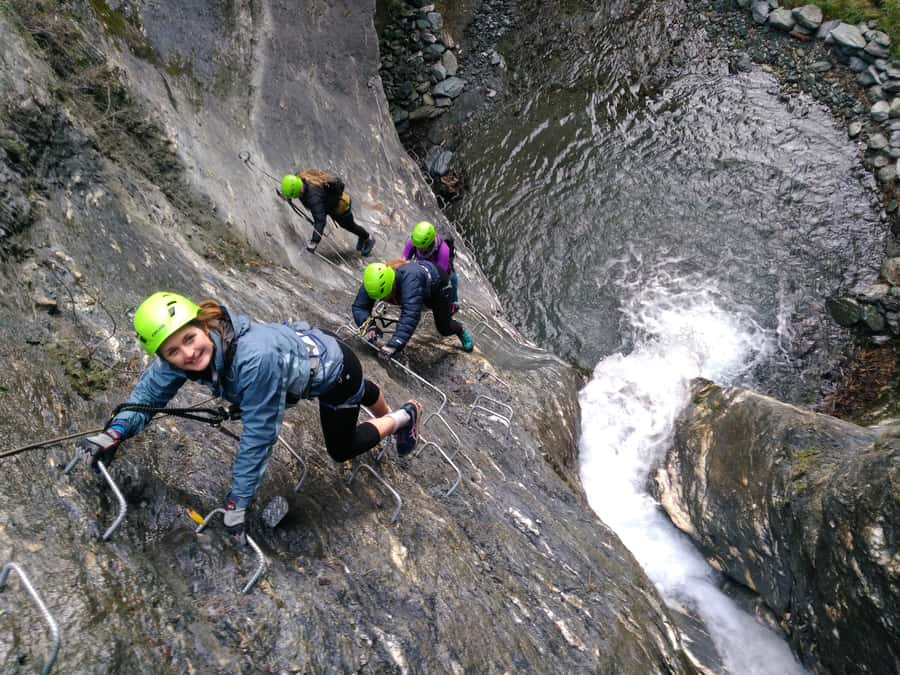
The beginner course includes roughly one hour of vertical and horizontal climbing. You move across rock faces, use fixed rungs and pegs, pass small waterfalls, and cross suspension bridges above pools. The setting changes as you go, so it is not simply a long ladder with a view at the end.
The water gives the route its character. You are climbing beside and through the waterfall environment, with hidden cascades and pools appearing along the way. Conditions may make the rock and equipment feel wet, so weather-appropriate clothing and hiking shoes matter. Open-toed shoes are not permitted.
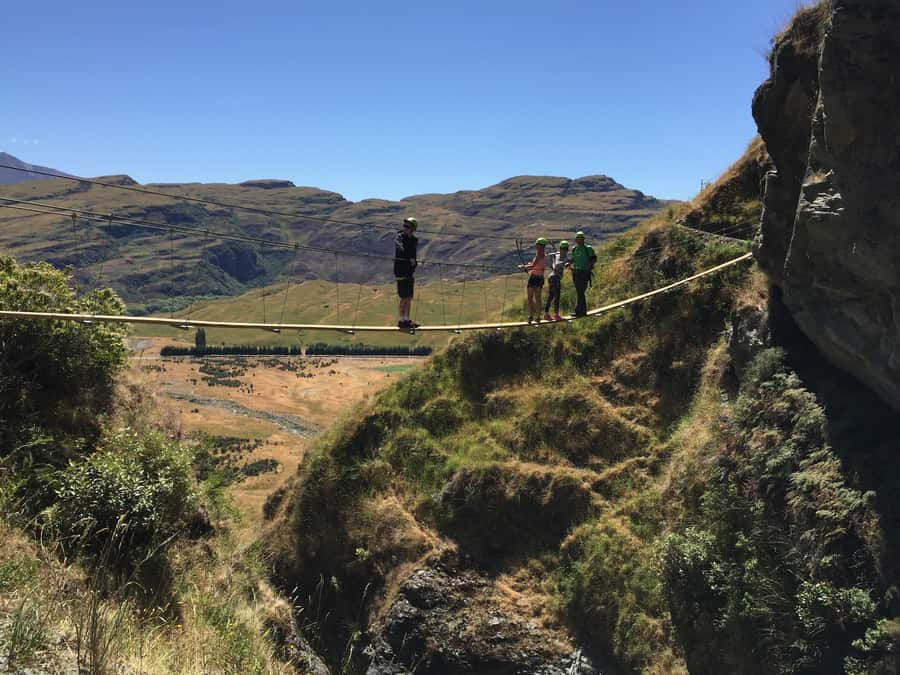
The bridges add a different kind of challenge. A fixed cable can feel reassuring, but walking across a suspended bridge above water demands balance and steady attention. If you are nervous with heights, you may find the first crossing more memorable than the actual climbing. The small guide groups help here, since the guide can focus on your pace instead of rushing a large crowd.
The route is described as beginner level, but beginner does not mean effortless. You need to pull, step, stretch, balance, and keep moving your body for a sustained period. One person who was only 5 feet 4 inches tall found a few handholds required a stretch, but also found the many well-positioned holds made the route manageable.
Mountain views arrive at the top
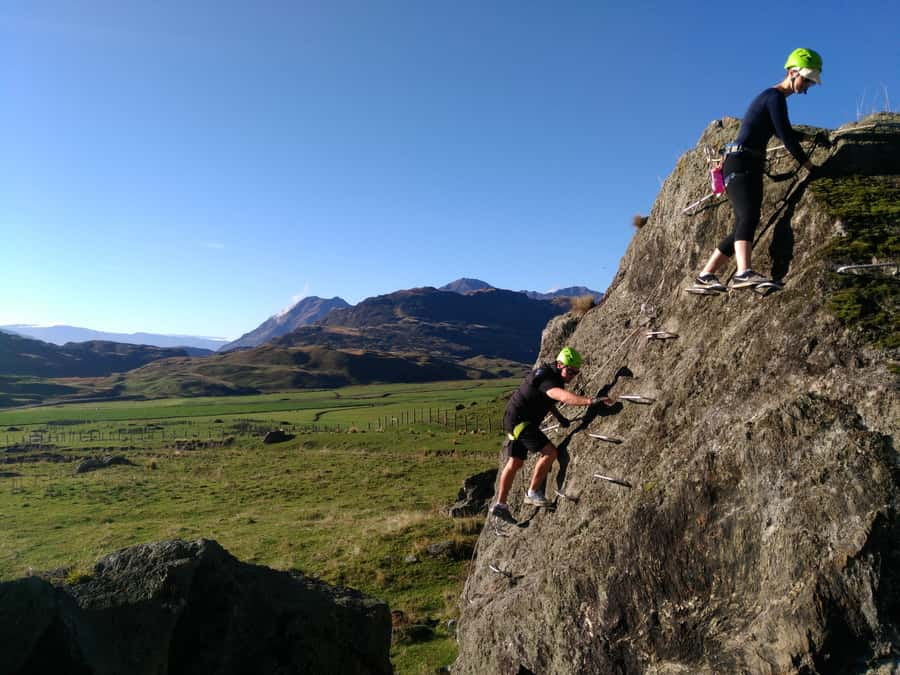
Near the end of the climb, the route opens to broad views over farmland, the surrounding mountain ranges, and Lake Wanaka. This is where the activity shifts from close-up concentration to open scenery.
The contrast works well. Most of the route keeps your attention on your feet, hands, cable, and the next move. Then you get a chance to stop, have a small snack and drink, and look outward. The view is not an afterthought added from a roadside lookout. You reach it by climbing for it, which gives the pause a real sense of achievement.
The break also helps you judge your energy. If Level 1 has used up your reserves, you can begin the descent. If you feel strong and the schedule allows, you may be offered the chance to continue onto Level 2. This optional progression is one of the better features of the outing because you do not have to commit to the harder route before you know how your body and nerves will respond.
Several people chose Level 2 after starting with the beginner course. They described it as more challenging but achievable, while others were perfectly happy to stop after Level 1. That choice makes the experience work for a wider range of abilities, though you should confirm the upgrade details and additional cost with the operator when booking.
A completely different sort of day out:
- Small Group Jet Boat Adventure on the Clutha River from Wanaka
★ 5.0 · 302 reviews - Wanaka: Water Taxi & Mou Waho Island Tour
★ 4.8 · 299 reviews - Cardrona High Country Pub Trail Horse Trek (Intermediate level+)
★ 5.0 · 269 reviews - Queenstown: Small Group Mt Cook Day Tour
★ 4.7 · 262 reviews
The descent is short but still part of the hike
If you finish at the top of the beginner route, the return takes about 15 minutes on foot down the mountain to the waterfall base. The climb uses the fixed system, but the descent is a walking route.
Do not think of the return as an effortless stroll. Your legs may be tired after the climb, and the route still requires suitable footwear and care. The total experience is listed as three hours, which includes preparation, the practice climb, the walk to the cliffs, the main route, the break, and the descent. The actual climbing time is about 1.5 hours, with approximately one hour on the main beginner section.
If you have a tight schedule in Wanaka, allow the full three hours rather than calculating only the climbing time. Arriving early and driving to the farm gate also takes planning.
Why the $118 price can make sense
At $118 per person, this is not a cheap add-on activity. You are paying for a guided outdoor climbing route, safety equipment, instruction, a practice section, a small snack and water, and a guide assigned to a very small group.
The value improves if you want something more active and distinctive than a standard viewpoint or short walk. You are not just looking at Twin Falls. You are moving through the waterfall setting and using a purpose-built route to reach views that would otherwise be inaccessible to a casual walker.
The small group is a major part of the price. With up to five people per guide, you get more direct supervision than you would on a large group outing. That matters when you are clipping into a cable, crossing a bridge, or deciding whether to continue to the next section.
The experience is less compelling value if you dislike heights, want a relaxed half-day in the countryside, or are unlikely to enjoy physical exertion. You should also budget for your own water bottle, since water is included during the activity but a bottle is not provided as part of the listed inclusions.
How difficult is the beginner climb?
You do not need previous climbing experience. The guides teach the equipment and the basic method before you reach the waterfall, then assist you along the course.
You do need a moderate level of fitness and full-body mobility. The activity combines hiking, rock climbing, walking, balance, and repeated use of your arms and legs. The stated minimum age is 10, with a minimum weight of 40 kilograms. People under 120 centimeters, over 120 kilograms, or with mobility impairments are not accepted.
The most useful way to judge the route is to separate technical skill from physical demand. The technical side is designed for beginners, and the safety system gives you a clear way to stay attached. The physical side is real. You may stretch for holds, climb vertically, cross bridges, and stay focused for an hour.
The experience has worked for families, adults in their 60s with reasonable fitness, and people who were uneasy about heights. That does not mean everyone will find it easy. If you walk regularly and can comfortably climb and balance, you may find the beginner route achievable. If heights cause strong distress, the activity may push you well outside your comfort zone.
Guides are the heart of the experience
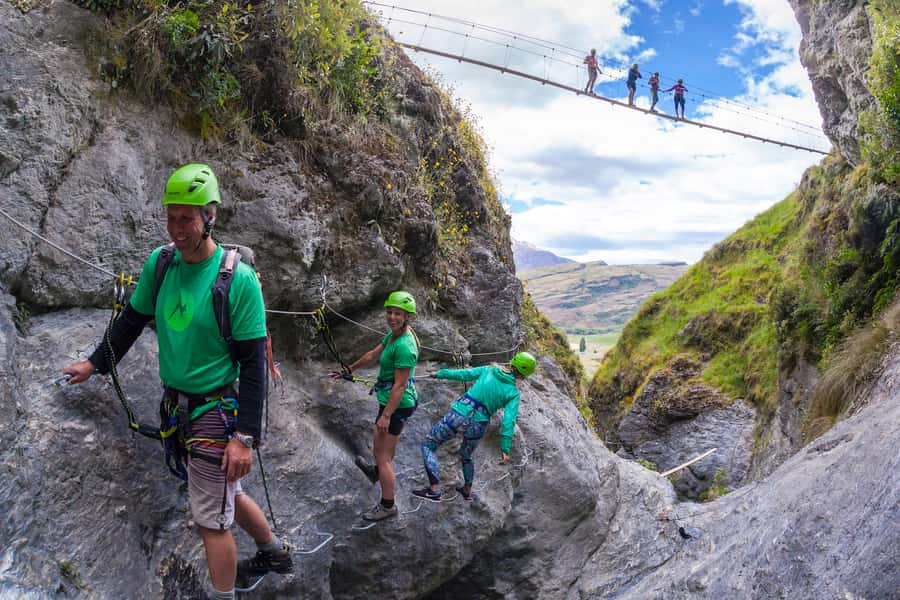
The strongest praise centers on the guides. Rocky is repeatedly singled out for making beginners feel at ease, while Luke and Maddie are praised for careful support. Jasmine, Georgia, Sarah, Connor, Liam, Tristan, Jasper, and others are also described as encouraging, patient, relaxed, and helpful.
That consistency matters more than a slick sales pitch. On a climbing activity, a good guide controls the pace, explains the equipment clearly, watches how people are coping, and helps without making nervous participants feel foolish.
You should expect the guide to be involved from the practice section through the main route. Guides have also taken photos for participants, which can be useful because taking your own camera out while climbing is awkward and carries a risk of dropping it. Still, photography is not guaranteed, so treat any guide-taken pictures as a welcome extra rather than part of the core service.
What to wear and pack for Twin Falls
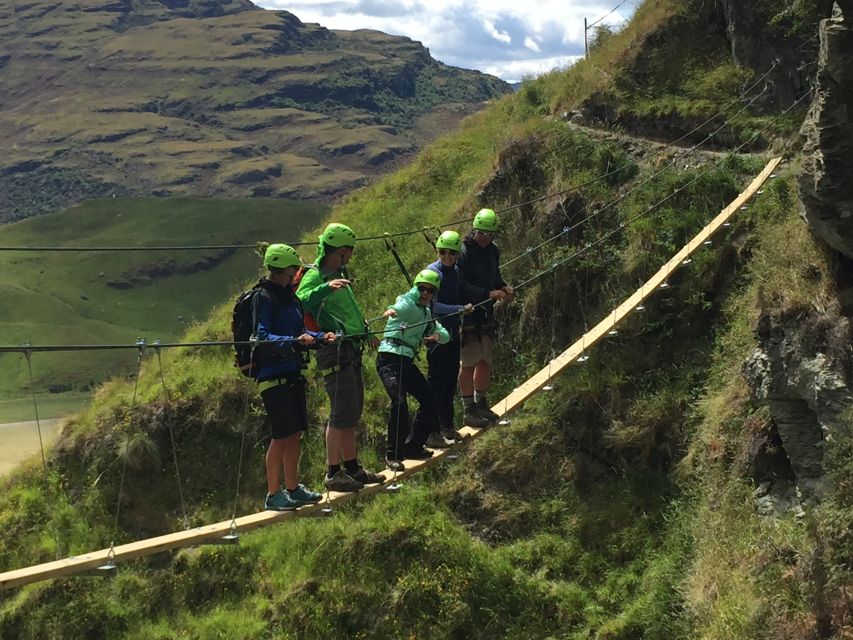
Wear weather-appropriate clothing and sturdy hiking shoes. Open-toed footwear is not allowed, and ordinary footwear that lacks grip would be a poor choice for a wet waterfall setting.
Bring:
- A water bottle
- A small daypack
- Hiking shoes
- Clothing suited to the forecast
- A camera only if you can secure it safely
You can leave unnecessary items at the base. Keep the pack light, since you will be climbing and crossing bridges rather than walking on a flat trail.
Weather can affect how comfortable the route feels. The information provided does not promise a dry experience, so dress for changing conditions and expect water to be part of the setting. Your guide can give the final practical direction on the day.
Is it suitable for families and nervous climbers?
For families with children aged 10 and older who meet the height and weight requirements, this can be an exciting shared challenge. A family group has the benefit of celebrating the climb together, though children still need to manage the physical demands and follow instructions carefully.
It also suits adults who have never climbed. The practice section, fixed cable system, and guide support remove much of the technical mystery. You do not need to know climbing knots or bring your own harness.
Nervousness is not an automatic reason to skip it. Several people who described themselves as uneasy with heights felt safe because the guides explained each stage and stayed supportive. But there is a difference between normal nerves and a strong fear of exposure. You will be high on a cliff, and the route includes suspension bridges, so book only if you are willing to face that challenge.
Cancellation, timing, and basic booking facts
The activity is conducted in English and lasts three hours. Starting times vary, so you need to check availability for your preferred date.
You can cancel up to 24 hours before the scheduled experience for a full refund. The reserve-now, pay-later option lets you hold a place without paying immediately, which is useful if your New Zealand plans are still moving around.
The meeting point is at the waterfall gate, not in central Wanaka. Plan your drive, arrive 15 minutes early, and leave enough room in your day for the full three-hour commitment.
Should you book the Wanaka Waterfall Cable Climb?
I would book this if you want an active Wanaka experience with a strong sense of place. The combination of a working-farm waterfall, fixed-route climbing, suspension bridges, pools, and Lake Wanaka views gives you more than a standard adventure park session.
It is especially suited to first-time climbers who want expert help, families with capable older children, and adults looking for a challenge without committing to advanced mountaineering. The small groups and careful practice climb are real advantages.
I would skip it if you have limited mobility, dislike heights, cannot manage a moderate physical outing, or want a quiet waterfall visit. At $118, the cost is fair for a guided, equipment-included activity, but only if you are ready to use your body and accept a little exposure.
For most fit beginners, Level 1 is the sensible choice. Start there, learn the system, and decide at the top if Level 2 still sounds like fun. That way you get a genuine adventure without signing up for more than you can reasonably handle.
FAQ
How long does the waterfall cable climb take?
The full experience lasts three hours. The introduction to via ferrata climbing takes about 1.5 hours, including the practice and main climbing sections. The beginner route itself takes approximately one hour, followed by a roughly 15-minute descent.
How far is Twin Falls from Wanaka?
Twin Falls is about 20 minutes from Wanaka by car. Follow Wanaka-Mount Aspiring Road west along the lake toward Treble Cone Ski Field and Mount Aspiring National Park.
Where is the meeting point?
Meet at the locked farm gate in front of the waterfalls. Look for the Wildwire sign. After reaching a cattle stop on the road, pull out immediately to the left in front of the two large waterfalls.
Do I need climbing experience?
No. The guides provide a safety briefing, climbing equipment, and an introductory practice climb before you begin the waterfall route.
What equipment is included?
A helmet, harness, climbing safety equipment, and the safety briefing are included. An expert guide, small snacks, and water are also included.
Should I bring my own water bottle?
Yes. A water bottle is listed as something to bring and is not included as equipment. You should also bring weather-appropriate clothing, a daypack, and hiking shoes.
Can I wear sandals?
No. Open-toed shoes are not allowed. Hiking shoes are recommended for the climb and descent.
What is the minimum age?
The minimum age is 10 years. Participants must also weigh at least 40 kilograms and meet the stated height requirement of 120 centimeters.
Can I continue to a harder climb?
You may have the option to continue to Level 2 after completing the beginner route, depending on time and how you feel. The harder route is described as more challenging, so ask the guide about the current option and price.
Can I cancel the booking?
Yes. You can cancel up to 24 hours in advance for a full refund. A reserve-now, pay-later option is also available.
Just added in Wanaka
- Wanaka: Tandem Paragliding Experience★ 4.9 · 93 reviews
- Wanaka: Scenic Hot Air Balloon Flight★ 4.7 · 6 reviews
- Wānaka: Scenic Helicopter Flight Wānaka Max★ 5.0 · 11 reviews
- Wanaka: Self-Guided Regular MTB – Lake Hawea to Lake Wanaka★ 4.8 · 40 reviews
- Wanaka: Mou Waho Island Boat Tour and Nature Walk★ 4.5 · 2 reviews
- Wanaka: Rob Roy Glacier Guided Hike with Lunch★ 5.0 · 3 reviews
- Wanaka: Scenic Helicopter Flight with Glacier Experience★ 5.0 · 42 reviews
- Wanaka: Mount Burke 4×4 Explorer and Boat Tour★ 5.0 · 36 reviews
2-Hour Experiences, compared.
2-Hour Cathedral Cove and Volcanic Coast Cruise
Read our review →
2 Hour Cathedral Cove and Volcanic Coast Cruise with Shade Canopy
Read our review →
America’s Cup 2-Hour Sailing Experience Waitemata Harbour
Read our review →
Small Group Daytime 2-Hour Eco Wildlife Tour at Zealandia
Read our review →Browse the lists this tour appears in