
REVIEW · WILDLIFE
Zealandia Small Group Eco Wildlife Night Tour
Nightfall brings Zealandia to life. This 2.5-hour evening tour pairs an excellent introduction to New Zealand’s lost wildlife with a guided walk through a predator-proof sanctuary, where you may spot kiwi, tuatara, weta, glowworms, and more. I like the small group of up to 12 people, which makes it easier to hear the guide and gather around wildlife sightings. I also like the serious conservation purpose behind the experience, not just the chance to take a good photo.
The main caution is simple: this is a real wildlife reserve, not a zoo. Kiwi sightings are possible but never promised, and the walk can feel long on a cold, windy, or muddy night. You need sturdy footwear, warm layers, and patience.
In This Review
- Key points to know before booking
- Why Zealandia is worth seeing after dark
- The exhibition explains New Zealand’s lost giants
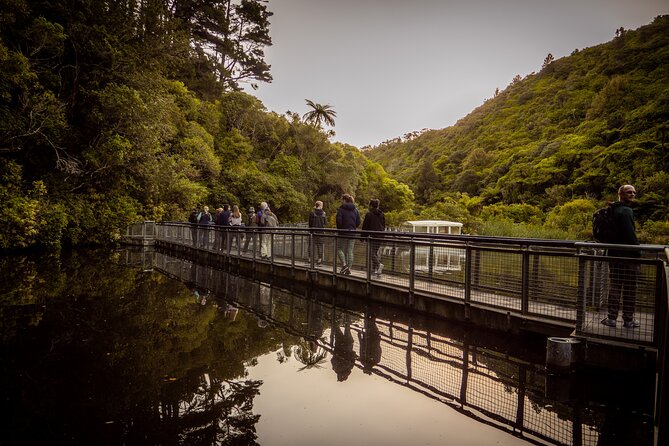
- Moving into Sanctuary Valley at dusk
- What you might see on the night walk
- Kiwi
- Tuatara
- Weta and other insects
- Glowworms
- Frogs, birds, fish, and eels
- The guide makes or breaks the experience
- Is the $74.47 price good value?
- Getting there from central Wellington
- What to wear and bring
- Who should book this night tour?
- Should you book the Zealandia night tour?
- FAQ
- How long does the Zealandia night tour last?
- Where does the tour start and finish?
- Is a kiwi sighting guaranteed?
- What wildlife might I see?
- Are torches provided?
- What should I wear?
- Is the tour suitable for children or people with limited mobility?
Key points to know before booking
- Kiwi sightings are possible but not guaranteed: Several tours have seen one, two, three, four, or even five kiwi, including a young bird, but wildlife follows its own timetable.
- The group is capped at 12 people: That is small enough for a calm walk and better chances of hearing the guide.
- The tour combines two experiences: You visit Zealandia: The Exhibition, then walk through the 550-acre Sanctuary Valley after dark.
- Red-light torches are supplied: These help you see the path and wildlife without using harsh white light.
- You need to arrange your own transport: Zealandia is about 10 minutes from central Wellington by car, but hotel pickup and drop-off are not included.
- The walk suits people who can manage two hours in low light: It is not recommended if you have limited mobility or difficulty walking for an extended period.
Why Zealandia is worth seeing after dark
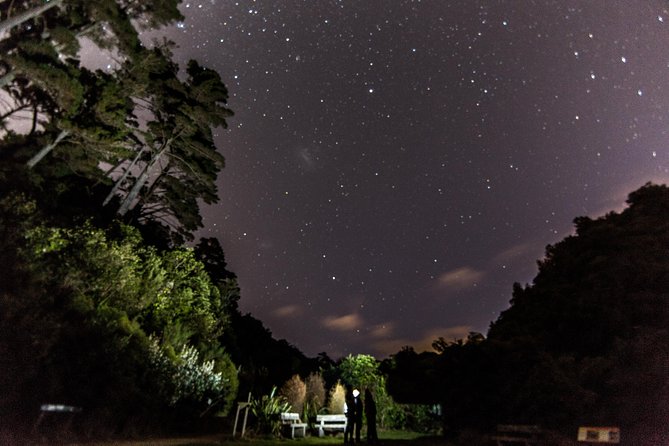
Zealandia Te Māra a Tāne is an eco-restoration project inside Wellington, designed as a protected home for native species. A predator-proof fence surrounds the sanctuary, helping create safer conditions for birds, reptiles, frogs, and insects that have suffered from introduced predators.
That setting changes the tone of the tour. You are not walking through a display filled with animals placed for easy viewing. You are following signs, calls, movement, and the guide’s sharp eyes. Sometimes you stop for a tuatara near the path. Sometimes a kiwi appears briefly and disappears into the darkness. Sometimes the most memorable find is a weta or a patch of glowworms.
I like this honest approach. You are paying for access, guiding, and a better chance of seeing nocturnal wildlife, not a guarantee of a particular animal. The experience works best if you value the search itself.
The sanctuary covers about 550 acres, or 225 hectares, so the setting feels far removed from downtown even though Zealandia is only around 10 minutes from central Wellington. Once the light fades, the city feels less important. You hear birds, insects, and the sound of your own group moving along the track.
A few more to weigh up in Wellington
- Wellington: Wētā Workshop Guided Tour Ticket
★ 4.7 · 997 reviews - Wētā Workshop Experiences Tour – Wellington
★ 5.0 · 875 reviews - Wellington: Return Cable Car Ticket
★ 4.6 · 714 reviews
The exhibition explains New Zealand’s lost giants
The evening begins inside the visitor centre with a short film and an introduction to Zealandia. This gives you useful context before the outdoor walk, especially if you are not familiar with New Zealand’s unusual bird life or the country’s conservation challenges.
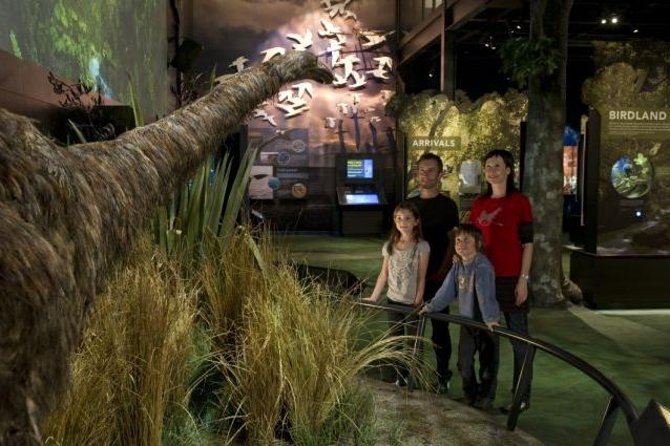
The exhibition includes lifelike models of the moa, giant flightless birds that once lived across New Zealand. You also see a model of Haast’s eagle, a powerful predator associated with the moa. These animals are extinct, but the models help you understand the scale of the creatures that once occupied the islands.
A light and sound presentation traces at least 1,000 years of change. It connects the vanished species with the sanctuary’s modern work to protect animals that remain. That connection matters. Without it, the walk could feel like a simple evening animal hunt. With it, each sighting has a larger meaning.
The exhibition is also a good part of the tour for anyone who likes natural science but does not want a long museum visit. It is interactive, visual, and brief enough to keep the focus on the night walk.
Moving into Sanctuary Valley at dusk
After the indoor introduction, your guide prepares the group for the walk. Torches are supplied, including red-light torches used to reduce disturbance to the animals. You may also receive a radio receiver so you can hear the guide while walking.
The tour can begin while there is still some daylight. That is useful because you can see the sanctuary’s setting before darkness takes over. As evening arrives, the sounds change. Daytime bird calls fade, and nocturnal activity begins.
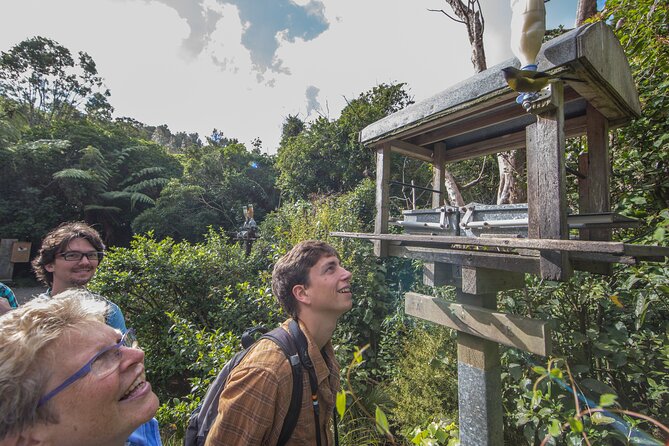
Your guide leads the group along the sanctuary paths, stopping to explain wildlife and conservation work. A second guide or volunteer may act as a spotter, scanning the ground, bushes, and water edges for movement. This extra pair of eyes can make a real difference. Finding a kiwi in the dark is not easy, and guides such as Claire, Autumn, Mary, Will, and Rebecca have been praised for their ability to spot wildlife and keep the group engaged.
The walk is described as 2.5 hours, but the pace is not a forced march. There are frequent pauses to look at animals and hear explanations. That is good for wildlife viewing, though one cold-weather account found the tour felt too long after the main sightings. If the forecast is poor, the same relaxed pace may feel slower.
What you might see on the night walk
A completely different sort of day out:
- Half Day Tour of Wellington
★ 4.5 · 638 reviews - Wellington: Guided City Tour with Cable Car Ticket
★ 4.8 · 553 reviews - Wellington’s Original LOTR Experience – includes Weta and Lunch
★ 5.0 · 529 reviews - Kapiti Island Classic Guided Day Tour
★ 5.0 · 522 reviews
Kiwi
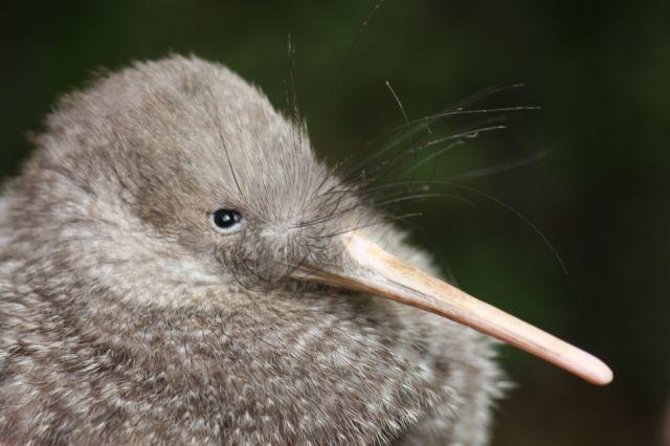
The little spotted kiwi is the star of the tour. Zealandia provides one of the better chances to see a kiwi active at night in a protected setting, but you still need luck and a patient guide.
Kiwi are shy, and a sighting may last only a short time. You could see one moving beside the track, crossing grass, or foraging near a drainage ditch. Some evening groups have seen a kiwi less than a metre away, while others have seen several individuals in one outing.
Do not expect the bird to pose. Keep quiet, follow instructions, and avoid flash photography. A flash can frighten the kiwi and ruin the sighting for everyone. The supplied red light is there for a reason.
Tuatara
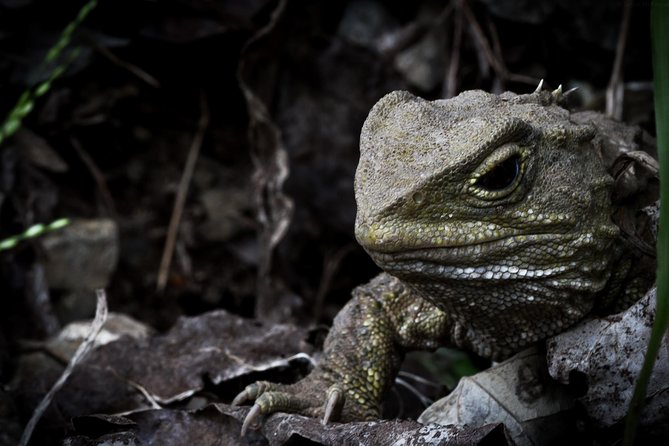
Tuatara are among the most memorable animals you might encounter. They resemble lizards, but they are a distinct reptile group with a long evolutionary story. On a good night, you might see several, sometimes around 10, sitting quietly near the path.
They are not fast-moving animals, so the group may get time to look closely. Your guide can point out details you would probably miss in the dark, such as the shape of the body, the texture of the skin, or the way the animal responds to light.
Weta and other insects
Weta are large native insects, and they can look startling when your torch catches them. The tour may also reveal other unusual local insects, including large crickets and slugs. These are not glamorous sightings, but they show how much life exists below the level of birds and reptiles.
If you are uneasy around insects, tell yourself that a weta is part of the local cast. The guide may also show spiders or other creatures in sheltered areas. One stop involving a cupboard full of spiders was more detail than one cold-weather group wanted, but insect lovers will likely enjoy it.
Glowworms
Glowworms can add a quiet bit of magic to the walk. They are easy to miss during the day, but their small points of light become visible in darkness. This is a good example of why the night setting matters. Zealandia is not simply the daytime sanctuary with the lights turned off.
Frogs, birds, fish, and eels
The exact sightings vary, but the tour can include native frogs such as Hamilton frogs and Maud Island frogs, along with kaka, takahē, shags, ducks, lizards, fish, and a large eel. You may hear morepork calls or male kiwi calls before seeing the animals that made them.
Takahē sightings are especially welcome because these birds are rare and unusual. Kaka can also add movement and noise to the evening. The guide will help you separate an animal call from the general sounds of the bush, which is difficult when you are visiting New Zealand for the first time.
The guide makes or breaks the experience
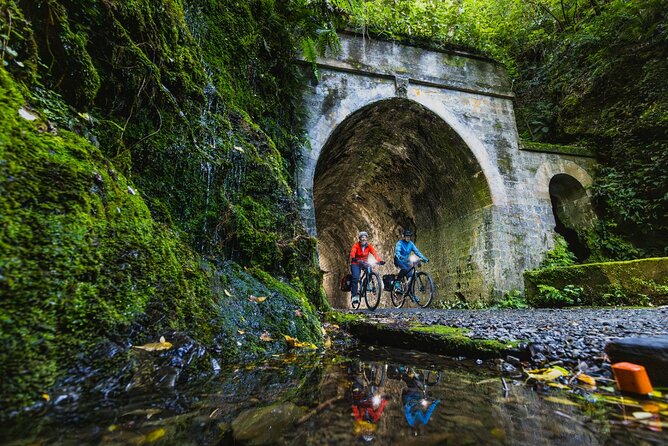
A night wildlife walk needs a good guide. You are moving in low light, looking for animals that may be hidden, and trying not to disturb them. The guide must provide information without talking so much that the group misses a sound or movement.
That balance seems to be handled well here. Guides including Claire, Autumn, Mary, Will, and Rebecca have been praised for their enthusiasm, local knowledge, and skill at finding animals. Volunteers may join the lead guide as spotters, giving the group more than one person scanning the path.
I particularly like the way the guides set expectations. They explain that sightings are never certain because this is a sanctuary, not an enclosure-based animal park. That makes a kiwi sighting feel earned rather than staged.
The group size also matters. With a maximum of 12 people, you are less likely to be separated from the guide or crowded around a narrow path. A smaller group can stay quieter, which helps during kiwi searches.
Is the $74.47 price good value?
At $74.47 per person, this is not the cheapest evening activity in Wellington. It is also more than a simple admission ticket because the price includes entry to the exhibition, a guided sanctuary walk, and the use of supplied torches.
I think the value is strongest if you care about native wildlife and conservation. You receive access to a protected area after dark, when many of Zealandia’s most interesting animals are active. The guides also add real value by finding creatures you might walk past and explaining what you are seeing.
The value is weaker if you want a guaranteed kiwi photograph or a short, easy stroll. You could spend much of the evening hearing animals rather than seeing them, and bad weather can make the walk tiring. Think of the price as paying for a guided chance, not a wildlife show.
One useful detail: information associated with the tour indicates that admission may also allow a return visit to the sanctuary the following day. Confirm this when you book, since it can improve the value considerably. A daytime return would let you see the area in a completely different light.
Getting there from central Wellington
The meeting point is 53 Waiapu Road, Karori, Wellington 6012. The sanctuary is near public transport, but the evening timing means a taxi is the most practical choice for many people.
Hotel pickup and drop-off are not included. Zealandia recommends arranging a taxi through your hotel concierge or calling Wellington Combined Taxis at 04 384 4444. The guides can help call a taxi for the return journey, which is useful if your planned ride fails to arrive.
Arrive 15 minutes before the start time. Do not cut this close. You need time to find the visitor centre, check in, and get ready for the walk.
What to wear and bring
The tour operates in all weather conditions, although poor weather can lead to cancellation, a different date, or a full refund. Dress for a cold evening even if Wellington feels mild during the day.
Wear sturdy footwear. The path can become muddy, and the tour lasts around two and a half hours. Bring extra layers and a waterproof jacket. Torches are supplied, so you do not need to bring one, though you should still follow the guide’s instructions about light and photography.
Food and drinks are not included. Plan to eat before the tour or after it, since the evening is built around the exhibition and walk rather than a meal stop.
The minimum age is 12. The walk is not recommended if you have limited mobility or difficulty walking for two hours in low-light conditions. Most people who can manage a steady walk should be able to take part, but the cold, darkness, and uneven or muddy conditions deserve serious thought.
Who should book this night tour?
I would choose this experience if you have even a modest interest in New Zealand’s birds, reptiles, insects, or conservation work. It is especially good for people who want to see wildlife in a protected natural setting rather than behind glass or in a conventional zoo.
It also suits visitors who are willing to trade certainty for discovery. You may see a kiwi, but you may also remember the trip because of a tuatara, glowworms, a frog, a strange insect, or the call of a morepork in the dark.
Families with children aged 12 and over can enjoy it, provided everyone can walk quietly and stay patient. Photography-focused visitors should adjust expectations. The low light and moving animals make sharp images difficult, and the rules are designed to protect the wildlife.
I would hesitate to recommend it to anyone who dislikes cold weather, muddy paths, or long periods of standing quietly. I would also avoid booking it as your only chance to see a kiwi if you would be deeply disappointed by missing one.
Should you book the Zealandia night tour?
Yes, if you want Wellington’s most distinctive wildlife experience and understand that nature does not run to a schedule. The small group, strong guiding, supplied red-light torches, and access to Zealandia after dark make the $74.47 price reasonable for wildlife lovers.
Book it for the chance to see a kiwi, but go for the wider experience: extinct moa and Haast’s eagle inside the exhibition, tuatara near the path, glowworms in the dark, native frogs, weta, birds, and the sound of a sanctuary working to bring back New Zealand’s wild life.
Arrive early, arrange your return taxi, wear warm waterproof clothing, and keep your expectations flexible. If you do those things, this can be one of the most memorable evenings in Wellington.
FAQ
How long does the Zealandia night tour last?
The tour lasts approximately 2 hours and 30 minutes, including the guided visit to Zealandia: The Exhibition and the walk through Sanctuary Valley.
Where does the tour start and finish?
It starts and finishes at 53 Waiapu Road, Karori, Wellington 6012, New Zealand.
Is a kiwi sighting guaranteed?
No. Kiwi are elusive wild animals, so sightings are not guaranteed. The tour gives you a strong chance to look for them, but you should also enjoy the other wildlife and the sanctuary setting.
What wildlife might I see?
Possible sightings include kiwi, tuatara, weta, glowworms, kaka, takahē, native frogs, lizards, fish, eels, shags, and ducks. You may also hear morepork or kiwi calls.
Are torches provided?
Yes. Torches and red-light flashlights are supplied for the walk.
What should I wear?
Wear sturdy footwear, extra layers, and a waterproof jacket. The tour operates in all weather conditions, and the path may be muddy.
Is the tour suitable for children or people with limited mobility?
The minimum age is 12. The experience is not recommended for people with limited mobility or difficulty walking for two hours in low-light conditions.
Just added in Wellington
- Wellington: Secret Realms of Middle-earth – Lothlorien★ 5.0 · 2 reviews
- Wellington Zoo General Entry Tickets★ 3.9 · 7 reviews
- Wellington: Remutaka Rail Trail Cycle Tour★ 4.9 · 17 reviews
- Wellington Helicopters Scenic Harbour Flight★ 4.4 · 19 reviews
- Wellington: Lord of the Rings Half-Day Guided Tour inc Weta★ 5.0 · 5 reviews
- Wellington: Martinborough Private Winery Tour with Lunch★ 5.0 · 3 reviews
- Wellington: Private custom tour with a local guide★ 4.6 · 3 reviews
- Wellington: Half-Day City Highlights Tour and Cable Car Ride★ 4.5 · 60 reviews
Wildlife, compared.
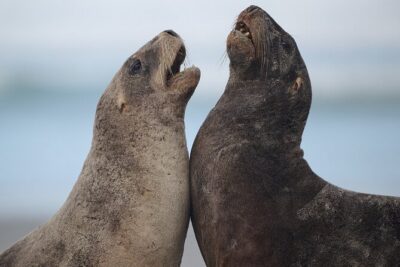
Clearwater Wildlife Tours (small group 10max) Otago Peninsula
Read our review →
6 Ziplines, Swing-Bridges & Wildlife Encounters
Read our review →
Island Hopper Day Cruise – sailing to wildlife sanctuary island – 6 hr cruise
Read our review →
Browse the lists this tour appears in