
REVIEW · LAKE TEKAPO TOURS
Lake Tekapo: Alpine Stargazing Experience with a Guide
Look up, and the town disappears. This 75-minute Lake Tekapo stargazing tour takes you by short transfer to a private 50,000-acre farm inside the Aoraki Mackenzie International Dark Sky Reserve. I like the 14-inch telescope, which brings planets, star clusters, and nebulae into view, and I like the small groups capped at 10 people. The main catch is simple: clouds, wind, and moonlight can change what you see.
You meet at the Silver River Stargazing office inside Kiwi Treasure, Lake Tekapo’s post office. From there, warm down jackets, a short ride, and a guide who can turn a black sky into a story are included. I also appreciate the free digital group photo, though telescope viewing is never fully guaranteed by nature.
In This Review
- Key points to know before booking
- Why Lake Tekapo is such a good place for stargazing
- Meeting at Kiwi Treasure and getting ready
- The short transfer to the private farm
- One hour under the southern stars
- What you might see through the 14-inch telescope
- The value of the guide and the laser pointer
- Staying warm on a cold hill
- The digital photo at the end
- Timing, weather, and what can go wrong
- Who will enjoy this experience most
- Is $59 a fair price?
- Should you book the Lake Tekapo stargazing tour?
- FAQ
- How long does the Lake Tekapo stargazing experience last?
- How much does the tour cost?
- Where is the meeting point?
- Is transportation included?
- How large is the telescope?
- What might I see through the telescope?
- Are warm clothes provided?
- Is the tour suitable for wheelchair users?
- What languages are available?
- Will I receive a photo?
Key points to know before booking
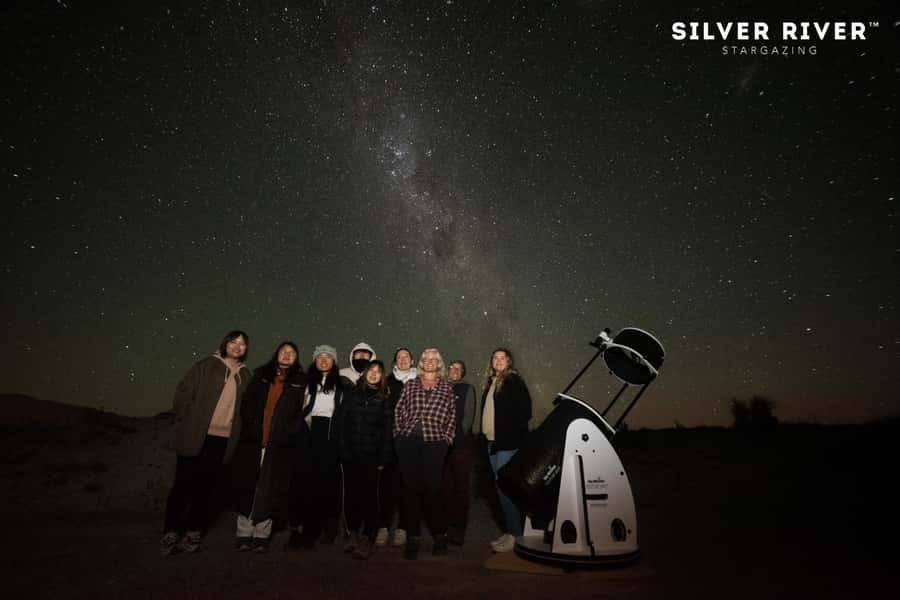
- The 14-inch telescope: Use a large modern telescope to view objects such as the Moon, Jupiter, Saturn, star clusters, and nebulae when conditions allow.
- A private dark-sky setting: The farm is away from Lake Tekapo’s stray lights, giving you wide, uninterrupted views of the southern sky.
- Small groups of up to 10: You should get more telescope time and easier access to the guide than on a large coach tour.
- Warm jackets are supplied: Borrow a long, warm down jacket, but still dress for a cold and windy hilltop.
- A guide-led introduction: Astro-lasers help connect spoken explanations with the stars and constellations above you.
- A free keepsake photo: Receive a digital photo of your group under the stars, normally within 48 hours by email, weather permitting.
Why Lake Tekapo is such a good place for stargazing
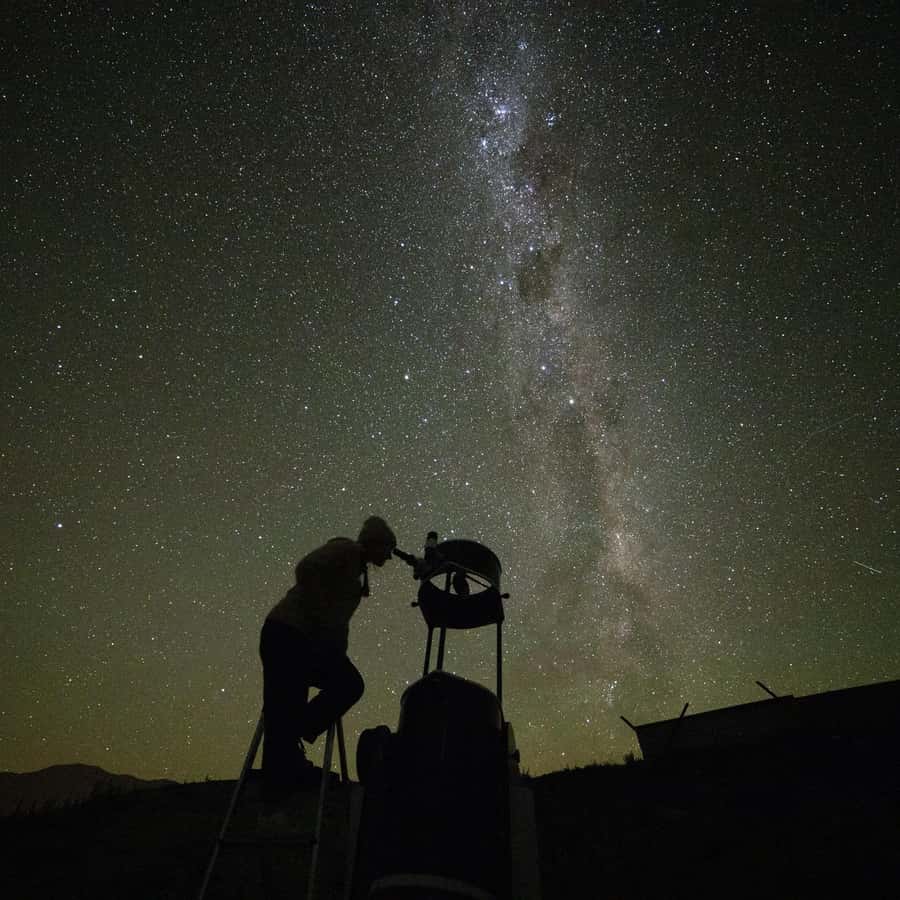
Lake Tekapo is part of the Aoraki Mackenzie International Dark Sky Reserve, a large area where light pollution is carefully limited. That matters because stargazing depends less on dramatic equipment than on the darkness around you.
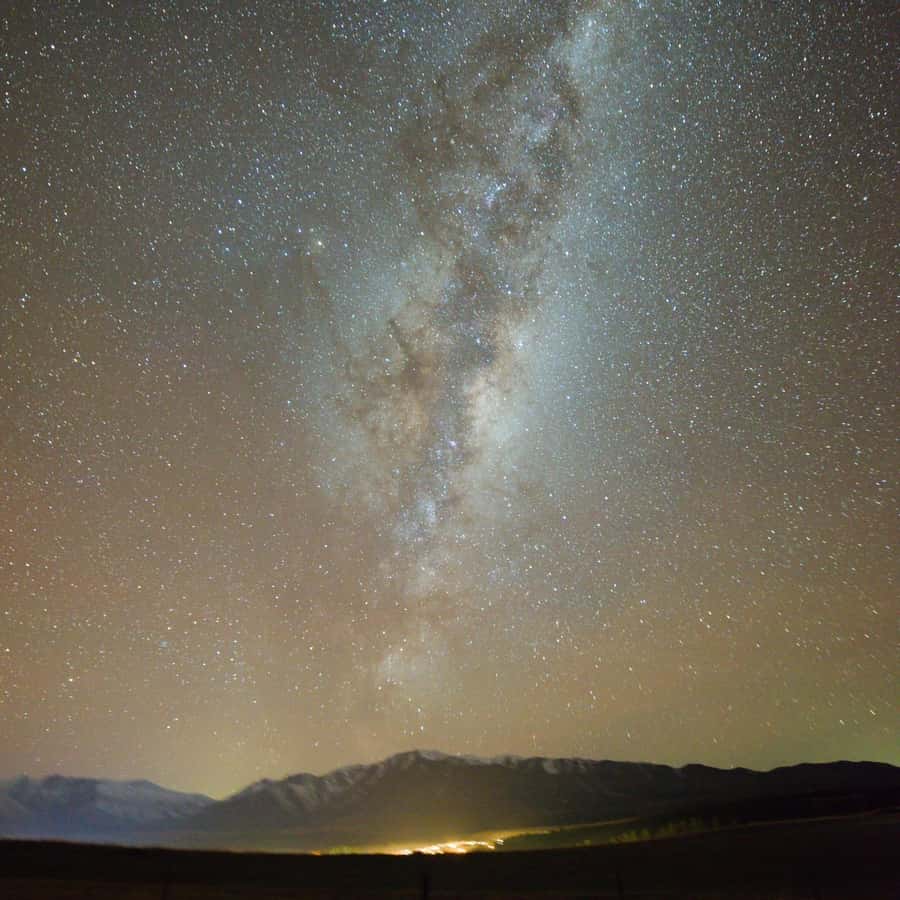
From town, you can already see more stars than in most cities. At the private farm used for this experience, stray light from Lake Tekapo is reduced even further. The Milky Way can become visible to the naked eye as a broad, bright band rather than a faint smudge.
That naked-eye view is one of the strongest reasons to book. The telescope adds detail, but you do not need any equipment to appreciate the sky here. On a clear night, the sheer number of stars can be the main event.
You are also looking at the southern night sky, which differs from what visitors from the Northern Hemisphere may know. The guide can point out southern constellations and explain how people use stars to find their way around the sky.
More Lake Tekapo trips:
- Lake Tekapo: Stargazing Experience
★ 4.9 · 607 reviews - From Christchurch: Mount Cook & Lake Tekapo Day Tour & Lunch
★ 4.6 · 405 reviews - Mount Cook, Lake Tekapo and Tasman Glacier Tour from Christchurch
★ 5.0 · 353 reviews
Meeting at Kiwi Treasure and getting ready
The meeting point is Silver River Stargazing’s office inside Kiwi Treasure, which also serves as Lake Tekapo’s post office. This detail is useful because searching for a separate observatory or farm entrance would send you in the wrong direction.
Allow enough time to find the office before departure. Once checked in, you receive a safety briefing of about five minutes. Warm down jackets are available, a thoughtful inclusion for an activity that requires standing or sitting outdoors at night.
Do not treat the supplied jacket as a substitute for proper clothing. Several accounts describe cold or windy conditions on the hill. Wear warm layers, covered shoes, and clothing you can comfortably keep on for the full outdoor portion.
The tour is wheelchair accessible, and live guiding is offered in English and Japanese. The infant policy is specific: only one infant is allowed per tour, and that infant must be booked onto the earliest departure of the night.
The short transfer to the private farm
After the safety briefing, the group takes a transfer of roughly five minutes to the stargazing site. The short ride is practical rather than scenic. Its value is that it gets you away from the town’s lights without asking you to arrange a separate car or find a remote farm after dark.
The transport has varied by departure. Some people have described an old bus, while others mention an RV-style vehicle. Either way, the ride is brief, and the telescope setup is ready when you arrive.
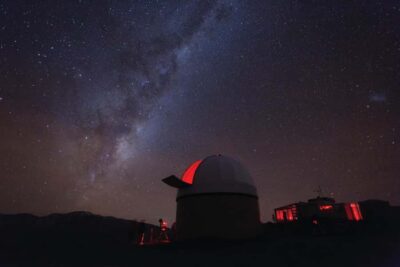
The farm covers about 50,000 acres, giving the group a broad, open setting with 360-degree views of the reserve. You are not looking through gaps between buildings or streetlights. Instead, the sky surrounds you.
One hour under the southern stars
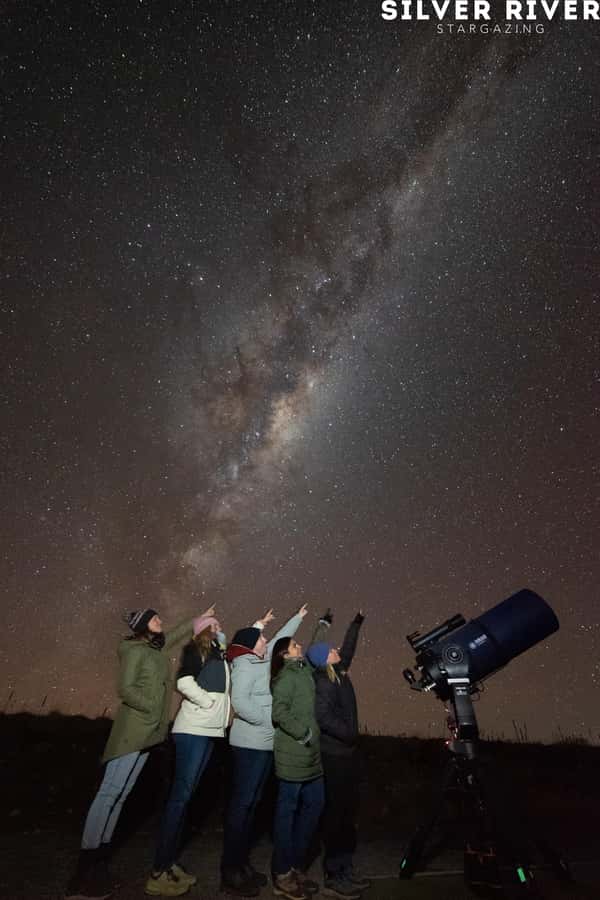
The main guided session lasts about one hour. The guide uses an astro-laser to trace constellations and make it easier to follow explanations. This is especially helpful when a group is trying to connect individual stars into a recognizable shape.
A good guide can make a major difference here. Guides named in feedback include Sam, Tara, Nicole, Marcus, JoJo, Wilson, Estelle, Kiera, Simon, Roselyn, and Sakura. The strongest descriptions focus on guides who combine clear astronomy explanations with stories about star names, different cultures, and the history behind constellations.
The experience is not designed as a silent sky-watching session. You are encouraged to listen, ask questions, and learn how to locate objects. That makes it a better choice than simply driving to the reserve, looking up for ten minutes, and going home wondering what you saw.
Families can also get a lot from the format. Tara, for example, was praised for answering children’s questions patiently and warmly. Teenagers have enjoyed learning through the telescope, and one young visitor was inspired to study more about astronomy after the tour.
The format should suit beginners. You do not need to know the names of stars, understand astronomy, or bring your own telescope. The guide provides the explanations and points out what to look for.
More stargazing nights in Lake Tekapo:
- Chameleon Stargazing Shared Tour
★ 5.0 · 181 reviews - Lake Tekapo: Mountaintop Stargazing at Mount John Summit
★ 4.5 · 176 reviews - Lake Tekapo: Stargazing Experience at Cowan’s Observatory
★ 4.7 · 52 reviews - Lake Tekapo: 1.5-Hour Hot Pools & Stargazing Experience
★ 4.0 · 45 reviews
What you might see through the 14-inch telescope
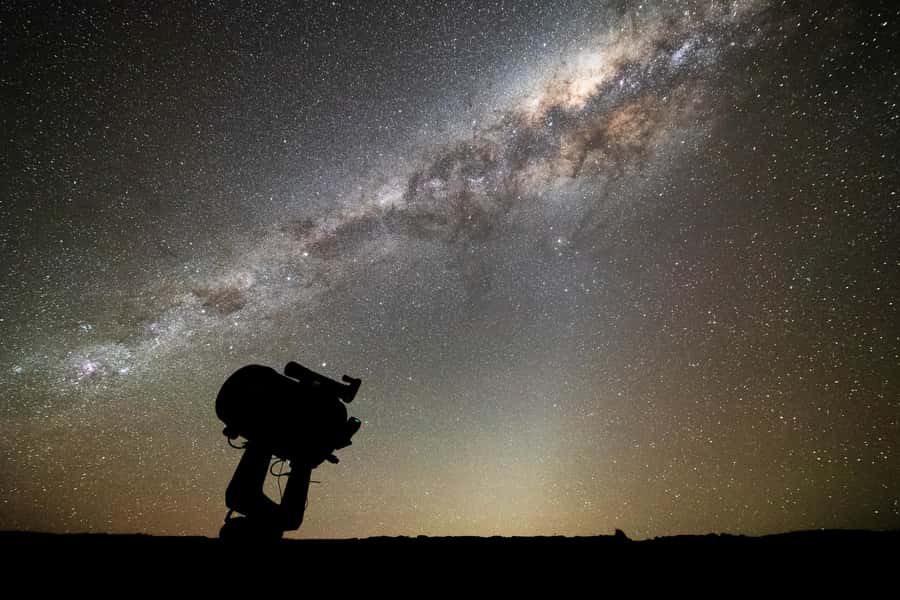
The 14-inch telescope is the technical heart of the activity. It is large enough to provide striking views of bright planets and selected deep-space objects, though exact sightings depend on the season, cloud cover, wind, and the position of the objects that night.
Past departures have included views of the Moon, Jupiter, Saturn, Jupiter’s four moons, star clusters, galaxies, and nebulae. Seeing Saturn or Jupiter through a telescope can be a special moment because the objects become more than bright points in the sky.
The Moon can also be impressive, but its brightness affects the rest of the session. A nearly full Moon may wash out some fainter stars, yet it can still provide a fine telescope target. One clear night with an almost full Moon still produced a strong experience.
A new Moon or a very dark night is generally more favorable for seeing faint parts of the Milky Way. That does not mean a bright Moon ruins the tour. It simply changes the balance between bright objects and faint star fields.
You may also see a meteor or, on a fortunate night, the Aurora Australis. These are natural events, not scheduled parts of the tour. One departure included a full southern aurora, adding a dramatic bonus to the evening.
Wind can affect telescope sharpness. One account described a windy night where some views were less clear, even though the sky remained rewarding. Clouds are a bigger problem. On a cloudy night, the guide may still explain the stars, but telescope views can be limited or unavailable.
The value of the guide and the laser pointer
At $59 per person, this is not simply a transport-and-look-up outing. You are paying for access to a large telescope, transport to a darker private site, warm jackets, a guide, and a digital photo.
The guide is the part that turns the outing into a real experience. A laser pointer can show you exactly where a constellation sits, while the explanation gives it meaning. You might learn how to find certain stars, why constellations have particular names, or how different cultures have interpreted the same patterns.
This also makes the activity more accessible to people who may struggle to identify faint stars. One person with visual impairment found that the laser pointer helped track the guide’s explanations, while the guide made extra effort to assist with the telescope.
The small-group limit of 10 is important. A large group can mean long waits between telescope views and a guide speaking to people scattered across a wide area. Here, the ratio of telescope time to participants should be more comfortable, though one person still wished for a longer stargazing period and more time at the telescope.
That is the main limitation of the 75-minute schedule. The session includes check-in, a briefing, transfers, explanations, telescope viewing, and photography. You will get a focused introduction rather than an all-night astronomy program.
Staying warm on a cold hill
Night temperatures can fall quickly, and the open farm is exposed to wind. The supplied down jackets are one of the most consistently appreciated practical touches. They are long and warm, and they help visitors who underestimated how cold stargazing can become.
Still, bring your own warm layers. A few people suggested that blankets or hot drinks would make the experience even more comfortable, but those are not listed as inclusions. You should plan as if the jacket is useful backup rather than the only layer you need.
Comfy chairs are available during the session, which helps because you are outside for much of the hour. The chairs also make it easier to settle in while waiting for your turn at the telescope.
The digital photo at the end
At the end of the outing, the guide takes a group photo beneath the stars, depending on the weather. You receive a link by email, normally within 48 hours.
This is a better souvenir than a generic postcard because it records your group against the actual night sky. The quality of the photo has been praised, with some people saying they would print and frame it.
Do keep your expectations realistic. It is a complimentary group photograph, not a private professional photo session. The shot also depends on the weather and the guide’s available photography conditions.
Timing, weather, and what can go wrong
The tour lasts 75 minutes from departure to return, with a five-minute safety briefing, about five minutes each way for transfers, and roughly one hour at the farm. A departure can be shifted slightly if conditions change. One outing began 15 minutes later, which caused no major issue for that group.
Weather is the one factor the operator cannot control. Clouds may block stars and telescope targets. Wind can make telescope images less steady. Even a cloudy night may still include an interesting astronomy talk, but you should not book this expecting guaranteed views of a particular planet or galaxy.
For the best chance of a dramatic sky, consider a night with little moonlight and check the forecast before booking. Because free cancellation is available up to 24 hours before departure, you have some flexibility if your plans allow it. You can also reserve now and pay later.
Do not cancel automatically because the forecast looks imperfect. Conditions can improve during the evening. One outing began after a cloudy day and cleared in time for excellent viewing. The sensible approach is to accept that stargazing is weather-dependent and leave room in your schedule for another attempt if the sky is poor.
Who will enjoy this experience most
I would recommend this tour to first-time stargazers, families with older children, couples, solo visitors, and anyone curious about the Southern Hemisphere sky. It gives you enough science to be useful without turning the evening into a technical lecture.
It is also a good match for photographers who want a group photo with the Milky Way. The telescope will appeal to anyone who wants to see more than the naked-eye sky, especially children and teenagers.
You may want to think twice if you dislike cold outdoor activities, need a long leisurely session, or expect a guaranteed aurora. The tour is short, and the schedule is fixed. It is also not ideal for a very young child who cannot stay up late, although one infant can be booked on the earliest departure under the stated policy.
Is $59 a fair price?
For $59, I consider this a solid value if you want structure and equipment. You could look at the sky from Lake Tekapo without paying anything, but you would miss the private darker setting, the guide’s explanations, the 14-inch telescope, the warm jacket, and the photo.
The value is strongest for people who would not know where to look or what they were seeing. The guide helps you notice the Milky Way, constellations, planets, and star clusters instead of treating the sky as a beautiful but confusing mass of lights.
The value is less certain on a fully cloudy night, since the telescope portion may not work. That risk is built into every outdoor astronomy activity. The flexible cancellation policy helps, but only if you make the decision more than 24 hours before departure.
Should you book the Lake Tekapo stargazing tour?
Book it if you want a guided introduction to the southern night sky, access to a serious telescope, and a simple way to reach a very dark private site. The small group, warm jackets, laser-guided explanations, and digital photo add real value.
I would choose this over simply visiting a dark-sky lookout if you are new to astronomy or want your children to learn as they look. Just dress warmly, allow for weather changes, and remember that the clearest rewards may come from the naked-eye Milky Way rather than the telescope.
For $59, it is an easy recommendation on a clear night. If the sky cooperates, Lake Tekapo can give you the kind of stars that make city skies seem almost empty.
FAQ
How long does the Lake Tekapo stargazing experience last?
The full experience lasts 75 minutes. This includes a five-minute safety briefing, transfers of about five minutes each way, and approximately one hour of guided stargazing.
How much does the tour cost?
The listed price is $59 per person.
Where is the meeting point?
Meet at the Silver River Stargazing office inside Kiwi Treasure, which is also Lake Tekapo’s post office.
Is transportation included?
Yes. Roundtrip transportation from the check-in office to the private stargazing site is included.
How large is the telescope?
The tour provides access to modern 14-inch telescopes.
What might I see through the telescope?
Depending on the conditions and the night’s sky, you might see the Moon, Jupiter, Saturn, Jupiter’s moons, star clusters, galaxies, and nebulae.
Are warm clothes provided?
Warm down jackets are provided for use during the tour. You should still bring warm layers because the farm can be cold and windy.
Is the tour suitable for wheelchair users?
Yes. The activity is listed as wheelchair accessible.
What languages are available?
Live guiding is available in English and Japanese.
Will I receive a photo?
A complimentary digital photo of your group under the stars is included, depending on the weather. It is normally shared by email within 48 hours.
Just added in Lake Tekapo
- Christchurch to Queenstown via Lake Tekapo and Mt Cook (1 way)★ 4.5 · 60 reviews
- Private Mt Cook Day Tour From Christchurch via Lake Tekapo★ 4.5 · 5 reviews
- Mt. Cook Private Day Tour from Christchurch via Lake Tekapo★ 5.0 · 1 review
- Mt Cook & Tekapo Day Tour from Christchurch (lunch included)★ 5.0 · 145 reviews
- Mt. Cook Full Day Private Tour via Tekapo from Christchurch★ 5.0 · 7 reviews
- Christchurch to Mt Cook via Tekapo (1 way) (Small Group)★ 4.5 · 8 reviews
- Lake tekapo & Mt. Cook Private tour from Christchurch★ 5.0 · 1 review
- Mt. Cook Full Day Group Tour via Tekapo from Christchurch★ 4.5 · 10 reviews
Lake Tekapo Tours, compared.
Mount Cook, Lake Tekapo and Tasman Glacier Tour from Christchurch
Read our review →
Tekapo Shuttle: Mt Cook Day Tour via Pukaki & Tasman Lake
Read our review →
Mount Cook & Lake Tekapo Day Tour from Christchurch with Lunch
Read our review →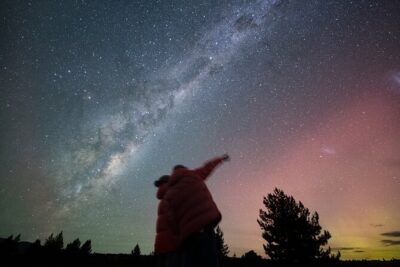
Browse the lists this tour appears in