
REVIEW · LAKE TEKAPO TOURS
Mount John Observatory Stargazing Experience, Tekapo
The Southern Cross is only the beginning. Mount John Observatory gives you a front-row seat to the southern sky, high above Lake Tekapo in the Aoraki McKenzie International Dark Sky Reserve. I like the mix of naked-eye stargazing and powerful telescopes, and I like that the guides explain the science without making you feel you need a degree in astronomy. The main catch is simple: clouds can cancel the mountain visit, and the indoor substitute may feel like a poor second choice.
This is a 1-hour-45-minute evening trip, including transport from Tekapo township to the 1,029-metre summit. The supplied extreme-weather coats help with the cold, but you should still wear layers. Clear skies are never guaranteed, so leave room in your schedule if seeing the Milky Way matters to you.
In This Review
- Key points about the Mount John stargazing experience
- Why Mount John is the right place to study the stars
- From Tekapo township to the 1,029-metre summit
- The 90-minute summit session
- Telescopes that make the difference
- Weather is the gamble you cannot remove
- Is NZ$139.39 good value?
- Group size, language, and physical demands
- The best time to book
- Who will enjoy this most?
- Practical details before you go
- Should you book Mount John Observatory?
- FAQ
- How long does the Mount John Observatory stargazing experience last?
- Where does the tour begin?
- What can I see through the telescopes?
- Are warm clothes provided?
- What happens if the weather is poor?
- Can children and people with mobility issues join?
Key points about the Mount John stargazing experience
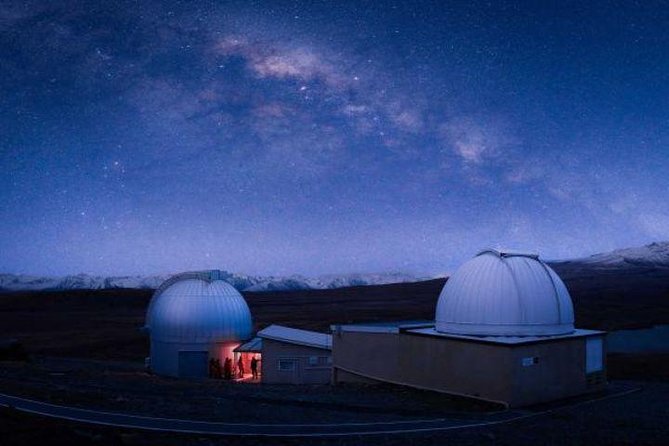
- Mountaintop access: You travel from Lake Tekapo to the summit of Mount John, home to the University of Canterbury’s observatory and research centre.
- Three ways to see the sky: Guides combine laser-pointer explanations, unaided viewing, and advanced telescope equipment.
- Southern Hemisphere highlights: You may learn to identify the Southern Cross, the true southern star, planets, star clusters, and distant galaxies.
- Small scheduled groups: The experience is listed for up to 22 people per departure, with other booking information stating a maximum of 30, so group size can vary.
- Cold-weather support: Extreme Cold Weather jackets are supplied, though warm layers and sturdy shoes still make sense.
- Weather matters: Poor conditions can bring a date change, refund, or an indoor alternative that may not match the mountain experience.
Why Mount John is the right place to study the stars
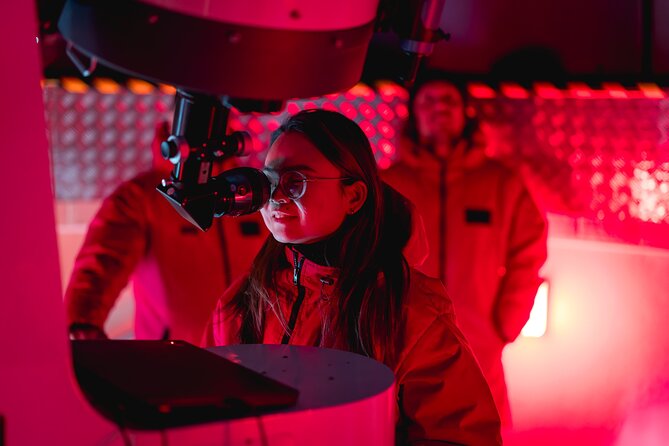
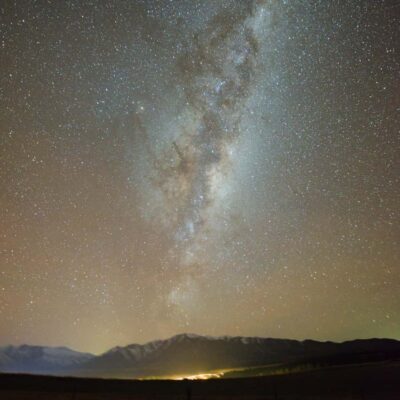
Lake Tekapo is part of the Aoraki McKenzie International Dark Sky Reserve, a protected area recognised for its unusually dark skies. That matters more than fancy equipment. Less artificial light means more stars visible to your eyes, and the Milky Way can appear as a broad band rather than a faint smudge.
Mount John adds height and distance from the lights around Tekapo. At 1,029 metres, the summit gives you a broad view over the surrounding mountains and lakes during the drive and before the sky tour begins. At night, the real attraction is not a scenic overlook in the usual sense. It is the absence of glare.
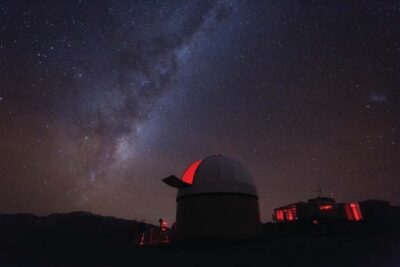
The summit is also home to a working University of Canterbury research centre. You are not simply taken to a roadside viewing platform with a few tourist telescopes. The setting gives the experience a stronger connection to real astronomy, even though the tour itself is designed for the general public.
I especially like that the guides do not assume you already know the sky. This works for a first-time stargazer, but it also has enough equipment and Southern Hemisphere targets to interest someone who has spent years looking upward.
More Lake Tekapo trips:
- Lake Tekapo: Alpine Stargazing Experience with a Guide
★ 4.5 · 626 reviews - Lake Tekapo: Stargazing Experience
★ 4.9 · 607 reviews - From Christchurch: Mount Cook & Lake Tekapo Day Tour & Lunch
★ 4.6 · 405 reviews
From Tekapo township to the 1,029-metre summit
You begin by checking in with the Dark Sky Project team in Lake Tekapo. Return transport to the summit is included, which is important because you should not be driving yourself up a dark mountain road after an evening of stargazing.
The transfer takes about 15 minutes. That is short enough to keep the outing focused, but long enough for the change in setting to register. You leave the township and climb toward the observatory, with the lights of Tekapo falling away behind you.
At the summit, the group receives extreme-weather jackets. Take the cold warning seriously. Even in spring, the mountaintop can feel bitter, and several people have found the supplied coats useful. Wear a warm base layer, trousers, and closed shoes. The jacket is a helpful outer layer, not a replacement for proper clothing.
You should also expect darkness in the literal sense. White torches and phone lights are not suitable during the viewing period because they spoil everyone’s night vision. The ground can be difficult to see, so stay close to the guide and your group when moving between viewing points.
The 90-minute summit session
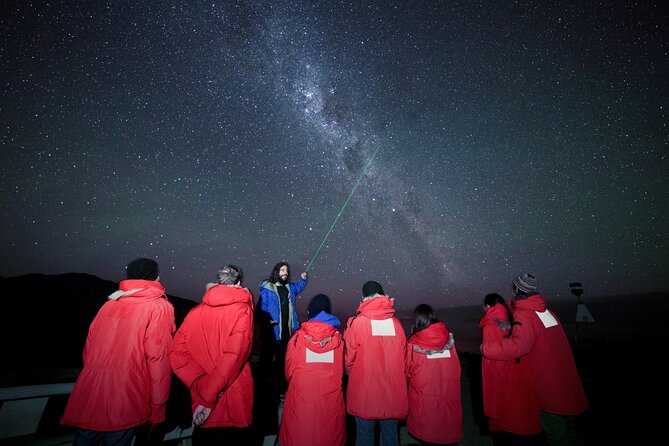
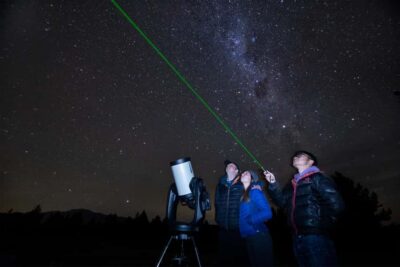
The main session lasts about 1 hour and 30 minutes. Guides use laser pointers to identify major stars and constellations, then bring the sky closer through observatory telescopes.
The unaided portion is more valuable than it may sound. A telescope can show you an object, but learning how to find it yourself gives you a better sense of the sky. You may be shown the Southern Cross, the true southern star, and a nearby false candidate that can confuse beginners. That lesson alone helps you make sense of the Southern Hemisphere night.
The guides also point out planets, star clusters, solar systems, and constellations. Depending on the conditions and what is visible that night, you might see the moons of Jupiter or a star cluster formed soon after the Big Bang. A distant galaxy may also appear through the equipment.
The exact viewing list will change. That is part of the nature of astronomy, not a failure of the tour. The moon, seasons, cloud cover, and the time of night all affect what can be seen. If you book in a bright moon period, the Milky Way may be less dramatic, though the moon itself can become an interesting target.
Telescopes that make the difference
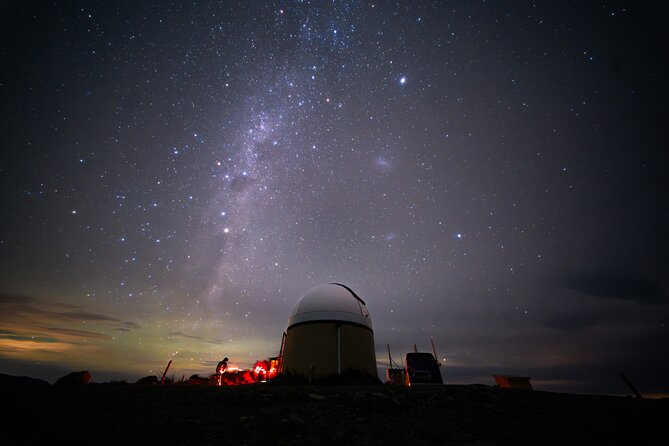
The tour uses advanced observatory equipment and gives you time at three telescopes. That is a strong feature for the price, since the experience is not limited to a quick look through one shared instrument.
You may notice that each telescope presents a different kind of surprise. One object can look small but intensely bright. Another may appear as a soft patch or a cluster of pinpricks. The guide’s explanation helps you understand what you are seeing, rather than treating the telescope as a magic tube that produces random lights.
This is also where the experience works well for beginners. You do not need to know the difference between a nebula, planet, cluster, and galaxy before arriving. The session is structured to teach the basics as you go, and the guides keep the tone friendly and entertaining.
Kieran, Alice, and Olive are among the guide names associated with especially warm and engaging sessions. The strongest part of the guiding is not merely the amount of information. It is the ability to keep the group involved while moving between technical facts, stories, and visible objects.
Still, a telescope cannot defeat cloud. If the sky closes in, the guide may work around gaps and show stars as they appear. Some cloudy sessions have still revealed the Southern Cross, other constellations, and several telescope targets. A fully cloudy night is a different matter.
More stargazing nights in Lake Tekapo:
- Chameleon Stargazing Shared Tour
★ 5.0 · 181 reviews - Lake Tekapo: Mountaintop Stargazing at Mount John Summit
★ 4.5 · 176 reviews - Silver River Stargazing Experience in Lake Tekapo
★ 4.5 · 106 reviews - Stargazing Experience at Cowan’s Private Observatory
★ 4.0 · 85 reviews
Weather is the gamble you cannot remove
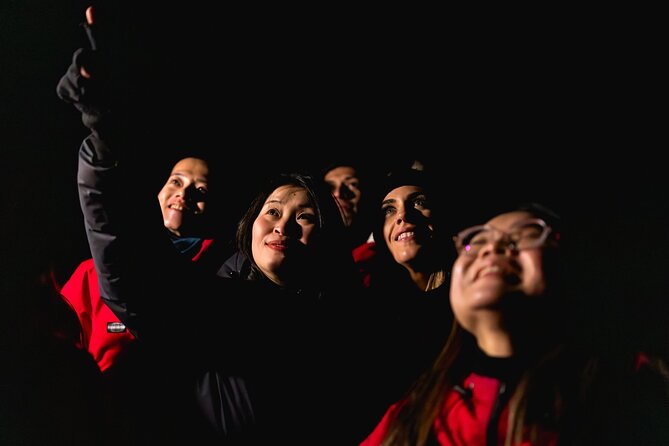
This is an outdoor astronomy experience. If poor weather makes the summit visit impossible, the operator may offer another date, a full refund, or an indoor alternative.
That policy is fair because cloud, wind, and visibility are outside the operator’s control. The practical problem is that an indoor session may not satisfy you if the main reason for booking is telescope viewing under a dark sky. One indoor replacement has been judged uninformative and unimpressive, so I would not treat it as equal to the mountain program.
If your schedule allows, book early in your Tekapo stay rather than on your final night. That gives you a chance to move the booking if weather intervenes. You can cancel for a full refund up to 24 hours before the start time, but cancellations or changes inside that window are not refunded.
Pay close attention when booking a departure after midnight. The booking date may not match the calendar date you have in mind. This is a small detail, but late-night astronomy trips are exactly where date confusion happens.
Is NZ$139.39 good value?
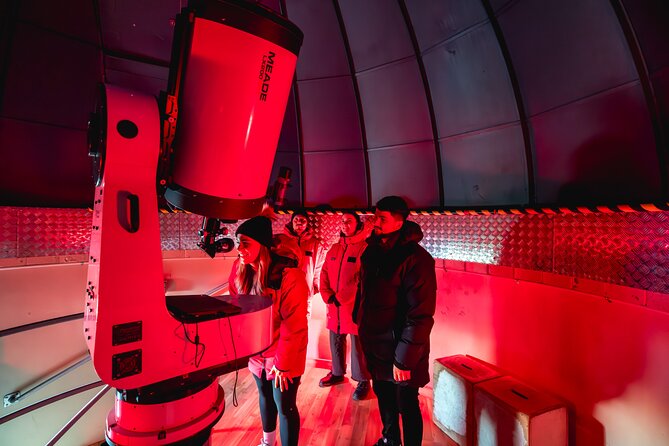
At $139.39 per person, this is not a casual walk outside to point at a few stars. You are paying for summit transport, access to a restricted observatory setting, trained guides, weather jackets, laser-guided instruction, and viewing through advanced equipment.
I think the price is reasonable if you care about astronomy or want one major evening activity in Tekapo. The combination of protected dark skies and a mountaintop research centre is hard to duplicate on your own. You could certainly walk away from town and see many stars for free, but you would not have the same access, explanation, or telescope time.
The value becomes weaker on a cloudy night, especially if you receive only the indoor alternative. The experience also feels less worthwhile if you expect dramatic photographs. The group is asked not to use white light, and one account noted that staff would not take camera pictures when there was any wind. This is a viewing experience first, not a professional photo session.
The booking figures suggest strong demand, with more than 10 bookings recorded in the previous week. That does not guarantee a particular group size or sky quality, but it does mean you should not leave a preferred evening until the last minute.
Group size, language, and physical demands
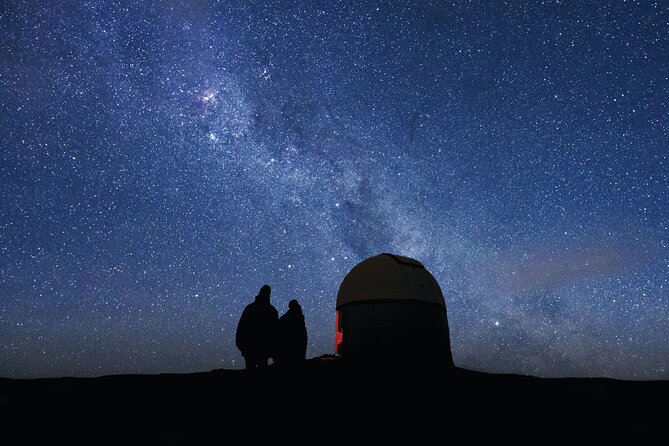
The main booking information lists a maximum of 22 people per trip time. Additional information gives a maximum of 30, so the published figures are not perfectly consistent. If personal space matters to you, ask for the expected group size before booking.
A smaller group makes telescope turns easier and gives you more chances to ask questions. A larger group can mean more waiting and less direct contact with the guide. The tour remains scheduled and guided, so you should expect to stay with the group rather than wander independently around the summit.
English and Mandarin guides are listed. You are required to speak the language of the tour for health and safety reasons. If you cannot speak that language, you will not be allowed to join, so check the language arrangement carefully before paying.
Children can participate but must be accompanied by an adult. The activity is not recommended for people with mobility issues. The supplied details do not describe a fully accessible route, and the summit is dark, cold, and uneven enough that moving around may be tiring or awkward.
The best time to book
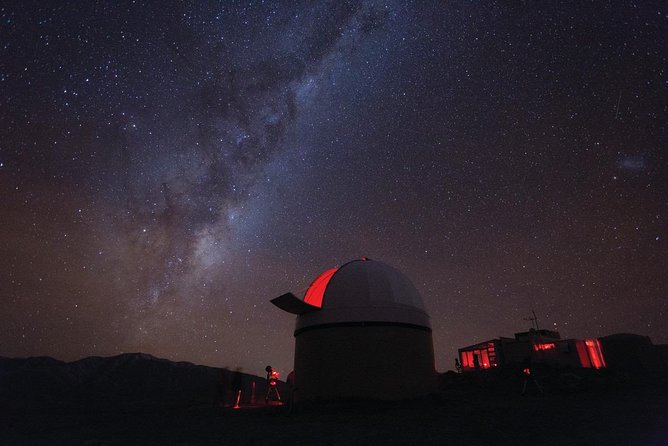
There is no single perfect season because each period changes the balance between cold, darkness, and weather. A spring visit can still be extremely cold at the summit, so do not assume a mild day in Tekapo means a mild evening on Mount John.
Try to avoid booking your only available night if a clear view of the Milky Way is your main goal. A bright full moon can reduce the number of faint stars you see, although it may give the guides another striking object to show you.
The safest approach is to book early in your stay and keep one backup evening open. That way, a cancellation does not end your chance to reach the summit. Check the forecast, but remember that mountain conditions can change and a promising evening is not a guarantee.
Who will enjoy this most?
I would recommend this to anyone with even a passing interest in the night sky. You do not need previous astronomy experience, expensive binoculars, or a camera. The explanations are pitched so beginners can follow them, while the setting and instruments give more serious stargazers something worthwhile.
It suits couples, families with older children, and solo visitors who want a focused evening activity. It is also a good choice if you want to understand the Southern Hemisphere sky rather than simply take a few pictures beneath it.
You may want to skip it if you dislike cold, cannot comfortably walk in darkness, or have only one free night and would be very disappointed by a cancellation. The experience depends on nature, and no guide can manufacture a clear sky.
Practical details before you go
Mobile tickets are accepted, and you check in at the Dark Sky Project in Lake Tekapo. Hotel pickup and drop-off are not included, so arrange your own way to the township meeting point.
Meals and snacks are also not included. Eat beforehand or carry what you need for the evening, keeping in mind that the tour details do not promise food at the summit.
The tour lasts approximately 1 hour and 45 minutes from check-in through the return transfer. The summit portion is about 90 minutes. Since departure times can run late, especially for after-midnight sessions, plan your sleep and transport around the full outing rather than just the telescope time.
Keep your phone brightness low. Do not use a white flashlight during the viewing. Stay near the guide, follow the group, and bring warm layers even if the evening begins pleasantly in town.
Should you book Mount John Observatory?
Book it if you want a guided introduction to the southern sky, access to three telescopes, and the chance to view stars from a serious observatory site. The staff’s clear explanations, engaging style, and ability to teach beginners are the strongest reasons to go.
I would book it early in a Tekapo visit, leave room for a weather change, and arrive prepared for real cold. If the sky clears, this can become one of your most memorable New Zealand evenings. If the clouds stay put, the value depends on your willingness to accept an indoor backup.
FAQ
How long does the Mount John Observatory stargazing experience last?
The experience lasts approximately 1 hour and 45 minutes. This includes about 15 minutes for the check-in and transport stage, followed by around 1 hour and 30 minutes at the summit.
Where does the tour begin?
You check in with the Dark Sky Project team in Lake Tekapo. Return transport to the summit of Mount John is included, but hotel pickup and drop-off are not.
What can I see through the telescopes?
Depending on the conditions, you might view planets, star clusters, solar systems, constellations, the moons of Jupiter, or a distant galaxy. The guides also provide unaided stargazing with laser pointers.
Are warm clothes provided?
Extreme Cold Weather jackets are provided. You should still wear warm layers because the summit can be very cold, including during spring.
What happens if the weather is poor?
If weather prevents the tour from operating, you may be offered another date or a full refund. An indoor alternative may also be offered, but it may not provide the same telescope and summit experience.
Can children and people with mobility issues join?
Children must be accompanied by an adult. The activity is not recommended for people with mobility issues, and most participants must be able to follow the group safely in cold and dark conditions.
Just added in Lake Tekapo
- Queenstown to Lake Tekapo via Mt Cook One-Way Small Group Tour★ 4.5 · 13 reviews
- Queenstown to Christchurch One-Way Tour via Mt Cook & Lake Tekapo★ 4.5 · 134 reviews
- Queenstown to Christchurch One Way Tour Via Lake Tekapo & Mt Cook★ 5.0 · 10 reviews
- Private 3 Day Queenstown Glenorchy Wanaka and Tekapo★ 5.0 · 3 reviews
- Mount Cook & Lake Tekapo the Ultimate combo from Queenstown★ 5.0 · 3 reviews
- Mt. Cook Private Day Trip From Queenstown with Lake Tekapo★ 5.0 · 10 reviews
- Lake Tekapo Private Day Trip from Queenstown★ 5.0 · 7 reviews
- Mt Cook to Christchurch One-Way Small Group Tour via Lake Tekapo★ 5.0 · 16 reviews
Lake Tekapo Tours, compared.
Mount Cook, Lake Tekapo and Tasman Glacier Tour from Christchurch
Read our review →
Tekapo Shuttle: Mt Cook Day Tour via Pukaki & Tasman Lake
Read our review →
Mount Cook & Lake Tekapo Day Tour from Christchurch with Lunch
Read our review →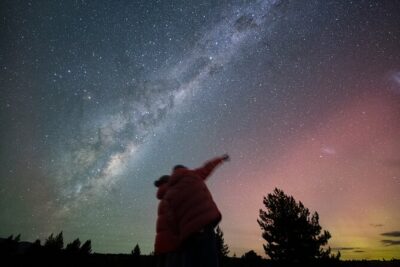
Browse the lists this tour appears in