
REVIEW · LAKE TEKAPO TOURS
Silver River Stargazing Experience in Lake Tekapo
The southern sky is worth staying up for. Silver River Stargazing gives you 75 minutes in New Zealand’s Aoraki Mackenzie International Dark Sky Reserve, with naked-eye stargazing, telescope views, guide-led explanations, and a complimentary group photograph. I especially like the small-group format and the included shuttle, which make a late-night outing simple and personal.
The experience costs $61.44 per person, a fair price if you get a clear sky and several telescope views. I also like that guides such as Wilson, Tara, Sakura, Jacob, Dan, Simon, and Kieran are praised for answering questions and explaining the southern constellations in plain language. The main drawback is weather. Clouds, wind, rain, and a bright moon can cut into the viewing, so you need to treat this as a weather-dependent outing rather than a guaranteed show.
In This Review
- Key points before you book
- Why Lake Tekapo is such a good place for stargazing
- From Go Tekapo to the private viewing site
- What happens during the 75-minute session
- The value of a small group
- Guides make or break the experience
- Weather is the deciding factor
- The photograph is a nice extra
- Is $61.44 a fair price?
- Who will enjoy this most?
- Booking advice for a better night
- Should you book Silver River Stargazing?
- FAQ
- Where does the Silver River Stargazing Experience begin?
- Where does the tour finish?
- How long does the stargazing experience last?
- How much does the experience cost?
- Is transportation included?
- Is a telescope used during the tour?
- How many people are in each group?
- Are warm clothes provided?
- Is a photograph included?
- What happens if poor weather cancels the tour?
Key points before you book
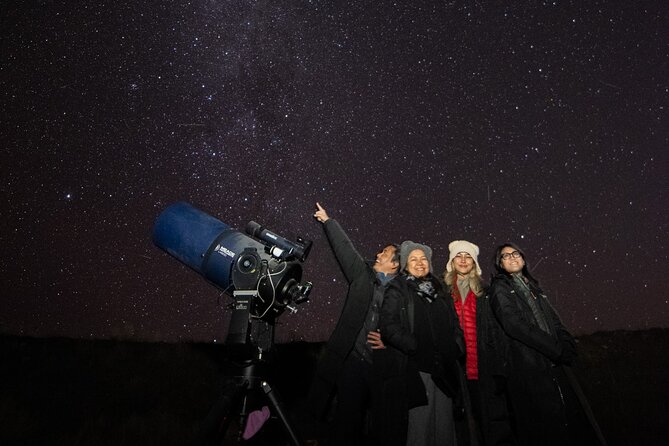
- 75 minutes in a true dark-sky reserve: Lake Tekapo offers far better night-sky conditions than a town or city, making the Milky Way and southern constellations easier to see.
- A 14-inch Meade telescope: You may view stars, planets, and deep-space objects through a large telescope, with guides helping you understand what you are seeing.
- Small groups are the real advantage: The advertised limit is ten people, giving you a better chance to use the telescope without a long wait.
- Warm jackets are provided: Take one even in summer. Several visitors found Tekapo surprisingly cold after dark.
- A complimentary individual group photograph: If the sky and weather cooperate, your photo is uploaded within 48 hours for download.
- Bad weather is a genuine risk: The operator offers a new date or full refund if poor weather cancels the outing. Partial refunds have also been offered when clouds spoil part of the session.
Why Lake Tekapo is such a good place for stargazing
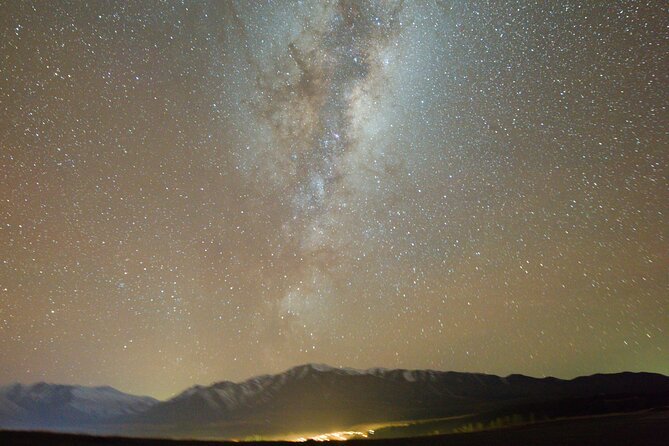
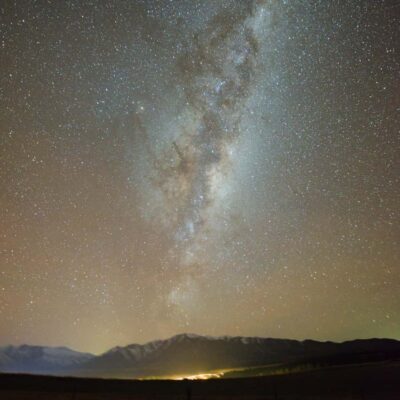
The setting does much of the work here. Lake Tekapo sits inside the Aoraki Mackenzie International Dark Sky Reserve, an area protected for its low light pollution and clear night-sky conditions. That matters because stars that disappear in an urban sky can become easy to spot here.
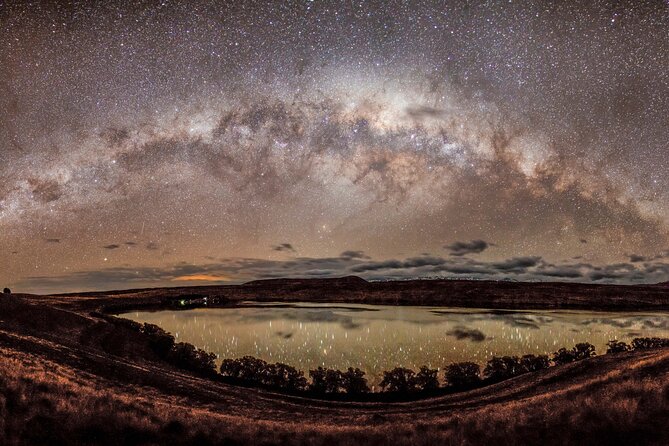
You are not simply looking at a few bright stars above a dark field. On a good night, you might see the Milky Way clearly, trace the Southern Cross, spot the Magellanic Clouds, and pick out planets or brighter star clusters. One particularly fortunate outing also included an active aurora, though you should view that as a bonus rather than part of the promised program.
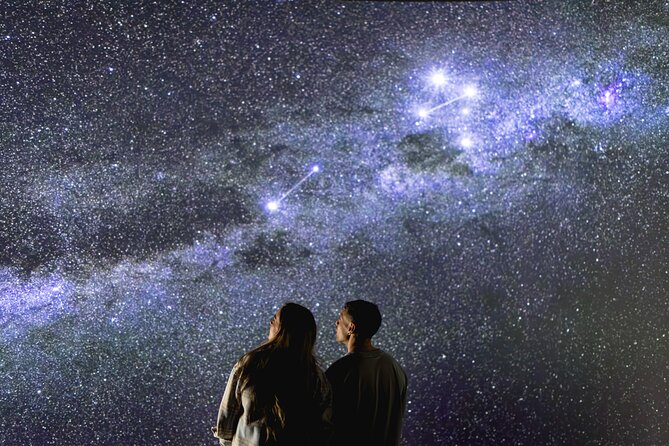
The experience also gives you a useful introduction to the southern hemisphere sky. Constellations that feel familiar in the north may appear in new positions, while objects such as the Southern Cross and Magellanic Clouds offer something many visitors cannot see from home.
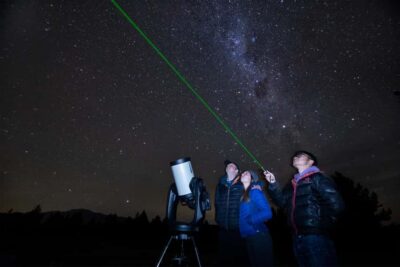
This is a guided experience, not a silent viewing session. The guide uses an astro-laser to point out stars and constellations, then explains what you are looking at and takes questions. That helps if you do not already know the night sky. A phone app can identify stars, but it cannot replace the shared experience of standing beneath a dark sky while someone explains how the objects relate to navigation, distance, and time.
More Lake Tekapo trips:
- Lake Tekapo: Alpine Stargazing Experience with a Guide
★ 4.5 · 626 reviews - Lake Tekapo: Stargazing Experience
★ 4.9 · 607 reviews - From Christchurch: Mount Cook & Lake Tekapo Day Tour & Lunch
★ 4.6 · 405 reviews
From Go Tekapo to the private viewing site
You begin at Go Tekapo, 12 Rapuwai Lane in Lake Tekapo. From there, a complimentary shuttle takes you to a private stargazing location. This is a useful touch because you do not need to arrange your own late-night transport or find a dark roadside pull-off in an unfamiliar area.
The shuttle also keeps the evening tidy. You check in, collect a warm winter jacket, and travel to the viewing site as a group. The tour returns to the same meeting point when the 75-minute session ends.
The practical point is clothing. Take the offered jacket, even if the afternoon felt mild or your visit takes place in summer. Several outings were described as cold, and wind made some nights feel harsher. You will spend time standing still while looking through the telescope, so warmth matters more than it might on an ordinary evening walk.
Comfortable shoes are also sensible, although the supplied information does not describe the exact surface or amount of walking. Service animals are allowed, and most people can participate. The activity is near public transportation, but the included shuttle is the easier option for this particular evening.
What happens during the 75-minute session
The main stop is the Aoraki Mackenzie International Dark Sky Reserve. The session is built around two kinds of viewing.
First comes naked-eye observation. Your guide uses a laser to identify constellations and notable objects in the sky. You may learn to find the Southern Cross, Orion’s Belt, the Magellanic Clouds, planets, and other stars visible on the night of your visit.
This part is important because the telescope should not be the whole event. If you only look through an eyepiece, you see individual objects without gaining much sense of where they sit in the sky. The guide’s explanations help you build a mental map.
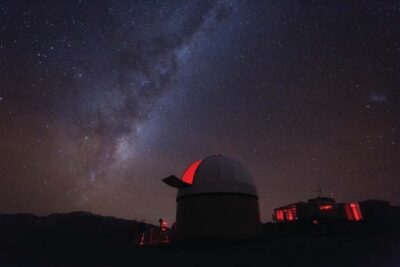
The second part uses the 14-inch Meade telescope. Depending on the season, sky conditions, and what is visible, you might view planets, stars, or distant objects. Jupiter has been seen through the telescope, and guides have shown several southern-sky targets during clear sessions.
A larger telescope does not mean every object will look like a glossy space photograph. The eyepiece shows a small field of view, and some objects may appear faint. One disappointed visitor felt the telescope showed only a small object that was hard to see. That criticism is worth taking seriously: astronomy is real observation, not a cinema screen.
The good news is that several people were able to use the telescope more than once because their groups were small. That is where this tour can offer better value than a crowded astronomy outing. If ten people share the equipment, waiting should be limited. The actual group may vary, and one report described a group of about a dozen, so do not assume every departure will have exactly the same size.
The value of a small group
The advertised guest limit is ten people, with a low guest-to-guide ratio. That is one of the strongest reasons to choose this experience.
At a telescope, group size changes everything. In a large group, you may get only one brief look before the guide moves on. In a smaller group, you have more time to ask why an object matters, request a second look, or check that you are viewing the correct target.
A small group also makes the guide’s presentation easier to follow. You are close enough to hear the explanation and ask questions without turning the evening into a formal lecture. The tone appears relaxed and friendly, with guides working at different levels for first-time stargazers and people who already know a little astronomy.
Guides named in the feedback include Wilson, Tara, Sakura, Jacob, Dan, Simon, Kieran, Sam Blair, Adrien, Kira, and Daniel. Their styles vary, but the strongest pattern is clear: people valued guides who could answer questions, point out objects with the naked eye, and keep the session moving when clouds appeared.
There is one caution. A two-star report described a larger group, limited storytelling, and only a few telescope turns. That may have been an unusually busy departure, but it shows why the group-size promise matters. If the small format is the main reason you book, it is worth confirming the expected group size when possible.
More stargazing nights in Lake Tekapo:
- Chameleon Stargazing Shared Tour
★ 5.0 · 181 reviews - Lake Tekapo: Mountaintop Stargazing at Mount John Summit
★ 4.5 · 176 reviews - Mount John Observatory Stargazing Experience, Tekapo
★ 4.5 · 160 reviews - Stargazing Experience at Cowan’s Private Observatory
★ 4.0 · 85 reviews
Guides make or break the experience
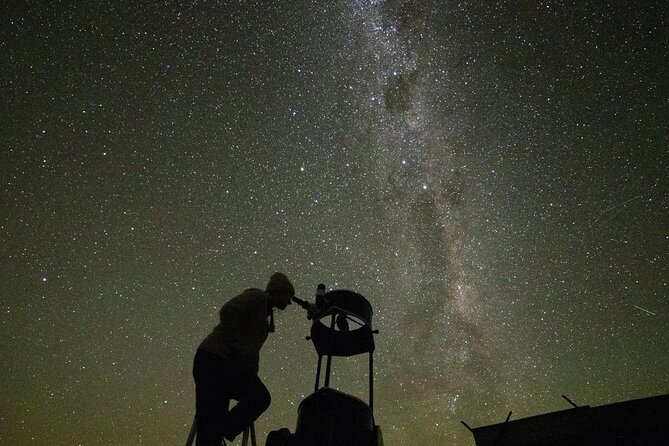
A telescope is only part of an astronomy tour. The guide determines whether you leave with a better understanding of the sky or simply a list of objects you briefly saw.
Daniel was praised for clearly explaining galaxies, stars, planets, their locations, and their links to navigation and distance. Wilson was noted for combining telescope views with plenty of naked-eye viewing. Dan received credit for giving an entertaining presentation and handling questions, while Jacob was praised for being approachable and managing the group well.
That range is encouraging for beginners. You do not need a deep astronomy background to take part. The session is designed to explain the basics of the southern sky without assuming you already know the names of stars or constellations.
Still, guide quality can vary from one departure to another. One person found there was little storytelling and only a few objects were identified. If you want advanced astrophysics, long-form science instruction, or specialist imaging, this short introductory tour may feel too basic.
For most visitors, the basic level is a strength. You get a clear introduction without spending several hours on technical detail. You can ask questions as they come up, and the guide can adjust the presentation to the group.
Weather is the deciding factor
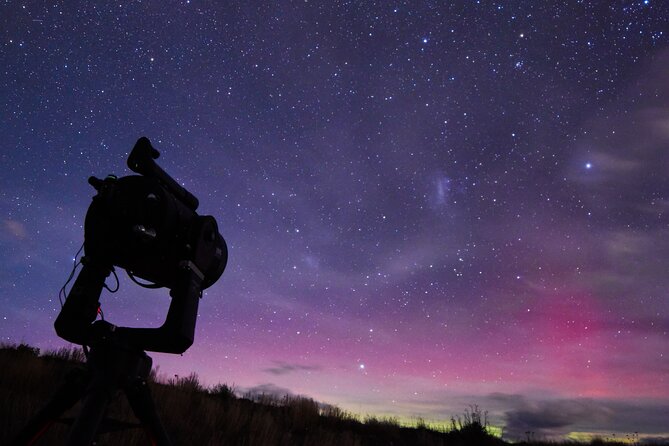
The great strength of a dark-sky tour is also its weakness: the experience depends on the sky.
Clouds can move in during the session. Rain and high winds can make telescope use difficult. A bright moon can also wash out fainter stars, even if the night looks clear. One outing had only about 15 minutes of visible stars before clouds covered the sky, yet the guide continued explaining what was possible and the operator offered a refund.
On another night, wind arrived before the storm, but the guide still managed to take the group photograph. Other sessions were cancelled under complete cloud cover, with a full refund offered. The operator’s stated policy is that poor weather cancellations receive a choice of another date or a full refund.
That policy protects the financial side of your booking, but it cannot replace a missed evening if your schedule is tight. I recommend booking early enough in your Lake Tekapo stay to leave room for a second attempt. Do not place this activity on your final night if seeing the stars is a top priority.
The cancellation rules are straightforward. You can cancel for a full refund up to 24 hours before the start time. Cancellations or changes made within 24 hours are not refunded, unless the operator cancels the activity because of poor weather.
The photograph is a nice extra
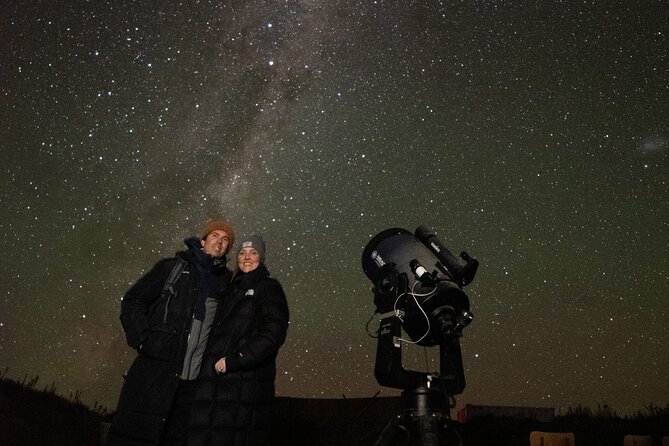
A group photograph under the stars is included at no extra charge, weather permitting. The image is personalized with you and your party, then uploaded to a public Flickr website within 48 hours. You receive a link to download the digital copy and share it online.
This is not the main reason to book, but it adds value. Night photographs can be difficult to take yourself, especially when you are trying to balance a phone, a tripod, warm clothing, and a dark setting. A tour photograph gives you a simple record of the evening.
Weather can interfere with this part too. High winds, clouds, or changing conditions may force the guide to take the picture quickly. One guide managed to photograph a group before a storm arrived, which shows the practical side of the service. The photo is a gift, not a promise of professional night-sky portraiture.
Is $61.44 a fair price?
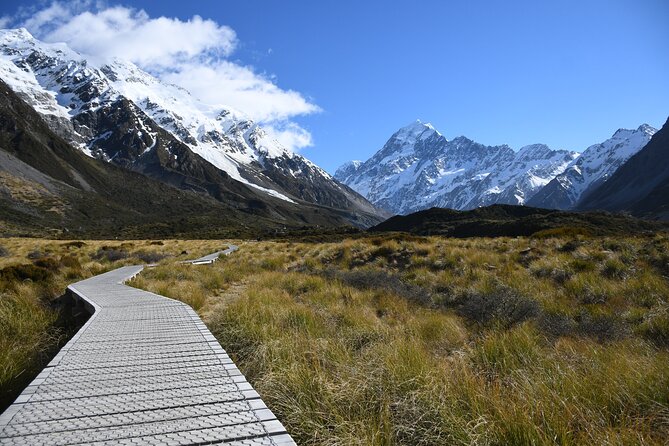
At $61.44 per person, this is reasonably priced for a guided 75-minute session that includes transport from the check-in office, a warm jacket, telescope access, and a digital group photograph.
The value is strongest on a clear night when you see the Milky Way, several constellations, and multiple telescope targets. A small group can also make the price feel fair because you are paying for access to the guide and equipment without committing to a much longer or more expensive astronomy program.
The value drops if clouds cover most of the sky. The operator has offered partial refunds when conditions spoiled part of a session, and full refunds for weather cancellations. That is reassuring, but you should still understand that the fee buys a guided opportunity to observe the sky, not guaranteed views of a particular planet, galaxy, or aurora.
Compared with simply using a sky-identification app, the tour costs more. In return, you get a dark location, a large telescope, live explanations, help finding objects, and the social pleasure of seeing the southern sky with other people. For a first visit to Lake Tekapo, those extras are meaningful.
Who will enjoy this most?
I would recommend Silver River Stargazing to first-time stargazers, couples, families, and anyone visiting Lake Tekapo who wants an easy introduction to the southern hemisphere sky.
It suits families particularly well when an earlier departure is available. One family chose a 10:45 p.m. option because midnight tours were too late for their children. Check the available start time when booking, since the supplied information does not promise a fixed departure hour.
It also suits people who enjoy asking questions. The best sessions seem to be those where the guide explains the sky in a friendly way and responds to the group rather than rushing through a set script.
You may want another option if you require guaranteed clear skies, advanced astronomy instruction, extensive astrophotography, or a very large telescope. You should also think twice if you dislike standing outside in cold, windy conditions or have only one night in the area.
Booking advice for a better night
Book this tour with flexibility. The sky can change after you arrive, so leave time for a second attempt if possible.
When the evening comes, wear warm layers and accept the jacket offered by the company. Keep expectations realistic about the telescope. You may see a striking planet or distant object, but you may also be looking at a faint point of light that becomes meaningful only after the guide explains it.
Pay attention to the naked-eye portion. The Southern Cross, Orion’s Belt, the Magellanic Clouds, and the Milky Way can be just as memorable as the telescope targets. If the moon is bright, ask the guide which objects are still worth seeking.
Finally, ask questions. The experience is at its best when you treat it as a conversation rather than a passive presentation. Guides such as Wilson, Tara, Sakura, Jacob, Dan, Simon, Kieran, and Daniel have been praised for making that exchange useful and enjoyable.
Should you book Silver River Stargazing?
Yes, if you are visiting Lake Tekapo and want a friendly, fairly priced introduction to the southern night sky. The small-group approach, 14-inch telescope, shuttle, warm jackets, and included photograph give it strong value on a clear night.
Book it with a weather backup, and do not expect a guaranteed aurora or perfect telescope image. If clouds cancel the session, the refund policy is helpful. If clouds arrive partway through, the guide may still provide an interesting astronomy lesson and offer a partial refund.
For most first-time visitors, this is a worthwhile evening activity. The real reward is not just one view through the eyepiece. It is learning to recognize the sky above Lake Tekapo, then looking up later and knowing what you are seeing.
FAQ
Where does the Silver River Stargazing Experience begin?
It begins at Go Tekapo, located at 12 Rapuwai Lane, Lake Tekapo 7999, New Zealand.
Where does the tour finish?
The activity ends back at the meeting point at Go Tekapo.
How long does the stargazing experience last?
The session lasts approximately 1 hour and 15 minutes.
How much does the experience cost?
The listed price is $61.44 per person.
Is transportation included?
Yes. A complimentary shuttle takes you from the check-in office to the private stargazing location and back.
Is a telescope used during the tour?
Yes. The experience uses a 14-inch Meade telescope, along with astro-lasers for pointing out stars and constellations.
How many people are in each group?
The advertised intimate tour is capped at ten people. The general activity information also lists a maximum of 30 participants, and group size may vary by departure.
Are warm clothes provided?
Yes. Warm winter jackets are included, and you should use one because the night can be cold, even during summer.
Is a photograph included?
Yes. Weather permitting, you receive a photograph of you and your party under the stars. The digital image is uploaded within 48 hours, with a download link provided through the company’s public Flickr website.
What happens if poor weather cancels the tour?
You are offered a different date or a full refund if the operator cancels because of poor weather. If you cancel yourself, you must do so at least 24 hours before the start time for a full refund.
Just added in Lake Tekapo
- Queenstown to Lake Tekapo via Mt Cook One-Way Small Group Tour★ 4.5 · 13 reviews
- Queenstown to Christchurch One-Way Tour via Mt Cook & Lake Tekapo★ 4.5 · 134 reviews
- Queenstown to Christchurch One Way Tour Via Lake Tekapo & Mt Cook★ 5.0 · 10 reviews
- Private 3 Day Queenstown Glenorchy Wanaka and Tekapo★ 5.0 · 3 reviews
- Mount Cook & Lake Tekapo the Ultimate combo from Queenstown★ 5.0 · 3 reviews
- Mt. Cook Private Day Trip From Queenstown with Lake Tekapo★ 5.0 · 10 reviews
- Lake Tekapo Private Day Trip from Queenstown★ 5.0 · 7 reviews
- Mt Cook to Christchurch One-Way Small Group Tour via Lake Tekapo★ 5.0 · 16 reviews
Lake Tekapo Tours, compared.
Mount Cook, Lake Tekapo and Tasman Glacier Tour from Christchurch
Read our review →
Tekapo Shuttle: Mt Cook Day Tour via Pukaki & Tasman Lake
Read our review →
Mount Cook & Lake Tekapo Day Tour from Christchurch with Lunch
Read our review →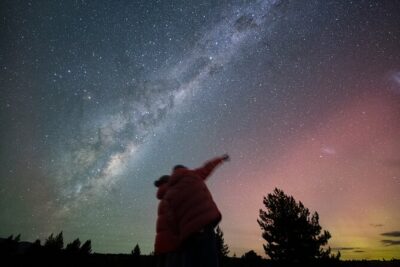
Browse the lists this tour appears in