REVIEW · TICKETS
Hundertwasser Art Centre Admission Ticket
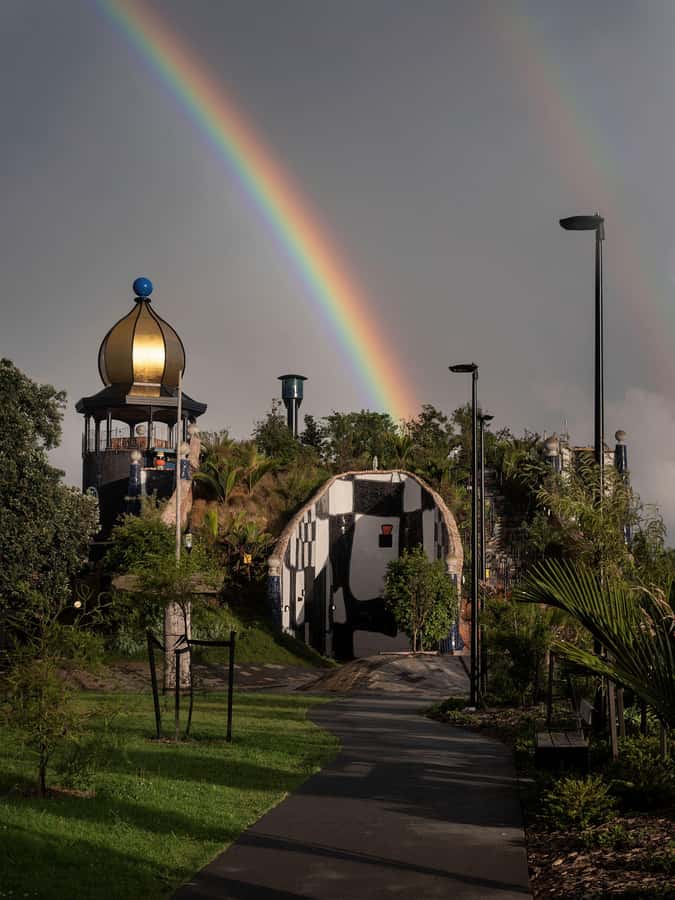
Colour changes the mood fast. The Hundertwasser Art Centre in Whangārei brings art, architecture, and nature together in a way few museums attempt. I like the original Hundertwasser works and the chance to visit Wairau Māori Art Gallery, New Zealand’s first public gallery devoted to contemporary Māori art.
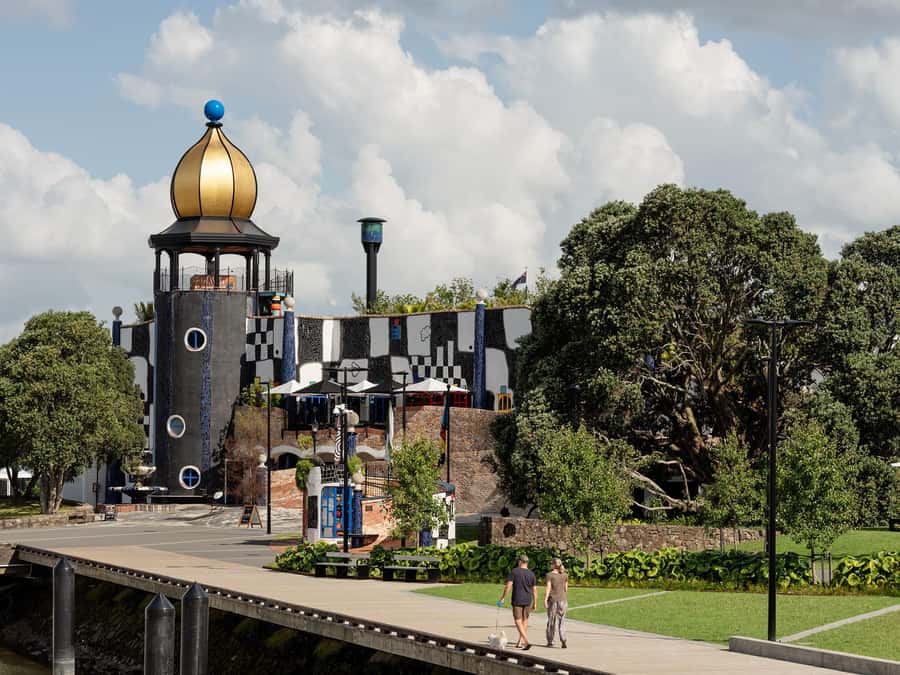
I also like the afforested roof and Golden cupola, which turn a museum visit into a rooftop outing with wide views across Whangārei. The main consideration is that the $17 admission does not include the guided tour, and visitors who want the extra stories must pay another $20.
In This Review
- Key points to know before you go
- Entering Hundertwasser’s colourful world in Whangārei
- Seeing Hundertwasser in New Zealand from 1973 to 2000
- Wairau Māori Art Gallery and a wider cultural conversation
- The afforested roof and Golden cupola views
- Guided tours and audio help for a richer visit
- What the $17 admission includes
- The MuseumShop and the final stop
- Practical advice for planning your visit
- Who will get the most from this visit?
- Should you book the Hundertwasser Art Centre?
- FAQ
- How much does admission to the Hundertwasser Art Centre cost?
- What does the admission ticket include?
- When is the Hundertwasser Art Centre open?
- Is a guided tour included with admission?
- Is the Hundertwasser Art Centre wheelchair accessible?
- Can I cancel my booking or pay later?
Key points to know before you go
- Largest Hundertwasser collection outside Vienna: See paintings, woven works, architectural models, and ecological projects connected to Hundertwasser’s years in New Zealand.
- Two distinct art experiences: The ticket includes both the Hundertwasser exhibition and Wairau Māori Art Gallery, with its changing displays of contemporary Māori art.
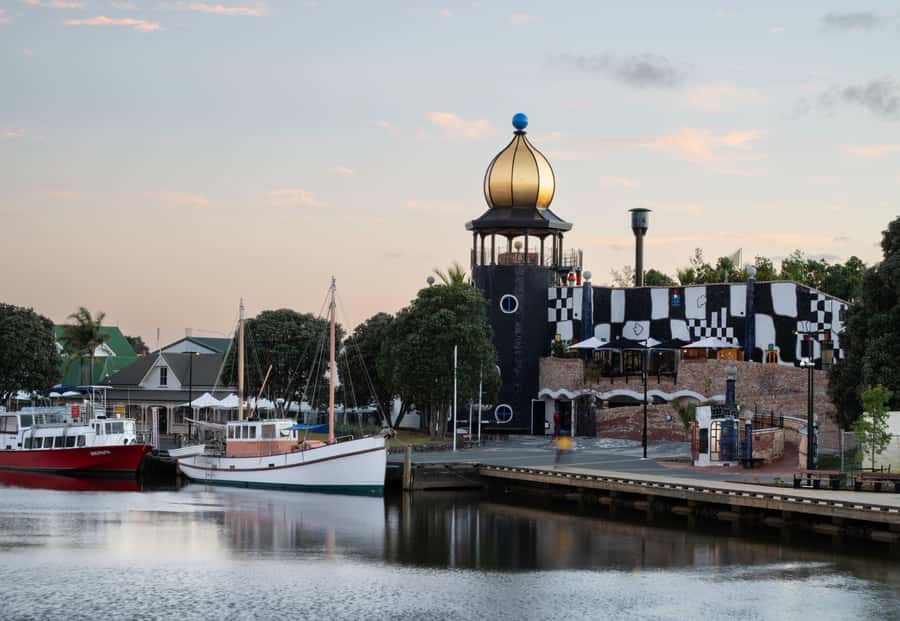
- A rooftop made for looking around: Walk across the planted roof, then climb to the Golden cupola for 360-degree views of Whangārei’s Town Basin and beyond.
- A one-day ticket with time to linger: The centre is open daily from 10am to 4pm, so you can set your own pace rather than rush through.
- Optional guided context: From Thursday to Sunday, an 11am tour adds stories about Hundertwasser’s life, ideas, architecture, and environmental views.
- Wheelchair-friendly access: Lift access reaches all exhibition levels, the roof, and the facilities.
Entering Hundertwasser’s colourful world in Whangārei
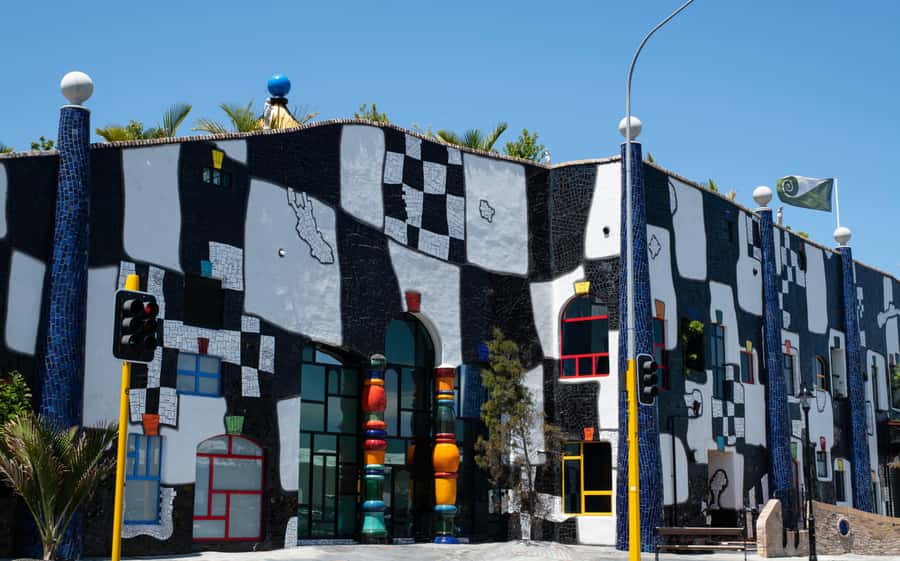
The experience begins before you reach the first gallery. Inside, irregular tiled floors, hand-built mosaics, curved lines, natural materials, and living walls introduce Hundertwasser’s central idea: buildings should work with nature rather than push it aside.
This matters because the building itself is part of the exhibition. You are not simply looking at pictures of an unusual architect’s ideas. You are walking through an example of those ideas, with uneven patterns and organic shapes replacing the tidy sameness found in many modern public buildings.
I would allow a little time at the entrance before moving on. Look down at the floor, check the details in the walls, and notice how colour is used to guide your attention. The design is cheerful and busy, so anyone who prefers quiet, plain museum interiors may find it visually intense.
That strong design is also the centre’s greatest strength. It gives the visit a clear identity from the start. Even if you know little about Hundertwasser, you quickly understand that this is a place about more than framed art.
A few more to weigh up in New Zealand
- Hobbiton Movie Set: Guided Tour Ticket
★ 4.9 · 8,167 reviews - Waiheke Island: Ferry & Hop-On Hop-Off Explorer Bus Tickets
★ 4.6 · 3,311 reviews - Rotorua: Wai-O-Tapu Geothermal Park Entry Ticket
★ 4.6 · 2,601 reviews
Seeing Hundertwasser in New Zealand from 1973 to 2000
The main exhibition, Hundertwasser in New Zealand 1973 to 2000, presents the artist’s connection with the country across several decades. You will find original paintings, woven works, architectural models, and ecological projects.
The range is useful. Paintings show his colour and form, while models explain how his ideas might work in actual buildings. Ecological projects add another layer, showing that his concerns reached beyond decoration and into the way people use land, roofs, trees, and public space.
I find this combination more helpful than an exhibition made up only of finished artworks. Models can make an artist’s architectural thinking easier to understand, especially when the building around you already reflects the same principles.
The collection is described as the largest group of Hundertwasser’s work outside Vienna. That makes the centre particularly worthwhile for anyone already interested in his art. You can see how his work changed across different formats and how his New Zealand connection shaped his creative outlook.
You do not need specialist art knowledge to enjoy this section. Start with the broad visual impression, then read the information that catches your eye. The exhibition is likely to work best when you give it time rather than treating it as a quick stop between other Whangārei sights.
The drawback is simple: the colours, irregular forms, and strong opinions about architecture can compete for your attention. If you want a traditional museum arranged in a calm chronological order, this will feel less straightforward. The unusual setting is part of the point, but it asks you to adjust your expectations.
Wairau Māori Art Gallery and a wider cultural conversation
The admission ticket also includes Wairau Māori Art Gallery. This is Aotearoa’s first public gallery dedicated to contemporary Māori art, and its changing exhibitions give the centre a second artistic voice.
That pairing is important. Hundertwasser’s work is not presented in isolation from New Zealand’s own living culture. Instead, the centre places his ideas beside contemporary Māori artistic practice, creating a cultural conversation that reaches beyond European modern art.
Because Wairau’s exhibitions change, the exact works on display will vary. You should expect thought-provoking contemporary art rather than a fixed collection that looks the same on every visit. The changing program is a reason to return if you are in Whangārei again, though it also means you should not assume a particular exhibition will still be showing.
I would visit both galleries even if one seems closer to your interests. The two sections give the ticket better value and help prevent the experience from becoming only an architecture stop. You get a chance to consider two different approaches to place, identity, creativity, and the relationship between people and the natural world.
The Māori gallery may also slow the pace of your visit. Contemporary art often rewards careful looking rather than quick recognition, and the powerful ideas may take more time than a casual photo stop. Read the available exhibition information and give yourself room to form your own response.
The afforested roof and Golden cupola views
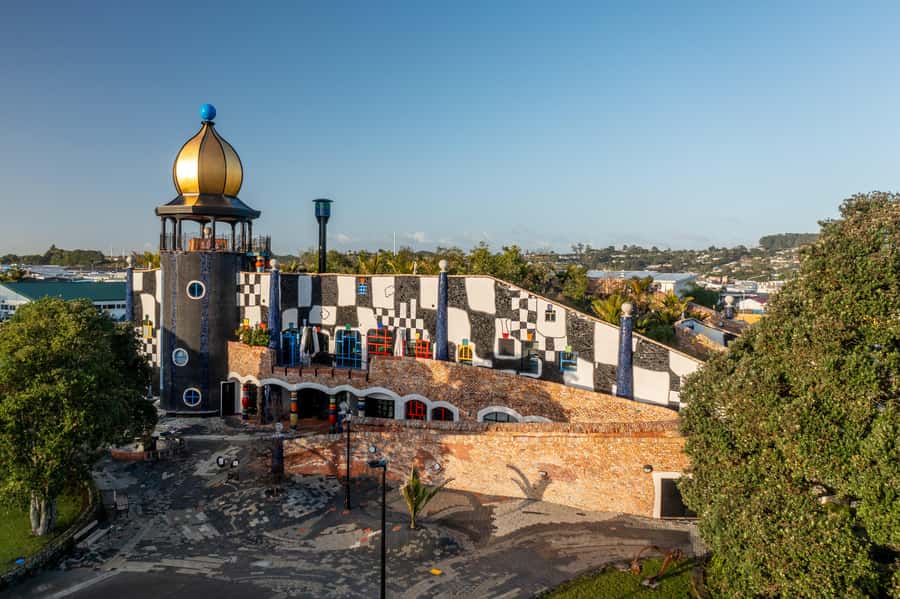
The rooftop is not an afterthought. The afforested roof is a living artwork planted with native species, extending Hundertwasser’s belief that nature should have a real place in architecture.
From the roof, you can look back at the building and see how the planted surface changes your sense of it. The architecture is no longer only walls, floors, and galleries. It becomes a structure with a green upper level that you can walk across.
The Golden cupola provides the visit’s clearest visual reward. Climb up for 360-degree views of Whangārei’s Town Basin and the surrounding area. This is the spot to bring your camera, but do not spend the whole time looking through it. The wide view helps you understand the centre’s position in the town and gives you a break from the close detail of the galleries.
The roof also gives the ticket a useful change of pace. After looking at paintings and models, you can step outside, get fresh air, and see the town from above. That balance makes the centre appealing even to people who are not committed museum visitors.
Wear comfortable shoes, and take note of the request for closed-toe shoes. The visit involves moving through several levels and climbing to the cupola. The centre is wheelchair accessible, with lift access to all exhibition levels, the afforested roof, and facilities, so the rooftop experience is not limited to visitors who can manage stairs.
The views are a bonus rather than a substitute for good weather. Cloud or poor conditions may affect what you can see, but the planted roof and cupola remain worthwhile parts of the building itself.
A completely different sort of day out:
- Waitomo: Glowworm Caves Guided Tour by Boat
★ 4.5 · 4,908 reviews - Rotorua Canopy Tours: 2.5Hour Native Forest Zipline Adventure
★ 5.0 · 4,563 reviews - Hobbiton™ Movie Set Walking Tour from Shires Rest
★ 5.0 · 3,577 reviews - Mitai Maori Village: Cultural Experience and Dinner Buffet
★ 4.7 · 3,575 reviews
Guided tours and audio help for a richer visit
Admission gives you freedom to explore independently. From Thursday to Sunday, an 11am guided tour is available for an additional $20 per person and runs from 11am to noon.
I would consider the tour if you are especially interested in Hundertwasser’s life, architecture, ecological thinking, or New Zealand connection. The building contains plenty to look at, but a guide can help tie the art, roof, materials, and design choices together.
The tour is not essential for a satisfying visit. The admission ticket already includes the two galleries and roof, and you can spend the day reading and looking at your own pace. Still, the extra cost may be worthwhile for visitors who enjoy context more than casual browsing.
An audio guide is also available daily as an optional extra. This may suit you better if you prefer to move independently or if your schedule does not fit the Thursday to Sunday tour. Since the supplied information does not give the audio guide price, check the current cost before adding it.
The 11am start is worth planning around. If you arrive close to opening, you can see some of the centre before the tour, then join the guided hour. If you prefer a quieter, self-directed visit, arriving at another time gives you more control.
What the $17 admission includes
At $17 per person, the ticket offers more than entry to a single gallery. You receive access to:
- Hundertwasser in New Zealand 1973 to 2000
- Wairau Māori Art Gallery and its changing exhibitions
- The afforested roof
- The Golden cupola and its panoramic views
- The building’s architectural details and design
- The MuseumShop for browsing
The value depends on how you use the day. If you rush through the galleries and leave without visiting the roof, the price will feel less attractive. If you take your time with the art, examine the building, visit both gallery areas, and enjoy the cupola, the admission covers a full half-day or longer at a reasonable cost.
The ticket is valid for one day, and the centre is open seven days a week from 10am to 4pm. That flexibility helps if you are fitting the visit around other plans in Whangārei. You can also choose between a weekday and weekend visit without losing access to the main experience.
The guided tour changes the calculation. At $20 extra, it costs more than the basic admission, so I would book it only if personal explanation is a major part of what you want. The standard ticket remains the better value for visitors who mainly want the art, architecture, Māori gallery, roof, and views.
The MuseumShop and the final stop
The MuseumShop is included as an area you can browse after the exhibitions. It offers art prints, books, design pieces, handcrafted items, and gifts inspired by Hundertwasser’s work.
You do not need to buy anything, but the shop can help extend the visit beyond the building. Books may be useful if you want to understand more about the artist, while prints and design items offer a way to take home the centre’s bold visual style without buying original art.
I like that the shop is part of the visit rather than a separate paid attraction. Still, budget-conscious visitors should treat it as optional. The admission already gives you the complete core experience, and there is no need to add a purchase to justify the ticket.
Practical advice for planning your visit
Set aside enough time to see both galleries and the roof. The ticket is valid for one day, but opening hours are limited to 10am to 4pm, so do not arrive at the last minute if you want to read exhibition information and climb to the cupola.
Comfortable closed-toe shoes are the sensible choice. You will move through exhibition levels and may want to spend time on the roof, where practical footwear is more useful than dress shoes.
Bring a camera if you enjoy architectural photography. The irregular floors, mosaics, curved forms, living walls, Golden cupola, and rooftop views give you plenty to photograph, though you should follow any signs about photography inside the galleries.
The meeting point is the Hundertwasser Art Centre with Wairau Māori Art Gallery in Whangārei. The experience is wheelchair friendly, with lift access throughout the exhibition levels, roof, and facilities. Babies under one year are not considered suitable for this activity.
The booking terms are useful for uncertain plans. You can cancel up to 24 hours ahead for a full refund, and the reserve now, pay later option lets you hold a place without paying immediately. Check the available starting times when booking, especially if you want the 11am guided tour.
Who will get the most from this visit?
I would recommend the centre to art lovers, architecture fans, visitors interested in contemporary Māori art, and anyone who wants an indoor Whangārei activity with a rooftop viewpoint. It also suits families with older children who enjoy colour, unusual buildings, and places where looking is more interesting than simply reading labels.
The centre is a good choice for a short cultural visit because it offers several kinds of experience in one place. You can look at original art, consider ecological ideas, visit a Māori gallery, walk on a planted roof, and see Whangārei from above.
It may be less suitable if you want a quiet, traditional museum or if you have only a few minutes. The building’s style is intentionally irregular, and some visitors may find the visual overload tiring. You should also remember that the guided tour costs extra.
Should you book the Hundertwasser Art Centre?
Book it if you want a distinctive Whangārei experience rather than a standard art gallery. The $17 ticket covers the main exhibition, Wairau Māori Art Gallery, afforested roof, Golden cupola, and the building’s unusual design, giving you solid value when you allow time to explore properly.
Add the guided tour if you want more explanation about Hundertwasser’s life and ideas. Skip the extra cost if you are happy to set your own pace. For most visitors, the basic admission is enough, and the rooftop views make the centre more than a rainy-day museum stop.
FAQ
How much does admission to the Hundertwasser Art Centre cost?
Standard admission costs $17 per person.
What does the admission ticket include?
The ticket includes the Hundertwasser in New Zealand 1973 to 2000 exhibition, Wairau Māori Art Gallery, the afforested roof, the Golden cupola, and access to browse the MuseumShop.
When is the Hundertwasser Art Centre open?
The centre is open seven days a week from 10am to 4pm.
Is a guided tour included with admission?
No. Guided tours are an optional extra costing $20 per person. They are available Thursday to Sunday from 11am to noon.
Is the Hundertwasser Art Centre wheelchair accessible?
Yes. The centre has lift access to all exhibition levels, the afforested roof, and the facilities.
Can I cancel my booking or pay later?
You can cancel up to 24 hours in advance for a full refund. The reserve now, pay later option allows you to book without paying immediately.
Just added in New Zealand
- Creative Wheel Throwing Pottery Class in Coromandel★ 4.0 · 2 reviews
- Coromandel Adventure and Wildlife Boat Tour to Aldermen Islands★ 5.0 · 9 reviews
- Wine trail and Christchurch City – Luxury, Small Group Tour★ 5.0 · 15 reviews
- 5 Day South Island New Zealand Private Tour from Dunedin★ 5.0 · 2 reviews
- Waipara Wine Trail Tour From Christchurch★ 5.0 · 1 review
- Willowbank Wildlife Reserve Day Entry★ 4.5 · 94 reviews
- Waipara Wine Trail Private Group Tour From Christchurch★ 5.0 · 1 review
- Waimakariri River Jet Boating from Christchurch★ 4.0 · 9 reviews
Tickets, compared.
Waiheke Island: Ferry & Hop-On Hop-Off Explorer Bus Tickets
Read our review →