
REVIEW · ROTORUA TOURS
Mt. Tarawera Volcano Scenic Floatplane Tour from Rotorua
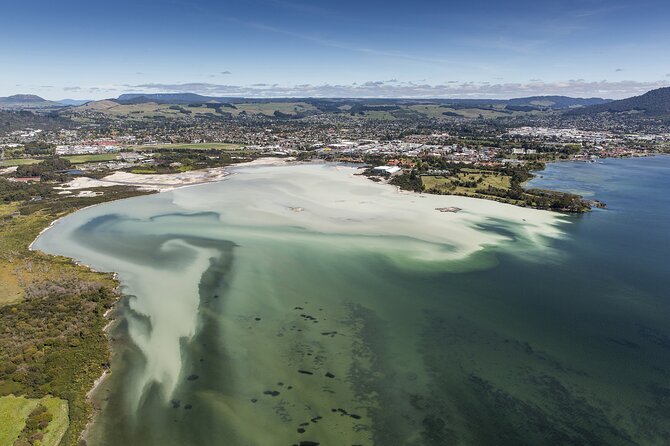
See Rotorua from the water and sky. This short floatplane flight packs Mt. Tarawera, crater lakes, geothermal valleys, and a water landing into about 30 minutes, giving you a broad view that is hard to match from the ground.
I like the water takeoff and landing on Lake Rotorua, which turns a sightseeing flight into a proper little adventure. I also like the pilot commentary and the close views of the volcanic rift at Mt. Tarawera. The main drawback is the weather: rain or poor visibility can postpone the flight or make the scenery much less impressive.
I would choose this for a first visit to Rotorua, especially if your schedule is tight. The small aircraft carries no more than 10 people, so you get a more personal ride than on a large sightseeing operation. Just remember that this is a scenic overview, not a long visit to the volcano itself.
In This Review
- Key points to know before booking
- Why seeing Mt. Tarawera from above matters
- Starting at Rotorua’s lakefront
- Mokoia Island and the crater lakes
- Following the 8-kilometer rift at Mt. Tarawera
- Steaming Cliffs and Waimangu Volcanic Valley
- Blue and Green Lakes on the return route
- Whakarewarewa, Sulphur Bay, and the water landing
- The pilot commentary makes the short flight better
- Is the $242.02 price good value?
- Who should book this Rotorua flight?
- Cancellation and practical planning
- Should you book the Mt. Tarawera floatplane tour?
- FAQ
- Where does the Mt. Tarawera floatplane tour start?
- Where does the tour end?
- How long is the floatplane flight?
- What sights does the flight pass over?
- How many people can join the flight?
- What happens if bad weather cancels the flight?
Key points to know before booking
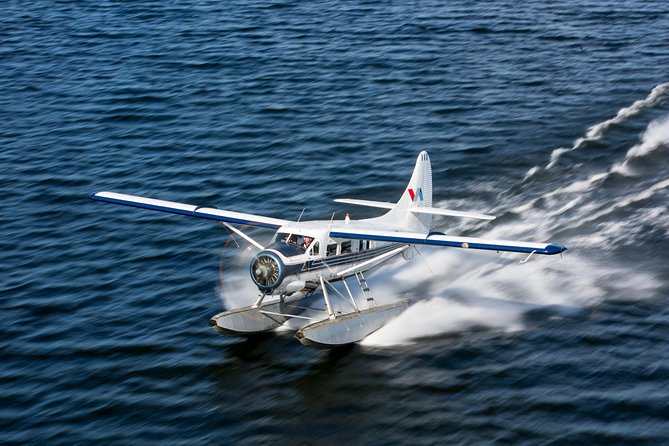
- The flight begins and ends on Lake Rotorua: You get the unusual thrill of a seaplane water launch and splashdown at the city lakefront.
- Mt. Tarawera is the main event: The route follows the volcano’s roughly 5-mile, or 8-kilometer, rift and its jagged crater country.
- You see several major sights in one flight: The route includes Mokoia Island, crater lakes, Waimangu Volcanic Valley, Blue and Green Lakes, Whakarewarewa, and Sulphur Bay.
- Your pilot is also your guide: Commentary explains what you are seeing instead of leaving you to guess at the brown, steaming, and brilliantly colored ground below.
- The aircraft holds a maximum of 10 people: That keeps the experience small, though every passenger must fit within the 297-pound, or 135-kilogram, per-seat limit.
- Weather matters greatly: Clear conditions make a major difference, and the operator may offer another date or a full refund if poor weather cancels the flight.
Why seeing Mt. Tarawera from above matters
Rotorua is easy to enjoy from ground level. You can walk through thermal areas, visit lakes, and drive toward the volcanic sites. But the region makes more sense from the air, where the shapes of the craters, lakes, and rifts line up into one enormous volcanic story.
Mt. Tarawera is not simply a mountain with a nice view. Its long split summit and broken sides were formed by the 1886 eruption, and the flight lets you look along that scar from above. The route gives you the scale of the eruption in a way that a viewpoint on the ground cannot.
I especially like the contrast between the dark volcanic rock, bright crater lakes, and pale steam rising from geothermal areas. From a road or walking track, you see one section at a time. From the floatplane, you move quickly across the whole Rotorua volcanic zone.
The flight is also useful for visitors who want a big-picture introduction before choosing more ground tours. After seeing Waimangu or the lakes from above, you may have a better sense of which places deserve a closer visit.
A few more to weigh up in Rotorua
- Rotorua Canopy Tours: 2.5Hour Native Forest Zipline Adventure
★ 5.0 · 4,563 reviews - Mitai Maori Village: Cultural Experience and Dinner Buffet
★ 4.7 · 3,575 reviews - Rotorua: Wai-O-Tapu Geothermal Park Entry Ticket
★ 4.6 · 2,601 reviews
Starting at Rotorua’s lakefront
You meet beside Lake Rotorua on Lakefront Drive in Ohinemutu, Rotorua 3010. The activity ends at the same meeting point, which keeps the logistics simple and makes it easy to fit into a day of sightseeing around the city.
There is no hotel pickup or drop-off, and food and drinks are not included. That is not a major problem for a 30-minute flight, but you should plan your own transport to the lakefront and avoid treating this as a full half-day outing.
The first part of the experience is the aircraft itself. A floatplane does not simply roll down a runway and climb away. It moves across the lake before lifting from the water, giving you a few extra moments to feel the change from ordinary sightseeing to flight.
Lake Rotorua adds its own scenery before you even leave the water. One passenger specifically enjoyed seeing black swans on the lake, and they can make a memorable foreground as the plane begins its run. The water launch is likely to be the part children and first-time flyers talk about most afterward.
Mokoia Island and the crater lakes
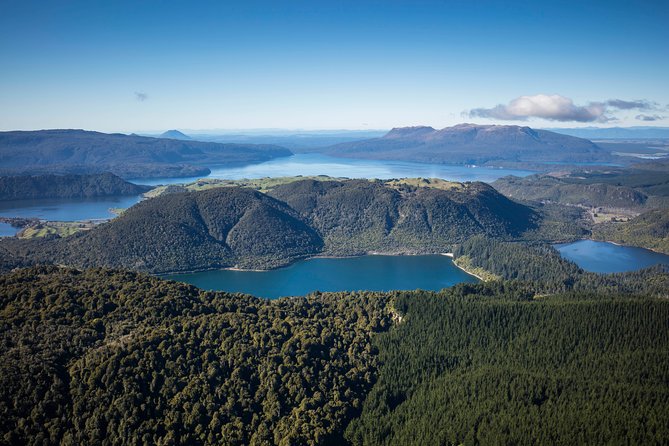
After takeoff, the route heads over Mokoia Island and the crater lakes. This opening section gives you a quick orientation to Rotorua’s water and volcanic country before the flight turns toward Mt. Tarawera.
Mokoia Island sits in Lake Rotorua and is one of the area’s most recognizable natural features. From the air, its position in the lake helps you understand how the city, shore, and surrounding volcanic formations fit together.
The crater lakes offer a different view. From above, their shapes and colors become the focus, rather than just the water itself. The pilot’s narration is helpful here because aerial views can be surprisingly hard to interpret. A blue patch, a green patch, or a dark ridge may look abstract until someone explains the volcanic setting.
The aircraft windows and flight direction will affect photography. You should be ready to take pictures quickly, since the plane will not hover over a single point. Keep your camera available, but listen to the commentary too. The pilot may point out a feature that disappears behind the wing a moment later.
Following the 8-kilometer rift at Mt. Tarawera
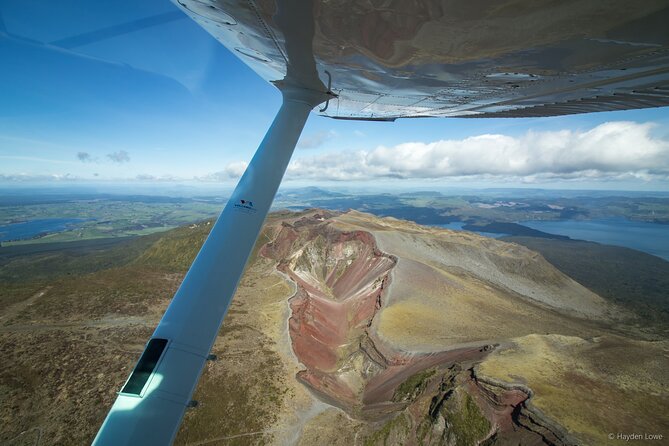
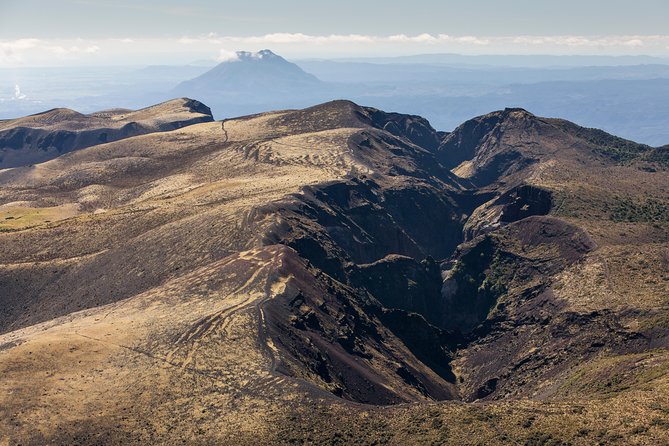
The flight’s strongest section comes when you reach Mt. Tarawera. The route follows the volcanic rift along the summit, where the 1886 eruption tore open a jagged, lunar-looking zone of rock and crater lakes.
This is the kind of sight that benefits from height. On the ground, you can study a volcanic wall or crater edge. From the floatplane, you see how the rift runs across the mountain and how much material was broken apart. The view is dramatic without needing theatrical commentary.
Mt. Tarawera also carries strong Māori cultural meaning and legend. The pilot serves as your aerial guide, so the flight is not only about taking pictures. The narration adds context to the mountain and helps connect the natural features with Rotorua’s wider story.
You should keep your expectations realistic. This is a short flight over the volcano, not a landing at Mt. Tarawera or a guided walk across its summit. If you want to stand on the crater itself, you need a separate land-based activity. If you want a broad, fast view of the whole volcanic rift, the floatplane is the more efficient choice.
A completely different sort of day out:
- Rotorua’s Ultimate Zipline: 6 ziplines, 400 m Tandem, Cliff Walk
★ 5.0 · 2,557 reviews - Rotorua Rafting: Kaituna River White Water Rafting & Free Sauna
★ 5.0 · 1,952 reviews - Cultural Experience & Seasonal Māori Cuisine at Te Pā Tū
★ 5.0 · 1,546 reviews - Mitai Maori Village Cultural Experience in Rotorua
★ 4.5 · 1,294 reviews
Steaming Cliffs and Waimangu Volcanic Valley
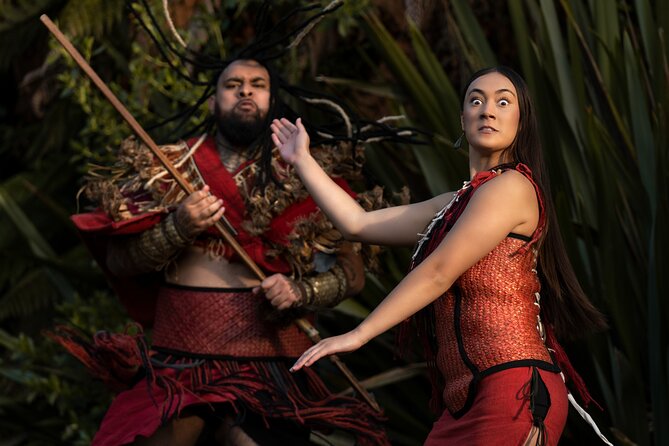
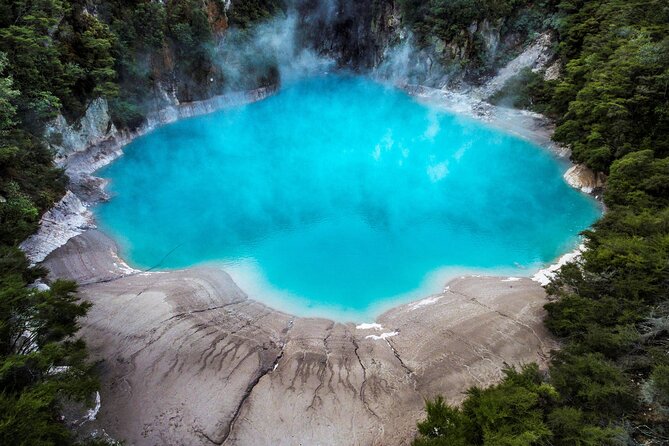
From Mt. Tarawera, the aircraft continues toward the Steaming Cliffs and Waimangu Volcanic Valley. This section shows the region’s geothermal activity in a different form, with steam, hot lakes, and altered ground replacing the sharp volcanic ridge.
Waimangu is important because it adds movement and heat to the view. You are not only looking at old rock. You may see areas where steam rises from the earth and where hot water has shaped the valley. The plane gives you a quick sense of how the geothermal zone extends across the countryside.
One passenger wished the flight would spend more time over the thermal fields. That is a useful warning. The itinerary does include Waimangu and the geothermal areas near Rotorua, but the flight is only about 30 minutes, so each section passes quickly. If your main goal is an extended look at bubbling pools and geysers, a ground tour will give you more time and detail.
Still, the aerial view has its own value. You see the relationship between the hot lakes and the wider volcanic region, something that can be difficult to grasp while walking among individual pools.
Blue and Green Lakes on the return route
The return leg passes over the Blue and Green Lakes. Their names are plain but effective: from above, the color contrast is one of the easiest sights to appreciate immediately.
The two lakes sit close together, yet their appearance differs noticeably. From the aircraft, you get the cleanest view of their separate colors and surrounding bush. This is a good example of why the flight is more than a simple ride over one volcano. The route gathers several of Rotorua’s signature sights into one compact loop.
I would think of this section as a visual pause after the rough, broken forms of Mt. Tarawera and the steaming country around Waimangu. The lakes are calmer and more orderly, which gives the flight a nice change of pace.
Again, weather can make or break the view. A clear day brings out the difference between the lakes. Low cloud, rain, or hazy conditions can flatten those colors and make the flight feel less rewarding. The operator requires good weather, and that rule is practical rather than fussy.
Whakarewarewa, Sulphur Bay, and the water landing
Before returning to Lake Rotorua, the plane passes over Whakarewarewa Thermal Reserve and Sulphur Bay. The route brings you back toward the city through steaming geothermal country, with geysers and sulfurous features visible from above.
Whakarewarewa is one of Rotorua’s best-known geothermal areas, and the aerial angle lets you see the thermal activity in relation to the city. You get a quick impression of how close the steaming ground is to everyday Rotorua.
The final water landing is a fitting ending. The plane drops back toward Lake Rotorua, skims onto the surface, and returns to the lakefront meeting point. A water landing is not just a transport detail. It is the memorable trick that separates this experience from a standard airplane sightseeing flight.
The flight ends where it began, but do not expect a long wrap-up or a meal afterward. The activity is designed as a compact scenic experience, so you can continue with a museum visit, geothermal attraction, or meal in Rotorua.
The pilot commentary makes the short flight better
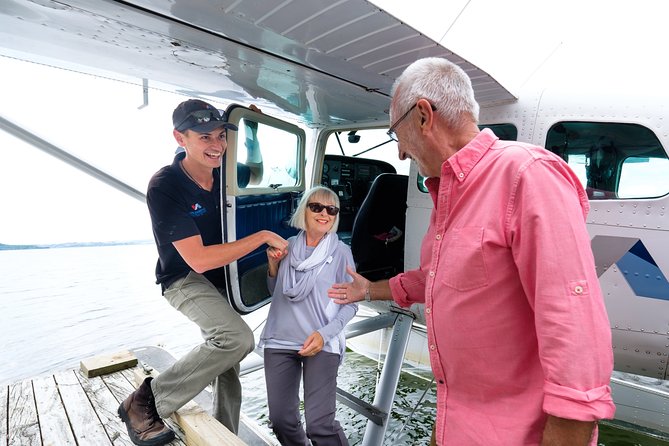
The pilot has two jobs here: flying safely and explaining the sights. That combination matters because the route moves fast. Without commentary, you might see a crater, lake, or steaming valley without knowing its name or importance.
The feedback points to warm, professional pilots and clear narration. Katie received particular praise for both her commentary and the care she showed toward a passenger with a back injury. That does not promise a specific pilot on your departure, but it gives you a useful picture of the service standard to expect.
The aircraft carries no more than 10 people, which supports the small-group feel. You are not part of a large crowd waiting for a turn to see the view. On a small plane, the pilot’s explanations also feel more connected to the people onboard.
A practical limit applies: each seat has a maximum passenger weight of 297 pounds, or 135 kilograms, for comfort and aircraft balance. Most people can take part, and the departure point is near public transportation, but you should account for this seat limit when booking.
Is the $242.02 price good value?
At $242.02 per person, this is not a cheap way to get from one side of Rotorua to another. You are paying for a scenic flight, a seaplane launch and landing, a pilot-guide, and access to views that are difficult to reproduce from roads or walking tracks.
The value is strongest if you have limited time. In half an hour, you cover Mt. Tarawera, the crater lakes, Waimangu, the Blue and Green Lakes, Whakarewarewa, and Sulphur Bay. Visiting all those places separately would take much longer and require additional admission fees or transport.
The value is weaker if you dislike aircraft, want a slow visit, or care mainly about geothermal details at ground level. A land tour gives you more time beside the pools and geysers. A boat trip gives you more time on the lake. This flight gives you range and perspective.
The small maximum group size also helps justify the price. You are buying a focused experience rather than a large sightseeing operation. The 4.8 rating from 42 ratings and 95 percent recommendation figure suggest strong satisfaction, though the weather-related disappointment is worth keeping in mind.
Who should book this Rotorua flight?
I would recommend it to photographers, first-time visitors, couples, families, and anyone who wants to see the region quickly. It is especially useful when your itinerary is full but you still want Mt. Tarawera and the geothermal country in one outing.
It also suits people who enjoy unusual transport. The floatplane is not merely a platform for viewing scenery. The water takeoff and landing add a sense of occasion, and the lake itself becomes part of the trip.
You may want to skip it if you need guaranteed departure conditions or a long, quiet look at one attraction. Weather can force a postponement, and one flight was moved by 24 hours because of rain. Even after rescheduling, poor conditions can reduce the quality of the view.
The operator offers morning and afternoon departures, so you can choose the slot that works best with your Rotorua plans. Because the tour is often booked about 37 days ahead, I would reserve early if your schedule is fixed, while leaving room for a weather change if possible.
Cancellation and practical planning
You can cancel for a full refund up to 24 hours before the scheduled start time. Changes or cancellations made less than 24 hours before departure are not accepted for a refund.
If poor weather cancels the experience, you are offered another date or a full refund. Since the tour depends on visibility as much as flying conditions, I would avoid placing it on the final hour of your Rotorua visit.
Confirmation arrives within 48 hours of booking, subject to availability. Minimum numbers apply, so the operator may cancel after confirmation if too few people are booked. In that case, you are offered an alternative or a full refund.
Should you book the Mt. Tarawera floatplane tour?
Book it if you want a fast, memorable view of Rotorua’s volcanic country and like the idea of taking off and landing on water. The route is well chosen, the pilot commentary adds real value, and the small aircraft keeps the experience personal.
Do not book it as a replacement for every ground attraction. The flight moves quickly, and the thermal areas deserve a closer visit if you want to study pools, geysers, and steam. But as a compact overview with a genuinely unusual start and finish, this is one of the more efficient ways to see Rotorua from above.
FAQ
Where does the Mt. Tarawera floatplane tour start?
The tour starts at Lakefront Drive, Ohinemutu, Rotorua 3010, New Zealand, beside Lake Rotorua.
Where does the tour end?
The flight ends back at the same meeting point on the Rotorua lakefront.
How long is the floatplane flight?
The scenic flight lasts approximately 30 minutes.
What sights does the flight pass over?
The route includes Mokoia Island, crater lakes, Mt. Tarawera, the Steaming Cliffs, Waimangu Volcanic Valley, the Blue and Green Lakes, Whakarewarewa Thermal Reserve, and Sulphur Bay.
How many people can join the flight?
The activity has a maximum of 10 people.
What happens if bad weather cancels the flight?
You can choose a different date or receive a full refund if the operator cancels because of poor weather.
Just added in Rotorua
- From Rotorua: Whirinaki Rainforest Guided Cultural Tour★ 5.0 · 6 reviews
- Whakarewarewa: Self-Guided Geothermal Trails★ 4.5 · 41 reviews
- Rotorua: Waimangu Volcanic Valley Entry Ticket★ 4.8 · 129 reviews
- Rotorua Sledging White Water Sledging | Kaitiaki Adventures★ 5.0 · 90 reviews
- Wonderworld Rotorua – New Zealand’s leading maze park★ 5.0 · 11 reviews
- White Island & Mount Tarawera Floatplane Adventure★ 5.0 · 8 reviews
- Whirinaki Forest Footsteps: Māori Guided Tour, Picnic & Transfer★ 5.0 · 5 reviews
- Rotorua to Auckland Afternoon Transfer with Waitomo Glow Worms★ 4.5 · 22 reviews
Rotorua Tours, compared.
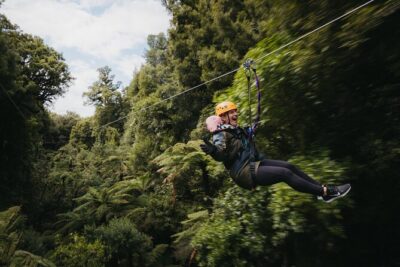
Rotorua Canopy Tours: 2.5Hour Native Forest Zipline Adventure
Read our review →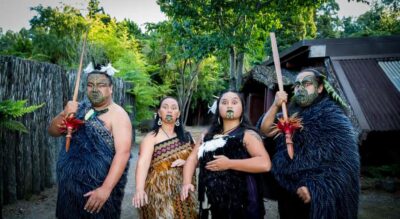
Mitai Maori Village: Cultural Experience and Dinner Buffet
Read our review →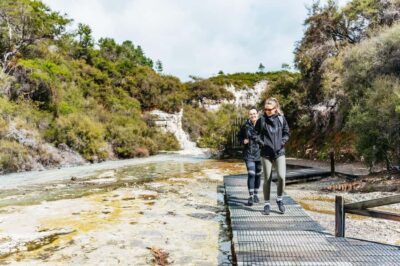
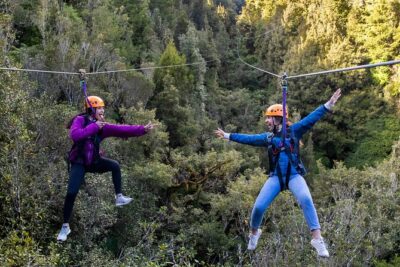
Rotorua’s Ultimate Zipline: 6 ziplines, 400 m Tandem, Cliff Walk
Read our review →
Rotorua Rafting: Kaituna River White Water Rafting & Free Sauna
Read our review →
Cultural Experience & Seasonal Māori Cuisine at Te Pā Tū
Read our review →
Mitai Maori Village Cultural Experience in Rotorua
Read our review →
Rafting Rotorua: Kaituna River White Water Experience
Read our review →Browse the lists this tour appears in