
REVIEW · WALKING TOURS
Rotorua: Hell’s Gate Geothermal Walk
Rotorua’s earth is never quite still. Hell’s Gate gives you a close look at bubbling mud, steaming fumaroles, boiling pools, sulfur deposits, and New Zealand’s largest active mud volcano. I like the striking mix of geothermal activity and native bush, and I also like that you can choose a self-guided walk or join a local guide. The main drawback is the strong sulfur smell, which can be hard to ignore.
I also appreciate the practical one-hour route. You can see a lot without giving up half a day, and the map makes the walk easy to follow. Just note that the advertised details are a little confusing: the walk takes about one hour, while the guided option is listed as 1.5 hours, and entry-ticket details should be confirmed before booking.
In This Review
- Key points to know before you go
- Reaching Hell’s Gate from Rotorua
- First impressions: a geothermal field with a wild edge
- Following the self-guided route
- What makes the hot waterfalls special
- A guide adds the missing story
- Geology, vegetation, and Māori connections
- Māori carving and the mud foot pool
- Is the $26 price good value?
- How Hell’s Gate compares with a quick geothermal stop
- Who should book this walk?
- Practical verdict: book it or skip it?
- FAQ
- How long does the Hell’s Gate geothermal walk take?
- How far is Hell’s Gate from Rotorua?
- Are guided tours available?
- Can I explore Hell’s Gate without a guide?
- What can I see at Hell’s Gate?
- Is the Māori carving activity included?
- Is the mud foot pool included?
- What should I bring?
Key points to know before you go
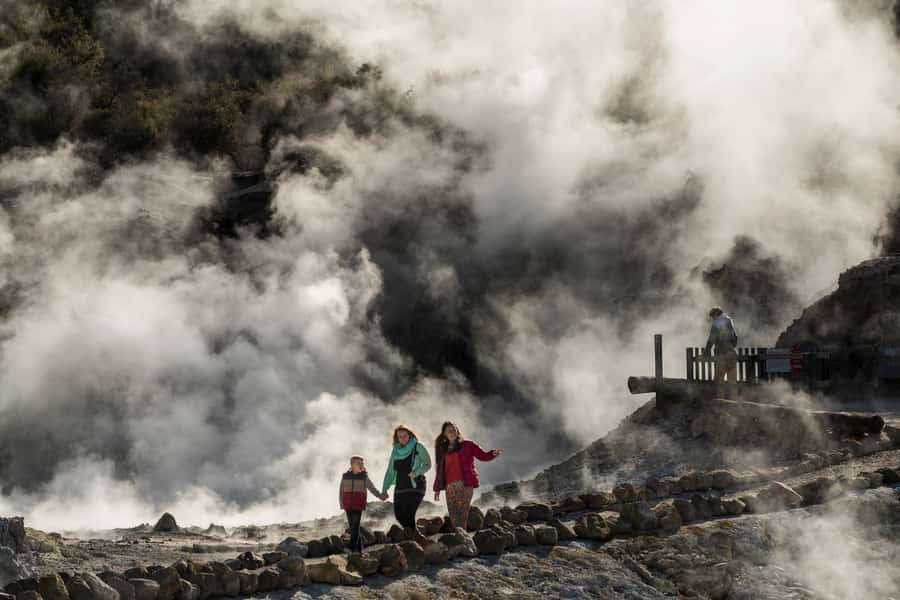
- The 2-kilometre walk crosses an active geothermal field, with boiling pools, hot water lakes, fumaroles, mud, and sulfur deposits.
- Hell’s Gate has New Zealand’s largest active mud volcano, plus the Southern Hemisphere’s largest hot waterfalls.
- The self-guided route works well for independent visitors, thanks to the supplied map and written explanations.
- Guided walks run at 10:30 AM and 2:30 PM, subject to availability. Guides such as Liam, Luke, and T have been praised for their humor and clear explanations.
- Māori carving and the mud foot pool may be available, but neither should be treated as guaranteed.
- Rain can improve the experience, as moisture adds steam and atmosphere to the geothermal features.
Reaching Hell’s Gate from Rotorua
Hell’s Gate is about a 15-minute drive from central Rotorua, making it an easy addition to a day around the city. From Rotorua, follow State Highway 30 east. About five minutes beyond the airport, turn toward Whakatane, then continue roughly 3 kilometres to the reserve.
That short drive matters. You do not need to plan a full-day outing around this walk, and it can fit neatly into a morning or afternoon schedule. If you are staying in Rotorua, allow time to arrive, check in, and choose between the independent route and the next available guided walk.
The experience is not designed for people with mobility impairments. You should bring comfortable shoes, water, sunscreen, sunglasses, and clothing suited to the weather. This is an all-weather activity, and rain is not necessarily a problem. In fact, the geothermal area can look more dramatic when wet, with extra steam rising from the pools and vents.
Smoking and drones are not allowed. Keep jewelry in mind, too. Sulfur residue can tarnish gold and silver items, so I would remove valuable jewelry before entering the geothermal area.
More Walking Tours in Rotorua
- Rotorua’s Ultimate Zipline: 6 ziplines, 400 m Tandem, Cliff Walk
★ 5.0 · 2,557 reviews - Rotorua: Hell’s Gate Outdoor Mud Spa & Guided Walk
★ 4.7 · 1,140 reviews - Volcanic Valley Self Guided Walking and Hiking at Waimangu
★ 4.5 · 248 reviews
First impressions: a geothermal field with a wild edge
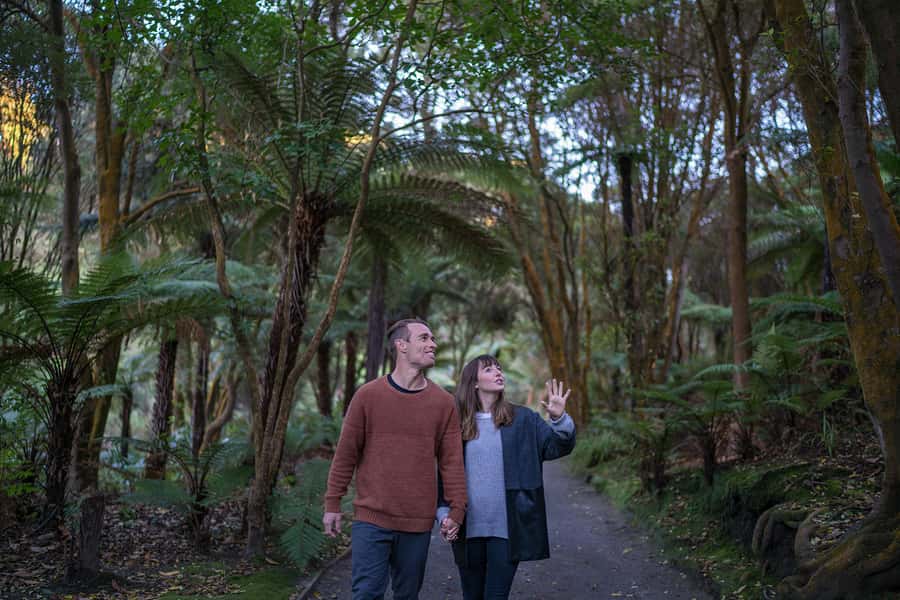
Hell’s Gate feels different from a simple collection of hot pools. The route passes through an active geothermic field where the ground gives off steam, mud bubbles, and hot water. Alongside the bare mineral surfaces, you see bush and vegetation, creating a sharp contrast between living plants and volcanic heat.
That contrast is one of the best reasons to visit. One section can feel harsh and almost otherworldly, while another has thick greenery and a bush-walk character. The scenery changes often enough to keep the short route interesting.
The sulfur smell arrives early. It has the familiar rotten-egg odor associated with sulfur, and it can be pungent. Most people can tolerate it, but very young children may find it unpleasant. If you are sensitive to strong smells, this is worth considering before you pay for admission.
The heat is not just visual. Some pools and erupting waters exceed 100 degrees Celsius. Stay on the marked route and respect the barriers. One visitor felt the fencing could be higher around the boiling mud, and that is a fair reminder that this is an active volcanic area, not a decorative garden.
Following the self-guided route
The self-guided walk is the most flexible way to see Hell’s Gate. You receive a map with descriptions of the geothermal features, then move at your own pace through the reserve. The route takes about one hour and covers roughly 2 kilometres.
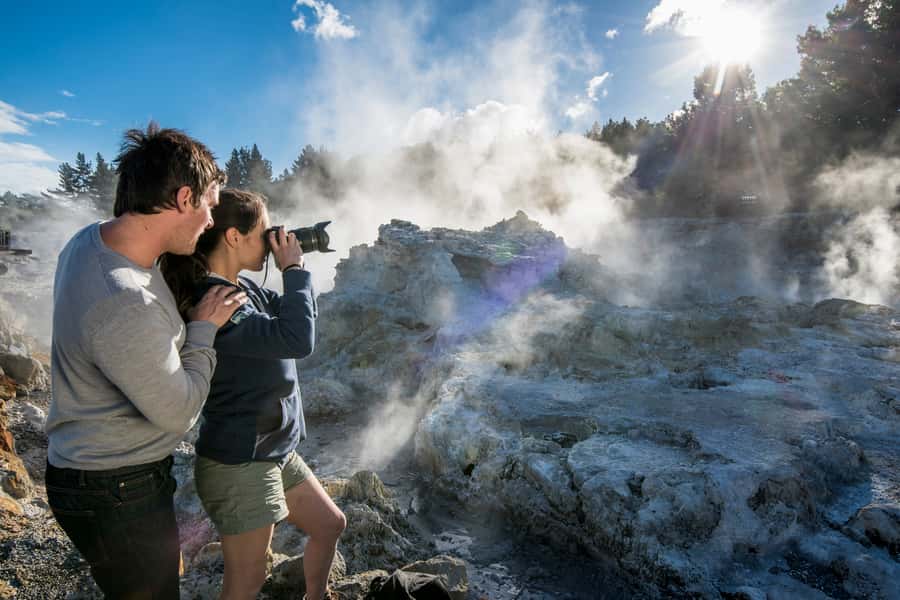
I like this option if you have limited time or prefer to stop often for photos. You can pause beside a steaming vent, read the explanation, and continue when ready instead of keeping pace with a group. The map is considered clear and useful, although the written explanations may feel a little brief if you want detailed geology.
The route leads through the main geothermal sights, including steaming fumaroles, hot water lakes, boiling pools, sulfur crystals, and mineral deposits. You also see the large active mud volcano, which is one of the reserve’s headline features.
The mud is especially entertaining because it looks almost alive. Pools bubble and heave at different speeds, creating a constantly shifting surface. You may get an interactive chance to feel geothermal mud, depending on what is operating that day. Use care and follow staff instructions, since the surrounding water and ground can be dangerously hot.
The path is described as easy by several people who completed it, including families with older children. Still, the activity is not suitable for people with mobility impairments, and you should wear shoes that feel secure on an outdoor walking route.
What makes the hot waterfalls special
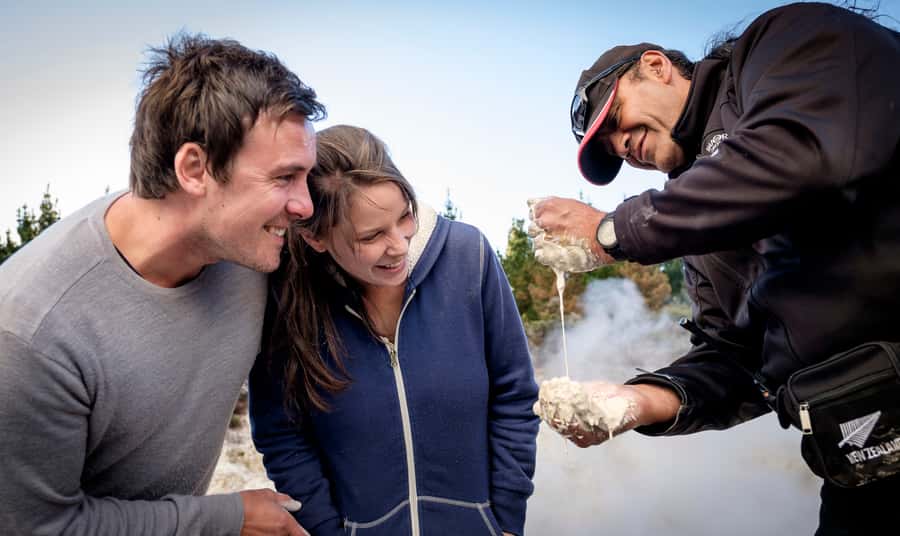
The hot waterfalls are among Hell’s Gate’s most memorable sights. The reserve has the Southern Hemisphere’s largest hot waterfalls, a detail that gives this stop more weight than a quick photo opportunity.
Water moving through a geothermal setting creates a strange visual mix. You get the familiar shape and motion of a waterfall, but with steam, heat, and mineral coloring. The waterfalls are especially appealing after rain, when the air feels full of moisture and the geothermal features become more theatrical.
The bush section near the falls is another highlight. It breaks up the more exposed geothermal plain and gives the walk a sense of variety. Several parts of the route are scenic in a conventional way, while the hot-water features remind you that Rotorua is sitting over a powerful volcanic system.
Do not expect every feature to behave like a tall, dramatic geyser. One useful point to know is that Hell’s Gate does not have the classic hot-water geyser some other geothermal parks show. Its appeal comes more from the combination of boiling mud, fumaroles, hot pools, waterfalls, and mineral deposits.
A completely different sort of day out:
- Rotorua Canopy Tours: 2.5Hour Native Forest Zipline Adventure
★ 5.0 · 4,563 reviews - Mitai Maori Village: Cultural Experience and Dinner Buffet
★ 4.7 · 3,575 reviews - Rotorua: Wai-O-Tapu Geothermal Park Entry Ticket
★ 4.6 · 2,601 reviews - Rotorua Rafting: Kaituna River White Water Rafting & Free Sauna
★ 5.0 · 1,952 reviews
A guide adds the missing story
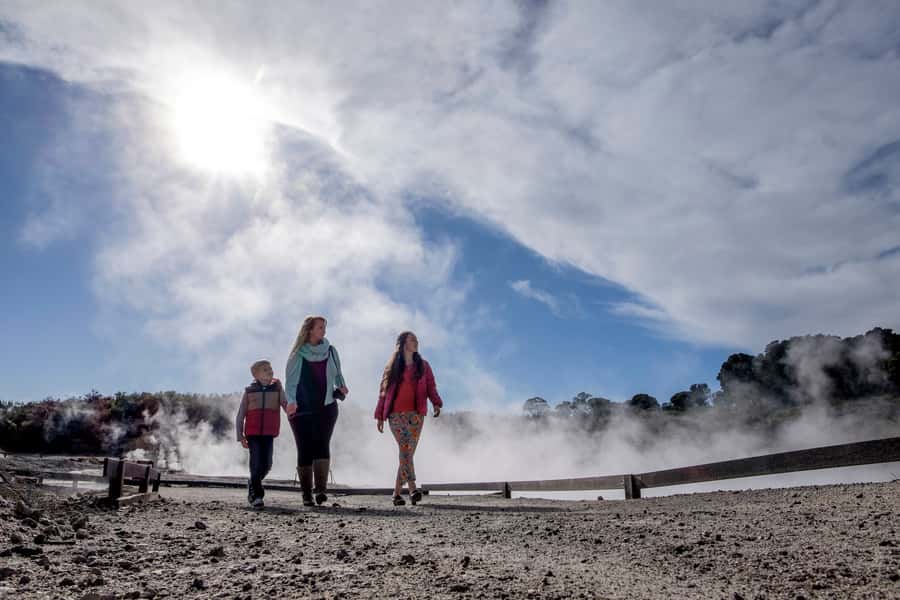
The self-guided route is perfectly workable, but the guided walk can make the same sights easier to understand. Guided tours are listed at 10:30 AM and 2:30 PM, subject to availability, and the guided experience is listed as lasting 1.5 hours.
A good guide connects the geology with the plants, Māori culture, and history of the reserve. That matters because geothermal pools can start to blur together when you are looking at them alone. A guide points out changes in color, heat, texture, and mineral content, then explains why the vegetation survives in some parts of the field but not others.
The guides have also been a major strength. Liam has been praised for being friendly, humorous, and informative. Luke has been described as engaging and funny, while another guide known as T was singled out for combining useful facts with a lively delivery. These details suggest that the personality of the guide can shape the outing in a good way.
If you want the guide, plan your arrival around one of the two stated times. The guided walk is not continuously available, and the timing can be unclear if you simply arrive expecting to join the next group. If your schedule is tight, the self-guided map gives you a reliable backup.
Geology, vegetation, and Māori connections
Hell’s Gate is more than a place to photograph strange-colored pools. The area shows how geothermal heat shapes both rock and plant life. You see fumaroles venting steam, sulfur forming crystals and deposits, and water heated far beyond normal bathing temperatures.
The reserve also includes examples of land coral, an unusual feature that adds to the sense that this is not an ordinary park. The geothermal conditions create forms and textures that seem out of place in a forest setting.
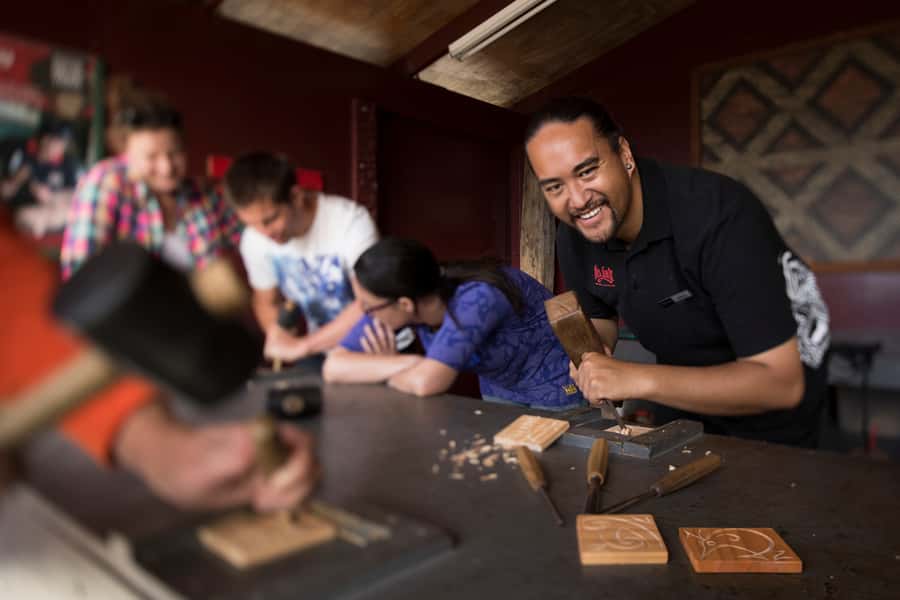
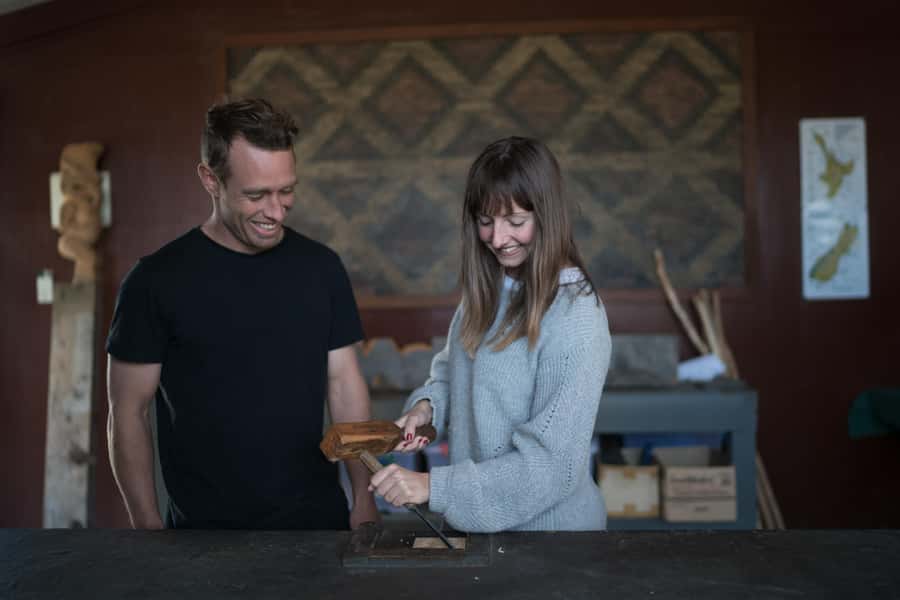
Culture is part of the experience, too. Hell’s Gate, also known as Tikitere, connects Māori traditions with the volcanic setting. The guided walk can help explain that connection, while the Māori carving activity gives you a chance to take part rather than simply look.
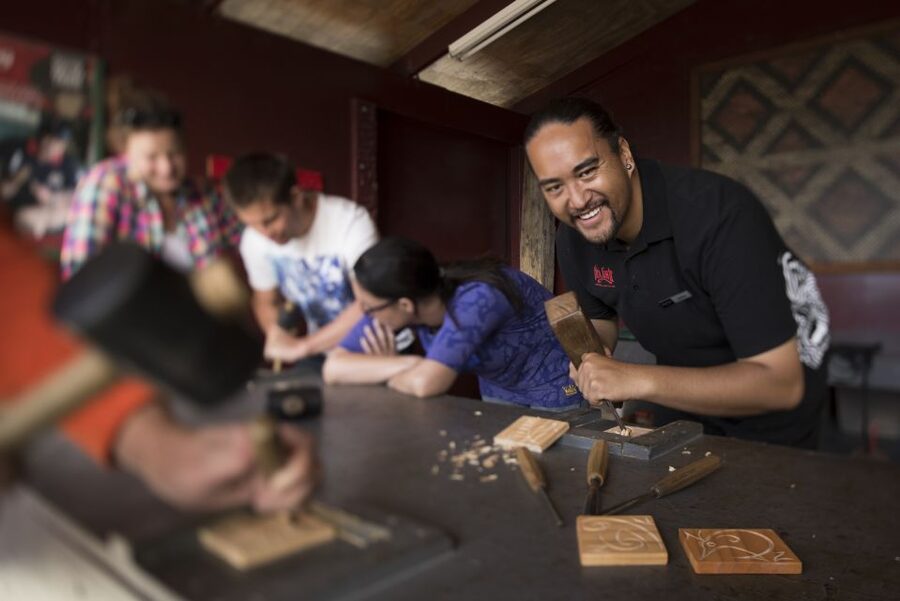
The carving is listed as complimentary, but it is subject to availability. Children must be at least 12 years old to participate in the carving. That age rule is easy to miss, so families should check before promising the activity to younger children.
Māori carving and the mud foot pool
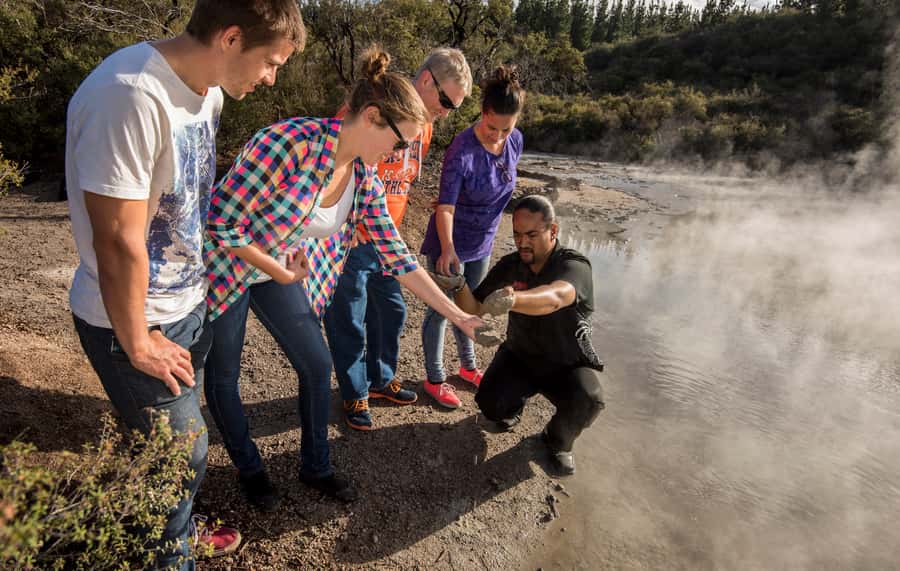
The carving activity can be a welcome change after the geothermal walk. Instead of continuing to look at pools, you get a hands-on cultural activity and a small complimentary Māori carving to take away.
It is not guaranteed every time, since the carving session depends on availability. The same applies to the mud foot pool. Some people have enjoyed the mud foot bath as a bonus, but you should treat it as an optional extra rather than the central reason to book.
This is also where timing matters. If you arrive during a busy period or have a fixed departure, ask staff what is available that day. The walk itself remains the core experience, while the carving and foot pool add value when operating.
Is the $26 price good value?
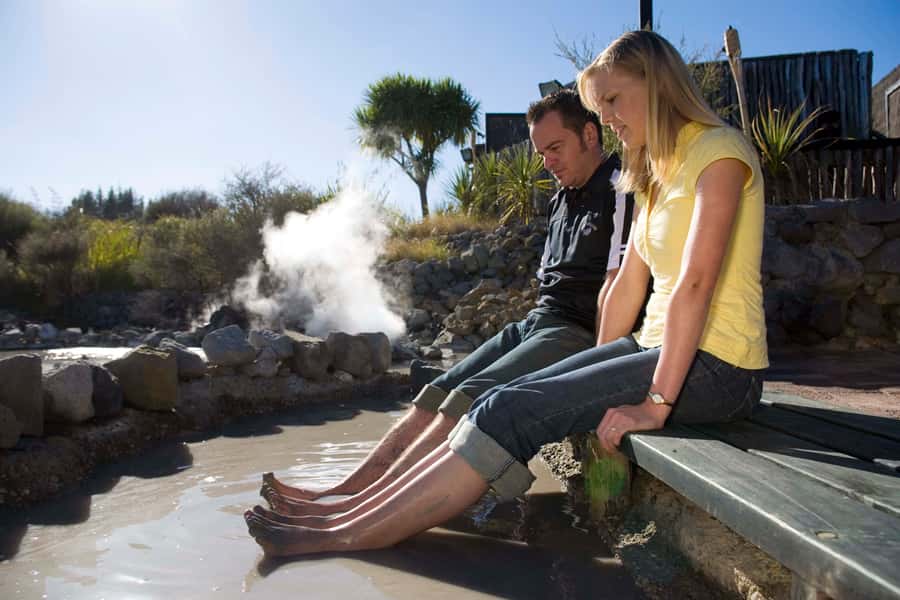
The stated price is $26 per person, which looks reasonable for a one-hour geothermal walk in Rotorua, especially if you are interested in seeing several geothermal features in one compact visit. The map, possible guided interpretation, and potential Māori carving or mud foot pool make the outing more than a bare admission to a viewpoint.
There is an important pricing point to clarify before booking. The activity information also says that an entry ticket is not included. Because the listed price and inclusion details do not line up perfectly, check exactly what the $26 covers and whether park admission is charged separately.
Value improves if you use the whole visit well. Take time with the map, join the guided walk if your schedule matches 10:30 AM or 2:30 PM, and allow a little extra time for the carving or mud foot pool if available. A coffee or meal at the on-site cafe can also make the stop feel more complete, though food is not included in the activity price.
For a short Rotorua experience, the cost is sensible if you want active geothermal features rather than a polished spa setting. If you mainly want to soak in hot water, this is not the right product. The reserve is about looking, walking, learning, and staying safely near powerful natural forces.
How Hell’s Gate compares with a quick geothermal stop
A short geothermal stop may give you one famous pool or a single eruption. Hell’s Gate gives you a broader walk through mud, steam, hot water, bush, waterfalls, and mineral deposits.
That variety is valuable if you want to understand the area as a working geothermal system. The route is long enough to show changing scenery but short enough to fit into a busy Rotorua day. You will not spend hours walking between distant features.
The tradeoff is that Hell’s Gate may feel less dramatic if your main goal is a large, regular geyser eruption. The park’s best moments are the bubbling mud, hot waterfalls, boiling pools, and unusual textures. The sulfur odor is also part of the deal.
Who should book this walk?
I would recommend Hell’s Gate to you if you want a compact introduction to Rotorua’s volcanic activity, enjoy easy outdoor walks, and like experiences that mix geology with Māori culture. It suits people who want to take photographs, read at their own pace, or listen to a guide who adds local context.
The self-guided option works well for independent visitors and anyone with only an hour. The guided option is better if you want explanations about the plants, pools, and cultural background. Guides such as Liam, Luke, and T have received especially warm praise for making the walk entertaining as well as informative.
You should think twice if you dislike sulfur smells, have limited mobility, or want a traditional geyser show. Families should also remember that children must be 12 or older for the carving activity, and that the carving, mud foot pool, and guided tour all depend on availability.
Rain should not put you off. Bring weather-appropriate clothing and consider a rain cape, which is available to buy on site. Wet weather can add steam and atmosphere, though you will want dry, comfortable shoes for the walk.
Practical verdict: book it or skip it?
Book Hell’s Gate if you want to see Rotorua’s geothermal activity up close without committing to a full-day excursion. The bubbling mud volcano, hot waterfalls, steaming vents, sulfur crystals, and bush sections give the one-hour walk plenty of variety.
I would choose the guided tour if the timing works, since the strongest experiences come from understanding what you are seeing. Choose self-guided if you value flexibility, photography, or a quick visit. Just confirm the entry fee before booking, prepare for the sulfur smell, and remove jewelry that could tarnish.
For $26, it can be good value, provided that price covers what you expect. Hell’s Gate is not a gentle spa outing. It is a close, practical look at hot, unstable, fascinating earth, with a few cultural extras that make the visit more memorable.
FAQ
How long does the Hell’s Gate geothermal walk take?
The geothermal walking route takes about one hour and covers roughly 2 kilometres. The guided tour is listed as lasting 1.5 hours.
How far is Hell’s Gate from Rotorua?
Hell’s Gate is about a 15-minute drive from central Rotorua. Follow State Highway 30 east, turn toward Whakatane about five minutes past the airport, and continue 3 kilometres to the reserve.
Are guided tours available?
Guided walking tours are available at 10:30 AM and 2:30 PM, subject to availability. The guide speaks English.
Can I explore Hell’s Gate without a guide?
Yes. You can take a self-guided walk using the map provided at the reserve. The map includes descriptions of the geothermal pools and other features.
What can I see at Hell’s Gate?
You can see New Zealand’s largest active mud volcano, hot waterfalls, fumaroles, hot water lakes, boiling pools, sulfur crystals, sulfur deposits, land coral, and geothermal vegetation.
Is the Māori carving activity included?
A complimentary Māori carving is listed as included, but the activity is subject to availability. Children must be at least 12 years old to participate.
Is the mud foot pool included?
The mud foot pool may be available, but it is subject to availability. Confirm with staff when you arrive.
What should I bring?
Bring comfortable shoes, sunglasses, sunscreen, water, and clothing suitable for the weather. Rain capes are available to purchase on site.
Just added in Rotorua
- Te Puia: Tuku Iho Trail with Cultural Show★ 5.0 · 5 reviews
- Te Puia: Te Rā Guided Day Tour + Haka Cultural Performance★ 4.7 · 128 reviews
- Te Puia: Te Pō Indigenous Combo – Tour, Dinner + Haka★ 4.4 · 52 reviews
- Rotorua: Wai Ariki Hot Springs & Spa 1hr Restorative Bathing★ 4.8 · 16 reviews
- Rotorua: White Island, Mount Tarawera & Waimangu Volcanic …★ 4.4 · 5 reviews
- Rotorua: Velocity Valley – NEW Vertigo 43m drop★ 5.0 · 3 reviews
- Rotorua: Volcano Landing and Geothermal Park Helicopter Tour★ 5.0 · 1 review
- Rotorua: Velocity Valley – Two Ride Pass★ 4.6 · 8 reviews
Walking Tours, compared.
Hobbiton™ Movie Set Walking Tour from Shires Rest
Read our review →
Rotorua’s Ultimate Zipline: 6 ziplines, 400 m Tandem, Cliff Walk
Read our review →
Waitomo Caves: Ruakuri Glowworm Cave Guided Walking Tour
Read our review →

Abel Tasman: Sea Shuttle Cruise and Walking Tour Combo
Read our review →

Browse the lists this tour appears in