
REVIEW · MAORI CULTURAL EXPERIENCES
Te Puia: Te Rā Guided Day Tour
One stop gives you geysers, carving, and kiwi. Te Puia’s Te Rā Guided Day Tour packs three very different Rotorua experiences into 90 minutes: the steaming Te Whakarewarewa Geothermal Valley, the Māori Arts and Crafts Institute, and a nocturnal kiwi enclosure. I like the strong mix of nature and culture, and I like that your entry supports a working school where traditional carving and weaving skills are taught.
The main catch is time. The geothermal valley can feel rushed, while the arts institute deserves a longer look. The tour is also listed as wheelchair accessible but not suitable for people with mobility impairments, so you should confirm the route before booking. At $59 per person, it offers good value if you want an efficient introduction to Te Puia, especially with a warm, engaging guide such as Makaere, Paul, Michael, Mita, or Nate leading the way.
In This Review
- Key points to know before you go
- Why Te Puia works well in Rotorua
- Starting at Te Whakarewarewa Geothermal Valley
- The Māori Arts and Crafts Institute tells a living story
- Meeting a kiwi in a nocturnal enclosure
- The guide is the key part of the experience
- What $59 buys you
- Handling weather, footwear, and access
- How to use the time after the tour
- Who should book Te Rā Guided Day Tour?
- Should you book Te Puia Te Rā?
- FAQ
- How long is the Te Puia Te Rā Guided Day Tour?
- Where does the tour start and finish?
- What does the tour include?
- Is food included?
- Is hotel pickup available?
- What language is the guided tour in?
- Can I cancel for a refund?
Key points to know before you go
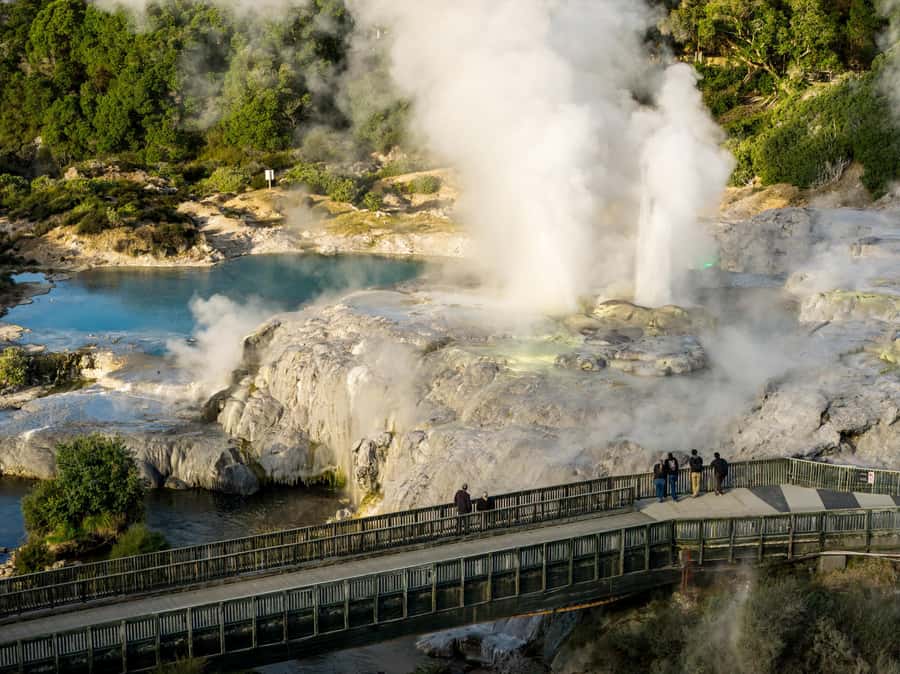
- Pōhutu Geyser is the star of the geothermal walk: It is the largest active geyser in the Southern Hemisphere, and the viewing area gives you a clear reason to keep an eye on the sky and steam.
- The kiwi visit happens in a nocturnal enclosure: You see New Zealand’s national bird in conditions designed for its night-active habits.
- The arts institute is a working school: You may see students developing skills in Māori weaving, wood carving, stone carving, and bone carving.
- Guides make or break the 90 minutes: The strongest part of the experience is the personal storytelling, humor, and pride many guides bring to Māori heritage and environmental care.
- You can stay after the guided tour: The tour returns to Te Puia, and you can continue looking around afterward, which helps offset the brisk pace.
- Bring comfortable shoes and plan for weather: The route is outdoors, and rain or cold can affect your view of the geyser.
Why Te Puia works well in Rotorua
Rotorua is not short of geothermal attractions or Māori cultural experiences. Te Puia is useful because it combines both in one visit, then adds a chance to see a kiwi without sending you to a separate conservation facility.
That combination gives you a fuller picture of the area. You see the earth at work through boiling mud, geysers, and steaming ground, then learn how Māori artists use wood, stone, bone, and fiber to carry cultural knowledge forward. The kiwi visit adds a conservation story rather than simply another animal stop.
The tour is guided in English and lasts 90 minutes. That is short enough to fit into a busy Rotorua day, but long enough to cover the three main parts of Te Puia without feeling like a simple walk past a few viewing points.
I would think of it as an introduction, not a full-day cultural study. You receive a useful overview, but the schedule cannot give every gallery, carving technique, geothermal feature, or Māori tradition the attention it deserves.
More Maori cultural experiences in Rotorua:
- Mitai Maori Village: Cultural Experience and Dinner Buffet
★ 4.7 · 3,575 reviews - Cultural Experience & Seasonal Māori Cuisine at Te Pā Tū
★ 5.0 · 1,546 reviews - Mitai Maori Village Cultural Experience in Rotorua
★ 4.5 · 1,294 reviews
Starting at Te Whakarewarewa Geothermal Valley
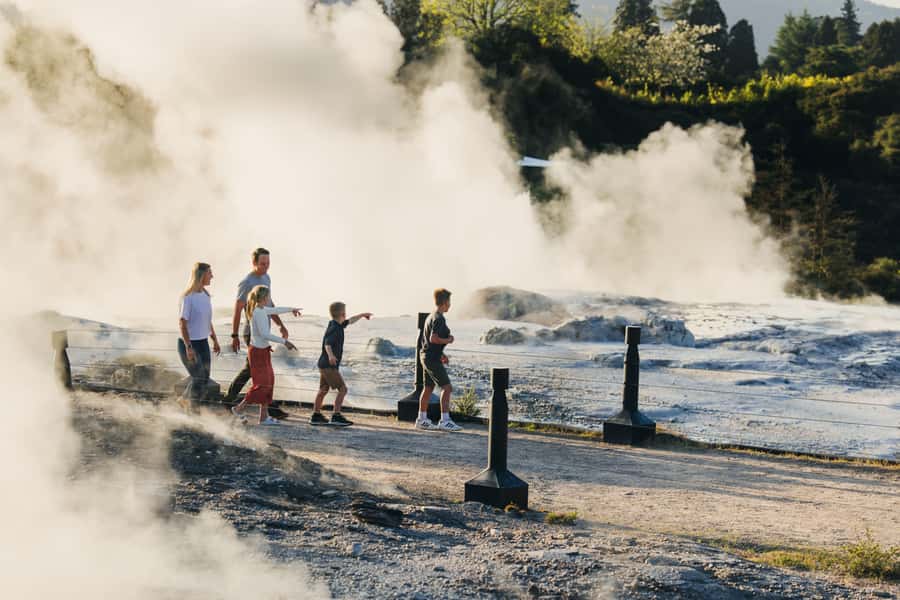
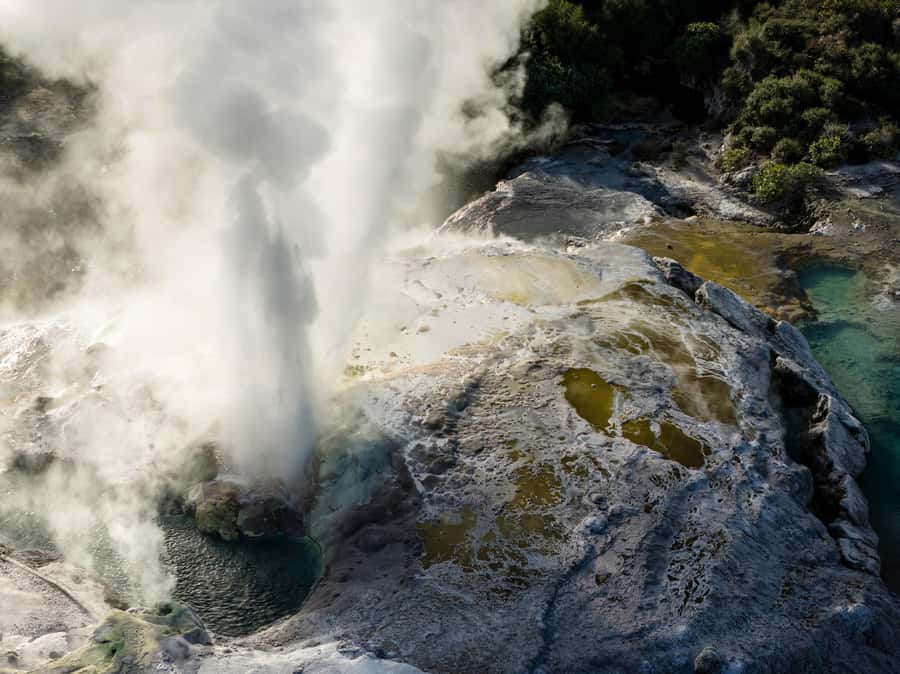
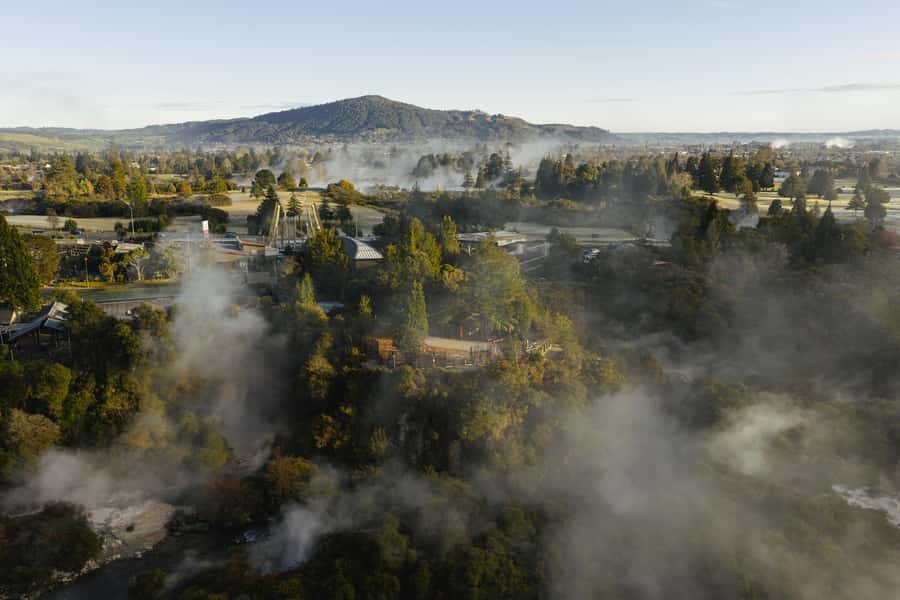
The tour begins at Te Puia in Rotorua and heads into Te Whakarewarewa Geothermal Valley. This is the most dramatic part of the visit, with geysers, bubbling mud pools, native bush, and the unmistakable smell of geothermal activity.
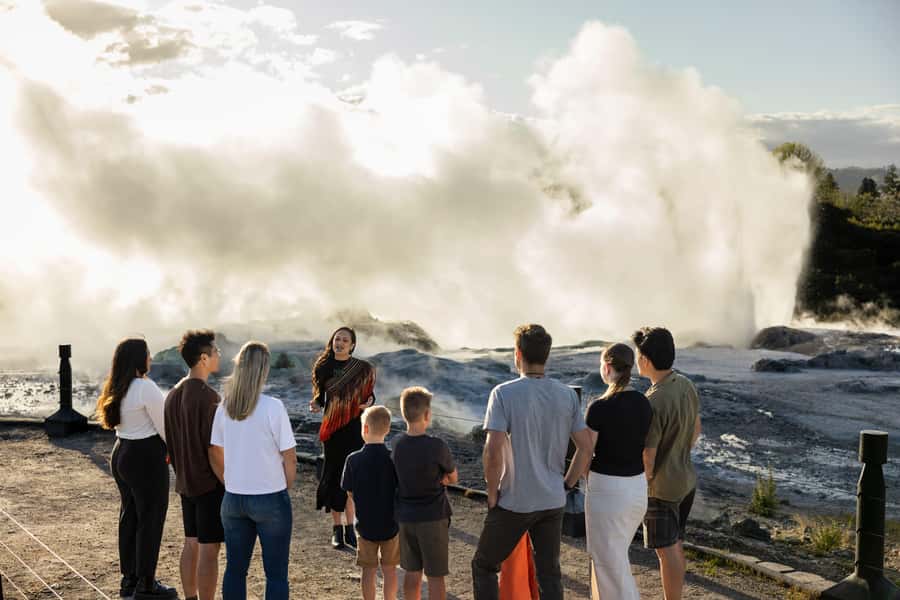
Your guide helps explain what you are seeing rather than leaving you to guess which pool is hot, which vent is active, and why the valley matters. That guidance is particularly useful around the geysers, where a few minutes of waiting can make the difference between seeing a plume and seeing only steam.
Pōhutu Geyser is the main event. It is the largest active geyser in the Southern Hemisphere, and the tour brings you close enough to appreciate its force. One guide also recommended good places to stand for the best view, a small detail that can matter when a group gathers around a popular viewing area.
Do not expect a perfectly guaranteed postcard moment. Cold, wet weather can turn an eruption into a wall of steam, making the plume harder to see. Another practical point is that the geothermal section may feel rushed, particularly if you want to stop at every mud pool or take many photographs.
Still, the geyser gives the walk a clear focus. Even when the weather is poor, the heat, sound, and smell of the valley make it memorable. If Pōhutu is active during your visit, you will understand quickly why this is the tour’s natural headline.
The Māori Arts and Crafts Institute tells a living story
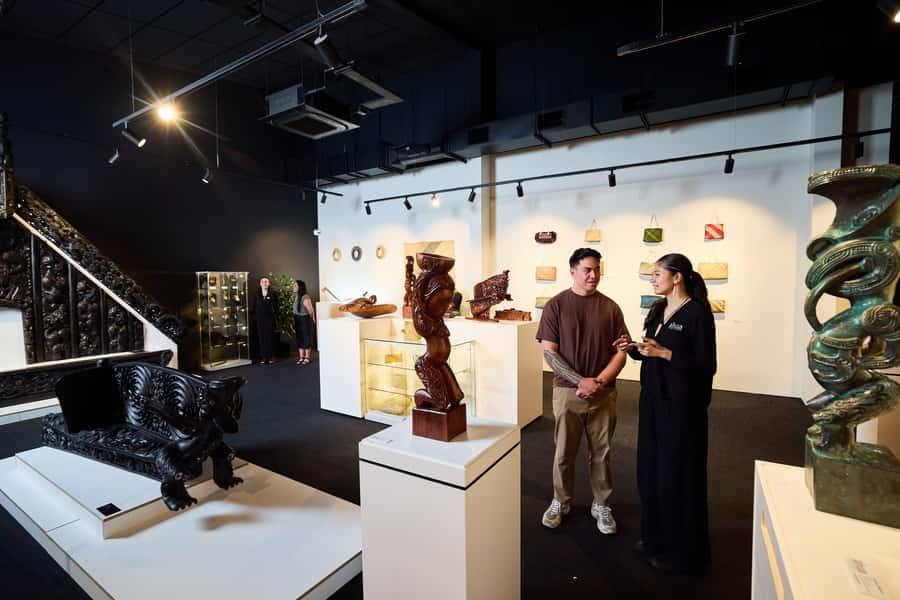
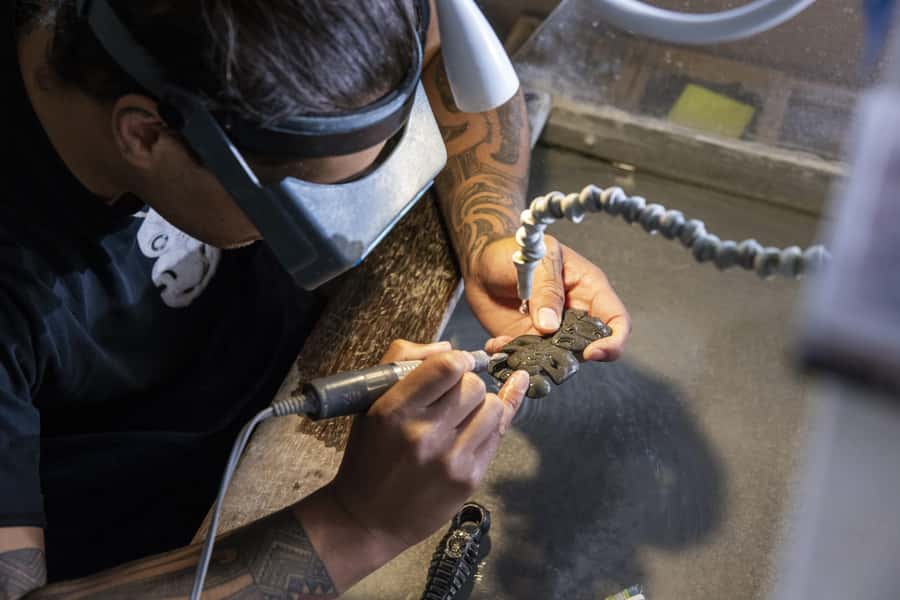
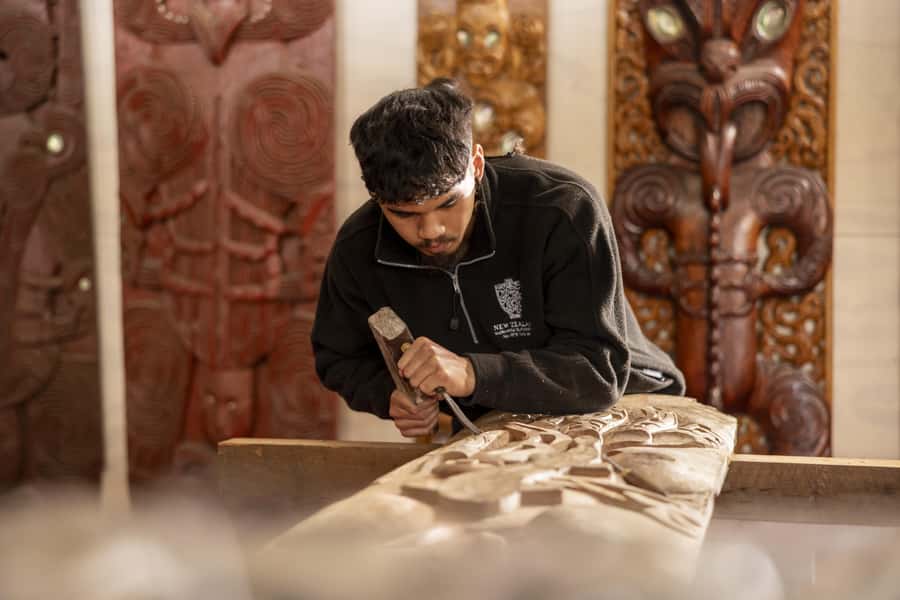
The New Zealand Māori Arts and Crafts Institute is more than a display of finished objects. It is a place where students practice traditional skills in weaving, wood carving, stone carving, and bone carving.
That distinction matters. You are not simply looking at old pieces behind glass. You are seeing a school where knowledge is passed on through practice, instruction, and patience. The experience gives the cultural section a practical quality that many brief heritage visits lack.
The Āhua Gallery is included as well. Together, the institute and gallery give you a way to connect the stories from your guide with actual materials, patterns, and objects.
This is where the tour’s pace can feel uneven. Some people appreciate spending a good portion of the 90 minutes at the school, while others want more time in the geothermal valley. One useful feature is that you can continue exploring Te Puia after the guided experience, giving you a chance to return to the arts displays or take another look around at your own speed.
I especially like the fact that the money supports the art school. That gives the admission fee a purpose beyond access to a popular attraction. You are helping a working institution continue traditional Māori arts education.
Meeting a kiwi in a nocturnal enclosure
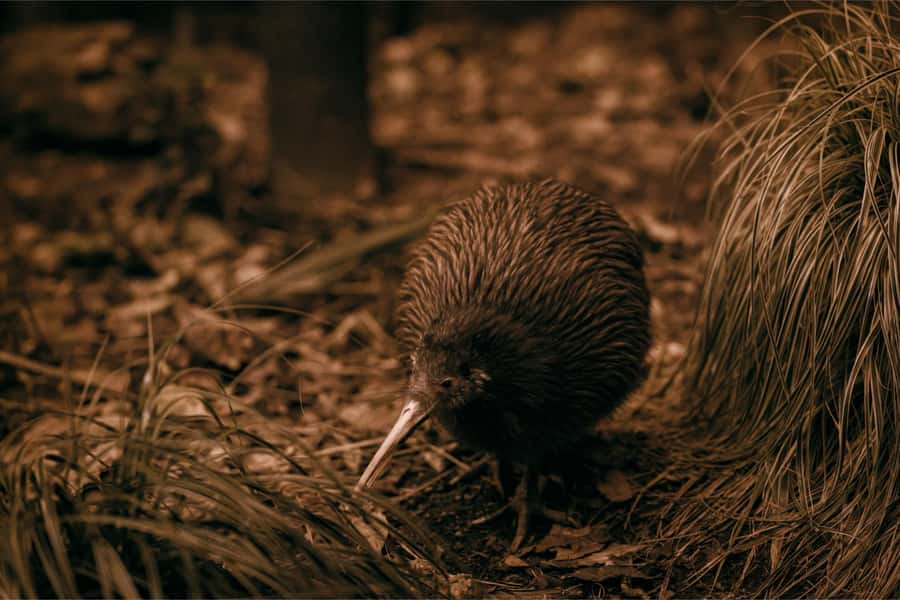
The Kiwi Conservation Centre is another strong reason to choose this tour. The kiwi is a national icon, but it is not an easy bird to see in the wild. It is nocturnal, shy, and protected, so a specially designed dark enclosure gives you a realistic chance to see one.
Keep your expectations sensible. A kiwi encounter is not the same as watching a large, active animal in an open exhibit. The low-light setting protects the bird’s natural routine, and your view may depend on where it is moving at the time.
That restraint is part of the value. The enclosure is built around conservation, not spectacle. You get a close look at an unusual native bird while learning why protection matters.
For many people, seeing a kiwi in real life becomes the emotional highlight of the visit. It also adds balance to the geothermal and cultural sections. After watching the earth send up steam and water, you turn to a small, quiet bird that represents another side of New Zealand’s natural heritage.
A few more to weigh up in Rotorua
- Rotorua Canopy Tours: 2.5Hour Native Forest Zipline Adventure
★ 5.0 · 4,563 reviews - Rotorua: Wai-O-Tapu Geothermal Park Entry Ticket
★ 4.6 · 2,601 reviews - Rotorua’s Ultimate Zipline: 6 ziplines, 400 m Tandem, Cliff Walk
★ 5.0 · 2,557 reviews - Rotorua Rafting: Kaituna River White Water Rafting & Free Sauna
★ 5.0 · 1,952 reviews
The guide is the key part of the experience
A good guide turns a collection of attractions into a connected story. Te Puia’s guides are called kaiārahi, and the strongest guides add humor, clear explanations, and personal pride to the walk.
Names that have drawn especially warm praise include Makaere, Paul, Michael, Mita, Nate, Kohu, and a guide called Michael who spoke with particular passion about the environment. The exact guide depends on your departure, but the pattern is clear: the human side of this tour matters.
You may hear ancestral stories, explanations of Māori traditions, and background on the art school. The best delivery does not feel like a memorized speech. It links the valley, the people, and the future of Māori culture in a way that is easy to follow.
Group size can affect how much you hear. One larger group found that a microphone or radio would have helped, especially when people stood farther back. Stay close to the guide and move in when the group stops. If you are visiting with children or anyone who struggles to hear outdoors, this is worth keeping in mind.
Guides have also been praised for answering questions, handling noisy groups politely, and keeping their energy up in wet weather. That flexibility matters in a 90-minute walk, where a flat delivery would make the schedule feel much longer.
What $59 buys you
At $59 per person, the tour is fairly priced if you plan to visit all three included areas. Your admission covers Te Puia, the geothermal valley, the Kiwi Conservation Centre, the New Zealand Māori Arts and Crafts Institute, and the Āhua Gallery, along with the guided tour.
The value comes from the range. A separate visit focused only on geysers would give you more time for geothermal features, while a cultural visit elsewhere might offer more performance or historical detail. Te Puia gives you a compact blend instead.
The price is less appealing if you want a slow, highly detailed visit to one subject. The 90-minute format means you will not receive an exhaustive account of Māori history, and you may not have enough time to study every carving or gallery display.
Food and drinks are not included. Hotel pickup and drop-off are not included either, so you need to make your own way to Te Puia in Rotorua. The meeting instruction is simple: arrive 15 minutes before your scheduled departure.
One booking issue deserves attention. A New Zealand visitor found that a separate local fee was not clear during online booking and was disappointed when a refund was refused. Check the price category carefully before you pay, especially if you live in New Zealand.
Handling weather, footwear, and access
Comfortable shoes are the one item specifically recommended, and you should take that seriously. You will be walking outdoors through a geothermal area, where wet ground and changing weather can make unsuitable footwear a nuisance.
Rain does not automatically ruin the experience. One visitor went in wet weather and was glad to have continued, but another wished umbrellas had been available. Bring your own weather protection if rain is possible, as the supplied information does not promise umbrellas.
Cold, damp conditions can also make Pōhutu harder to see clearly because steam hangs over the viewing area. The geyser may still be active, but the water plume can appear less dramatic.
The access information needs careful reading. The activity is marked wheelchair accessible, but it is also marked as not suitable for people with mobility impairments. Those statements do not give enough detail about slopes, surfaces, or the full route. If access is important for you, contact Te Puia before booking and ask exactly which sections are manageable.
How to use the time after the tour
The guided portion ends back at Te Puia. You are allowed to continue looking around afterward, and this is one of the tour’s best practical features.
Use the extra time to revisit the institute if the guide moved quickly through the displays. You can also return to a geothermal viewing area, spend longer at the Āhua Gallery, or browse the gift shop. One visitor particularly enjoyed the shop and found plenty of presents, including items for herself.
That extra time changes how you should judge the 90-minute schedule. The guided route may feel brisk, but you are not forced to leave as soon as the guide says goodbye. The key is to treat the tour as your orientation, then use the remaining time for the parts that caught your interest.
If you are hoping for Māori singing and dancing, note that this guided tour description does not include a performance. One visitor enjoyed a music and dance show during a visit, but you should not assume that entertainment is part of this particular 90-minute experience. Ask Te Puia about separate performance options if that is important to you.
Who should book Te Rā Guided Day Tour?
I would recommend it to first-time Rotorua visitors who want a clear introduction without spending an entire day at one site. Families, couples, solo visitors, and anyone with a tight schedule can get a lot from the combination of geysers, Māori arts, and kiwi conservation.
It is also a good fit if you prefer learning with a guide rather than reading signs alone. The repeated praise for guides such as Paul, Makaere, Mita, and Nate points to the value of the live storytelling.
You may want a different plan if your main goal is photography, detailed geothermal study, or a long, quiet look at the arts school. The tour moves on when the schedule says it will. You can soften that drawback by staying afterward.
The experience also suits visitors who care about cultural continuity. The institute is a working school, and the fee supports that educational role. You are not simply consuming a performance or ticking off a geyser from a list.
Should you book Te Puia Te Rā?
Book it if you want three of Rotorua’s signature experiences in one well-organized 90-minute visit: Pōhutu Geyser, a kiwi in a purpose-built nocturnal enclosure, and a working Māori arts school.
Go in expecting an introduction rather than a complete cultural or geothermal study. Stay after the tour to slow down, bring comfortable shoes and rain protection, arrive 15 minutes early, and check the access and local pricing details before payment. At $59, it is a worthwhile choice for a broad first look, with the guide and the kiwi encounter likely to be the parts you remember longest.
FAQ
How long is the Te Puia Te Rā Guided Day Tour?
The guided experience lasts 90 minutes, or one and a half hours.
Where does the tour start and finish?
It starts and finishes at Te Puia in Rotorua, New Zealand.
What does the tour include?
It includes entry to Te Puia, a guided tour, Te Whakarewarewa Geothermal Valley, the Kiwi Conservation Centre, the New Zealand Māori Arts and Crafts Institute, and the Āhua Gallery.
Is food included?
No. Food and drinks are not included in the tour price.
Is hotel pickup available?
No. Hotel pickup and drop-off are not included, so you need to make your own way to Te Puia.
What language is the guided tour in?
The live tour guide speaks English.
Can I cancel for a refund?
Yes. You can cancel up to 24 hours before the scheduled experience for a full refund. You can also reserve now and pay later, subject to the booking terms.
Just added in Rotorua
- Te Puia: Tuku Iho Trail with Cultural Show★ 5.0 · 5 reviews
- Te Puia: Te Rā Guided Day Tour + Haka Cultural Performance★ 4.7 · 128 reviews
- Te Puia: Te Pō Indigenous Combo – Tour, Dinner + Haka★ 4.4 · 52 reviews
- Rotorua: White Island, Mount Tarawera & Waimangu Volcanic …★ 4.4 · 5 reviews
- Rotorua: Wai Ariki Hot Springs & Spa 1hr Restorative Bathing★ 4.8 · 16 reviews
- Rotorua: Velocity Valley – NEW Vertigo 43m drop★ 5.0 · 3 reviews
- Rotorua: Volcano Landing and Geothermal Park Helicopter Tour★ 5.0 · 1 review
- Rotorua: Velocity Valley – Two Ride Pass★ 4.6 · 8 reviews
Maori Cultural Experiences, compared.
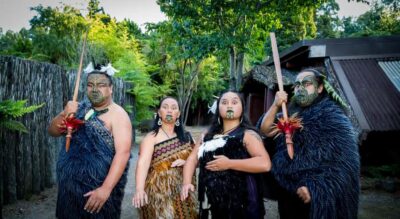
Mitai Maori Village: Cultural Experience and Dinner Buffet
Read our review →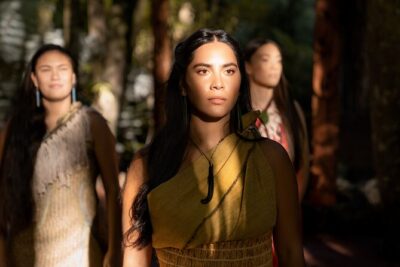
Cultural Experience & Seasonal Māori Cuisine at Te Pā Tū
Read our review →
Mitai Maori Village Cultural Experience in Rotorua
Read our review →
Lake Taupo: Classical Sailing to the Māori Rock Carvings
Read our review →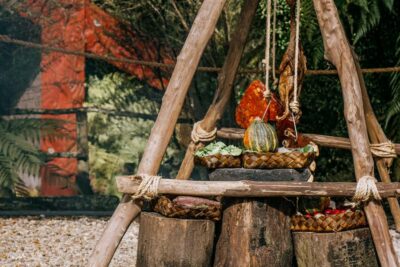
Te Pa Tu Māori Cultural Experience with Dinner
Read our review →
Lake Taupō Māori Rock Carvings Scenic Cruise aboard Ernest Kemp
Read our review →
Waitomo Caves & Rotorua – Te Puia Small-Group Tour from Auckland
Read our review →
Lake Taupo: Maori Rock Carvings 10.30 AM 1.5-Hour Cruise
Read our review →Browse the lists this tour appears in