
REVIEW · 2-HOUR EXPERIENCES
Tarawera and Lakes 2-Hour Duck Eco Tour
History takes to the water. This Rotorua tour combines a genuine 1942 WWII amphibious Duck with four striking lakes, volcanic scenery, Māori stories, and live commentary. I like the unusual vehicle and the smart route, which gives you three splashdowns without requiring a separate boat trip. The main drawback is weather: open windows can make the ride cold, and heavy rain may soften the views.
I also like how much ground the tour covers in two hours. You leave central Rotorua, visit Lake Okareka, view the sacred Green Lake, splash onto the Blue Lake, and reach Lake Tarawera beneath Mt Tarawera. The guide-led format adds real context, though the amount and style of commentary can vary, and one guest found a talkative guide tiring.
In This Review
- Key points to know before booking
- Why the Duck makes this more than a sightseeing bus ride
- Leaving Rotorua for Lake Okareka
- Mt Tarawera and the road to Lake Tarawera
- Splashing onto Lake Tarawera
- Viewing Rotokakahi, the sacred Green Lake
- The final splashdown at Tikitapu, the Blue Lake
- The commentary: funny, factual, and sometimes a little much
- Is $65 good value for two hours?
- Weather, clothing, and practical advice
- Who should book the Tarawera Duck Tour?
- Should you book it?
- FAQ
- How long is the Tarawera and Lakes Duck Tour?
- Where does the tour begin?
- Which lakes does the tour visit?
- How many times does the Duck enter the water?
- What should I wear?
- Is the tour available in bad weather?
Key points to know before booking
- A real 1942 WWII amphibious Duck: You ride an original-style landing craft on roads and water, a rare experience in New Zealand.
- Four lakes in two hours: The route includes Lake Okareka, Lake Tarawera, Rotokakahi, also called the Green Lake, and Tikitapu, the Blue Lake.
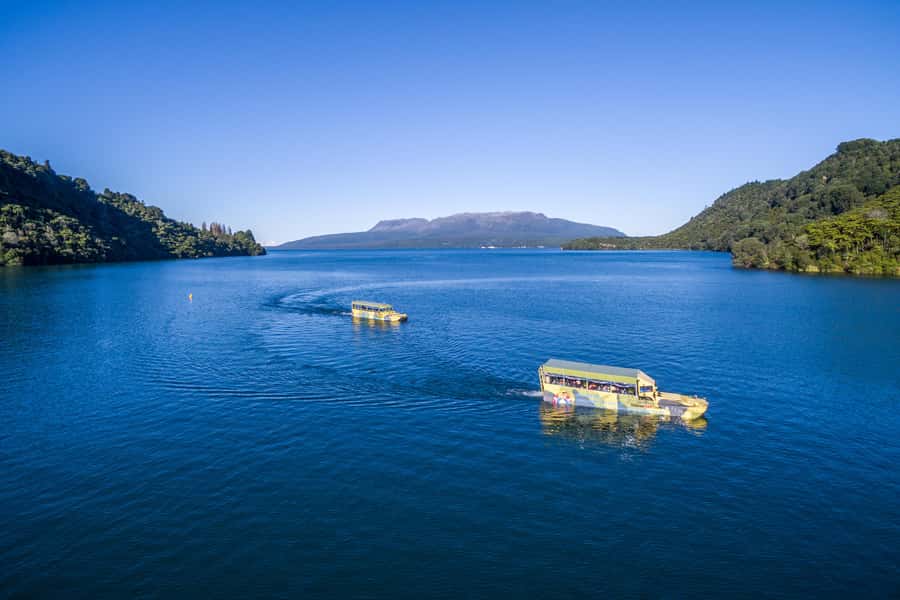
- Three splashdowns: You enter the water at Lake Okareka, Lake Tarawera, and Tikitapu without changing seats.
- Mt Tarawera is the visual star: The volcanic domes provide the tour’s most memorable backdrop, especially from Lake Tarawera.
- Stories give the scenery meaning: Commentary covers Māori migration, local legends, geothermal activity, ecology, and the 1886 eruption.
- Bring a warm layer: The Duck has open windows. Roll-down sides help in rain, and blankets are supplied on colder days, but you should still dress warmly.
Why the Duck makes this more than a sightseeing bus ride
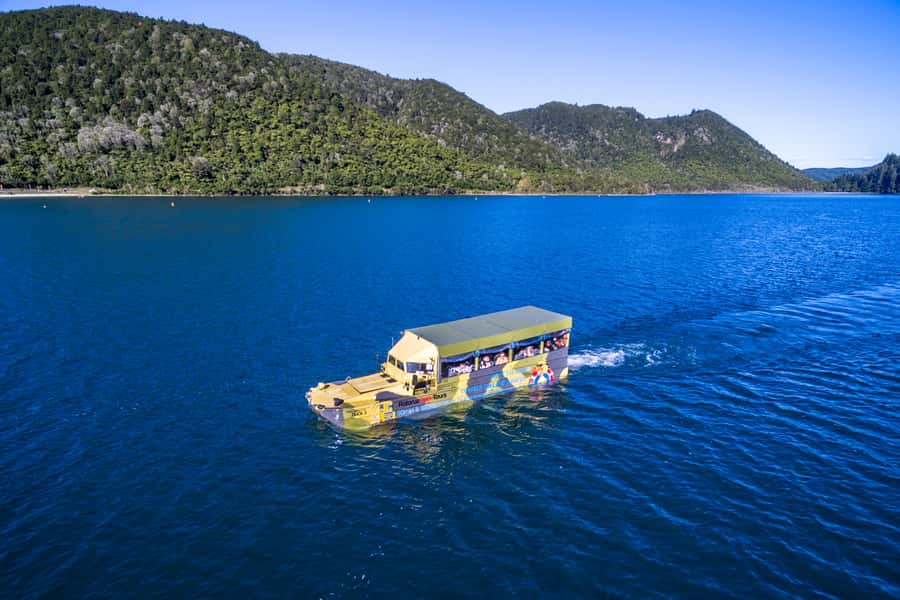
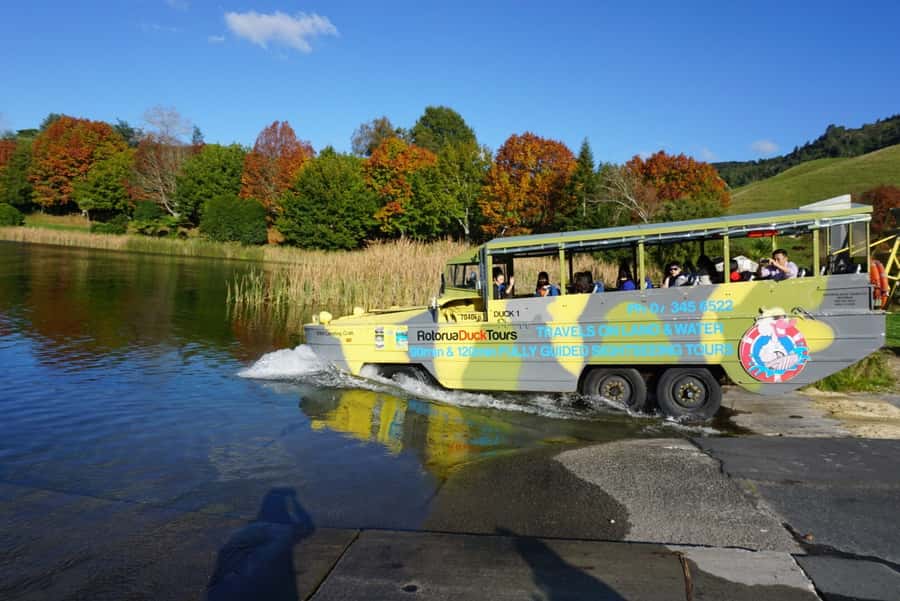
Rotorua has no shortage of lake tours, but this one begins with a vehicle that is part transport and part attraction. The Duck is a genuine WWII amphibious craft from 1942, built to move from land into water. You remain seated as it rolls along the road, reaches a lake, and splashes in.
That change from road to water is the tour’s simplest and best trick. It gives the outing a playful feel, but the vehicle also connects with the area’s wartime and engineering history. You are not simply looking at the lakes from a coach window, and you do not need to board a second vessel halfway through the trip.
The Duck is noisy and not built like a modern luxury bus. That is part of its charm, but it also means you should expect a lively ride rather than a quiet, polished cruise. The open sides offer better views and fresh air, yet they also expose you to wind and cold. On a rainy day, the clear roll-down sides help keep you dry, though the weather can still affect visibility and comfort.
The tour begins at 1241 Fenton Street in central Rotorua. Hotel transport is not included, so you need to make your own way to the meeting point and arrive on time. The activity lasts two hours, which makes it easy to fit around other Rotorua plans, provided you leave some breathing room in case the return takes longer than expected.
A few more to weigh up in Rotorua
- Rotorua Canopy Tours: 2.5Hour Native Forest Zipline Adventure
★ 5.0 · 4,563 reviews - Mitai Maori Village: Cultural Experience and Dinner Buffet
★ 4.7 · 3,575 reviews - Rotorua: Wai-O-Tapu Geothermal Park Entry Ticket
★ 4.6 · 2,601 reviews
Leaving Rotorua for Lake Okareka
The first part of the trip takes you out of Rotorua toward the lake district. The city is known for its sulphurous smell, and you may notice the scent again on the return journey. That earthy, sulphurous aroma is a small but useful reminder that geothermal forces are never far away here.
Your first splashdown is at Lake Okareka. The Duck moves from the road into the sheltered water, giving you the novelty of a boat ride without leaving your seat. The lake is a gentle introduction to the amphibious vehicle, since the calm setting lets you settle into the unusual rhythm of the tour.
Lake Okareka also shows why the route works well as a first look at Rotorua’s lakes. You see the water from the roadside, then experience it from the surface. That change in viewpoint adds something a standard driving tour cannot provide.
The commentary begins tying the scenery to the wider story of the region. You hear about local geology, Māori traditions, migration to New Zealand, geothermal activity, and the plants and natural systems around the lakes. The strongest guides use humor to keep the information moving, and that has been a consistent feature of this outing. Guides named Esther, Ollie, Shelley, and Marcus have all been praised for being entertaining and informative.
Mt Tarawera and the road to Lake Tarawera
As the Duck continues through the lake district, Mt Tarawera becomes the key landmark. Its volcanic domes are not just scenic peaks. They are the visible remains of the forces that shaped the area and the reason the 1886 eruption is central to the tour’s story.
The guide explains the eruption and its effect on the region. This is where the trip gains weight beyond its novelty. The ride is fun, but the mountain reminds you that the ground around Rotorua has a long and sometimes violent geological past.
The commentary also places the area within Māori history and tradition. Stories of migration, local legends, and sacred places help you understand that the lakes are not simply attractive stops on a sightseeing route. The cultural material is delivered as part of the journey, so you are looking at the water and mountain while hearing why they matter.
You should expect the guide’s delivery to shape your experience. Several guides have been praised for funny, easy-to-follow storytelling, with one described as keeping the group entertained throughout the ride. At the same time, the volume of talk is not always perfect for everyone. If you prefer a quiet scenic tour, the running commentary may feel heavy, especially when a guide spends too long on jokes or explanations.
Splashing onto Lake Tarawera
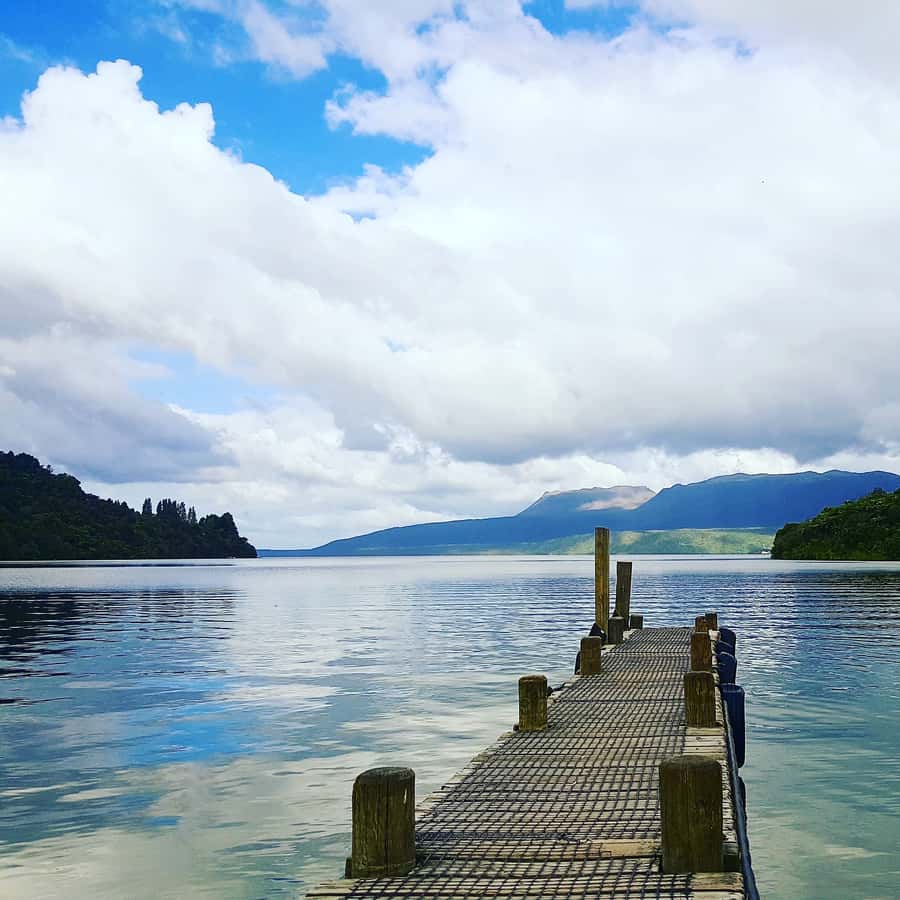
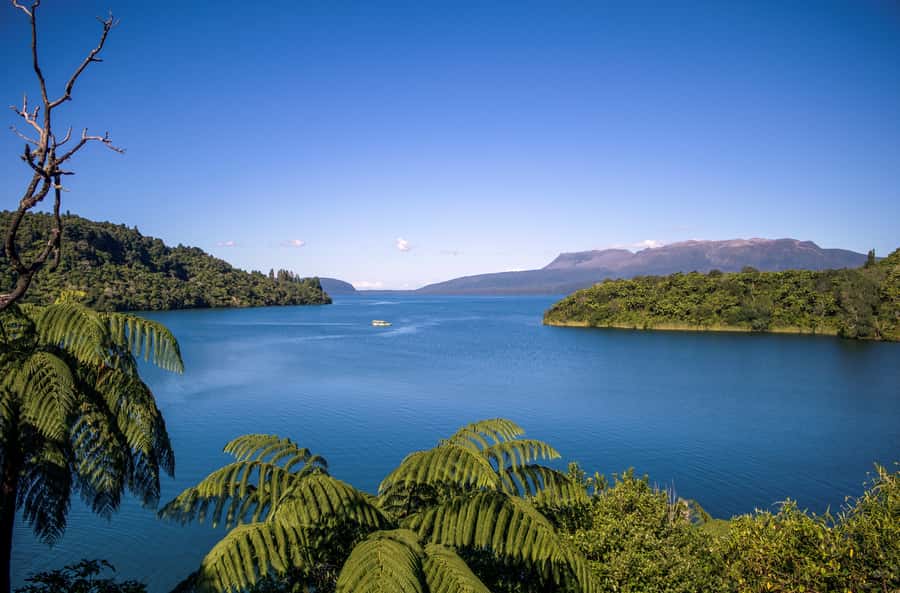
The main water moment comes at Lake Tarawera, at the base of Mt Tarawera. The Duck plunges into the lake, placing you directly among the scenery that gives the tour its name.
This is the strongest part of the route for many reasons. You have already seen the volcanic domes from the road, but the view feels different from the water. The mountain becomes a backdrop rather than a distant roadside feature, and the lake gives you time to take in the scale of the setting.
The splashdown itself is more about fun and atmosphere than speed. You are not signing up for an action ride, and the tour is not presented as a high-adrenaline water activity. Instead, the appeal is the oddness of sitting in a WWII landing craft as it becomes a boat.
Lake Tarawera also gives the guide the best setting for discussing the 1886 eruption. The mountain, the lake, and the stories of the area come together here. If you want a Rotorua activity that combines scenery with a sense of place, this section does the most work.
Weather matters most at this point. On a clear day, the volcanic views should be the visual highlight. In rain, you can still take part, but cloud and wet conditions may reduce what you see. One particularly memorable account involved a tour continuing through thunder and lightning. That makes for a dramatic tale, but it also shows why you should dress for conditions rather than assume a warm day in town will last outside the city.
A completely different sort of day out:
- Rotorua’s Ultimate Zipline: 6 ziplines, 400 m Tandem, Cliff Walk
★ 5.0 · 2,557 reviews - Rotorua Rafting: Kaituna River White Water Rafting & Free Sauna
★ 5.0 · 1,952 reviews - Cultural Experience & Seasonal Māori Cuisine at Te Pā Tū
★ 5.0 · 1,546 reviews - Mitai Maori Village Cultural Experience in Rotorua
★ 4.5 · 1,294 reviews
Viewing Rotokakahi, the sacred Green Lake
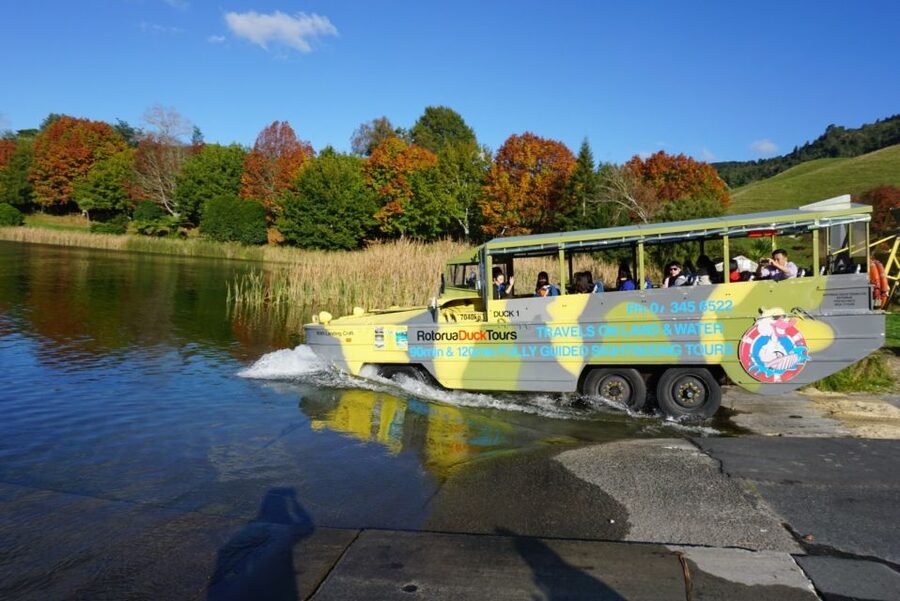
On the return journey, the Duck passes Rotokakahi, known as the Green Lake. This is a viewing stop rather than one of the three water splashdowns.
Rotokakahi is described as sacred, so the guide’s commentary is important here. You are not simply ticking off another lake. The explanation gives the place cultural meaning and helps you understand why the route includes a lake that you do not enter.
This is also a good example of the tour’s balance between access and respect. You see the lake as part of the wider journey, while the commentary explains its significance. Do not expect a long independent walk or a chance to explore every shore. The tour is designed as a moving overview, not a series of extended stops.
That limitation is worth keeping in mind. If your goal is to spend quiet time beside one lake, photograph every angle, or walk through the surrounding area, a dedicated lake visit may suit you better. If you want several viewpoints and stories in a compact time, the passing view works well.
The final splashdown at Tikitapu, the Blue Lake
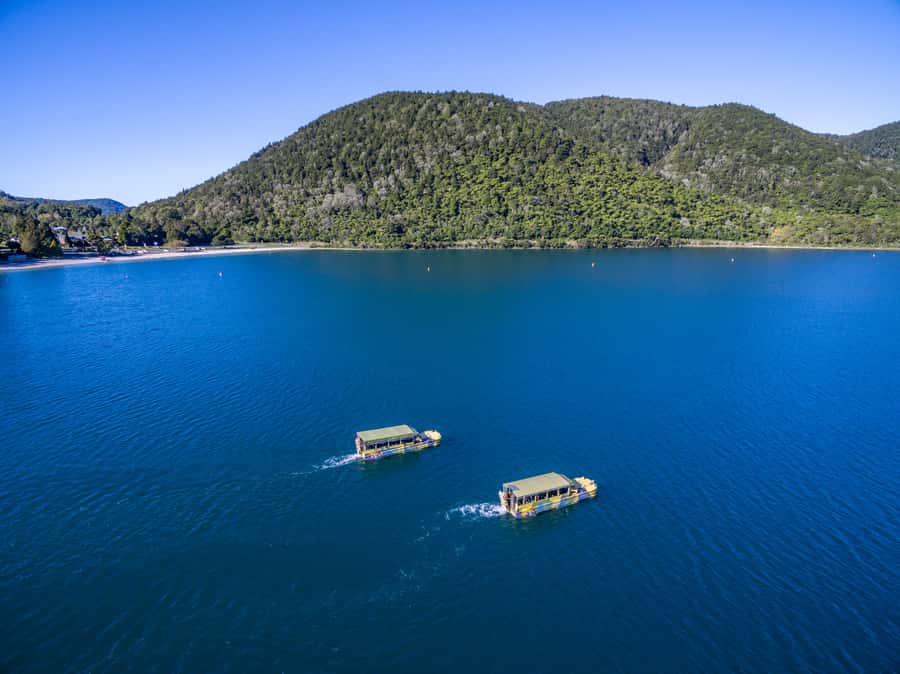
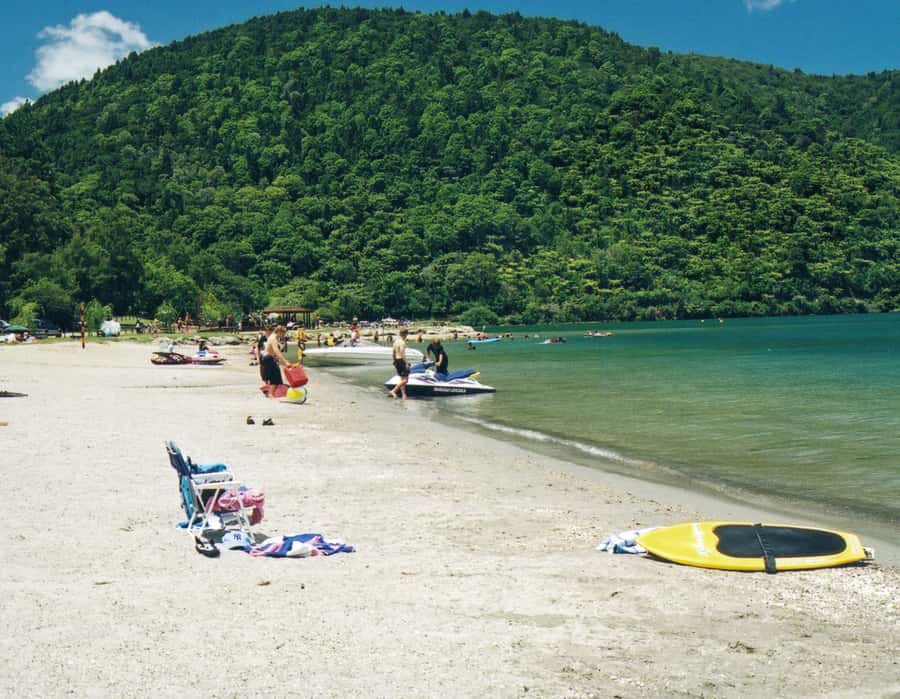
The fourth lake visit is Tikitapu, commonly called the Blue Lake. This is the final splashdown before the Duck heads back toward Rotorua.
The Blue Lake adds a different visual note to the route and gives you one last chance to experience the Duck from the water. By this stage, you have seen three lakes from the surface and one sacred lake from the road, so the tour has delivered a broad sample of the district without turning into an all-day commitment.
The contrast between the Blue Lake and the volcanic setting of Tarawera helps keep the itinerary from feeling repetitive. You are not stopping at four identical viewpoints. Each lake has a different place in the story, and the vehicle’s repeated road-to-water movement gives the route a clear rhythm.
Still, the schedule is fairly full. Two hours sounds generous, but it includes the drive out of Rotorua, several lake visits, splashdowns, and live commentary. You will get an overview rather than long pauses at each site. If you have fixed plans afterward, allow extra time. One person specifically wished the tour had returned on schedule, so I would not book it directly before a flight, timed meal, or another activity that cannot wait.
The commentary: funny, factual, and sometimes a little much
The guide is central to this experience. Without the stories, the Duck would still be amusing, but the tour would lose much of its value. The live English commentary covers geology, Māori legends, migration, geothermal activity, ecology, Rotorua’s cultural background, and the Mt Tarawera eruption.
The best feedback focuses on the guides’ mix of facts and humor. Ollie was described as friendly and well informed, Esther as a fantastic driver and guide, and Shelley as a funny host with memorable jokes. Another guide was praised for giving just enough history to keep the trip interesting without making it feel like a lecture.
That range also points to the main variable. Commentary depends on who is driving and guiding that day. Most of the time, you can expect a lively presentation, but the style may be more talkative or comedic than you prefer. One person found a new guide spoke too much, while another found the jokes tiresome.
I would book this tour if you enjoy learning while you move. If you want long stretches of silence for photography, you may find the continuous commentary less appealing. The Duck itself makes some noise, and the road sections are part of the experience, so this is not a quiet nature outing.
Is $65 good value for two hours?
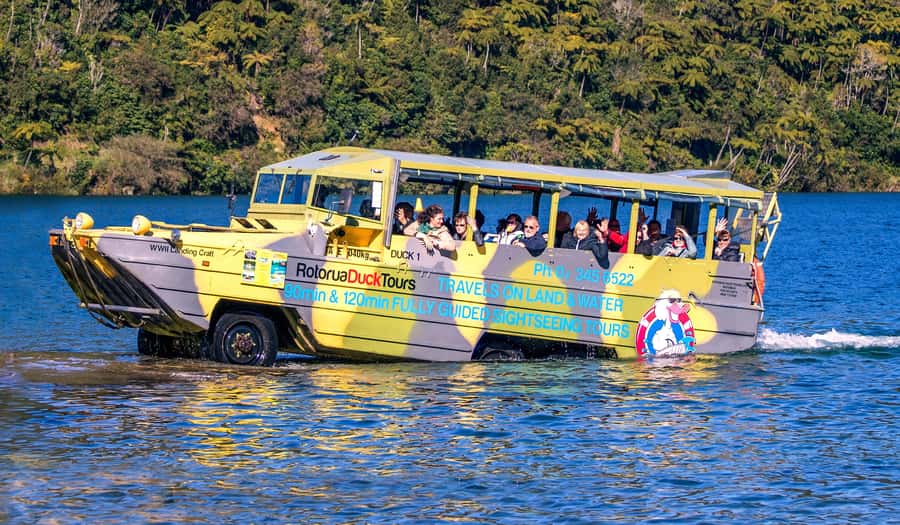
At $65 per person, the tour offers more than a basic scenic drive. You get a two-hour guided route, a historic amphibious vehicle, four lakes, three splashdowns, and interpretation of the region’s natural and cultural past.
The value is strongest if you would otherwise pay separately for a lake cruise and a sightseeing drive. The Duck gives you both types of access in one compact outing, while the guide adds information that would be difficult to gather on your own during a short visit.
It is less compelling if you are judging the price by time spent at each stop. You do not get long independent visits, extended walks, or a full day beside Lake Tarawera. The experience is best understood as a moving introduction to the Rotorua lake district.
For families, the vehicle and splashdowns add a memorable hook. Older children are likely to enjoy the road-to-water change, while adults can listen for the history and geology. Since the tour is suitable for all ages, it can work well for a mixed-age group looking for one activity everyone can share.
The included duck quacker is a small but telling detail. It adds to the cheerful, slightly silly mood, especially when the Duck returns through Rotorua. One account described the amused reaction of a nearby driver as a group of passengers made their quackers heard in town. You should expect some playful noise, not a solemn museum visit.
Weather, clothing, and practical advice
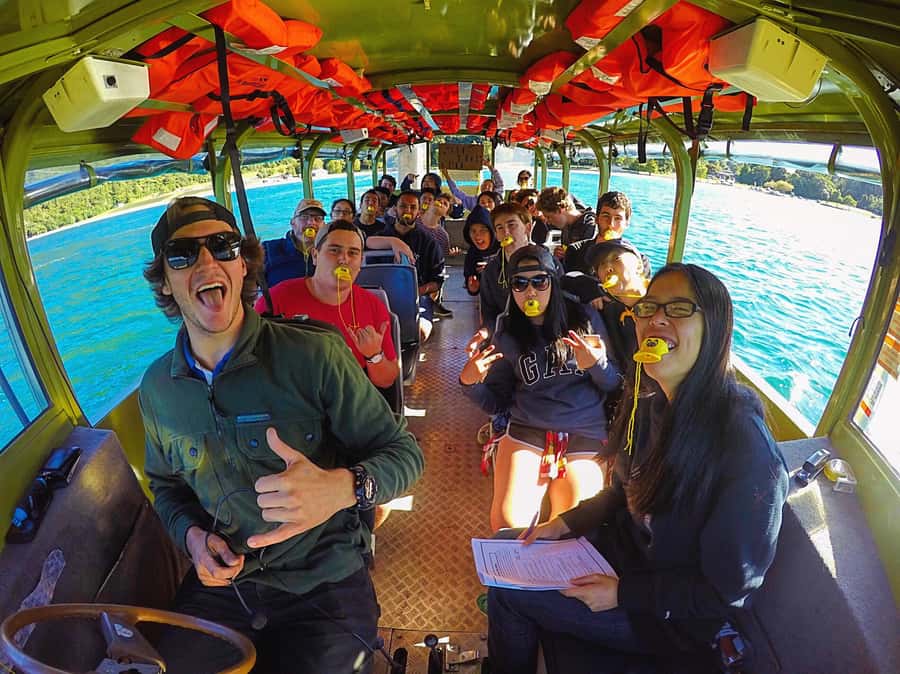
Wear comfortable shoes and dress warmly, especially if the day is cool or windy. The Duck has open windows, so the temperature on board can feel lower than it does at the meeting point. Blankets are provided on colder days, but I would still bring a warm layer.
The vehicle operates in all weather. Clear roll-down sides help keep rain out, but rain can still change the feel of the outing and reduce the clarity of the views. If you have flexibility, a dry day will make the volcanic domes and lake scenery easier to appreciate.
Arrive at 1241 Fenton Street on time. Hotel pickup and drop-off are not included, so plan your route to the meeting point before departure. The activity is conducted in English, and the tour is fully guided from start to finish.
The cancellation terms are helpful for uncertain plans: you can cancel up to 24 hours in advance for a full refund. You can also reserve now and pay later, which gives you some flexibility while arranging a Rotorua itinerary.
Who should book the Tarawera Duck Tour?
I would recommend it most strongly to first-time Rotorua visitors who want a broad introduction to the lakes district. It is also a good choice for families, history fans, people interested in Māori culture and volcanic geology, and anyone who wants a sightseeing trip with a playful twist.
You will get the most from it if you enjoy being told what you are seeing. The guide connects the lakes, mountain, eruption, culture, and geothermal setting into one story, so the trip feels more meaningful than a simple scenic ride.
I would be more cautious if you need a precise return time, dislike cold air, or prefer quiet, self-directed sightseeing. The tour can run beyond the expected schedule, and commentary is a major part of the experience. Wet weather does not cancel the tour, but it can make the ride less comfortable.
With a rating of 4.6 from 77 reviews, the overall response is strong. The most praised features are the guides’ humor, the useful commentary, the beautiful lakes, and the sheer novelty of riding a WWII amphibious vehicle. The recurring cautions are clear too: prepare for weather, and allow some schedule flexibility.
Should you book it?
Book this tour if you want to see several Rotorua lakes, learn why they matter, and enjoy an unusual vehicle at the same time. The Lake Tarawera splashdown beneath Mt Tarawera is the heart of the trip, while the Green Lake and Blue Lake add cultural and scenic variety.
I would choose it early in a Rotorua visit, since it gives you a useful sense of the lake district before you decide where to spend more time. Bring warm clothes, accept the jokes, and leave your schedule loose. At $65, it is a fair buy for a compact, family-friendly outing that offers scenery, stories, and a genuine piece of WWII machinery in one ride.
FAQ
How long is the Tarawera and Lakes Duck Tour?
The tour lasts two hours, including the road journey, lake visits, splashdowns, and live commentary.
Where does the tour begin?
The meeting point is 1241 Fenton Street in Rotorua, New Zealand. Hotel pickup and drop-off are not included.
Which lakes does the tour visit?
The route visits Lake Okareka, Lake Tarawera, Rotokakahi, also called the Green Lake, and Tikitapu, known as the Blue Lake.
How many times does the Duck enter the water?
The Duck splashes down three times, at Lake Okareka, Lake Tarawera, and Tikitapu. Rotokakahi is viewed from the route rather than entered.
What should I wear?
Wear comfortable shoes and dress warmly on cold days. The Duck has open windows, and blankets are provided when conditions are colder. Clear roll-down sides help keep you dry in rain.
Is the tour available in bad weather?
Yes. The Duck operates in all weather, and clear roll-down sides are used on rainy days. You should still prepare for wind, cold, and reduced views in poor conditions.
Just added in Rotorua
- Te Puia: Tuku Iho Trail with Cultural Show★ 5.0 · 5 reviews
- Te Puia: Te Rā Guided Day Tour + Haka Cultural Performance★ 4.7 · 128 reviews
- Te Puia: Te Pō Indigenous Combo – Tour, Dinner + Haka★ 4.4 · 52 reviews
- Rotorua: Wai Ariki Hot Springs & Spa 1hr Restorative Bathing★ 4.8 · 16 reviews
- Rotorua: White Island, Mount Tarawera & Waimangu Volcanic …★ 4.4 · 5 reviews
- Rotorua: Velocity Valley – NEW Vertigo 43m drop★ 5.0 · 3 reviews
- Rotorua: Volcano Landing and Geothermal Park Helicopter Tour★ 5.0 · 1 review
- Rotorua: Velocity Valley – Two Ride Pass★ 4.6 · 8 reviews
2-Hour Experiences, compared.
2-Hour Cathedral Cove and Volcanic Coast Cruise
Read our review →
2 Hour Cathedral Cove and Volcanic Coast Cruise with Shade Canopy
Read our review →
America’s Cup 2-Hour Sailing Experience Waitemata Harbour
Read our review →
Small Group Daytime 2-Hour Eco Wildlife Tour at Zealandia
Read our review →Browse the lists this tour appears in