
REVIEW · STARGAZING TOURS
Star Safari Stargazing Experience, Martinborough
The southern sky puts on a fine show. Star Safari combines a dark-sky setting near Martinborough with powerful telescopes, patient guidance, and a useful backup when clouds spoil the view. I especially like the small groups of up to 10 people and the chance to ask Sam, an astrophysicist, and Hari, an astrobiologist, as many questions as you like. The main catch is simple: clear skies are never guaranteed.
I also like that this is more than a quick look through a telescope. You can see deep-sky objects, learn how to find your way around the stars, handle astronomy binoculars, and enjoy a hot drink afterward. On cloudy nights, the experience continues with planetarium software, virtual reality, and a collection of New Zealand rocks linked to the search for life on Mars. Bring warm layers, since the viewing area gets very cold after dark.
In This Review
- Key points for your night under the stars
- Why Martinborough is a fine place to study the stars
- The first steps into the Moon Garden
- What you can see through the telescopes
- Why the guides shape the experience
- The International Space Station and other surprises
- When clouds arrive, the night does not end
- Staying warm in a cold viewing area
- Is the $62.06 price good value?
- Who will enjoy Star Safari most
- Booking details worth knowing before you go
- Should you book Star Safari?
- FAQ
- Where does Star Safari meet?
- How long does the stargazing experience last?
- What happens if the weather is cloudy?
- How many people can join the session?
- What should I wear?
- Can I cancel for a refund?
Key points for your night under the stars
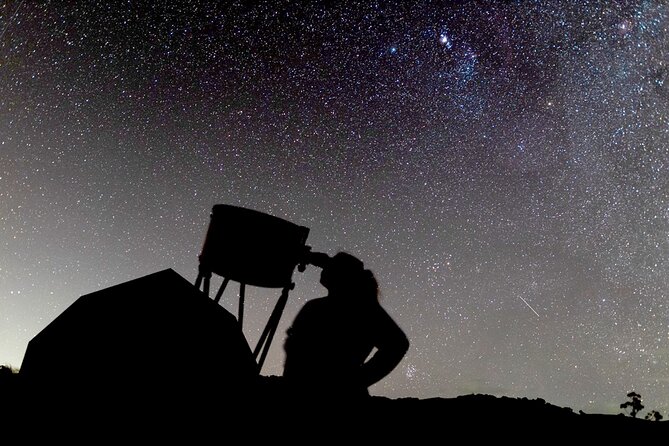
- Two manual 16-inch telescopes give you a close look at planets, clusters, galaxies, and nebulae.
- Sam and Hari lead the session, offering astrophysics and astrobiology insight with plenty of time for questions.
- Small groups of up to 10 people mean less waiting and more time at the telescopes.
- The cloudy-night program still has substance, with a virtual planetarium, VR Solar System, and Mars-related rock collection.
- The Wairarapa International Dark Sky Reserve offers some of New Zealand’s darkest and clearest skies.
- A complimentary hot drink helps take the chill off after your time outside.
Why Martinborough is a fine place to study the stars
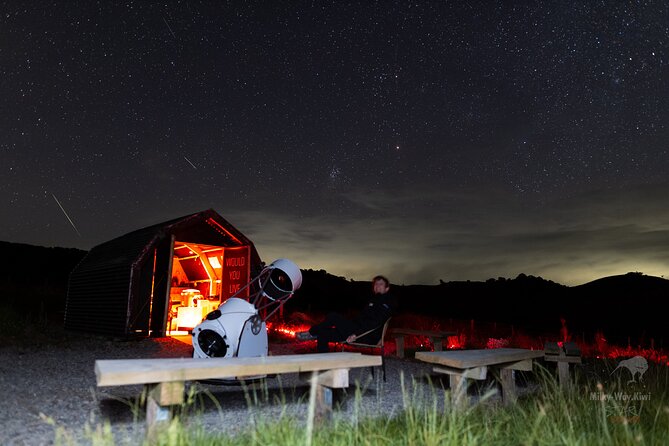
Star Safari operates near Martinborough in the Wairarapa, about 80 kilometres from Wellington Airport. The area forms part of the Wairarapa International Dark Sky Reserve, where limited light pollution can make a major difference to what you see overhead.
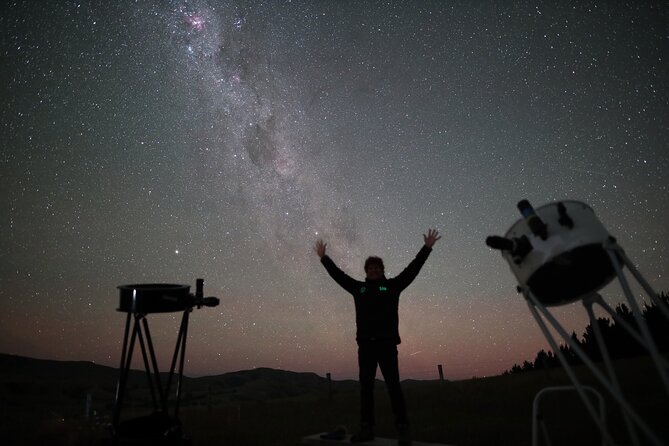
That setting matters. In a bright city, the Moon and a few obvious stars may be all you notice. In a dark location, the Milky Way can become a broad, textured band, and fainter clusters and nebulae have a better chance of showing through. The southern sky also offers sights that are unfamiliar to many visitors from the Northern Hemisphere.
I would treat the journey as part of an evening outing rather than a quick activity squeezed between other plans. The meeting point is listed at VG48+C6 Ponatahi in the Wellington Region, and the experience finishes back there. Check your route and allow enough time to arrive without rushing. The supplied details do not include transport from Wellington, so you should plan your own way to the meeting point.
More stargazing nights in Wellington:
- Private Stargazing at Star Safari near Martinborough
★ 5.0 · 3 reviews - Lake Tekapo: Alpine Stargazing Experience with a Guide
★ 4.5 · 626 reviews - Lake Tekapo: Stargazing Experience
★ 4.9 · 607 reviews
The first steps into the Moon Garden
On arrival, you meet Hari and Sam and collect a blanket or jacket through the reception area. The telescope viewing area is about 25 metres away, inside the Moon Garden. That short walk is useful to know, especially if you are bringing children or arriving in daylight before the temperature drops.
The outside session lasts about 60 to 90 minutes, within a total experience of roughly 90 minutes. The exact time spent at the telescopes depends on the sky and on what is visible that night. A clear evening may allow a steady run of planets, star clusters, and distant objects. Patchy cloud can turn the session into a mix of short viewing windows and explanation.
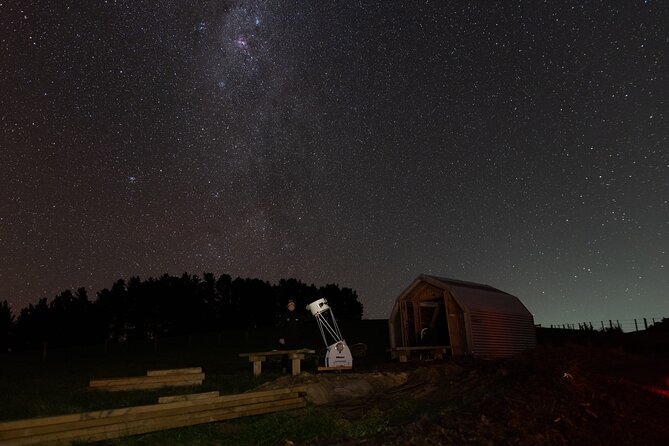
This is not a large bus tour where a guide points at the sky and moves on. With a maximum of 10 people, you get a better chance to stay close to the equipment and ask questions. The number of telescopes also helps. Star Safari has two 16-inch manual telescopes and may have three or four telescopes available for the session.
What you can see through the telescopes
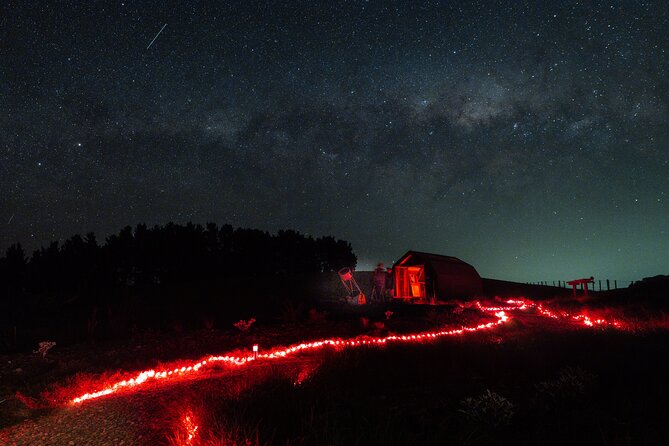
The telescope portion is built around the southern sky. You might see the Milky Way, planets, galaxies, nebula clouds, star clusters, and stars with different colors. One especially memorable target can be Saturn, when it is in the right part of the sky. Its rings and moons can turn an abstract lesson into something you can recognize at once.
The telescopes are manual, which gives the session a more hands-on character. Rather than relying only on an automated system, Sam and Hari know how to locate objects themselves. That means you are not simply shown a target. You also learn how the sky is arranged and how to orient yourself among the stars.
For beginners, this is valuable. The night sky can look like a mass of bright points with no obvious starting place. Star Safari aims to give you a practical entry point, helping you understand what you are looking at and where to begin.
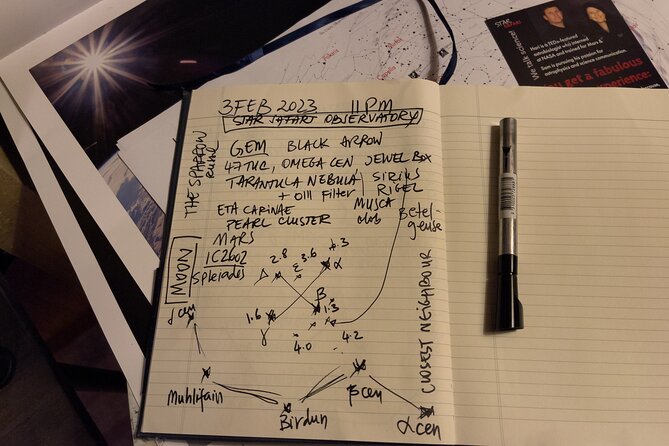
If you already know the basics, bring an observing list. The hosts specifically welcome advanced stargazers, so you can use the session to pursue particular planets, clusters, or other objects rather than leaving the choice entirely to the guide.
Astronomy binoculars are also available. These can be a good middle ground between looking with your eyes and using a large telescope. You may find that some broad star fields are easier to appreciate through binoculars, while the telescope gives you a closer look at a specific object.
Why the guides shape the experience
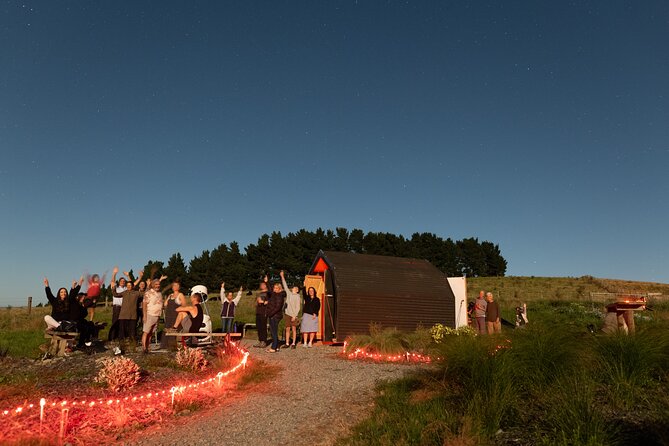
Sam brings an astrophysicist’s view of the Universe, while Hari works as an astrobiologist. Their subjects overlap, but they also open different paths for questions. You can ask about what an object is, how it formed, and what it might tell us about planets and life.
Both guides are licensed to operate a laser pointer. That matters because a good explanation needs a clear way to connect words with the sky. A laser pointer can show you a constellation or a line between stars, helping you get your bearings before you look through a telescope.
The strongest part of this format is the open question time. You are not limited to a fixed talk. Ask about a planet, a shooting star, a satellite, or the International Space Station if it passes overhead. The hosts can also explain how to identify different kinds of stars and why some appear red or blue.
The experience is designed as a learning session, but it does not sound like a formal classroom. The focus is on sharing their enthusiasm and helping you make sense of what you see. That should suit curious adults, families, and anyone who wants more than a photograph of a telescope.
A few more to weigh up in Wellington
- Wellington: Wētā Workshop Guided Tour Ticket
★ 4.7 · 997 reviews - Wētā Workshop Experiences Tour – Wellington
★ 5.0 · 875 reviews - Wellington: Return Cable Car Ticket
★ 4.6 · 714 reviews - Half Day Tour of Wellington
★ 4.5 · 638 reviews
The International Space Station and other surprises
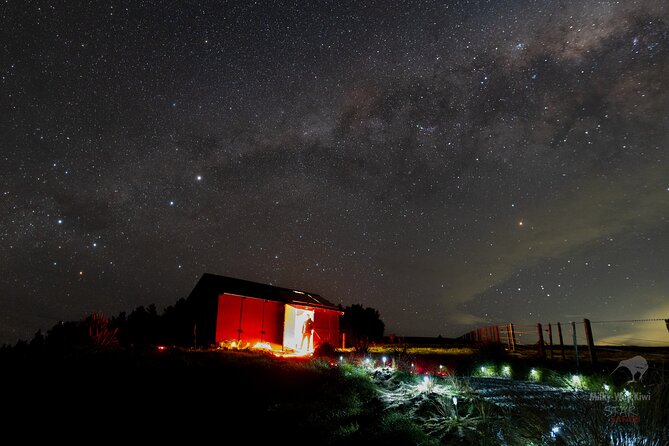
The sky is not limited to stars. If the timing is right, you may catch the International Space Station or one of the many satellites that cross overhead. A meteor may also flash by, giving you the classic wish-on-a-shooting-star moment.
These sightings cannot be promised. They depend on timing and chance, so consider them extra rewards rather than the central reason to book. The same is true of a particular planet or deep-sky object. The night sky changes with the season, the time, and the weather.
That changing menu is one reason a guided session can be more useful than simply standing outside with a phone app. The hosts can adjust to what is visible and explain why some targets are worth your attention on that particular night.
When clouds arrive, the night does not end
Weather is the big variable here. If clouds block the stars, Star Safari switches to an e-astronomy program rather than simply canceling the evening on the spot.
The cloudy-night session uses planetarium software to tour the Universe and includes virtual reality exploration of the Solar System. This gives you a way to travel through space even when the real sky is hidden. The VR element may not suit everyone. One person specifically experienced some 3D sickness, so you should be aware that virtual reality can feel uncomfortable for some people.
The program also includes a collection of rocks from across New Zealand. These specimens connect to astrobiology and the search for life on Mars, which gives the cloudy-night option a clear purpose. It is not just a filler video while you wait for the weather to improve.
Still, you should set your expectations correctly. A virtual tour cannot replace seeing Saturn’s rings or the Milky Way with your own eyes. If actual stargazing is your main goal, check the forecast and remember that the operator may cancel for poor weather, offer another date, or provide a full refund under the stated policy.
Staying warm in a cold viewing area
The advice to dress as if you were going hiking is worth taking seriously. Night air in an open viewing area can feel much colder than the afternoon temperature suggests, and you may spend a long time standing still while waiting for your turn at a telescope.
Bring warm layers, sturdy shoes, and something suitable for outdoor conditions. The supplied guidance specifically recommends a warm jacket or blanket, and Star Safari provides blankets or jackets through the reception area. I would still arrive prepared rather than rely only on what is available.
A complimentary hot drink is included and has become a regular tradition at Star Safari. Hot chocolate was especially appreciated after a cloudy or cold session. It is a small detail, but it improves the rhythm of the evening: outside for the sky, inside for warmth, then back to the night if conditions allow.
Is the $62.06 price good value?
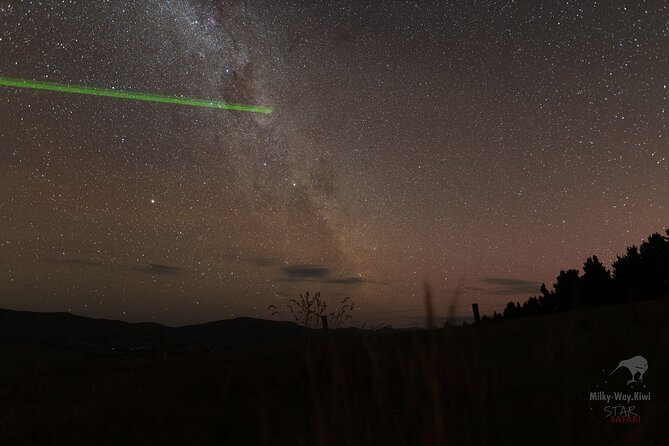
At $62.06 per person, this is not the cheapest way to look at stars, but the price covers more than access to a dark field. You are paying for a 90-minute guided experience, specialist hosts, large telescopes, astronomy binoculars, a small group, and a planned alternative for cloudy conditions.
The value is strongest if you want to understand what you are seeing. A basic self-guided stargazing outing can be inexpensive, but it may leave you guessing which stars, planets, or clusters deserve attention. Here, you have two specialists available for direct questions and a session built around teaching you how to orient yourself.
Families may find the cost easier to justify because children were free in one family booking. The provided details do not state a general age policy or exactly how child pricing works, so check the current booking terms before you rely on that. A six-year-old was able to attend with a family group, while even younger children were taken along without an extra charge in that particular case.
The small group also matters. A maximum of 10 people is a good balance between shared excitement and access to the equipment. You should not expect a private session unless your own party fills the group, but you are less likely to feel lost in a crowd.
Who will enjoy Star Safari most
I would recommend this experience to first-time stargazers who want a clear introduction to the night sky. The guides explain how to get started, and the manual telescopes give the session a sense of discovery rather than a simple push-button demonstration.
It also suits serious hobbyists. You can bring an observing list and ask for particular targets, while the multiple telescopes and binoculars offer different ways to view the sky.
Families can fit in well, too. The open questions, VR program, hot drink, and chance to see a satellite give children several ways to stay interested. Very young children may find a 90-minute evening session difficult, especially in the cold, so warm clothing and realistic expectations matter.
I would be more cautious if you only want guaranteed telescope views. Weather can close the outdoor portion, and even a clear night will not promise a specific planet, meteor, or space-station pass. The cloudy-night program is a real alternative, but it is a different experience.
Booking details worth knowing before you go
The activity accepts mobile tickets, and confirmation is provided at booking. Service animals are allowed, and most people can participate. If you have access questions, contact the provider before booking, since the available information does not give full details for every need.
The group limit is 10 people, which helps keep the session personal. Dress warmly and arrive ready for outdoor conditions. The activity ends where it begins, at the Ponatahi meeting point.
Free cancellation is available up to 24 hours before the start time for a full refund. Changes or cancellations inside that 24-hour window are not accepted for a refund under the stated rules. If bad weather causes the operator to cancel, you will be offered another date or a full refund.
Should you book Star Safari?
Book it if you want an informed, small-group introduction to the southern sky, especially if you are staying around Martinborough and can plan around the weather. The combination of dark skies, two passionate specialists, large manual telescopes, and a thoughtful cloudy-night option gives the $62.06 price fair value.
If the forecast is clear, this could be one of the most memorable evening activities in the Wairarapa. If clouds are likely, decide how much you would enjoy planetarium software, VR, and astrobiology before committing. Either way, pack warm clothes. The stars may be millions of light-years away, but the cold is much closer.
FAQ
Where does Star Safari meet?
The meeting point is VG48+C6 Ponatahi in the Wellington Region, New Zealand. The activity ends back at the same meeting point.
How long does the stargazing experience last?
The experience lasts approximately 1 hour and 30 minutes. The outdoor telescope viewing portion generally lasts 60 to 90 minutes, depending on the conditions.
What happens if the weather is cloudy?
Star Safari offers an e-astronomy program when the weather is unsuitable for telescope viewing. This includes planetarium software, virtual reality exploration of the Solar System, and a collection of New Zealand rocks connected to the search for life on Mars.
How many people can join the session?
The maximum group size is 10 people.
What should I wear?
Dress warmly, as if you were going hiking. The viewing area can become very cold at night. Star Safari also provides access to a blanket or jacket through the reception area.
Can I cancel for a refund?
You can cancel at least 24 hours before the start time for a full refund. If Star Safari cancels because of poor weather, you will be offered another date or a full refund.
Just added in Wellington
- Wellington: Secret Realms of Middle-earth – Lothlorien★ 5.0 · 2 reviews
- Wellington Zoo General Entry Tickets★ 3.9 · 7 reviews
- Wellington: Remutaka Rail Trail Cycle Tour★ 4.9 · 17 reviews
- Wellington Helicopters Scenic Harbour Flight★ 4.4 · 19 reviews
- Wellington: Lord of the Rings Half-Day Guided Tour inc Weta★ 5.0 · 5 reviews
- Wellington: Martinborough Private Winery Tour with Lunch★ 5.0 · 3 reviews
- Wellington: Private custom tour with a local guide★ 4.6 · 3 reviews
- Wellington: Half-Day City Highlights Tour and Cable Car Ride★ 4.5 · 60 reviews
Stargazing Tours, compared.
Mount John Observatory Stargazing Experience, Tekapo
Read our review →
Silver River Stargazing Experience in Lake Tekapo
Read our review →
Stargazing Experience at Cowan’s Private Observatory
Read our review →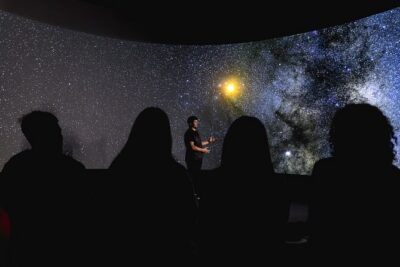
Dark Sky Indoor Maori Cultural Astronomy Experience
Read our review →Browse the lists this tour appears in