REVIEW · SAFARI
From Wairarapa: Star Safari with Astronomers & VR Experience
The best night show needs no stage. Star Safari in Wairarapa takes you to the Wairarapa Dark Sky Reserve, where powerful telescopes and clear southern skies turn astronomy into a friendly, hands-on evening. I like the small groups of no more than 10, and I like that Hari and Sam mix science with stories rather than giving you a dry lecture.
I also like the sensible cloudy-night plan: high-end virtual reality and planetarium software keep the experience worthwhile when real stars disappear. The main consideration is simple: this is an outdoor night activity, so you need warm clothing and comfortable shoes, and the real telescope session depends on the weather.
In This Review
- Key points to know before you go
- Arriving at the hilltop observatory
- Finding your way around the southern skies
- Looking through the 16-inch manual telescopes
- Science with stories, not a classroom lecture
- The cloudy-night VR program
- Why 90 minutes is a useful length
- Is $59 a fair price?
- Who will enjoy Star Safari most
- Practical advice for a better evening
- Should you book Star Safari?
- FAQ
- Where does Star Safari take place?
- How long does the experience last?
- How much does Star Safari cost?
- What happens if the weather is cloudy?
- Are children allowed to attend?
- How many people are in the group?
- What languages are available?
- Is the experience wheelchair accessible?
Key points to know before you go
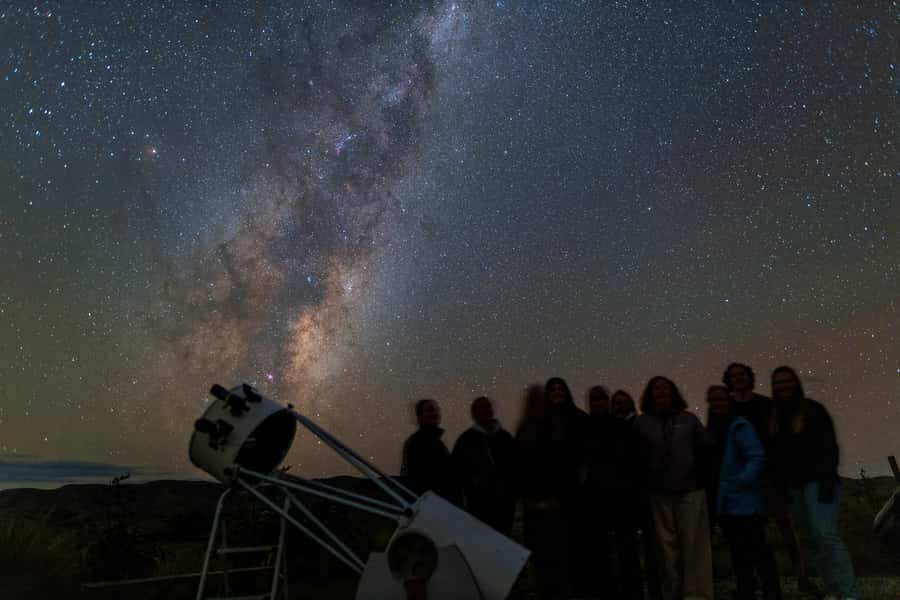
- The southern sky gets a proper introduction: You learn how to find your way around the stars before looking through a telescope.
- Sixteen-inch manual telescopes provide the main event: Your hosts guide you from telescope to telescope and explain what you are seeing.
- Cloud does not cancel the evening: A specially designed VR program takes you through stars, planets, galaxies, and the edge of the observable universe.
- Hari and Sam lead the session: Hari brings an astrobiologist’s interest in life beyond Earth, while Sam contributes an astrophysicist’s understanding of the cosmos.
- Small groups make questions easy: The maximum group size is 10, useful if you want personal help at the telescopes.
- Families get good value: Up to two children under 15 can attend free with a paying adult.
Arriving at the hilltop observatory
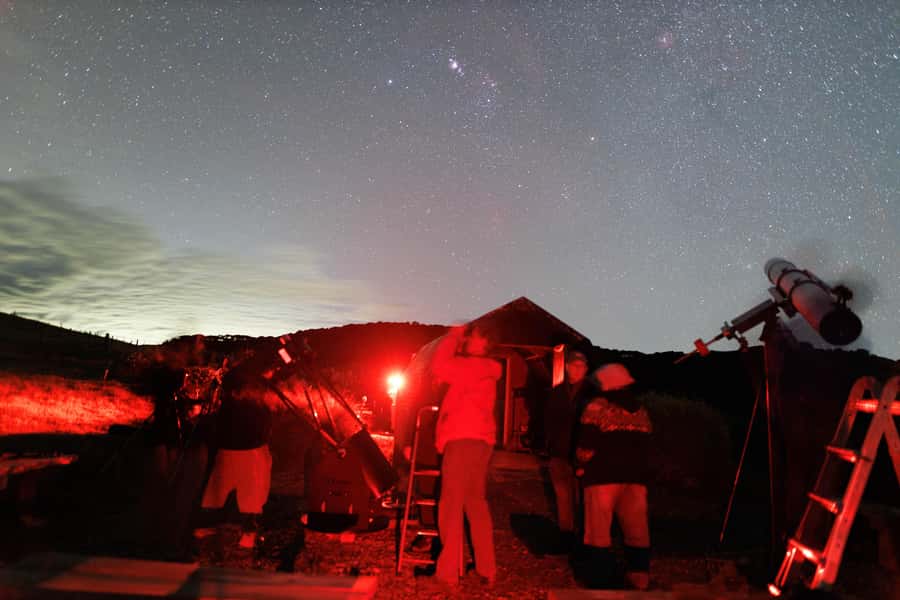
Your visit begins by following the signs up the hill to the observatory. Meet the hosts at the car park, then settle in for a 90-minute session devoted to the southern skies.
The meeting arrangement is refreshingly straightforward, but you should allow enough time to follow the signs carefully. No transport is included in the information provided, so plan to make your own way to the observatory and arrive ready for an outdoor evening.
The setting matters here. The Wairarapa Dark Sky Reserve offers a better backdrop for stargazing than a bright town or city. Less artificial light means more chance of seeing the Milky Way clearly and making sense of the stars above you. The sky is not just scenery for this activity. It is the main reason the experience works.
Bring a warm layer even if the evening begins mild. You may spend time outside looking upward, and still air at night can feel much colder than expected. Comfortable shoes are also listed as essential, which makes sense for moving around the observatory area.
Other trips worth a look in New Zealand:
- Hobbiton Movie Set: Guided Tour Ticket
★ 4.9 · 8,167 reviews - Waitomo: Glowworm Caves Guided Tour by Boat
★ 4.5 · 4,908 reviews - Rotorua Canopy Tours: 2.5Hour Native Forest Zipline Adventure
★ 5.0 · 4,563 reviews
Finding your way around the southern skies
The evening starts with an introduction to what you will see. This opening matters because the night sky can look like a mass of scattered points if nobody gives you a way to read it.
Your hosts help you get your bearings and explain how to identify features in the southern sky. That gives the rest of the session a useful structure. Instead of simply waiting for an impressive object to appear in a telescope, you begin to understand how the sky fits together.
I like this approach for first-time stargazers. You do not need a background in astronomy, and you are not expected to arrive knowing the names of constellations or planets. The guide’s job is to make the sky less intimidating and more readable.
The balance between science and storytelling should also suit mixed groups. Children can enjoy the big questions about space, while adults get enough scientific detail to understand what they are seeing. Hari’s interest in astrobiology brings a natural focus to the possibility of life elsewhere, and Sam’s work as an astrophysicist adds a wider view of the cosmos.
The program is available with guides speaking English, French, or Romanian. You should check the language arrangement when booking if that is important for your group.
Looking through the 16-inch manual telescopes
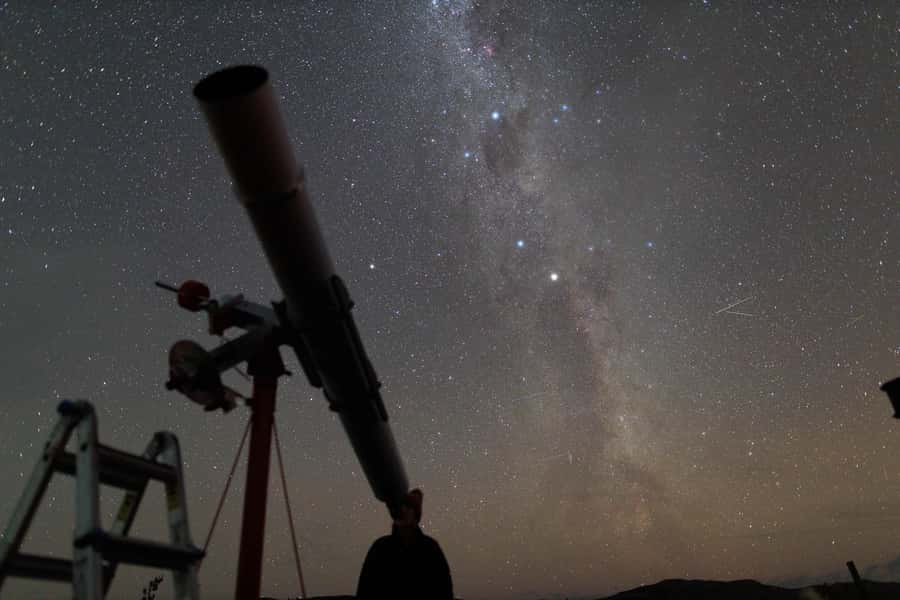
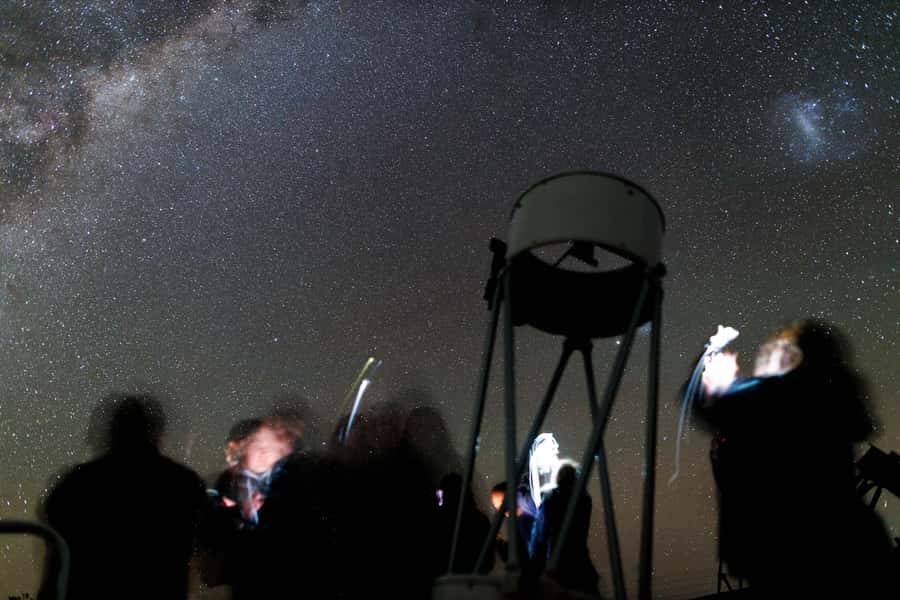
After the introduction, you spend time at the telescopes. The experience includes use of 16-inch manual telescopes, and your hosts guide you through the viewing rather than leaving you to work out the equipment alone.
That guidance is valuable. Telescopes can be less intuitive than they appear, especially in the dark. A manual telescope also gives the session a more direct, hands-on feel than simply looking at a screen. Your host can point out what is worth seeing, answer questions, and explain why a particular object matters.
You should expect the exact sights to depend on the date, time, and weather. The supplied details do not promise a fixed list of planets or galaxies, so it would be misleading to guarantee any single object. The strength of this format is the live response to the sky on the night you visit.
The small group limit of 10 is a real advantage here. With a large crowd, telescope time can feel rushed and questions may be hard to ask. A smaller group gives you a better chance to listen closely, look through the equipment, and speak directly with Hari or Sam.
The manual setup may not suit someone looking for a polished show with constant visual effects. It is better for you if you enjoy a slower, more personal session where the guide helps you connect the equipment to the wider story of the universe.
Science with stories, not a classroom lecture
Star Safari is built around the idea that astronomy should be understandable. Hari and Sam have made the stars their life’s work, with Hari working as an astrobiologist and Sam as an astrophysicist.
Those backgrounds give the session a strong foundation, but the useful part for you is how that science is presented. The evening includes storytelling as well as facts, so you can follow the ideas without feeling as if you have enrolled in a university course.
That combination is especially helpful for families. Younger children may not remember technical terms, but they can remember the idea of searching for life in the universe or seeing the Milky Way in a new way. Adults get context that can make the telescope views more meaningful.
I would also recommend this for couples or solo visitors who want more than a scenic night outdoors. The experience offers a chance to ask questions and think about the scale of space, but it remains accessible and social rather than overly formal.
Do not expect a long, technical astronomy course in 90 minutes. The short format is a strength if you want a clear introduction, but it also means the program cannot cover every topic in detail.
A completely different sort of day out:
- Hobbiton™ Movie Set Walking Tour from Shires Rest
★ 5.0 · 3,577 reviews - Mitai Maori Village: Cultural Experience and Dinner Buffet
★ 4.7 · 3,575 reviews - Waiheke Island: Ferry & Hop-On Hop-Off Explorer Bus Tickets
★ 4.6 · 3,311 reviews - Kaikoura: Whale Watching Cruise
★ 4.6 · 3,089 reviews
The cloudy-night VR program
Cloudy weather does not simply end the evening. If the real sky is hidden, the program moves indoors to a specially designed cloudy-night experience using high-end virtual reality headsets and planetarium software.
This backup is more than a holding activity. You can be guided through stars, planets, and galaxies as if the sky were clear. The program also includes a detailed look at the Milky Way and a virtual trip to the edge of the observable universe.
That option improves the value of the booking because you are not paying for a gamble with no alternative. Weather still affects the kind of experience you receive, but the hosts have planned for the most obvious problem.
There is an important difference between the two formats. A real telescope session connects you with the actual night above Wairarapa, while VR gives you a controlled view of places and scales that are impossible to experience from one observatory. If you want traditional stargazing, clouds will still be a disappointment. If you mainly want to learn about space and see more of the universe, the indoor program should remain engaging.
The virtual reality equipment may not appeal to everyone, particularly if you prefer a quiet outdoor setting. Still, it gives families and first-time visitors a clear way to explore space when the weather refuses to cooperate.
Why 90 minutes is a useful length
The activity lasts 90 minutes. That is long enough for an introduction, guided telescope time, questions, and the cloudy-night alternative if needed, without turning into an exhausting late-night commitment.
For families, the length is manageable. Children under 15 attend free with a paying adult, with up to two children included under that offer. You still need to check the booking conditions for your particular group, but this can make the price much more attractive for a family.
For adults, 90 minutes gives the evening a clear shape. You are not committing an entire night to astronomy, so it can fit into a wider Wairarapa visit. The shorter session also keeps the focus sharp: orientation first, telescope time next, and a guided explanation throughout.
The timing does mean you should not expect unlimited viewing time at every telescope. In a group of up to 10, the hosts can share their attention well, but the evening remains a guided introduction rather than an open-ended private observatory session.
Is $59 a fair price?
At $59 per person, the value depends on what you want from a night-sky activity. You receive a 90-minute guided experience, access to 16-inch manual telescopes, expert instruction, an introduction to the southern skies, and a hot chocolate drink.
The strongest value comes from the combination of live expertise and a weather backup. You are not just hiring equipment or standing outside with a star map. Hari and Sam explain what you are seeing, respond to questions, and connect the objects in the sky to larger scientific ideas.
The price also looks better for families because children under 15 are free with a paying adult, up to two children. A small group of no more than 10 adds another benefit. You are paying for a more personal format instead of being folded into a large crowd.
The main limitation is that the price does not guarantee clear weather or a fixed set of celestial sights. If the clouds arrive, you receive the VR program instead. That is a well-planned alternative, but it is still different from seeing the real southern sky through a telescope.
A hot chocolate is a small touch, but a useful one. It suits the cold outdoor setting and gives the evening a friendly finish rather than making it feel like a technical demonstration.
Who will enjoy Star Safari most
I would choose this experience if you want an introduction to astronomy that feels personal and easy to follow. It is a good fit for:
- Families looking for an evening activity that works for children and adults
- First-time stargazers who want help identifying features in the southern sky
- Visitors interested in astrobiology, astrophysics, planets, and the possibility of life beyond Earth
- Couples or solo visitors who prefer a small group to a large commercial tour
- People who want a weather backup instead of a simple cancellation
- Anyone visiting Wairarapa who can make their own way to the hilltop observatory
It may be less suitable if you want a completely private session, a guaranteed list of planets and galaxies, or a long advanced astronomy workshop. The experience is friendly and focused, not an all-night research session.
Wheelchair access is available, which makes the activity easier to consider for visitors with mobility needs. You should still confirm the practical arrangements for reaching the observatory and car park when you book.
Practical advice for a better evening
Wear warm clothing from the start. Do not rely on the temperature at the beginning of the evening, since you will be outside during the telescope portion.
Choose comfortable shoes for the hilltop observatory area. Bring a camera if you want to record the setting, but remember that night-sky photography can be difficult without the right equipment. The camera is useful for the experience and surroundings, but your own eyes will be the main viewing tool.
Keep your expectations flexible. A clear sky may provide the classic stargazing experience, while clouds send you indoors for VR and planetarium exploration. Neither program is exactly the same, so the best attitude is to value the chance to learn about the universe in two different ways.
You can also reserve now and pay later, which helps if you are arranging several activities around Wairarapa. Free cancellation is available up to 24 hours in advance for a full refund, giving you some protection if your plans change.
Should you book Star Safari?
Book it if you want a small, friendly introduction to the southern sky with real astronomers, substantial telescope equipment, and a useful cloudy-night alternative. The mix of science, storytelling, and personal guidance makes the $59 price reasonable, especially for families using the free child places.
I would skip it only if you need guaranteed clear skies or a fixed list of celestial objects. For everyone else, Star Safari offers a thoughtful way to spend 90 minutes in Wairarapa, with enough flexibility to remain worthwhile even when the stars hide.
FAQ
Where does Star Safari take place?
It takes place at the observatory in the Wairarapa Dark Sky Reserve on New Zealand’s North Island. Follow the signs up the hill to the observatory and meet at the car park.
How long does the experience last?
The stargazing experience lasts 90 minutes.
How much does Star Safari cost?
The listed price is $59 per person.
What happens if the weather is cloudy?
You receive an indoor cloudy-night program using high-end virtual reality headsets and planetarium software. The program covers stars, planets, galaxies, the Milky Way, and the edge of the observable universe.
Are children allowed to attend?
Yes. Children under 15 are free with a paying adult, with up to two children included.
How many people are in the group?
The experience is limited to 10 participants.
What languages are available?
The live tour guide is available in English, French, and Romanian.
Is the experience wheelchair accessible?
Yes, the activity is listed as wheelchair accessible.
Just added in New Zealand
- Creative Wheel Throwing Pottery Class in Coromandel★ 4.0 · 2 reviews
- Coromandel Adventure and Wildlife Boat Tour to Aldermen Islands★ 5.0 · 9 reviews
- Wine trail and Christchurch City – Luxury, Small Group Tour★ 5.0 · 15 reviews
- 5 Day South Island New Zealand Private Tour from Dunedin★ 5.0 · 2 reviews
- Waipara Wine Trail Tour From Christchurch★ 5.0 · 1 review
- Willowbank Wildlife Reserve Day Entry★ 4.5 · 94 reviews
- Waipara Wine Trail Private Group Tour From Christchurch★ 5.0 · 1 review
- Waimakariri River Jet Boating from Christchurch★ 4.0 · 9 reviews
Safari, compared.
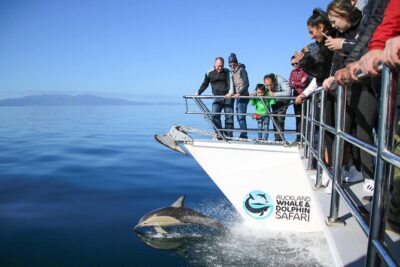
Auckland Dolphin and Whale Watching Eco-Safari Cruise
Read our review →
Seal Coast Safari – Exclusive access to Wellington’s secret coast
Read our review →