
REVIEW · STARGAZING TOURS
Hanmer Springs: Guided Stargazing Tour
Look up, and Hanmer Springs gets much bigger. This two-hour evening outing takes you from the village to a dark-sky site surrounded by native forest, where I like the mix of expert-led sky watching and hands-on time with telescopes, binoculars, and star finders. I also like the simple comforts: hot drinks, snacks, blankets, and a lounge chair for looking up without stiffening your neck.
The main drawback is weather. Cloud can cancel the tour, and even a clear night can feel cold, so you need proper warm clothing. Summer starts late, often around 10:00 PM, which may not suit young children or anyone hoping for an early night.
In This Review
- Key points to know before you book
- Why Hanmer Springs is a fine place to watch the stars
- Getting there from the thermal pools
- The first lesson begins without a telescope
- Seeing faint objects through the guided telescope
- Manual telescopes for a more active evening
- Reclining with astro binoculars and a star finder
- How much value do you get for $77?
- Who will enjoy this stargazing tour most?
- Weather can make or break the evening
- Should you book the Hanmer Springs stargazing tour?
- FAQ
- How long does the Hanmer Springs stargazing tour last?
- How much does the stargazing tour cost?
- Where does the shuttle depart from?
- What equipment is included?
- What should I wear?
- What happens if the weather is poor?
Key points to know before you book
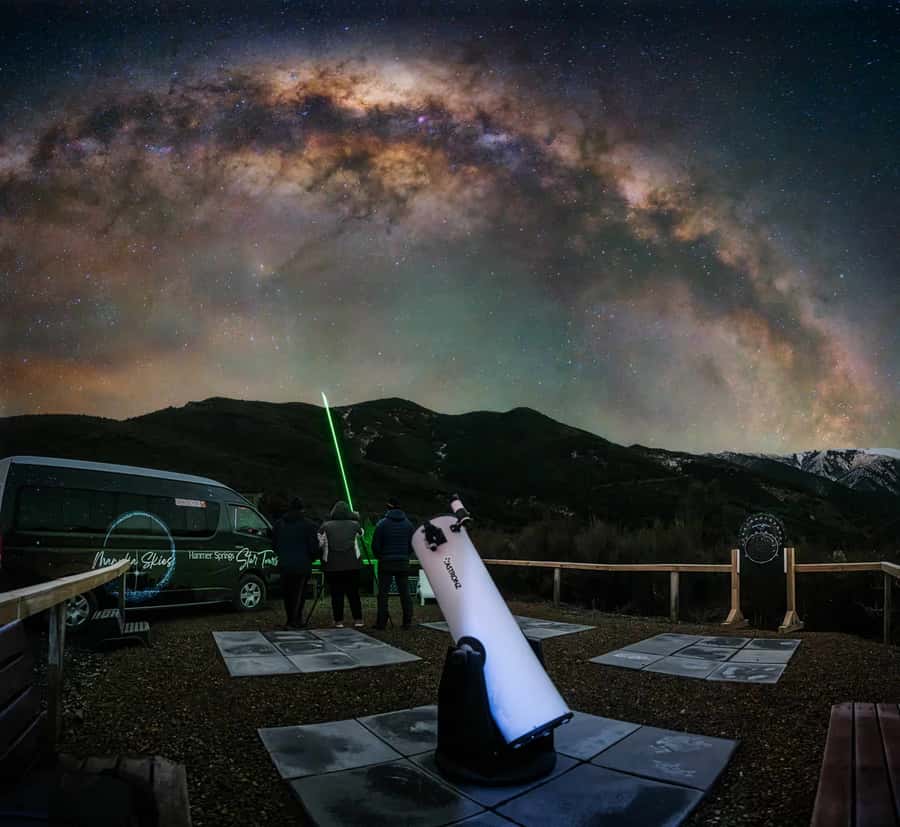
- A small group of up to 10 people gives you a better chance to ask questions and use the equipment.
- The Southern Cross is part of the naked-eye introduction, making this useful if you are still finding your way around the southern sky.
- The electronically guided telescope reaches beyond the visible stars, with targets such as the Omega Cluster and Sombrero Galaxy.
- Manual telescopes and astro binoculars keep the evening interactive, rather than turning it into a talk where you only stand and listen.
- Hot drinks, snacks, blankets, and lounge chairs are included, a welcome touch on a cold South Island night.
- Pickup and drop-off are free within Hanmer Springs Village, with the meeting point beside the thermal pools.
Why Hanmer Springs is a fine place to watch the stars
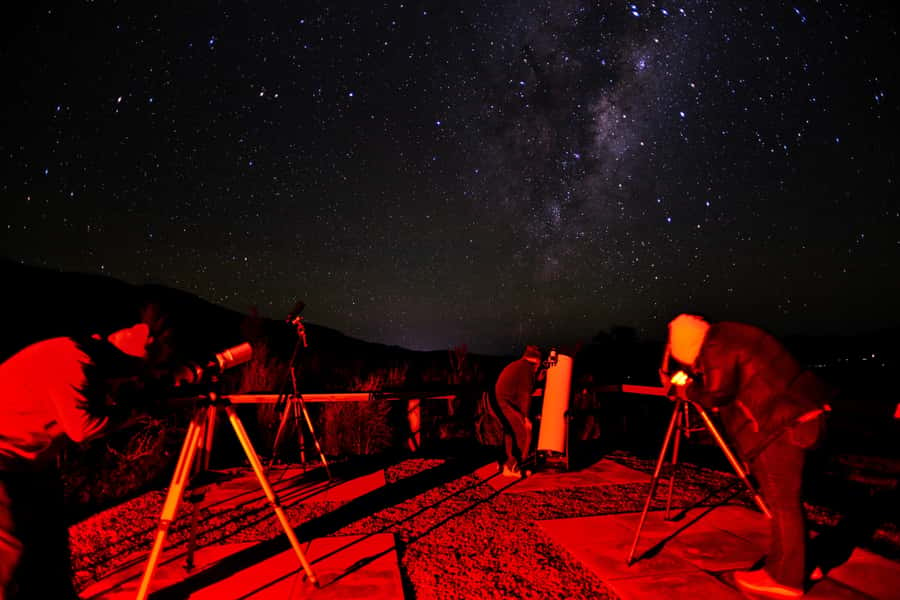
Hanmer Springs is best known for its thermal pools, mountain air, and outdoor activities. After dark, the area offers a very different reason to stay out: the reduced artificial light makes it easier to pick out constellations and faint objects in the sky.
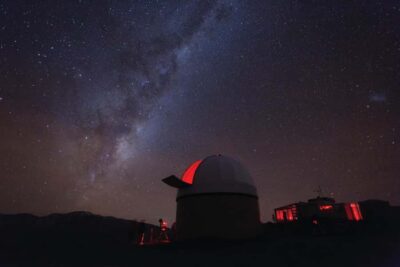
The tour takes you to a local dark-sky location surrounded by native forest. That setting matters. You are not standing beside a busy road or under bright resort lighting, and the forest gives the evening a quiet, tucked-away feel without requiring a long journey from the village.
I would keep your expectations sensible. This is not an observatory visit with a giant research telescope, and astronomy always depends on conditions. The appeal is the combination of a dark location, useful equipment, and guides who can explain what you are seeing in a friendly, practical way.
The experience has earned a perfect 5 rating from four verified bookings, with praise focused on the guides’ passion, interesting explanations, and strong grasp of both stars and history. That matches the format well: you get facts, but you also get help making sense of the sky above you.
More stargazing nights in Canterbury:
- Lake Tekapo: Alpine Stargazing Experience with a Guide
★ 4.5 · 626 reviews - Lake Tekapo: Stargazing Experience
★ 4.9 · 607 reviews - Chameleon Stargazing Shared Tour
★ 5.0 · 181 reviews
Getting there from the thermal pools
Your evening begins with a free shuttle pickup in Hanmer Springs Village. The bus and shuttle stop is on Jacks Pass Road, outside the public toilets and immediately beside the thermal pools. If you are driving, parking is available next to the pickup point.
This is a useful arrangement because you do not need to find the dark-sky site yourself. You also avoid driving back after spending two hours outside in the dark. The full experience lasts about two hours from pickup to drop-off, so allow for the transfer as part of the evening rather than treating it as a separate trip.
The departure time changes through the year. Winter tours typically begin around 7:30 PM, while summer departures are often around 10:00 PM. Check the available time for your date before booking, especially if you are arranging dinner, visiting the thermal pools, or travelling with children.
One practical point deserves emphasis: wear more than you think you need. Bring a warm jacket, gloves, and a hat. A windproof layer is strongly recommended, and blankets are supplied on site. The weather can change quickly, so warm clothing is not just a nice extra. It can decide whether you enjoy the evening or spend it thinking about your toes.
The first lesson begins without a telescope
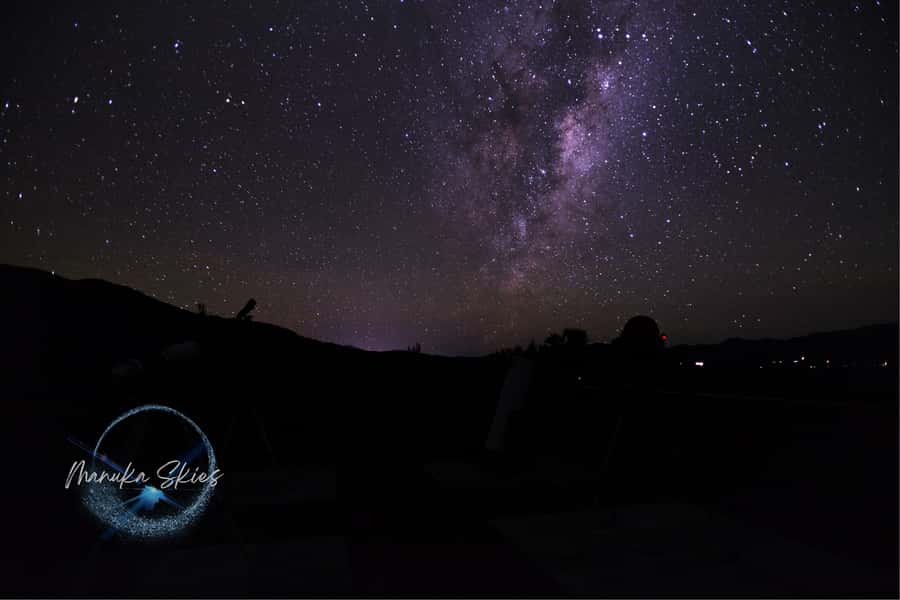
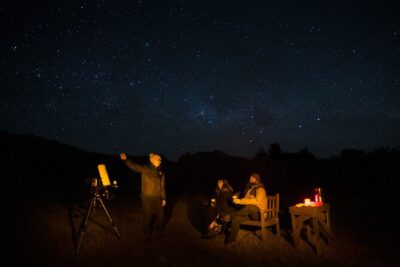
At the dark-sky location, you are welcomed with hot drinks and snacks. This is a good start. You can settle in, warm your hands, and get comfortable before looking through equipment.
The guides first work with the naked eye. This is one of the most useful parts of the outing because it gives you a basic map before the equipment makes the sky seem even larger. You discuss stars and constellations, including the Southern Cross, and learn how to navigate the night sky.
I like this order. It is tempting to point a telescope at the first bright object and let the machine do all the work. Instead, you begin by learning where to look and how the major patterns fit together. That helps you keep your bearings when you later move between telescopes and binoculars.
The Southern Cross is an especially fitting subject in New Zealand. It is one of the best-known southern constellations, and learning to recognize it gives you a practical reference point. You are not simply collecting star names. You are learning a little of the skill people once used to find direction at night.
The guides also bring myths and history into the discussion. The information provided does not list the exact stories covered, so you should not expect a fixed script of named legends. Still, the format clearly goes beyond pointing at bright dots. The guides explain the patterns and the stories people have attached to them.
Seeing faint objects through the guided telescope
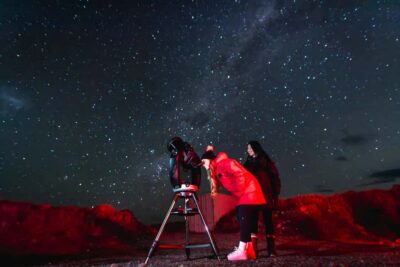
The main telescope is electronically guided and designed to show deep-sky objects that are not visible to your unaided eye. Examples include the Omega Cluster and the Sombrero Galaxy.
This is where the tour can change your sense of scale. With your eyes alone, you may see familiar star patterns. Through a telescope, you can look at objects far beyond those simple shapes. The Omega Cluster gives you a chance to see a dense gathering of stars, while the Sombrero Galaxy offers a look toward a distant galaxy with a distinctive form.
I would keep your expectations realistic about what appears in the eyepiece. A telescope does not turn every object into a bright, full-colour space photograph. What you see depends on the sky, the equipment, and your own eyesight. The value is in seeing these objects directly and having a guide explain what they are.
The electronic guidance is helpful for this kind of viewing. Faint targets can be difficult to locate, even when you know their names. The telescope helps the group reach objects that would otherwise remain beyond casual stargazing.
Because the group is limited to 10 people, the pace should allow time to ask questions and take turns. No one is promised unlimited time at the eyepiece, but a small group is a much better arrangement than a crowded line around one telescope.
A few more to weigh up in Canterbury
- Hanmer Springs Thermal Pools & Spa
★ 4.5 · 218 reviews - Amuri Adventure Jet Boating in Hanmer Springs
★ 5.0 · 191 reviews - Hanmer Springs: Thermal Pools Single or Return Entry Ticket
★ 4.7 · 107 reviews - Methven-Mt Hutt Scenic Hot Air Balloon Flight
★ 5.0 · 74 reviews
Manual telescopes for a more active evening
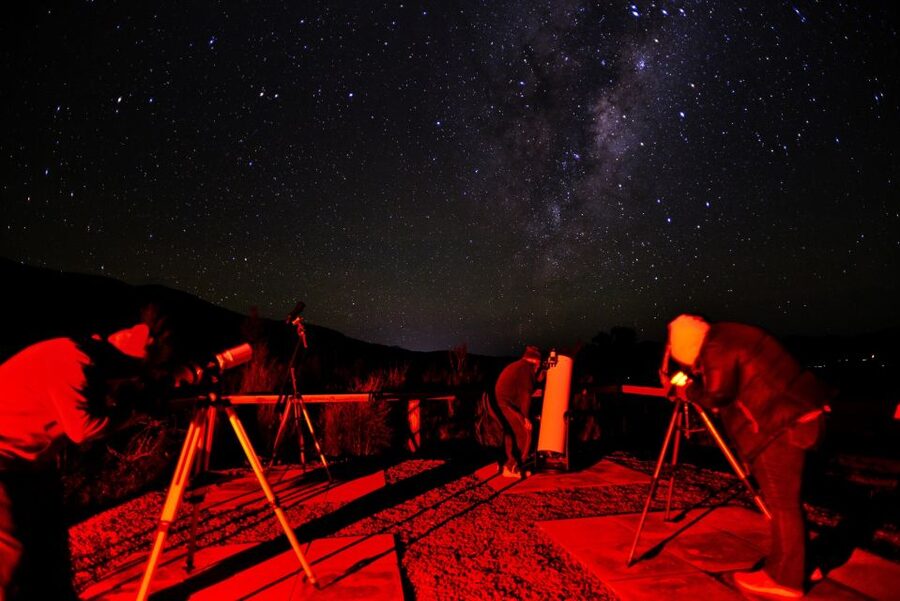
The electronic telescope is not your only option. A selection of manual telescopes is available for free roaming, so you can try finding objects without relying entirely on an automated mount.
This is a nice distinction. The guided telescope gives you access to targets that may be hard to locate, while the manual equipment lets you test your own skills. You can move between the two styles depending on how much guidance you want.
If you are new to astronomy, the manual telescopes may feel less straightforward at first. That is part of the point. The guides are available to help, so you are not left alone with a confusing set of controls. Still, you should expect an interactive activity, not a passive show.
The complimentary red-light torch is another thoughtful detail. Red light helps you see what you are doing without being as disruptive to night vision as a bright white torch. You also receive an information brochure covering what you learned, which gives you something useful to take away after the equipment is packed up.
Reclining with astro binoculars and a star finder
The most comfortable part of the night uses astro binoculars from lounge chairs. You can recline fully and look upward, which is much easier on your neck than standing and craning your head for long periods.
This setup also changes the mood. The telescope encourages you to focus on one target at a time. The lounge and binoculars let you scan the wider sky and notice how the stars fit together. You can pair the binoculars with an interactive star finder and test your navigation skills.
I see this as one of the strongest reasons to choose the tour over a quick telescope viewing. You get to try equipment, make decisions, and receive help when needed. The experience has enough structure to teach you something, but enough freedom to let you explore at your own pace.
The lounge chairs and blankets are especially valuable in winter. A clear sky often means colder conditions, and comfort becomes part of the practical calculation. Hot drinks and snacks help, too, though you should still arrive dressed for outdoor conditions.
How much value do you get for $77?
At $77 per person, the tour is not the cheapest evening activity in Hanmer Springs. It can still be good value if you want more than a short look through a telescope.
Your price covers the shuttle, all stargazing equipment, astro binoculars, manual telescopes, lounge chairs, blankets, hot drinks, snacks, a red-light torch, and an information brochure. You also receive guidance throughout the evening rather than simply hiring equipment and guessing what to do.
The small group size improves the value. With no more than 10 participants, you should have a better chance to use the equipment and speak with the guides. The guides’ passion and strong knowledge of stars and history were the most praised parts of the experience, and that human element is what separates this outing from simply downloading a sky app.
You may not find the price worthwhile if you only want to see the Southern Cross for a few minutes, or if you already own good astronomy equipment and know the southern sky well. For a first serious look at the night sky, though, the combination of instruction, equipment, comfort, and transport makes the fee easier to justify.
Who will enjoy this stargazing tour most?
I would recommend it to curious adults, couples, families with older children, and anyone spending several nights in Hanmer Springs who wants an evening activity with a clear sense of place.
It suits beginners particularly well. You do not need to know constellation names or understand how telescopes work before arriving. The naked-eye introduction gives you a starting point, and the guides can help you use the manual equipment and star finder.
It also suits people who like to participate. You can ask questions, try the manual telescopes, use binoculars, and test your navigation skills. If you prefer a short, polished presentation with no hands-on element, this may feel less comfortable.
The late summer departure is worth considering. A 10:00 PM start can push the evening well past midnight once dinner and the return are included. Winter is earlier, but colder, so your choice is between a more convenient start and warmer seasonal conditions.
The tour is not suitable for wheelchair users. Alcohol and drugs are not allowed, which is sensible for a night involving darkness, equipment, and transport.
Weather can make or break the evening
Stargazing is never fully predictable. The tour may be cancelled if poor weather prevents it from going ahead, and notification is given 30 minutes before departure.
That short notice can be inconvenient. I would avoid booking a tightly timed dinner, show, or long-distance connection immediately afterward. Keep a flexible evening if possible.
The cancellation policy helps reduce the financial risk. You can cancel up to 24 hours in advance for a full refund, and the booking option allows you to reserve now and pay later. Still, a weather cancellation on the day can affect your plans even if it does not cost you the tour fee.
Bring warm clothing regardless of the forecast. A windproof jacket, gloves, and hat are strongly recommended, while blankets are provided at the site. The goal is to stay comfortable enough to concentrate on the sky rather than the temperature.
Should you book the Hanmer Springs stargazing tour?
Book it if you want a small, friendly introduction to the southern night sky with real equipment and plenty of guidance. The mix of naked-eye navigation, a guided electronic telescope, manual scopes, astro binoculars, lounge chairs, and hot drinks gives the two hours good variety.
I would be especially keen to book this after visiting the thermal pools, since the meeting point is right beside them and the shuttle removes the need to drive into the dark-sky area. Just plan for the seasonal start time and bring serious warm layers.
Skip it if you need guaranteed weather, cannot manage a late summer start, or want a fully accessible experience for a wheelchair user. For everyone else, the perfect score from four verified bookings and the repeated praise for the guides’ passion point to a well-run, personal evening rather than a quick tourist stop.
FAQ
How long does the Hanmer Springs stargazing tour last?
The tour takes approximately two hours from pickup to drop-off.
How much does the stargazing tour cost?
The price is $77 per person.
Where does the shuttle depart from?
The shuttle leaves from the bus and shuttle stop on Jacks Pass Road, outside the public toilets and immediately beside the Hanmer Springs thermal pools. Parking is available next to the pickup point.
What equipment is included?
All stargazing equipment is included, including an electronically guided telescope, manual telescopes, astro binoculars, an interactive star finder, and a complimentary red-light torch.
What should I wear?
Bring warm clothing, including a windproof jacket, gloves, and a hat. Blankets are provided at the dark-sky location.
What happens if the weather is poor?
If the tour cannot go ahead because of poor weather, you will be notified 30 minutes before departure. You can also cancel up to 24 hours in advance for a full refund.
Just added in Canterbury
- Helicopter trial Flight. Have a go at being the pilot★ 5.0 · 1 review
- Merino Farm Experience★ 5.0 · 3 reviews
- Christchurch Alpaca Farm Tour From Kaiapoi★ 5.0 · 2 reviews
- Oasis Cottage Gardens and Floristry Studio in Oxford, NZ★ 5.0 · 1 review
- Canterbury Helicopter Scenic Flight with Hilltop Landing★ 5.0 · 1 review
- Lyttelton Shore Excursion – Guided Walking Tour and Picnic★ 5.0 · 57 reviews
- North Canterbury Helicopter Winery lunch★ 5.0 · 1 review
- Arthurs Pass and Southern Alps Day Excursion from Port Lyttelton or Christchurch★ 5.0 · 1 review
Stargazing Tours, compared.
Nocturnal Wonders Tawharanui Kiwi Spotting and Stargazing Tour
Read our review →Browse the lists this tour appears in