
REVIEW · STARGAZING TOURS
Twizel: Stargazing Tour with an Astronomer and Telescope
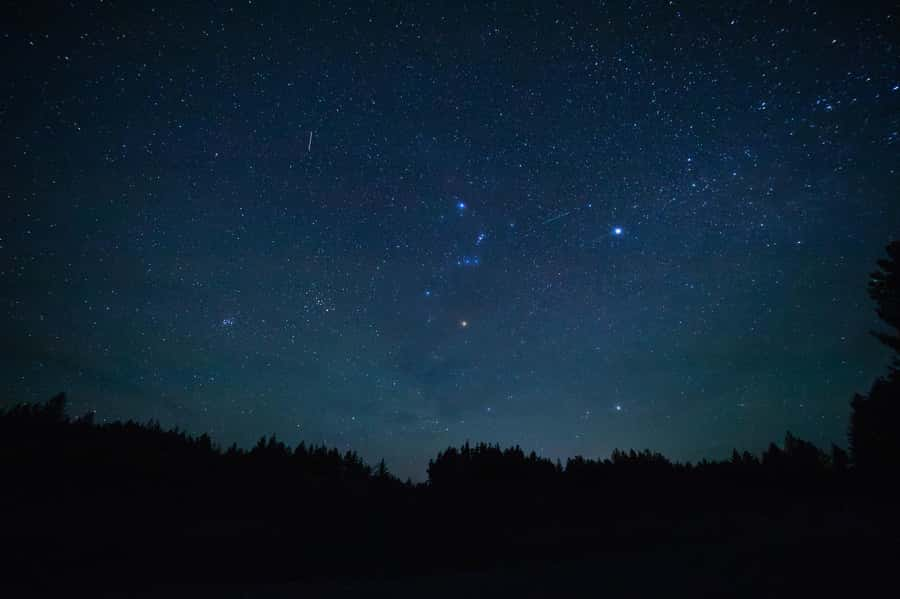
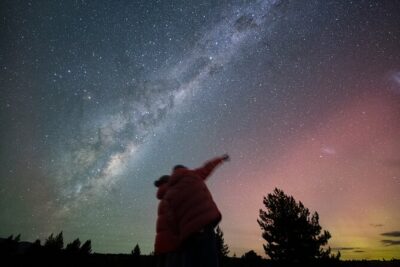
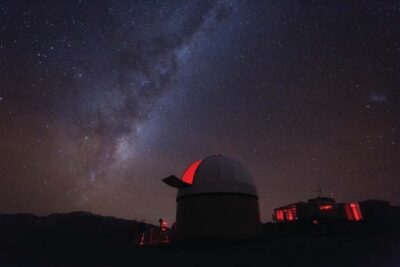
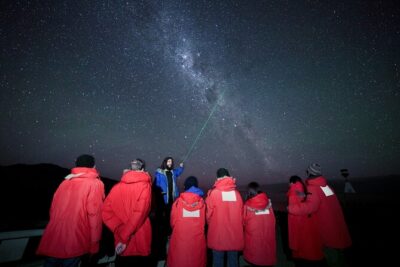
The universe gets surprisingly close in Twizel. This 75-minute evening tour places you beneath the Aoraki Mackenzie International Dark Sky Reserve, where astronomer Daniel, also called Dan, uses a laser pointer and telescope to make the southern sky easier to understand. I especially like the small groups of up to 10 and the personal astrophoto included at the end. The main catch is simple: nights here can be cold, and clouds can cancel the show.
I also like that this is not just a quick look through a telescope. Dan explains the science behind the stars, planets, constellations, and galaxies, while the view changes with the season. At $59 per person, it offers solid value, though you should arrive prepared for an outdoor experience with no toilets on site and no guarantee of clear skies.
In This Review
- Key points to know before booking
- Why Twizel is a smart place for stargazing
- Meeting at 50 Kate Cameron Drive
- The first half: finding stars with a laser
- The telescope: planets, nebulae, and star clusters
- Daniel’s approach makes the difference
- The personal astrophoto at the end
- Is $59 good value for 75 minutes?
- Cold nights and other practical limits
- Weather, seasons, and what you may see
- Who will enjoy this Twizel tour most?
- Should you book Stargaze Mackenzie?
- FAQ
- How long is the Twizel stargazing tour?
- Where does the tour meet?
- What should I wear?
- Is the tour suitable for children?
- What happens if the weather is cloudy?
- Is the tour wheelchair accessible?
Key points to know before booking
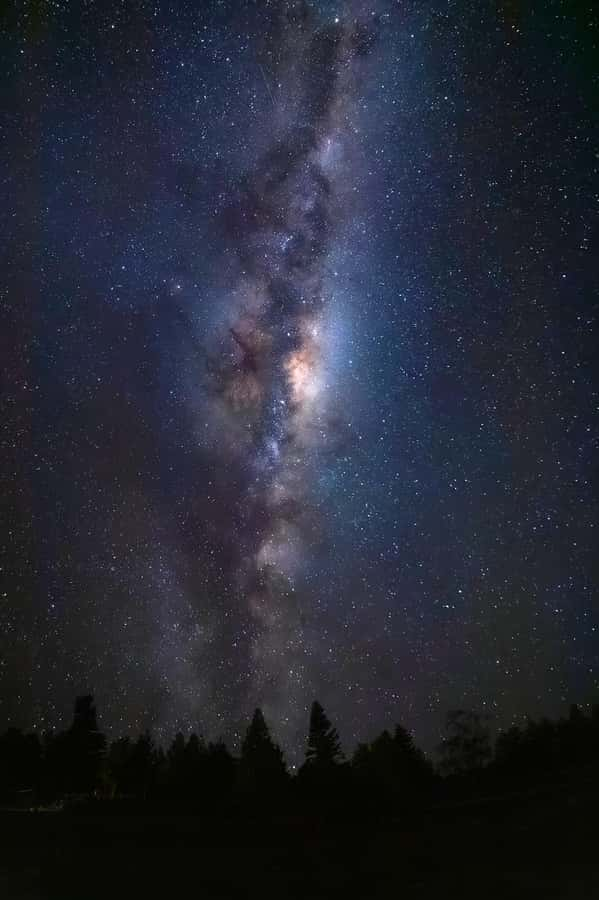
- Twizel sits under one of the world’s clearest dark skies, inside the Aoraki Mackenzie International Dark Sky Reserve.
- Daniel’s laser-guided explanations make unfamiliar southern constellations easier to follow.
- The telescope section changes with the season, with possible views of planets, nebulae, star clusters, and galaxies.
- Groups are limited to 10 people, giving the experience a calm, almost private feel.
- A personal night-sky photo is included, a thoughtful keepsake rather than an extra purchase.
- Warm clothing is essential, even during summer in the Mackenzie region.
Why Twizel is a smart place for stargazing
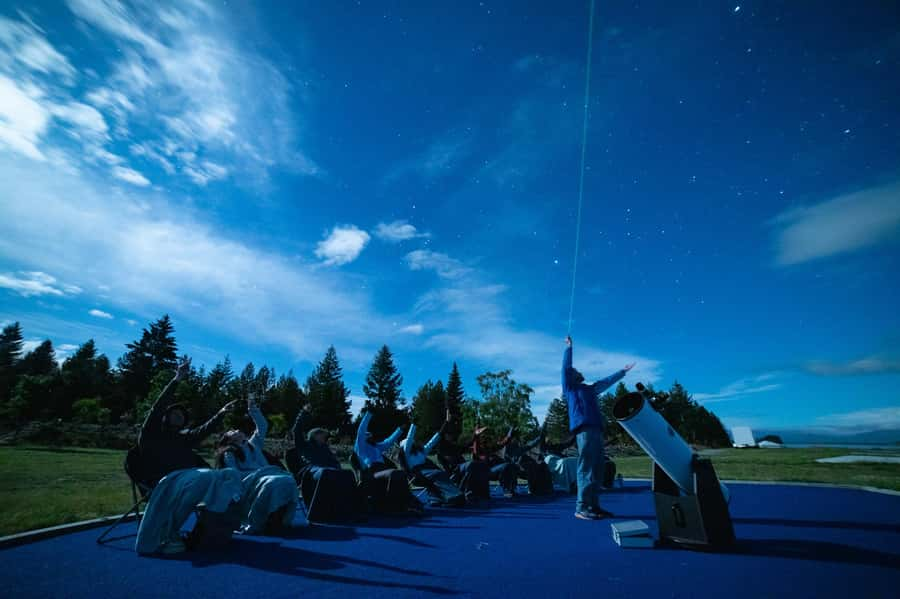
Twizel is in the Mackenzie Basin on New Zealand’s South Island, a region known for unusually dark and clear skies. Artificial light is limited, so the Milky Way can appear with far more detail than it does from a city or large resort town.
That setting matters. A telescope is useful anywhere, but it becomes much more rewarding when the sky behind it is not washed out by streetlights. You can see more stars with your own eyes, and the guide has a better backdrop for explaining what you are looking at.
The tour takes place within the Aoraki Mackenzie International Dark Sky Reserve. The reserve is not just a marketing label for this activity. Its preservation values shape the experience, with attention given to the scientific, environmental, and cultural importance of a dark night sky.
I like this wider context. You are not simply checking off Saturn or the Southern Cross. You are also learning why darkness is worth protecting. That gives the evening more meaning without turning it into a lecture.
More stargazing nights in New Zealand:
- Lake Tekapo: Alpine Stargazing Experience with a Guide
★ 4.5 · 626 reviews - Lake Tekapo: Stargazing Experience
★ 4.9 · 607 reviews - Chameleon Stargazing Shared Tour
★ 5.0 · 181 reviews
Meeting at 50 Kate Cameron Drive
The listed starting point is 50 Kate Cameron Drive. More precisely, your guide meets you at the car park on the first left just after you enter Lake Front Road.
This is one of those details worth saving in your phone before leaving your accommodation. Arrive about five minutes early for check-in, since the tour is short and the group needs to get settled before the sky talk begins.
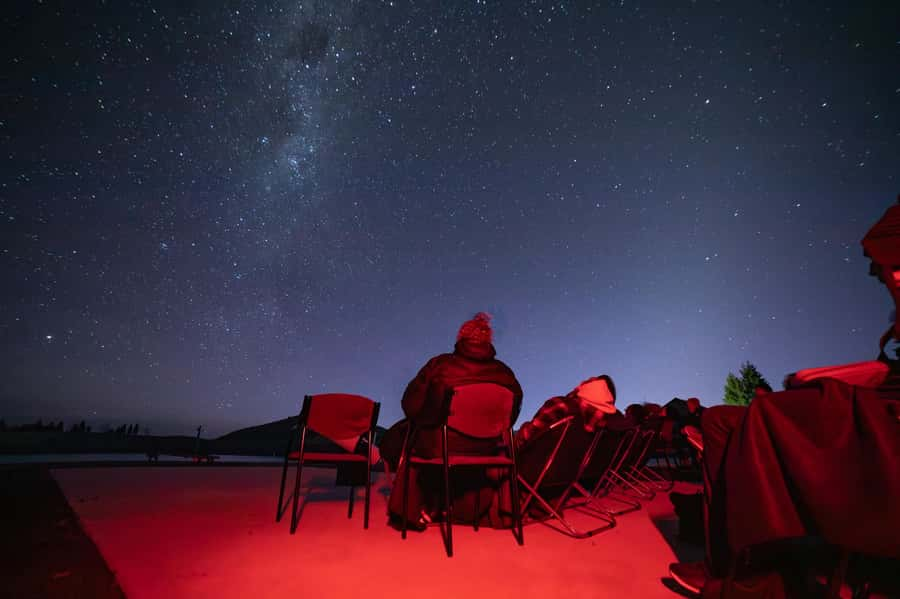
The setting is outdoors, with seating supplied. Blankets are also available, but do not treat them as a replacement for warm clothing. Several people who took the tour in spring, summer, and autumn still found the night cold. Bring layers, a warm hat, and gloves if you feel the chill easily.
There are no toilets on site. Use facilities before arriving. It is a small practical point, but one that can make a big difference during a 75-minute outdoor session.
The first half: finding stars with a laser
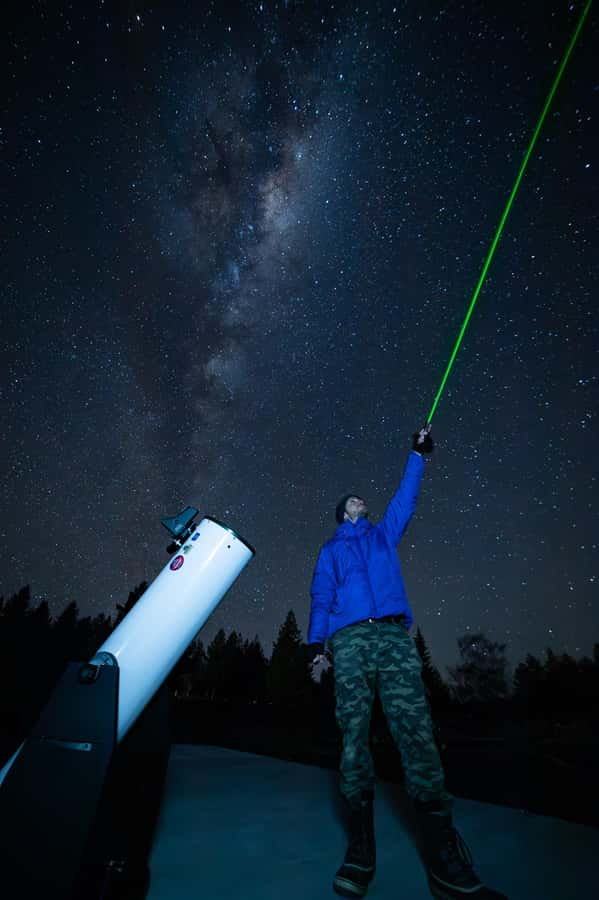
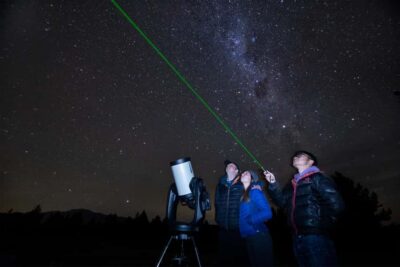
The opening part of the tour is a guided look at the sky. Daniel uses a laser to point out visible stars and constellations, then explains what you are seeing and why it matters.
This is the part that helps you get your bearings. Without guidance, a very dark sky can be almost too full of stars. The familiar patterns you know from books or apps may look different, and the southern hemisphere has its own highlights.
Dan’s strength is making difficult astronomy understandable. His explanations cover planets, stars, constellations, and basic astrophysics in plain language. You do not need to arrive with technical knowledge. If you already follow astronomy, you should still find the conversation rewarding because the focus changes with the season and the objects visible that night.
Past sessions have included explanations of the Milky Way, Orion, Alpha Centauri, and other southern-sky features. The exact program cannot be fixed in advance because the time of year and current conditions decide what appears above you.
The pace also sounds well judged. You have time to sit back and look, rather than being hurried from one object to another. Comfortable outdoor chairs and blankets make it easier to stay focused, although comfort depends heavily on how well you dress.
The telescope: planets, nebulae, and star clusters
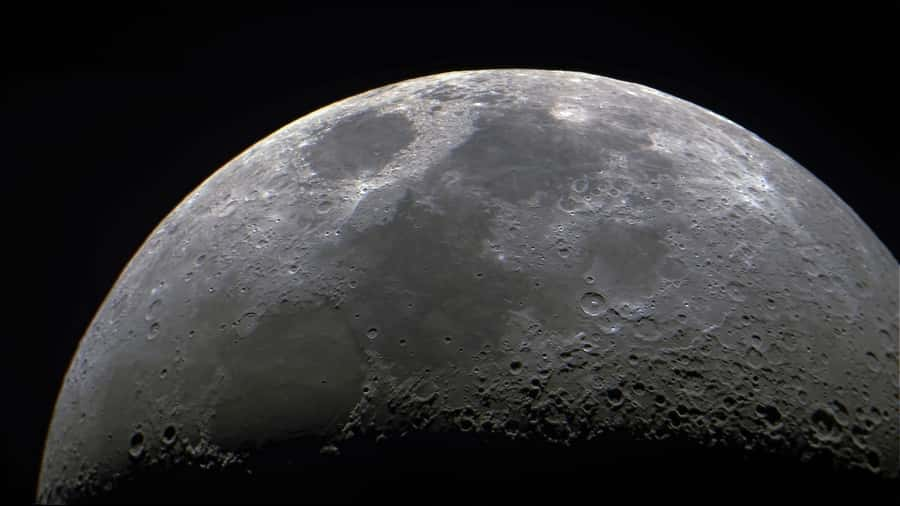
The second part moves from the broad sky to individual objects through a powerful telescope. The telescope targets depend on what is visible that night, so you might see planets, nebulae, star clusters, or galaxies.
This is where the tour becomes more than a constellation talk. Seeing an object through an instrument, then hearing what it is and how far away it may be, helps connect the science to something you can actually observe.
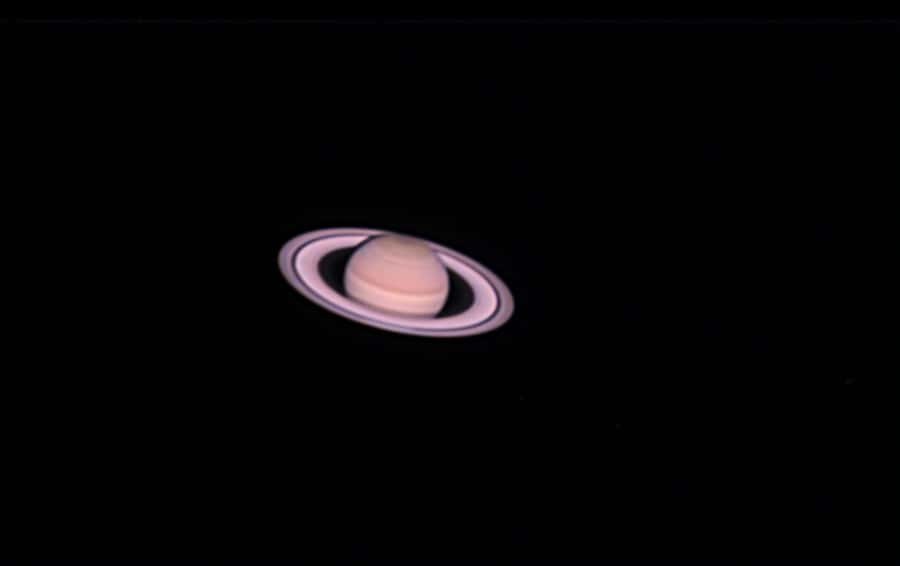
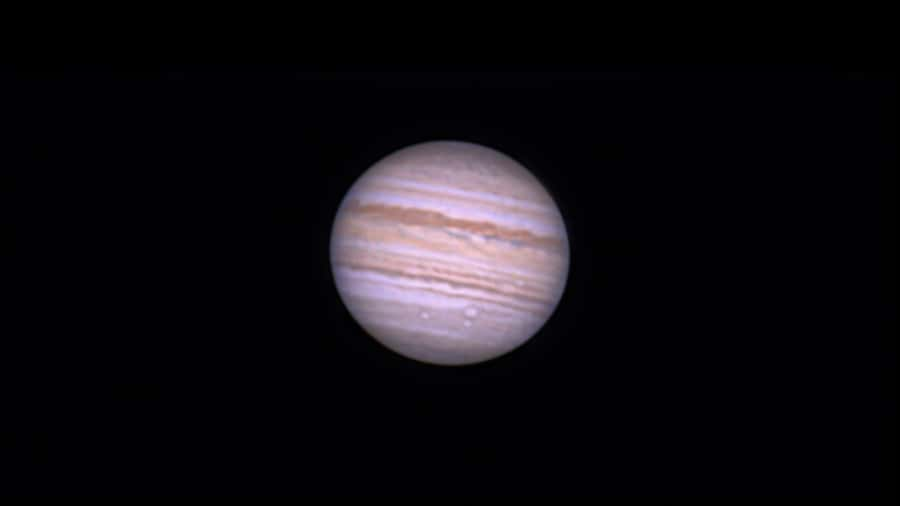
The telescope has provided views of Jupiter, including its bands and moons, as well as Saturn and its rings and moons. Those are the kinds of sights that can stay with you long after the tour. Saturn is especially satisfying because its shape is recognizable even to someone who has never used a telescope before.
Other reported targets have included the Tarantula Nebula, Alpha Centauri, and the Milky Way. The experience will not promise a particular planet or galaxy on your date, and that is important. Clouds, seasonal movement, and visibility all affect the program.
Daniel explains each object after you view it. That extra context is valuable. A quick telescope look can be beautiful but confusing, while a guided look helps you understand why the object matters and what you are actually seeing.
A completely different sort of day out:
- Hobbiton Movie Set: Guided Tour Ticket
★ 4.9 · 8,167 reviews - Waitomo: Glowworm Caves Guided Tour by Boat
★ 4.5 · 4,908 reviews - Rotorua Canopy Tours: 2.5Hour Native Forest Zipline Adventure
★ 5.0 · 4,563 reviews - Hobbiton™ Movie Set Walking Tour from Shires Rest
★ 5.0 · 3,577 reviews
Daniel’s approach makes the difference
A telescope alone does not make a great astronomy tour. The guide has to manage the equipment, read the sky, explain complex ideas, and keep a small group involved.
Daniel, the guide and business owner, receives especially strong praise for his enthusiasm and clear explanations. He is described as friendly, passionate, and able to explain complicated ideas in simple terms. That matters if your group includes people with very different levels of interest.
I would expect the experience to work well for both beginners and serious sky-watchers. Children aged six and older can join, and the small group size should give younger participants a better chance to see through the telescope and ask questions.
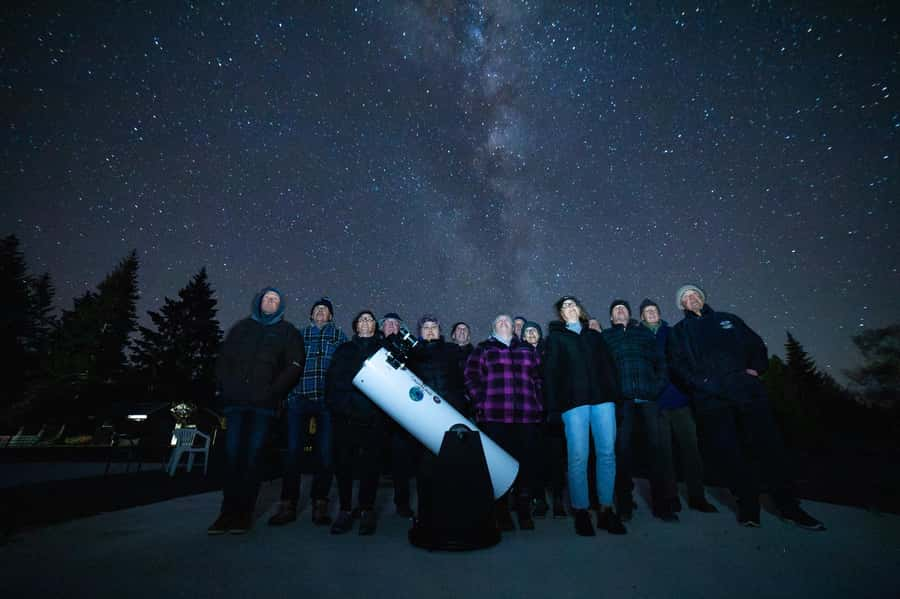
The limit of 10 people is a real advantage. It should feel more personal than a large coach-group presentation, and you will have a better chance to hear the guide and get your turn at the telescope. One past session ran with only two people because of the conditions, showing that the operator can still make the evening worthwhile with a very small group.
The tour is in English. If you are comfortable following an English-speaking guide, the explanations are a central part of the value rather than a minor extra.
The personal astrophoto at the end
The tour finishes with a personal photograph of you beneath the stars. This is included in the $59 price.
I like this touch because it gives you something concrete from an experience that otherwise exists mostly in memory. The photo is not simply a standard group snapshot. The supplied information describes personal astrophotos with the Milky Way, and several people praised the color and clarity of their finished images.
You should see this as a bonus, not the main reason to book. The telescope and guided sky talk are the core of the evening. Still, a well-made image of you under the southern sky is a generous extra, particularly at this price.
It also makes the tour appealing if one person in your group is less interested in astronomy but wants a memorable photograph from New Zealand. You can enjoy the science, then leave with a visual reminder of the night.
Is $59 good value for 75 minutes?
At $59 per person, I consider this good value if clear skies allow the full program to run.
You receive a guided stargazing session, an astronomer guide, laser explanations, telescope access, seating, blankets, and a personal astrophoto. The small group limit adds value because you are not paying for a distant view of a telescope surrounded by dozens of people.
The price is also reasonable because the guide is doing more than operating equipment. Daniel explains the science, adjusts the focus of the session to current visibility, and connects the objects to larger questions about space and the night sky.
There is a risk, though. This is weather-dependent, and clouds can reduce what you see or lead to cancellation. If the tour is cancelled because of weather, you are offered a refund or a chance to reschedule. You can also cancel up to 24 hours ahead for a full refund, and the reserve-now, pay-later option lets you hold a place without paying immediately.
That flexibility helps offset the uncertainty. Still, do not book this as your only possible evening plan if your schedule is tight. It is best treated as a flexible highlight of your time in Twizel.
Cold nights and other practical limits
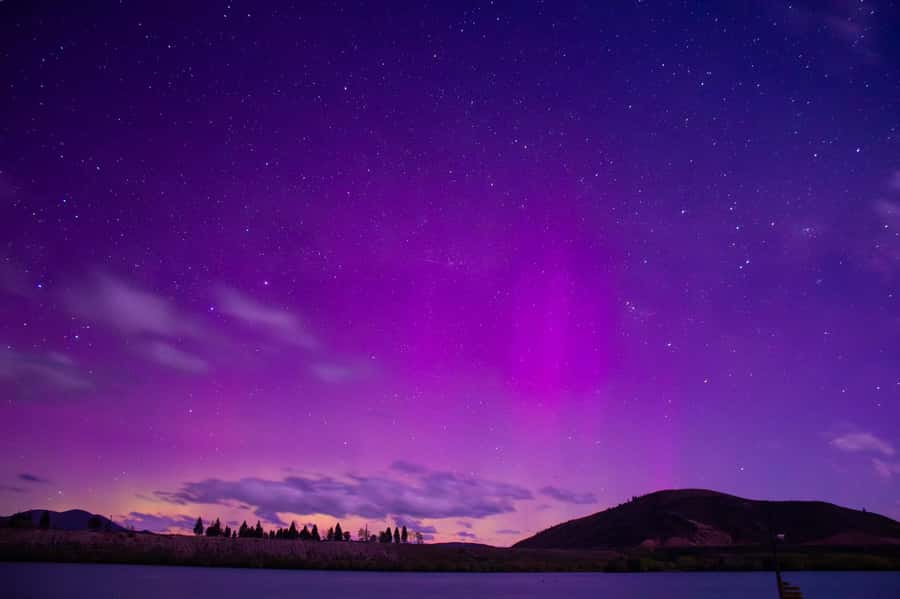
The biggest issue is temperature. The Mackenzie region can feel very cold after dark, even in the middle of summer. Sitting still while looking through a telescope makes the cold more noticeable than walking around.
Wear several layers rather than relying on one heavy jacket. Add a hat and gloves, and use the supplied blankets as a second layer of comfort. Shoes should also be suitable for an outdoor setting, though no special equipment is listed as necessary.
Flash photography is not allowed. That rule protects everyone’s night vision, and it is important in a stargazing setting. Alcohol and drugs are also prohibited, and intoxicated participants are not permitted.
The tour is wheelchair accessible, which is useful information for planning. The booking details do not specify the exact surface or seating arrangements, so if you have particular mobility needs, confirm those details before arriving.
Children under six cannot join. For older children, the quiet outdoor format may work well if they can stay warm and remain attentive for 75 minutes.
Weather, seasons, and what you may see
The sky is not a fixed theater program. What you see depends on the time of year, cloud cover, and visibility that night.
In summer, darkness arrives later, so check the available start times carefully. One past January session had excellent conditions despite concern that the season would not be dark enough. That is encouraging, but it should not be taken as a promise for every date.
Clear conditions can reveal the Milky Way, Orion, Jupiter, Saturn, star clusters, and nebulae. Some sessions may focus more on planets, while others may turn toward distant galaxies or less familiar southern objects.
Clouds do not always mean the evening has no value. The guide can still discuss astronomy and explain what would normally be visible, but poor visibility will naturally reduce the telescope portion. That is why the refund or reschedule policy matters.
I recommend checking the forecast on the day, then arriving with realistic expectations. You are buying expert guidance under a dark sky, not a guarantee that every famous object will appear.
Who will enjoy this Twizel tour most?
I would choose this experience if you want a calm, educational evening rather than a loud group attraction.
It suits first-time stargazers because Daniel explains the basics clearly. It also suits people already interested in astrophysics, photography, planets, or the southern hemisphere’s night sky because the telescope section can reach beyond the most obvious stars.
Families with children aged six and above may enjoy it, provided everyone is dressed for the cold. Couples and solo visitors should appreciate the peaceful setting and the personal photo. The group size is small enough that the experience should not feel anonymous.
I would hesitate if you dislike cold outdoor activities, need indoor facilities nearby, or have only one available evening with no flexibility. Bad weather can affect the program, and even a clear night may feel uncomfortable if you arrive in light clothing.
Should you book Stargaze Mackenzie?
Yes, if you want a well-priced introduction to the southern sky with a real astronomer, a telescope, and time to ask questions.
The strongest reasons to book are Daniel’s enthusiasm, the small group of no more than 10 people, the excellent dark-sky setting, and the included astrophoto. The best practical advice is to dress warmer than you think necessary and use the bathroom before arriving.
This is not a quick photo stop or a guaranteed list of famous planets. It is a weather-dependent outdoor lesson under one of New Zealand’s finest night skies. If that sounds appealing, $59 is a fair price for 75 minutes of clear explanations, telescope views, and a memorable look upward.
FAQ
How long is the Twizel stargazing tour?
The tour lasts 75 minutes, including the laser-guided sky talk and telescope observations.
Where does the tour meet?
Your guide meets you at the car park on the first left just as you enter Lake Front Road. The listed starting location is 50 Kate Cameron Drive.
What should I wear?
Wear warm layers, plus a hat and gloves if needed. Nights in the Mackenzie region can be cold even during summer, and blankets are provided.
Is the tour suitable for children?
Children aged six and older can join. Children under six are not permitted.
What happens if the weather is cloudy?
The tour runs only in clear conditions. If bad weather causes a cancellation, you will be offered a refund or the chance to reschedule.
Is the tour wheelchair accessible?
Yes, the activity is listed as wheelchair accessible. It is also conducted in English and limited to 10 participants.
Just added in New Zealand
- Christchurch: Helicopter Trial Flight★ 5.0 · 7 reviews
- WLG: Museum of NZ Māori Highlights Tour & General Admission★ 4.7 · 30 reviews
- Willowbank Wildlife Reserve Day Entry Ticket★ 4.5 · 85 reviews
- From Blenheim/Picton: Marlborough Gourmet Wine Tasting Tour★ 4.8 · 35 reviews
- Whakaari – White Island Cultural and Flight Experience★ 5.0 · 138 reviews
- From Rotorua: Whirinaki Rainforest Guided Cultural Tour★ 5.0 · 6 reviews
- Whitianga: 2-Hour Glass Bottom Boat Cathedral Cove Tour★ 4.8 · 126 reviews
- Whakarewarewa: Self-Guided Geothermal Trails★ 4.5 · 41 reviews
Stargazing Tours, compared.
Mount John Observatory Stargazing Experience, Tekapo
Read our review →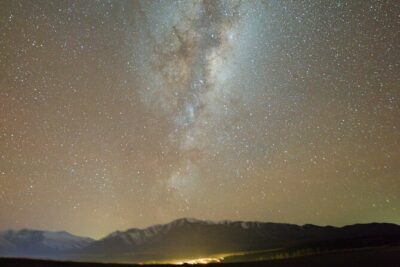
Silver River Stargazing Experience in Lake Tekapo
Read our review →
Stargazing Experience at Cowan’s Private Observatory
Read our review →
Dark Sky Indoor Maori Cultural Astronomy Experience
Read our review →Browse the lists this tour appears in